
The Ultimate Guide to Buying a Classical Guitar: Expert Tips for Every Level
Buying a classical guitar is one of the most personal decisions a musician can make. Whether you are picking up the instrument for the first time or looking to upgrade to a professional concert guitar, the choices can feel overwhelming. This guide cuts through the noise and gives you a clear, honest framework — from understanding budget tiers and tonewoods to what separates a student instrument from a hand-crafted concert guitar built by one of today's leading luthiers.
At Siccas Guitars, we have spent decades helping players at every level find the right instrument. Every guitar in our inventory is tested by professional musicians before it reaches you, and we offer a 14-day home trial so you can make your decision in the comfort of your own playing environment.
Why Buying a Classical Guitar Is Different
Classical guitars differ fundamentally from steel-string acoustic guitars and electric guitars. They use nylon strings, which produce a warmer, more nuanced tone and are gentler on fingertips — a real advantage for beginners. The neck is wider than on most steel-string instruments, which suits the right-hand and left-hand technique that classical and fingerstyle playing require. If you are coming from another style of guitar, read our comparison of acoustic vs. classical guitar key differences before deciding.
Because classical guitars are played without a plectrum, the quality of the top wood and the precision of the construction have a direct impact on tone, projection, and long-term playability. This is why experienced players place so much emphasis on solid wood construction — and why it matters even at entry level.
Budget Tiers: What to Expect at Every Price Point
Understanding budget tiers is the single most useful starting point when buying a classical guitar. The market broadly divides into three categories: student, intermediate, and concert.
Student Guitars
Student instruments are designed to be playable, reliable, and affordable. Brands such as Altamira, Raimundo, and Hanika (entry models) represent the upper end of this tier and consistently deliver solid construction and good intonation. At this level you will find solid wood tops paired with laminate back and sides on many models — still a worthwhile instrument for a beginner, but a step below fully solid construction.
The most important thing at the student level is action and setup. A guitar that is hard to press down discourages practice. All student guitars at Siccas are set up before shipping to ensure comfortable playability out of the box.
Intermediate Guitars
The intermediate tier is where the investment begins to make a meaningful difference to your playing. Instruments from Hanika (higher models), Duke, and Yulong Guo typically feature all-solid wood construction — solid top, solid back, and solid sides. This is a significant upgrade: solid wood resonates more freely than laminate, improving sustain, dynamic range, and the overall tonal complexity that classical technique demands.
Players at the intermediate level are often working on demanding repertoire — pieces by Tárrega, Bach, Barrios, or Villa-Lobos — and the guitar needs to respond to nuanced right-hand work. An all-solid instrument rewards that investment of technique in a way a laminate guitar simply cannot.
Concert and Professional Guitars
At the professional level, you are entering the world of individual luthiers building instruments by hand, often on commission, with waiting lists that can stretch years. Luthiers such as Dammann, Redgate, Marin Montero, and Friederich represent different schools of construction and tonal philosophy. Each instrument is unique. The choice at this level becomes less about specifications and more about the relationship between a player's technique and the specific voice of the guitar.
Buying a concert guitar is a process that benefits enormously from a home trial. What sounds brilliant in a shop or in a short video may not work in your playing space or suit your touch. This is exactly why Siccas offers a 14-day home trial on all instruments.
Tonewoods: Cedar vs. Spruce
The choice of top wood is the single most discussed variable in classical guitar tone, and for good reason. The top is the primary soundboard — it vibrates to produce almost all of the guitar's acoustic output. The two dominant woods are cedar and spruce.
Cedar Tops
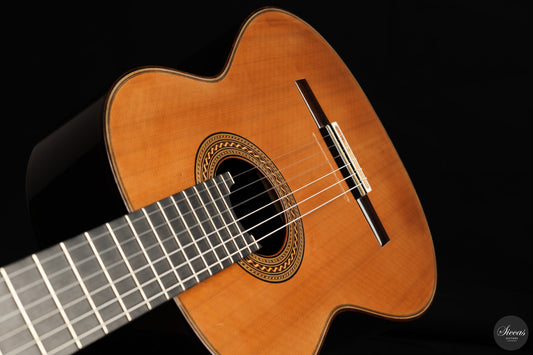
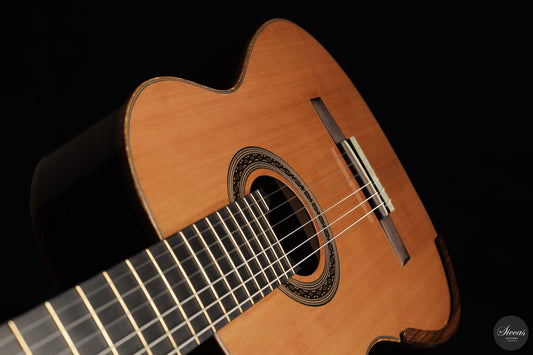
Cedar is a softer, lighter wood that responds quickly to a light touch. It tends to produce a warm, dark tone with pronounced midrange presence — qualities often described as intimate and expressive. Cedar guitars suit players who favour a singing melodic line and a relatively light right-hand attack. They open up tonally with less break-in time than spruce.
Spruce Tops
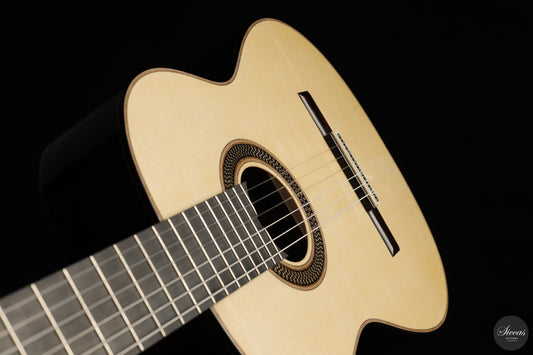
Spruce is denser and stiffer than cedar, which means it requires slightly more right-hand energy to unlock its full potential. In return it offers a brighter, more transparent sound with strong treble clarity and a wide dynamic range. Spruce guitars tend to develop and improve over years of playing as the wood opens up. Many professional players prefer spruce for large-hall projection and the ability to produce a wide tonal palette from pianissimo to fortissimo.
Neither wood is universally better. The right choice depends on your playing style, the repertoire you favour, and your personal taste. For a detailed comparison, see our dedicated article on spruce vs. cedar classical guitars.
Scale Length: Understanding 650mm
The standard scale length for a full-size classical guitar is 650mm, measured from the nut to the saddle. This is the reference point for all classical guitar technique — the spacing of the frets, the tension of the nylon strings, and the reach between positions are all calibrated around this measurement.
Smaller scale lengths (630mm, 640mm) exist and are appropriate for players with smaller hands or for younger students. However, if you are buying a guitar for adult use or for serious study, 650mm is the correct starting point unless a teacher or physiotherapist has specifically recommended otherwise.
Solid Wood Tops: The Single Most Important Upgrade
If there is one piece of advice that applies across all budget tiers, it is this: always choose solid wood over laminate for the top. A laminate top is constructed from thin layers of wood glued together, which limits the natural vibration of the soundboard. A solid wood top is cut from a single piece of timber, allowing the grain to resonate freely and the instrument to develop tonally over time.
The difference is audible from the first note. Solid top guitars produce a rounder, more complex tone with better sustain and more sensitivity to right-hand dynamics. Even an entry-level solid top guitar from a reputable builder will outperform a laminate instrument at a similar or slightly higher price point.
Browse our full range of classical guitars, and filter by top wood if you already know your preference — we stock both spruce top and cedar top instruments across all budget levels.
Watching Guitars Being Compared: A Video Guide
One of the best ways to understand how different instruments sound and feel is to watch comparisons played by professional musicians. The following video, filmed at Siccas Guitars, gives you a direct sense of how different classical guitars compare in a real playing context.
Choosing a Luthier: What Makes a Hand-Built Guitar Different
At the concert level, the name of the luthier carries as much weight as any specification. Individual makers develop recognisable voices in their instruments — a tonal signature that reflects their choice of materials, bracing patterns, and construction philosophy developed over decades.
Understanding the tradition behind a guitar can help you make a more informed choice. The influence of makers like José Ramírez on the development of the modern concert guitar is well documented, and many contemporary luthiers trace their approach back to Spanish building traditions. Exploring that lineage — through the instruments themselves and through the players who championed them — is part of what makes buying a concert guitar such a rewarding process.
If you want to understand how great players relate to their instruments, our guide to great classical guitarists is a good starting point, as are individual profiles of artists like Andrés Segovia, who defined what a concert classical guitar should do, and David Russell, whose recordings showcase what a truly great instrument can achieve.
The Repertoire Connection: Matching Your Guitar to the Music You Play
The music you want to play should influence the guitar you buy. A bright spruce-top instrument with strong projection suits the contrapuntal demands of Bach better than a dark cedar guitar optimised for late-Romantic colour. Conversely, the intimate expressiveness of Tárrega's Recuerdos de la Alhambra or Capricho Árabe calls for a guitar that sings in the upper register and responds to the lightest touch.
If you are exploring what the classical guitar repertoire has to offer, our overview of famous classical guitar pieces covers the key works across styles and periods — useful context for understanding what tonal qualities matter most to you.
The 14-Day Home Trial: How It Works
Buying a guitar online without playing it first is a genuine concern for many players. Our 14-day home trial is designed to remove that uncertainty entirely. When you order a guitar from Siccas, you have two weeks to play it in your own space, with your own music, at your own pace. If it is not the right instrument for you, return it for a full refund.
This matters particularly at the intermediate and concert levels, where the difference between instruments is subtle and highly personal. A guitar that sounds extraordinary in a warehouse may not project in your living room. A guitar that felt too bright on first contact may open up beautifully after a week of consistent playing. The home trial gives you the time to find out.
Buying a Classical Guitar: A Practical Checklist
- Set a realistic budget and identify the tier (student / intermediate / concert) that fits.
- Decide on top wood — cedar for warmth and quick response, spruce for clarity and projection.
- Confirm solid wood construction — prioritise a solid top at minimum, all-solid at intermediate and above.
- Check scale length — 650mm standard for adults; 630–640mm for smaller hands or younger players.
- Watch comparison videos to hear the instruments played by professionals.
- Use the 14-day home trial to confirm the guitar works in your own playing environment.
Browse Our Current Selection
Our inventory changes regularly as new instruments arrive from luthiers around the world. If you are looking for a specific builder, wood combination, or price range, the best place to start is our full classical guitar collection. For specialist collections, explore our double-top guitars — a modern construction technique that offers exceptional volume and responsiveness — or our flamenco guitars for players interested in that distinct tradition.
If you have questions about a specific instrument or need help choosing between two guitars, contact us directly. We play every guitar we sell, and we are happy to give you an honest assessment based on your level, repertoire, and budget.