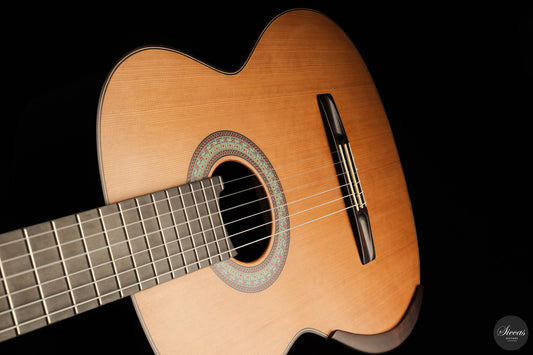
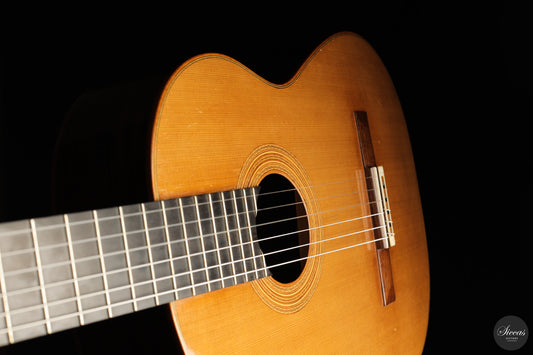
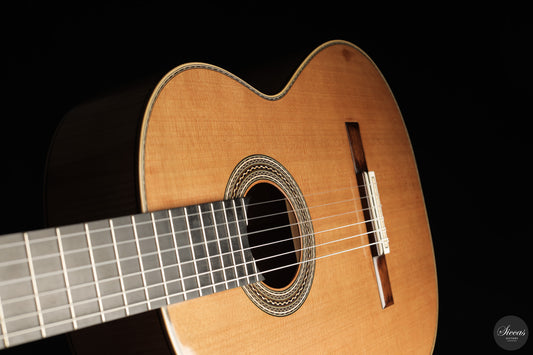
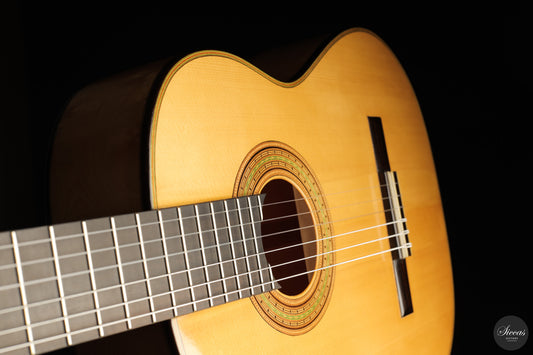
The classical guitar is one of the most rewarding instruments you can learn. It develops finger independence, musical awareness, and a close connection to centuries of composed music – from Renaissance dances to works of the 20th century. At the same time, it is often considered demanding: nylon strings, fingernails, reading notation, and correct posture.
This guide removes much of that complexity. Whether you are a complete beginner or coming from steel-string or electric guitar, you will find everything you need to start confidently, avoid common beginner mistakes, and build a practice routine that supports long-term progress.
By the end of this article, you will know how to choose your first guitar, sit correctly, position both hands, read basic notation, and structure your first month of practice.
What Makes the Classical Guitar Different?
If you have played acoustic or electric guitar before, much will feel familiar – but with important differences that change how you approach the instrument.
Nylon strings: Classical guitars use nylon or carbon strings instead of steel. The sound is warmer and more intimate, and the strings are much easier on the fingertips. The three bass strings consist of nylon with metal winding, while the three treble strings are plain nylon or carbon.
Wider neck and flat fingerboard: The neck is wider and the fingerboard is flat. This provides space for complex fingerings without accidentally muting adjacent strings, which is essential for polyphonic music.
Fingerstyle technique: Classical guitar is played without a pick. The right hand uses the thumb and fingers (p, i, m, a) to play bass, harmony, and melody simultaneously.
Sheet music instead of tabs: The classical tradition is based on standard notation. Learning to read music opens access to centuries of repertoire and develops deeper musicianship.
Seated playing position: The guitar is played seated, usually supported by a footstool or guitar support. This position provides stability, relaxation, and freedom of movement.
Choosing Your First Classical Guitar
Your first guitar does not need to be expensive, but it must be playable. A poorly set-up instrument will slow your progress. The following overview provides general orientation by budget.
Under 150 EUR: Typically laminate construction with basic playability. Suitable for testing commitment.
150–400 EUR: Often features a solid top made of cedar or spruce, offering better projection and tonal nuance. A good choice for committed beginners.
400–800 EUR: Generally improved build quality, richer overtones, and greater long-term stability. Suitable for players who know they will continue.
Key factor: A solid top has the greatest impact on sound quality. Useful accessories include a footstool or guitar support, a clip-on tuner, and spare strings.
Posture and Guitar Position
Good posture is fundamental. It affects mobility, tone control, and long-term comfort. The classical position can be built step by step.
Step 1: Choose a chair: Use a firm chair without armrests. Your thighs should be roughly parallel to the floor.
Step 2: Position the guitar: For right-handed players, the guitar rests on the left thigh. The neck angles upward at about 45 degrees. A footstool under the left foot or a guitar support attached to the body helps with height.
Step 3: Stabilize with three contact points: Left thigh, right inner thigh, and chest. The guitar should remain stable without support from the hands.
Step 4: Relax the shoulders: Keep both shoulders level and relaxed. If tension appears, reset your position.
Step 5: Right arm placement: The forearm rests lightly on the guitar’s upper bout. The hand naturally falls over the sound hole with a slightly arched wrist.
Right-Hand Fundamentals
The right hand shapes tone, dynamics, and articulation. In classical notation, the fingers are traditionally labeled as follows:
p (thumb) plays the bass strings (4, 5, 6).
i (index), m (middle), and a (ring) play the treble strings.
There are two fundamental strokes:
Free stroke (tirando): The finger plucks the string and moves freely into the air. This is the standard stroke and dominates most playing.
Rest stroke (apoyando): The finger comes to rest on the adjacent string, producing a stronger tone often used for melodies and scales.
Beginners should start exclusively with free strokes on open strings, focusing on relaxed movement and even tone.
Left-Hand Technique
The left hand changes pitch by pressing the strings just behind the fret. The fingers are numbered as follows:
1 index, 2 middle, 3 ring, 4 little finger.
The thumb rests lightly behind the neck, roughly opposite the second finger. It supports rather than grips. Use only the minimum pressure required to produce a clean note.
Reading Music: The Basics
Classical guitar uses standard notation in the treble clef. While unfamiliar at first, it provides access to the full repertoire and supports musical thinking.
Begin with the open strings and notes in first position. The open strings from lowest to highest are E–A–D–G–B–E.
Work one string at a time and say the note names aloud as you play. Rhythm is equally important. Start with whole notes, half notes, and quarter notes, counting aloud.
Your First Pieces
A stable foundation begins with simple material.
1. Open-string exercises: i–m alternation for consistent tone.
2. Single-line melodies: Simple tunes on one or two strings.
3. Easy duets: Playing one part while another part is played by a teacher or recording.
4. Simple arpeggios: Basic chord shapes using p–i–m–a patterns.
5. Graded repertoire collections: Method books organized by difficulty.
Practice Structure for Beginners
Effective practice is focused and consistent. Twenty to thirty minutes daily is sufficient for beginners.
5 minutes: Warm-up with open strings and gentle movement.
5 minutes: Technique focused on one specific element.
10 minutes: Repertoire, practiced slowly in small sections.
5 minutes: Sight-reading of easy material.
5 minutes: Review of previously learned pieces.
The guiding principle is simple: slow practice builds speed.
Essential Accessories
Only a few items are needed to practice comfortably.
Footstool or guitar support: Supports proper playing position.
Clip-on tuner: Tune before every session.
Nail care: Useful for the right hand as technique develops.
Music stand: Keeps music at eye level.
Metronome: Any basic app is sufficient.
Common Mistakes
1. Ignoring posture: Posture affects everything that follows.
2. Playing too fast: Speed comes from accuracy.
3. Neglecting the right hand: Tone starts with the right hand.
4. Avoiding notation: Early reading saves time later.
5. Practicing without a plan: Clear goals improve progress.
Frequently Asked Questions
How long does it take to learn classical guitar? Simple melodies can be played within weeks, and easy classical pieces within two to three months with consistent practice.
Do I need long fingernails? Moderate nails on the right hand help tone production, while left-hand nails should remain short.
Can I teach myself classical guitar? Yes, though occasional guidance from a qualified teacher is highly beneficial.
Is classical guitar harder than acoustic guitar? It is different rather than harder, emphasizing precision and notation.
What is the best age to start? Any age. Progress depends on consistency rather than age.
Your Next Steps
You now have the foundation to begin.
Days 1–2: Tune your guitar and establish a comfortable sitting position.
Days 3–4: Practice open-string right-hand exercises.
Days 5–6: Add first-position notes on the high E string.
Day 7: Combine both hands in a simple scale or melody.
The classical guitar rewards patience and consistency. Start today, practice regularly, and trust the process.