

Santos Hernandez
Santos Hernández (1873–1943) built the guitar that launched Andrés Segovia's career — the 1912 instrument from the Manuel Ramírez workshop, now in the Metropolitan Museum of Art. His independent instruments, built under his own name from 1916 until his death, represent the Madrid school at its finest. Original Santos Hernández guitars in playing condition are among the rarest instruments in the classical guitar world.
-
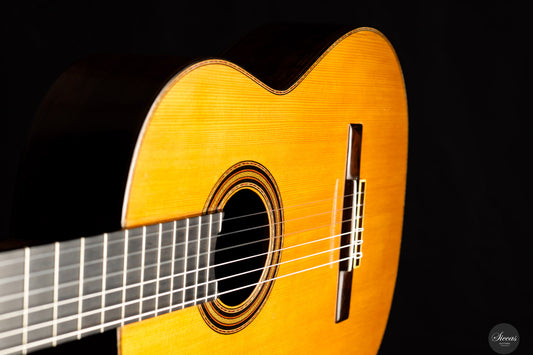
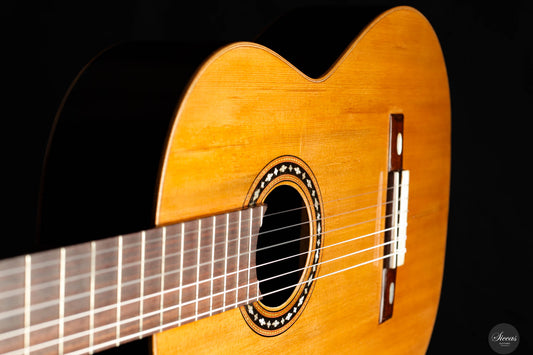
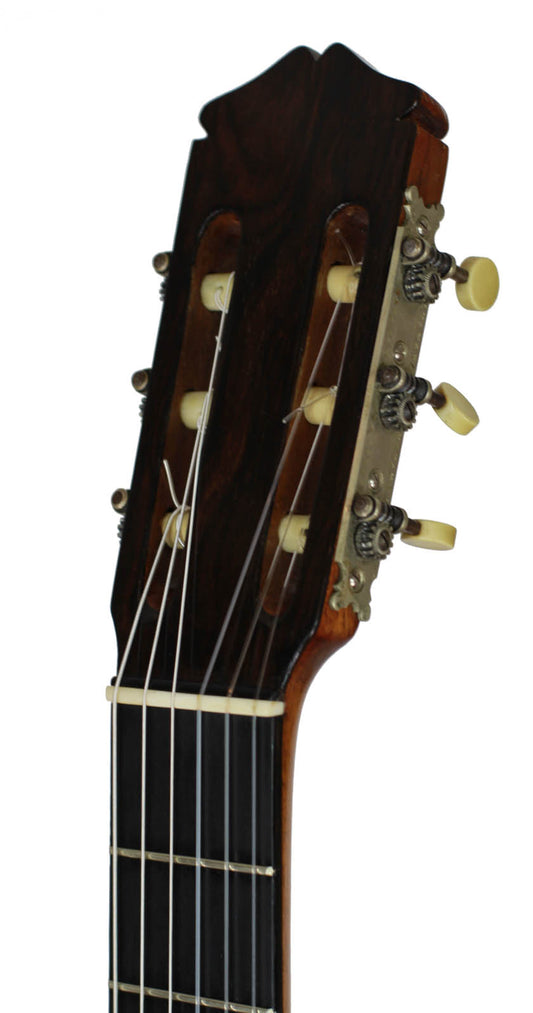
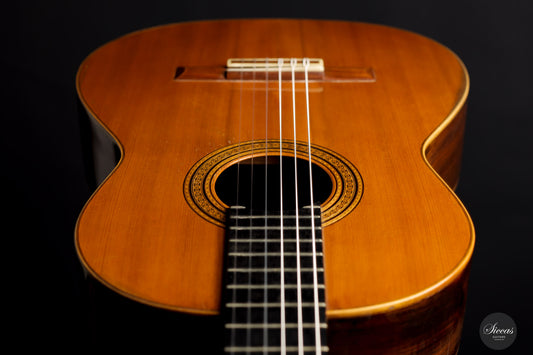
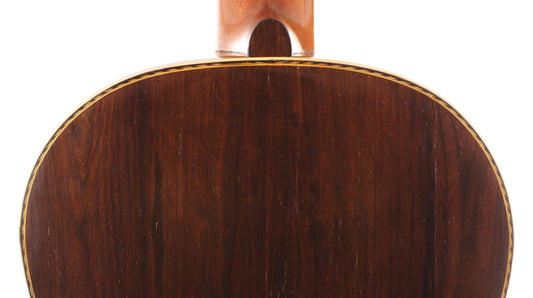
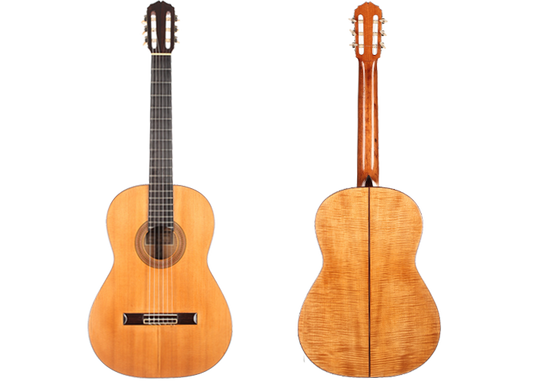
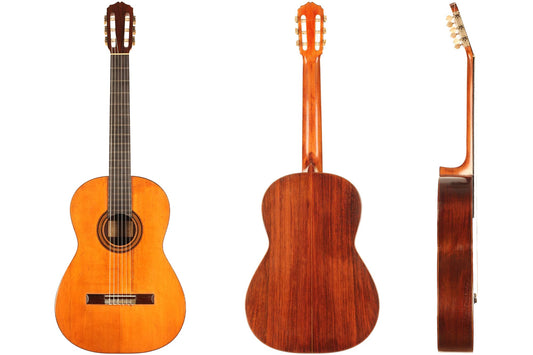
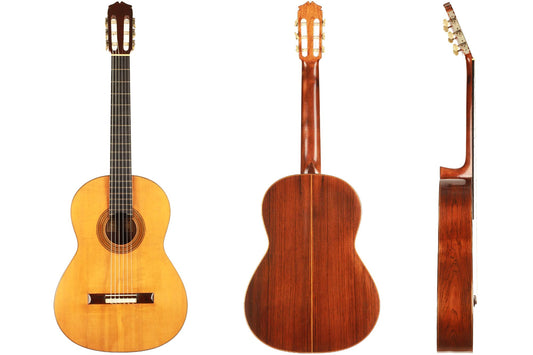
Santos Hernandez - 1932
Price: 29.990 €Unit price per Tax free (0% DE)SoldLuthier: Santos HernandezConstruction Type: Traditional -
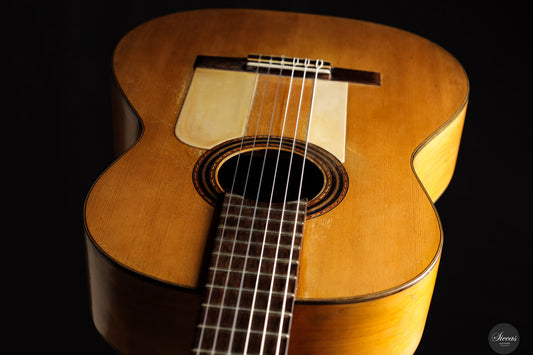
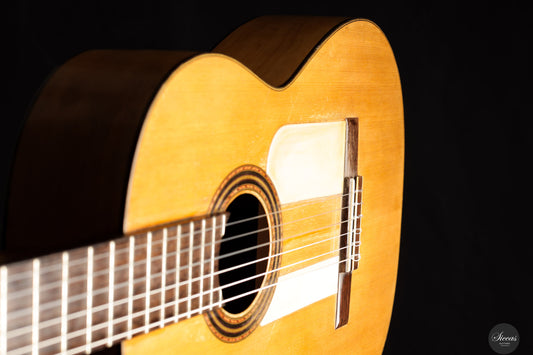
Santos Hernandez - 1928 - Flamenca Blanca
Price: 17.990 €Unit price per Tax free (0% DE)Luthier: Santos HernandezConstruction Type: Flamenco -
Luthier: Santos Hernandez
-
Luthier: Rare GuitarsLuthier: Santos Hernandez
-
Luthier: Santos HernandezLuthier: Seltene Gitarren
-
Luthier: Rare GuitarsLuthier: Santos HernandezLuthier: Seltene Gitarren
-
Luthier: Rare GuitarsLuthier: Santos HernandezLuthier: Seltene Gitarren
-
Luthier: Santos Hernandez
-
Luthier: Rare GuitarsLuthier: Santos HernandezLuthier: Seltene Gitarren
-
Luthier: Rare GuitarsLuthier: Santos HernandezLuthier: Seltene Gitarren
-
Luthier: Rare GuitarsLuthier: Santos Hernandez
-
Luthier: Santos Hernandez











Ask us - right here.
Enrico, our AI team member, replies around the clock.
Instant reply · free · no obligation Rather use WhatsApp
Frequently Asked Questions About Classical Guitars
How do I choose the right classical guitar for my level?
Choosing the right classical guitar depends on your playing level, musical goals, and budget. Beginners benefit from studio-model guitars from renowned workshops, while advanced players and professionals often choose a handmade master guitar. We are happy to advise you personally and can send detailed sound samples and videos on request.
What is the difference between a master guitar and a studio guitar?
Master guitars are built entirely by hand in the workshop of a single luthier, using only high-quality, well-aged tonewoods. Studio guitars are made in small series, often under the supervision of the master luthier, and offer excellent value for students and ambitious amateur players.
Can I try a classical guitar at home for 14 days?
Yes — every guitar you purchase from us comes with a 14-day home approval period. This complimentary trial applies worldwide to all orders, whether you are in Germany, Europe, the USA, Asia or anywhere else. We ship your instrument fully insured in a high-quality case so you can play it under your own acoustic conditions. If the guitar is not the right one for you, simply send it back and receive a full refund of the purchase price.
Can I try a classical guitar before purchasing?
Absolutely. You are warmly invited to visit our showroom in Karlsruhe, Germany, and test the instruments at your leisure. We are happy to schedule a personal appointment. If a visit is not possible, we send detailed videos and sound samples, and offer extensive consultation by phone or video call.
What payment methods and financing options do you offer?
We accept bank transfer, PayPal, major credit cards, and Klarna. For high-value instruments, we offer individual installment plans on request. Please contact us directly — we will find a suitable solution for every budget.
How do I properly care for my classical guitar?
A classical guitar requires constant humidity between 45 and 55 percent. Store the instrument in its case with a humidifier, avoid direct sunlight and large temperature fluctuations. Change the strings regularly and clean the guitar with a soft microfiber cloth.
You may also be interested Santos Hernandez
The name Santos Hernández is inseparable from the story of Andrés Segovia — and through Segovia, inseparable from the story of the classical guitar in the 20th century. The guitar that Manuel Ramírez gave to the young Segovia in 1912 was built by Hernández in the Ramírez workshop. Segovia played it for decades. It launched his career. It is now in the Metropolitan Museum of Art. And the man who built it went on to produce, under his own name, some of the greatest classical and flamenco guitars of the early 20th century.
From the Ramírez Workshop to Independence
Santos Hernández (1873–1943) trained in Madrid and came to work in the workshop of Manuel Ramírez — brother of José Ramírez I and one of the city's most respected luthiers. The 1912 guitar that changed Segovia's life was built during this period. After Manuel Ramírez's death in 1916, Hernández established his own workshop in Madrid, building independently until his death in 1943. These independent instruments — made under the Santos Hernández name from 1916 onward — are the ones that collectors and historians value most highly.
Hernández also trained the next generation. Domingo Esteso, who became one of the most celebrated flamenco guitar makers of his era, trained under Hernández. The Sobrinos de Domingo Esteso (Faustino and Mariano Conde) continued that tradition into the second half of the 20th century. The lineage from Santos Hernández runs directly through the finest tradition of 20th-century Madrid guitar making.
What a Santos Hernández Guitar Sounds Like
These are Madrid school instruments: projecting, clear, balanced, with the tonal qualities that made the Spanish concert guitar the instrument Segovia used to conquer international concert halls. The treble is present and articulate, the bass defined and powerful, the midrange even. They do not have the warmth and vocal quality of the Granada school — they have something different: a directness, a clarity, and a projection that suit the concert hall and the major repertoire equally well.
Importantly: these instruments have been played and developed. A Santos Hernández guitar from the 1920s or 1930s has 90+ years of playing history behind it. The wood has long since settled and opened. What you hear when you play one is not what it sounded like when new — it is what it sounds like after nearly a century of musical life.
Authentication and Collecting
The value and significance of Santos Hernández instruments makes authentication essential. Key markers include label examination, construction details (neck joint type, bracing pattern, top graduation), material analysis, and provenance documentation. Instruments that were sold directly by Hernández or passed through documented collections are significantly easier to authenticate than those with incomplete histories. We work with leading experts in historical Spanish guitars, and every instrument we offer is accompanied by full authentication documentation.
Condition assessment is equally important: structural integrity, quality of past repairs, and playability all affect both the musical value and the market value of these instruments. We provide comprehensive condition reports with every instrument we sell.
Frequently Asked Questions
What is a Santos Hernández guitar worth?
Values vary significantly with construction date, condition, and provenance documentation. Prime independent instruments from 1916–1943 in concert condition with strong documentation are among the most valuable guitars in the classical guitar market. Contact our team for current guidance.
Did Santos Hernández build flamenco guitars?
Yes — Hernández built both classical and flamenco guitars. His flamenco instruments, particularly the cypress-body blancas he built in the 1920s and 1930s, are highly prized by flamenco historians and collectors. Domingo Esteso, his most celebrated student, continued this flamenco tradition.
How do I authenticate a Santos Hernández guitar?
Physical examination by an expert is required — label alone is insufficient for authentication. We provide full expert assessment with every instrument we sell.
Browse Santos Hernandez Guitars
Every instrument authenticated, fully assessed, and documented. Worldwide insured shipping, expert consultation. Browse Santos Hernandez guitars or speak to our team.