

José Luis Romanillos
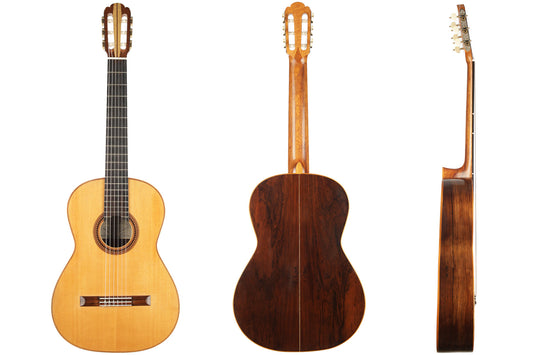
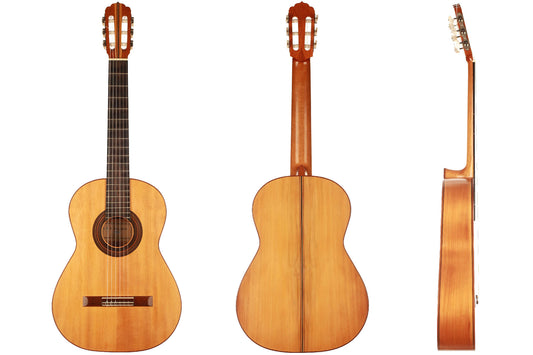
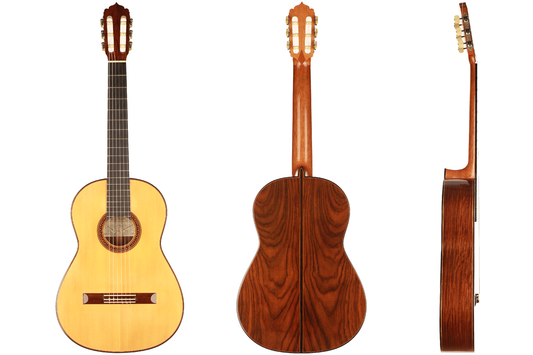
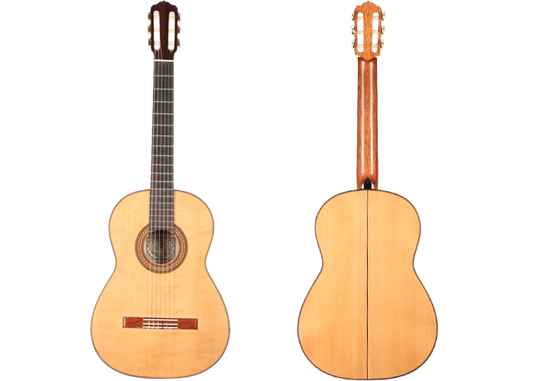
José Luis Romanillos is the luthier Julian Bream chose above all others — and one of the most profound scholars of Antonio de Torres, the 19th-century builder who established the foundations of the modern guitar. His instruments combine deep historical knowledge with exceptional craft. When a Romanillos comes to market, it does not stay available long.
-
Luthier: José Luis RomanillosConstruction Type: Traditional
-
Luthier: José Luis Romanillos
-
Luthier: José Luis Romanillos
-
Luthier: José Luis Romanillos
-
Luthier: José Luis Romanillos
-
Luthier: José Luis Romanillos
-
Luthier: José Luis Romanillos
-
Luthier: José Luis RomanillosLuthier: Seltene Gitarren
-
Luthier: José Luis RomanillosLuthier: Seltene Gitarren
-
Luthier: José Luis Romanillos
-
Luthier: José Luis Romanillos
-
Luthier: José Luis Romanillos
-
Luthier: José Luis Romanillos
-
Luthier: José Luis Romanillos
-
Luthier: José Luis Romanillos
-
Luthier: José Luis Romanillos
-
Luthier: José Luis Romanillos
-
Luthier: José Luis Romanillos
-
Luthier: José Luis Romanillos
-
Luthier: José Luis RomanillosLuthier: Rare GuitarsLuthier: Seltene Gitarren


























Ask us - right here.
Enrico, our AI team member, replies around the clock.
Instant reply · free · no obligation Rather use WhatsApp
Frequently Asked Questions About Classical Guitars
How do I choose the right classical guitar for my level?
Choosing the right classical guitar depends on your playing level, musical goals, and budget. Beginners benefit from studio-model guitars from renowned workshops, while advanced players and professionals often choose a handmade master guitar. We are happy to advise you personally and can send detailed sound samples and videos on request.
What is the difference between a master guitar and a studio guitar?
Master guitars are built entirely by hand in the workshop of a single luthier, using only high-quality, well-aged tonewoods. Studio guitars are made in small series, often under the supervision of the master luthier, and offer excellent value for students and ambitious amateur players.
Can I try a classical guitar at home for 14 days?
Yes — every guitar you purchase from us comes with a 14-day home approval period. This complimentary trial applies worldwide to all orders, whether you are in Germany, Europe, the USA, Asia or anywhere else. We ship your instrument fully insured in a high-quality case so you can play it under your own acoustic conditions. If the guitar is not the right one for you, simply send it back and receive a full refund of the purchase price.
Can I try a classical guitar before purchasing?
Absolutely. You are warmly invited to visit our showroom in Karlsruhe, Germany, and test the instruments at your leisure. We are happy to schedule a personal appointment. If a visit is not possible, we send detailed videos and sound samples, and offer extensive consultation by phone or video call.
What payment methods and financing options do you offer?
We accept bank transfer, PayPal, major credit cards, and Klarna. For high-value instruments, we offer individual installment plans on request. Please contact us directly — we will find a suitable solution for every budget.
How do I properly care for my classical guitar?
A classical guitar requires constant humidity between 45 and 55 percent. Store the instrument in its case with a humidifier, avoid direct sunlight and large temperature fluctuations. Change the strings regularly and clean the guitar with a soft microfiber cloth.
You may also be interested José Luis Romanillos
The story of José Luis Romanillos and Julian Bream is one of the great partnerships in the history of the classical guitar. Romanillos, a Spanish luthier who settled in England, and Bream, at the height of his powers as one of the 20th century's greatest guitarists — their collaboration produced instruments that defined how Bream sounded on his most celebrated recordings and brought the Romanillos name to international attention.
The Bream Connection
Romanillos moved to England in the 1950s, eventually settling in Wiltshire. Through the English guitar world, he came to the attention of Julian Bream — and a partnership developed that lasted for decades. Bream became Romanillos's primary customer and most prominent advocate, commissioning instruments and performing on them at the highest international level. The recordings Bream made on Romanillos guitars — his interpretations of Bach, the Romantic repertoire, 20th-century works — are among the most admired in the instrument's recorded history. For romanillos guitar buyers, this association with one of the greatest performers of the 20th century is part of what makes these instruments so sought after.
The Torres Scholar
What distinguishes Romanillos from virtually every other working luthier is the depth of his engagement with the instrument's history. His book Antonio de Torres, Guitar Maker — His Life and Work (1987) is the definitive study of the 19th-century Sevillian luthier who established the modern guitar's form — its fan bracing, its scale length, its body proportions. Romanillos spent years examining surviving Torres instruments, documenting their construction in detail, and applying that knowledge to his own making. The result is guitars that stand in a direct, informed relationship to the tradition's founding document. This is not nostalgia — it is the most serious possible engagement with what makes the classical guitar work.
What a Romanillos Guitar Sounds Like
The Torres influence is audible. Romanillos guitars have a singing, warm quality — close to the Granada school in character, though Romanillos worked outside any geographic school tradition. The tone is full and sustained, with excellent voice separation and a natural, unhurried quality to the attack. These are not loud, aggressive instruments. They are musical instruments in the deepest sense: designed to make music rather than to impress audiences with power.
Romanillos Guitars: Availability and Authentication
Romanillos built relatively few instruments across his career — his output was always limited by the attention he gave to each piece. Instruments on the secondary market come primarily from performers who commissioned them directly and are simplifying their collections, or from estates. Authentication is important: documentation of the original commission and delivery, provenance chain, and physical construction details all contribute to establishing authenticity.
Frequently Asked Questions
What is a Romanillos guitar worth?
Values vary with age, condition, and Bream provenance. Instruments known to have been played or owned by Julian Bream carry additional significance. Contact our team for current market guidance on specific instruments.
Is Liam Romanillos related to José Luis?
Yes — Liam Romanillos is the son of José Luis Romanillos, and himself a luthier of considerable standing. Instruments by both are represented in the classical guitar market.
Browse José Luis Romanillos Guitars
Every instrument fully documented and assessed. Worldwide insured shipping, expert consultation. Browse José Luis Romanillos guitars or speak to our team.