

Cedar
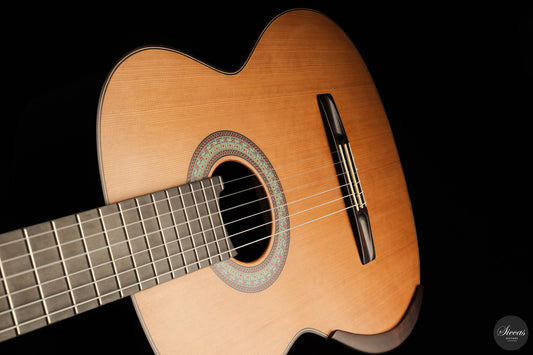
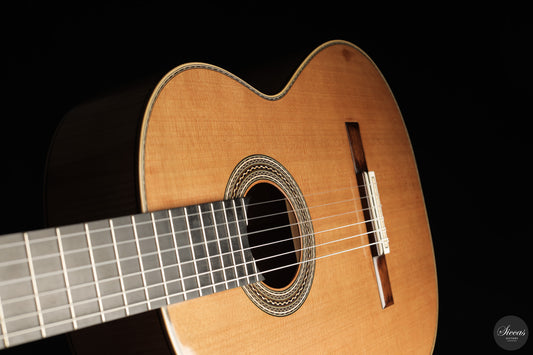
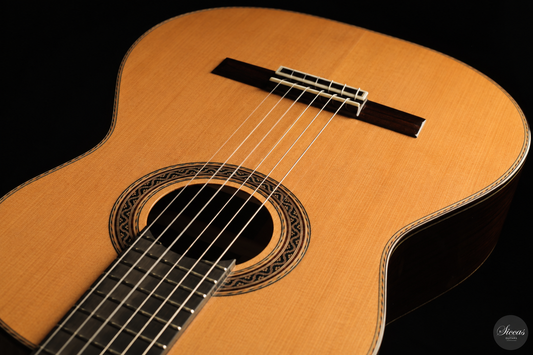
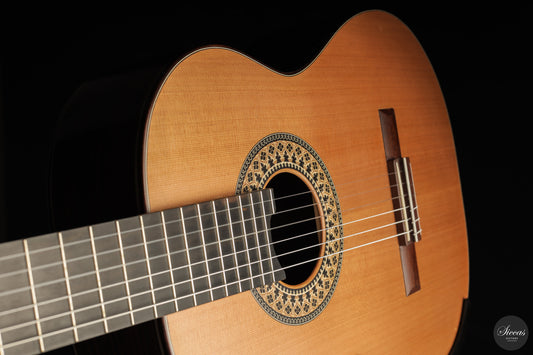
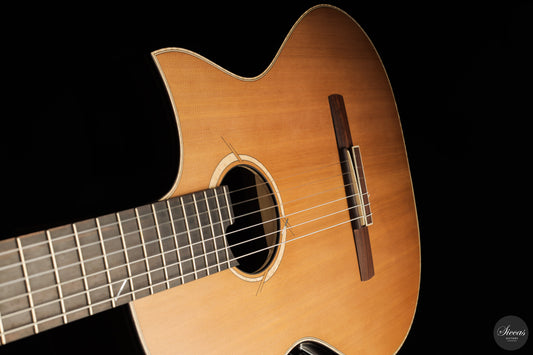
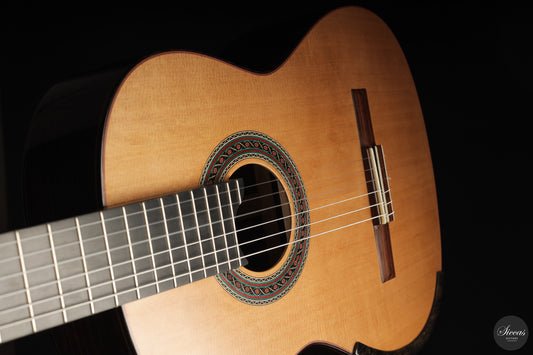
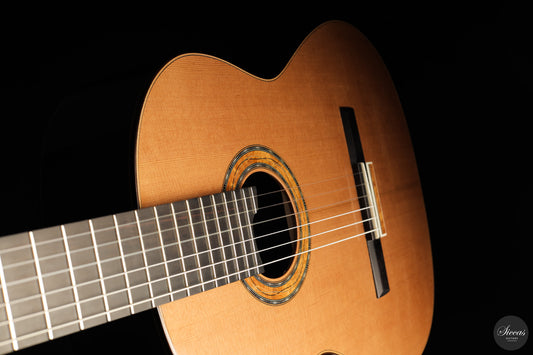
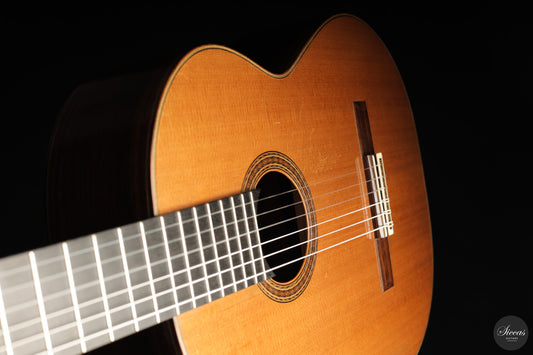
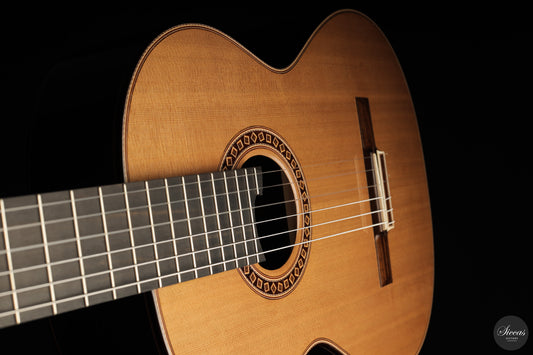
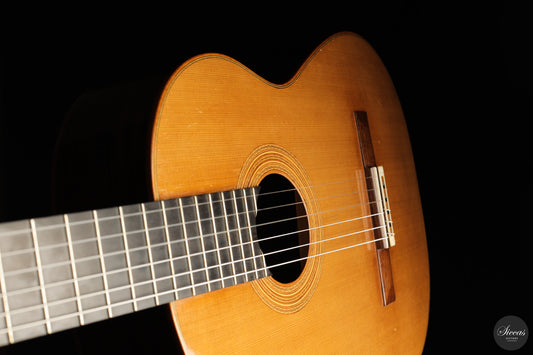
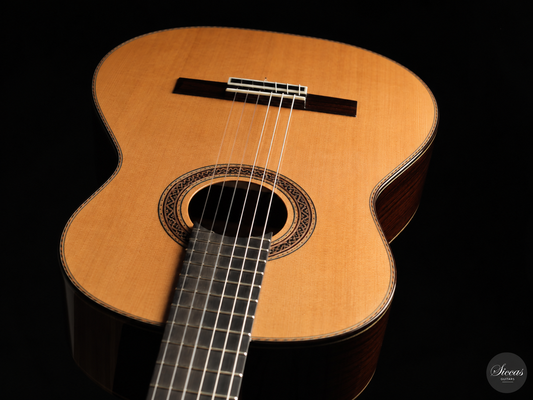
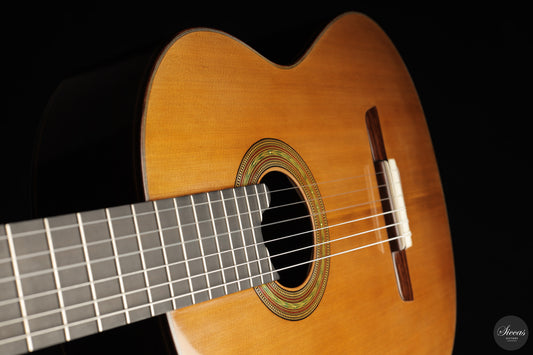
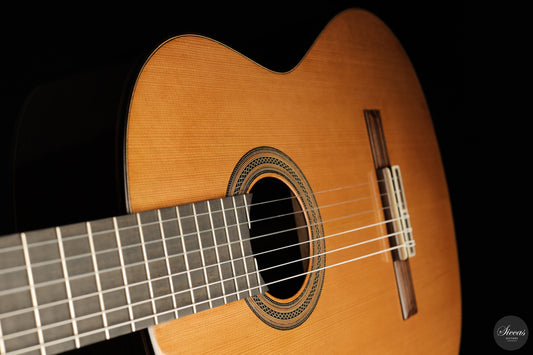
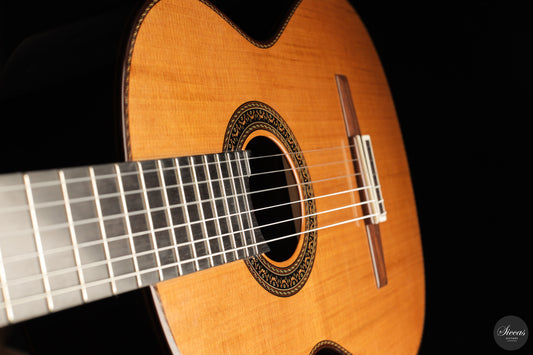
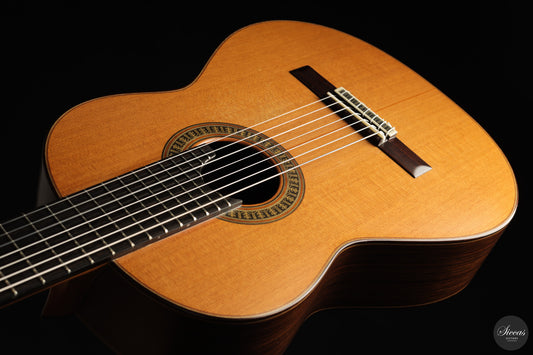
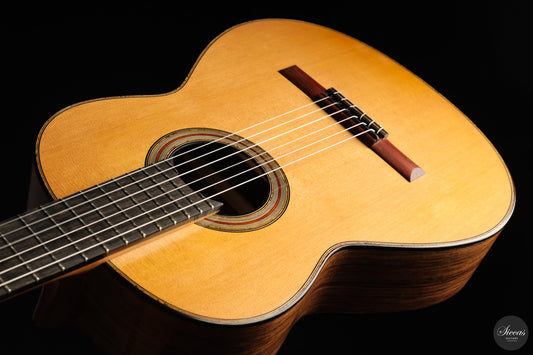
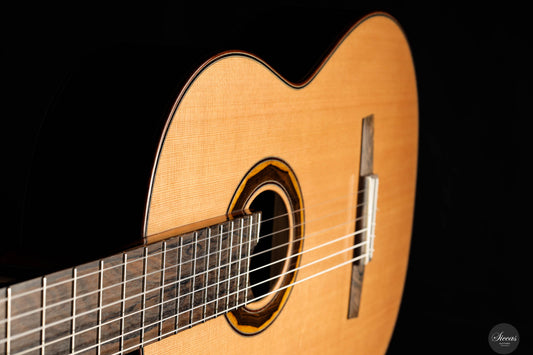
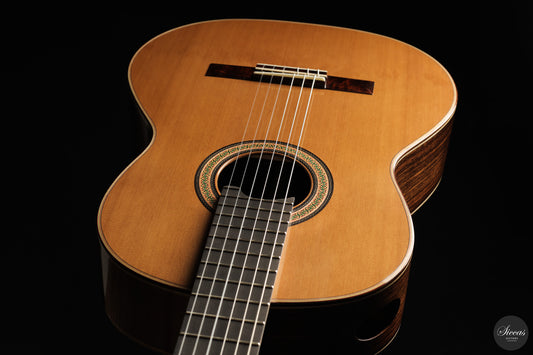
Cedar tops reward a lighter touch and deliver warmth from the very first note — no lengthy break-in, no forcing the sound. If your playing leans toward expressive, intimate, or Romantic repertoire, a cedar-top classical guitar will feel immediately at home. Every guitar in this collection filmed in a professional video review.

-
Fernando Mazza - 2025 20th Anniversary Model Doubletop
Price: 8.490 €Unit price per Tax free (0% DE)Luthier: Fernando MazzaConstruction Type: Double-Top Guitars -
ZUCALI - 2026 Shiva No. 2606 64 cm
Price: 9.990 €Unit price per Tax free (0% DE) -
Jose Marques - 2026 Lattice No. 127
Price: 6.490 €Unit price per Tax free (0% DE)Luthier: Jose MarquesConstruction Type: Lattice -
Maxwell T. Sipe - 2026 No. 125 Lattice 64 cm
Price: 6.990 €Unit price per Tax free (0% DE)Luthier: Maxwell T. SipeConstruction Type: Lattice -
Dominique Delarue - 2004 No. 263
Price: 6.990 €Unit price per Tax free (0% DE)Construction Type: Traditional -
Friederike Linscheid - 2026 Doubletop
Price on requestReservedLuthier: Friederike LinscheidConstruction Type: Double-Top Guitars -

 Reserved
Simon Marty - 2026 Classical Guitar
Price on requestReservedLuthier: Simon Marty -
Gerhard Oldiges - 1993
Price: 4.990 €Unit price per Tax free (0% DE)SoldLuthier: Gerhard OldigesConstruction Type: Traditional -

-

 Reserved
Karel Dedain - 2026 Concert No. 06
Price: 10.990 €Unit price per Tax free (0% DE)ReservedLuthier: Karel DedainConstruction Type: Traditional -
Siccas Luthiers - Halo Traditional Cedar 63 cm
Sale price 1.790 € Price:Unit price per Tax free (0% DE)1.990 €Save: 200 €Pre-OrderManufacturer: Siccas LuthiersManufacturer: Siccas LuthiersConstruction Type: TraditionalConstruction Type: Traditional -

 Pre-Order
Siccas Luthiers - Halo Traditional Cedar
Sale price 1.790 € Price:Unit price per Tax free (0% DE)1.990 €Save: 200 €Pre-OrderManufacturer: Siccas LuthiersManufacturer: Siccas LuthiersConstruction Type: TraditionalConstruction Type: Traditional -
Lorenzo Frignani - 2026 Classical Guitar No. 275
Price: 13.990 €Unit price per Tax free (0% DE)Luthier: Lorenzo Frignani -
Francisco Gil Romero - 2026
Price: 4.990 €Unit price per Tax free (0% DE)Luthier: Francisco Gil RomeroConstruction Type: Traditional -
Erez Matzrafi - 2026 "Thucea"
Price: 5.890 €Unit price per Tax free (0% DE)Sold -
Vicente Carrillo - 2026 Gabriela II - Cedar 63 cm
Sale price 5.590 € Price:Unit price per Tax free (0% DE)5.890 €Save: 300 €SoldLuthier: Vicente CarrilloConstruction Type: Double-Top Guitars -
Vicente Carrillo - 7-String "Yamandu Costa" - Concierto
Price: 4.990 €Unit price per Tax free (0% DE)Luthier: Vicente CarrilloConstruction Type: Traditional -
Michele Della Giustina - 2026 No. 445 Double-Top
Price: 8.990 €Unit price per Tax free (0% DE)ReservedLuthier: Michele Della GiustinaConstruction Type: Double-Top Guitars -
Armin Hanika - 1a DTL
Price: 10.490 €Unit price per Tax free (0% DE)Manufacturer: Armin Hanika -
Siccas Luthiers - Continuum Lattice Cedar
Price: 2.690 €Unit price per Tax free (0% DE)Manufacturer: Siccas LuthiersManufacturer: Siccas LuthiersConstruction Type: Lattice -
Siccas Luthiers - Continuum Lattice Cedar 64 cm
Price: 2.690 €Unit price per Tax free (0% DE)Manufacturer: Siccas LuthiersManufacturer: Siccas LuthiersConstruction Type: Lattice




















Ask us - right here.
Enrico, our AI team member, replies around the clock.
Instant reply · free · no obligation Rather use WhatsApp
Frequently Asked Questions About Classical Guitars
How do I choose the right classical guitar for my level?
Choosing the right classical guitar depends on your playing level, musical goals, and budget. Beginners benefit from studio-model guitars from renowned workshops, while advanced players and professionals often choose a handmade master guitar. We are happy to advise you personally and can send detailed sound samples and videos on request.
What is the difference between a master guitar and a studio guitar?
Master guitars are built entirely by hand in the workshop of a single luthier, using only high-quality, well-aged tonewoods. Studio guitars are made in small series, often under the supervision of the master luthier, and offer excellent value for students and ambitious amateur players.
Can I try a classical guitar at home for 14 days?
Yes — every guitar you purchase from us comes with a 14-day home approval period. This complimentary trial applies worldwide to all orders, whether you are in Germany, Europe, the USA, Asia or anywhere else. We ship your instrument fully insured in a high-quality case so you can play it under your own acoustic conditions. If the guitar is not the right one for you, simply send it back and receive a full refund of the purchase price.
Can I try a classical guitar before purchasing?
Absolutely. You are warmly invited to visit our showroom in Karlsruhe, Germany, and test the instruments at your leisure. We are happy to schedule a personal appointment. If a visit is not possible, we send detailed videos and sound samples, and offer extensive consultation by phone or video call.
What payment methods and financing options do you offer?
We accept bank transfer, PayPal, major credit cards, and Klarna. For high-value instruments, we offer individual installment plans on request. Please contact us directly — we will find a suitable solution for every budget.
How do I properly care for my classical guitar?
A classical guitar requires constant humidity between 45 and 55 percent. Store the instrument in its case with a humidifier, avoid direct sunlight and large temperature fluctuations. Change the strings regularly and clean the guitar with a soft microfiber cloth.
You may also be interested Cedar
Choosing a cedar top classical guitar is one of the most consequential decisions a guitarist makes. Cedar and spruce produce fundamentally different sounds — and the difference is immediately audible, even to beginners. This guide explains who benefits from a cedar top, what to expect from the sound, and which instruments in our collection represent the best value at each level.
What Cedar Actually Sounds Like
Cedar is warmer, darker, and more immediately responsive than spruce. It does not need weeks of playing before it opens up — a cedar-top guitar sounds full, rich, and complex from day one. The overtone spectrum is mid-forward: less brilliant treble sparkle than spruce, more depth and body in the midrange. Notes sustain well and blend easily, which is part of why cedar suits legato, lyrical playing so naturally.
The trade-off: cedar compresses at high dynamics more than spruce. Push a cedar guitar hard and you reach its ceiling faster. For players who need maximum projection in a 500-seat hall, spruce may serve better. For intimate recitals, recording, and the majority of classical and Romantic repertoire — cedar excels.
Cedar vs. Spruce: The Short Answer
| Cedar | Spruce | |
|---|---|---|
| First impression | Warm, full, immediate | Bright, clear, needs opening |
| Break-in time | Days to weeks | Months to years |
| Suits best | Romantic, impressionist, intimate | Baroque, concert projection, wide dynamics |
| Touch sensitivity | High — responds to subtle variations | Requires more force to fully open |
| Long-term development | Reaches plateau faster | Improves for decades |
For an in-depth audio comparison: Cedar vs. Spruce — Tone Comparison.
Who Should Choose Cedar
Cedar suits you if: your natural touch is on the lighter side and you want the guitar to reward that rather than fight it; you play primarily Romantic repertoire — Tárrega, Barrios, Ponce, Villa-Lobos; you perform in smaller venues or record frequently; or you want to hear the guitar's full voice now rather than in two years.
Cedar also suits beginners who are still developing finger strength — the lower resistance rewards a lighter touch with a fuller tone, which is genuinely encouraging in the early stages.
Cedar Guitars at Siccas: What We Film and Why
Every cedar-top guitar in our collection is filmed in a full professional video review — because cedar's warmth is something you need to hear, not read about. We film each instrument with world-class guitarists across multiple playing styles so you can evaluate projection, sustain, treble clarity, and bass response before committing. You can also request specific pieces to be played on any instrument before purchase.
Frequently Asked Questions
Is cedar better for beginners than spruce?
Often yes — cedar's immediate responsiveness means beginners hear a fuller, more rewarding tone at lighter playing force. It does not require the finger strength or dynamic precision that spruce rewards. That said, some teachers prefer spruce from the start to encourage proper technique development.
Does a cedar guitar sound good after 10 years?
Yes, though differently from spruce. Cedar's tonal plateau comes earlier — it sounds mature quickly and changes less dramatically over decades. A well-maintained cedar guitar from the 1970s or 80s can still sound exceptional; it just won't have the dramatic improvement story of a great spruce top played for 40 years.
Which luthiers use cedar?
Many of the world's greatest luthiers build with cedar, including Daniel Friederich, José Luis Romanillos, Antonio Marin Montero, and most of the Granada school. Cedar is especially prominent in Canadian and Japanese guitar making.
Browse Cedar Top Guitars
Every instrument is filmed, every purchase includes a 14-day home trial and worldwide insured shipping. Browse our full selection of cedar top classical guitars or contact our team — we'll help you find the right instrument for your playing.