

Domingo Esteso
-
Luthier: Domingo Esteso
-
Luthier: Domingo EstesoLuthier: Rare Guitars
-
Luthier: Domingo EstesoLuthier: Rare GuitarsLuthier: Seltene Gitarren
-
Luthier: Domingo Esteso
-
Luthier: Domingo Esteso
-
Luthier: Domingo Esteso
-
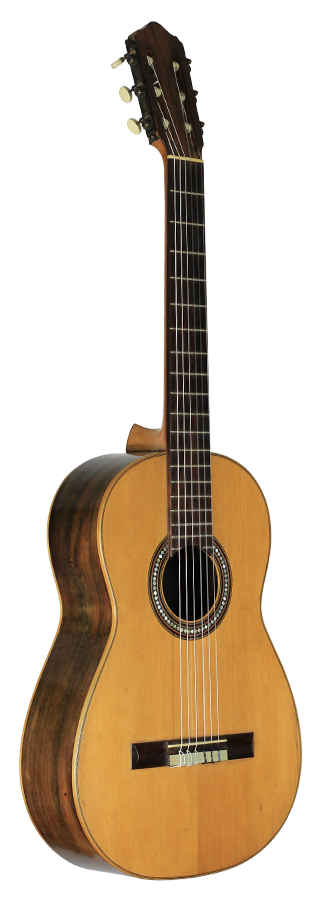
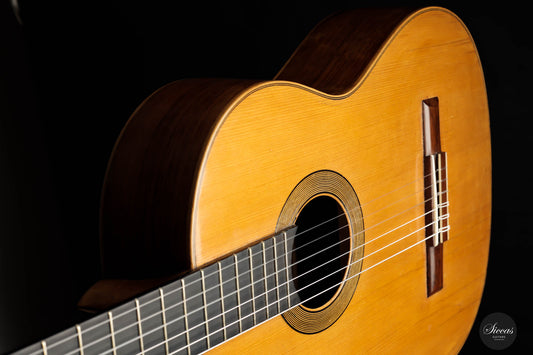
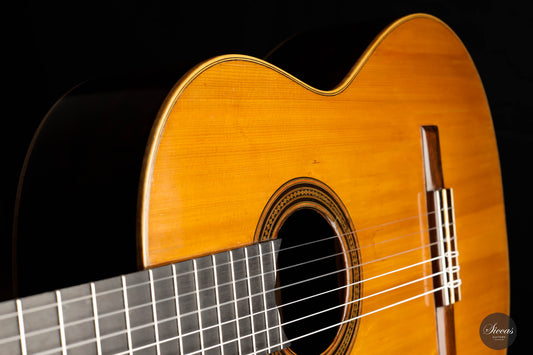
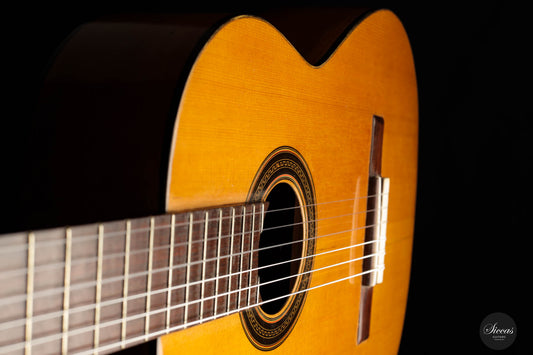
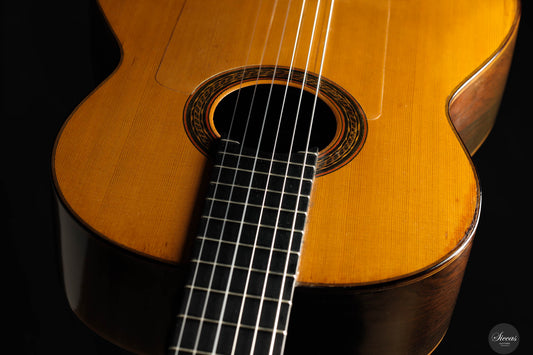
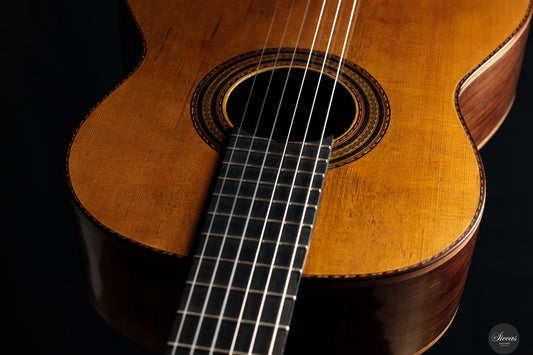
Domingo Esteso - 1937
Sale price 12.990 € Price:Unit price per Tax free (0% DE)15.990 €Save: 3.000 €SaleLuthier: Domingo EstesoConstruction Type: Traditional -
Luthier: Domingo Esteso







Ask us - right here.
Enrico, our AI team member, replies around the clock.
Instant reply · free · no obligation Rather use WhatsApp
Frequently Asked Questions About Classical Guitars
How do I choose the right classical guitar for my level?
Choosing the right classical guitar depends on your playing level, musical goals, and budget. Beginners benefit from studio-model guitars from renowned workshops, while advanced players and professionals often choose a handmade master guitar. We are happy to advise you personally and can send detailed sound samples and videos on request.
What is the difference between a master guitar and a studio guitar?
Master guitars are built entirely by hand in the workshop of a single luthier, using only high-quality, well-aged tonewoods. Studio guitars are made in small series, often under the supervision of the master luthier, and offer excellent value for students and ambitious amateur players.
Can I try a classical guitar at home for 14 days?
Yes — every guitar you purchase from us comes with a 14-day home approval period. This complimentary trial applies worldwide to all orders, whether you are in Germany, Europe, the USA, Asia or anywhere else. We ship your instrument fully insured in a high-quality case so you can play it under your own acoustic conditions. If the guitar is not the right one for you, simply send it back and receive a full refund of the purchase price.
Can I try a classical guitar before purchasing?
Absolutely. You are warmly invited to visit our showroom in Karlsruhe, Germany, and test the instruments at your leisure. We are happy to schedule a personal appointment. If a visit is not possible, we send detailed videos and sound samples, and offer extensive consultation by phone or video call.
What payment methods and financing options do you offer?
We accept bank transfer, PayPal, major credit cards, and Klarna. For high-value instruments, we offer individual installment plans on request. Please contact us directly — we will find a suitable solution for every budget.
How do I properly care for my classical guitar?
A classical guitar requires constant humidity between 45 and 55 percent. Store the instrument in its case with a humidifier, avoid direct sunlight and large temperature fluctuations. Change the strings regularly and clean the guitar with a soft microfiber cloth.
You may also be interested Domingo Esteso
Domingo Esteso (1882–1937) – Maestro Luthier
Domingo Esteso stands as a cornerstone of Spanish guitar-making tradition. His journey began as an apprentice in the workshop of Manuel Ramírez, and after Ramírez’s passing, he continued working under the guidance of the master’s widow, eventually placing his own name alongside Ramírez’s on the label.
Within the workshop, he collaborated with Santos Hernández and Enrique García, all three becoming distinguished heirs to the Ramírez legacy.
The guitars built during this period possess enduring qualities—both in their meticulous craftsmanship and their distinctive tonal character—that set them apart to this day.
Later, Domingo Esteso established his own workshop together with his wife, Nicolasa Salamanca, who expertly applied the lacquer finish. Located at Gavina Street No. 7, this period marks his most prolific phase, yielding instruments of exceptional beauty and flawless craftsmanship. Several of these guitars have fortunately survived and are now treasured as true artistic masterpieces.
Many of his instruments found homes outside Spain, particularly in Argentina (for which a special label for the Romero y Fernández house in Buenos Aires was produced). Due to Spain’s economic hardship at the time, a significant portion of his guitars was sold abroad despite their premium value.
In 1926, his nephew, Faustino Conde, joined the workshop, followed in 1929 by my father, Mariano Conde. This formed the foundation for the next chapter of the family tradition.
Under Domingo Esteso’s tutelage, they absorbed his techniques and mastery of Spanish guitar making. They remained with him until his passing in 1937, during the Spanish Civil War. A respiratory illness—worsened by drafts in the workshop and the absence of penicillin—sadly claimed his life. Production continued on a limited scale until 1939 due to the wartime circumstances.