





This guitar is sold – but we may have something similar.
Our experts know every guitar in the house and are happy to advise you personally.
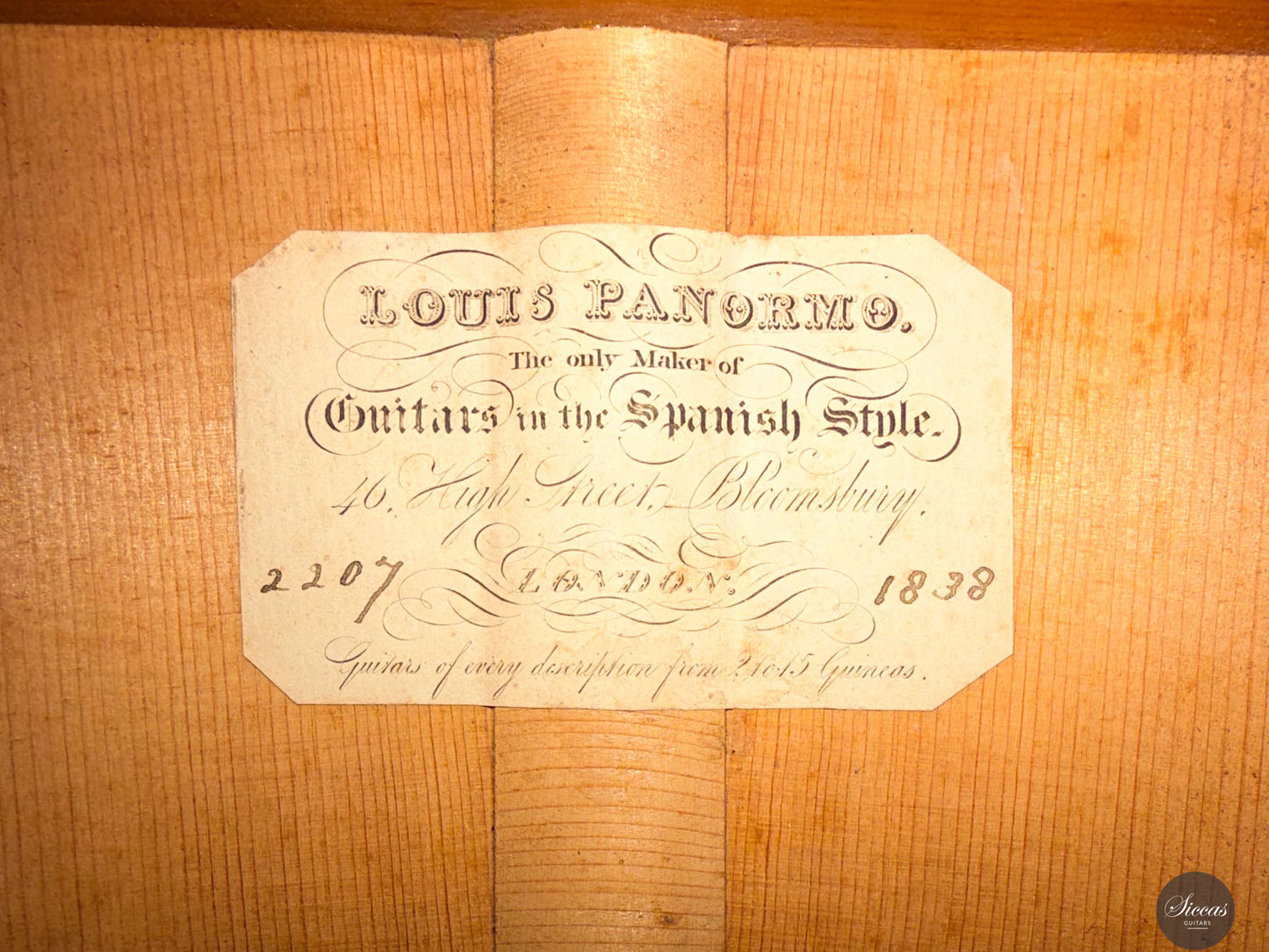
Ask about similar guitarsLouis Panormo - 1838 No. 2207 63 cm
Details
Details
Overview
Overview


Video overview


More details about the guitar
About the luthier
Louis Panormo was one of the most important guitar makers active in England during the first half of the nineteenth century. Born in Paris around 1784 into a family of instrument makers of Italian origin, he later settled in London where he established himself as a leading figure in the development of the early romantic guitar. Panormo worked during a period of rapid evolution in guitar design and is widely credited with introducing Spanish inspired fan bracing to instruments built in England. His work reflects a deep understanding of both French and Spanish traditions and played a decisive role in shaping the voice and construction of the romantic guitar.
Panormo’s guitars were admired for their refinement, structural intelligence and musical sensitivity. They were sought after by professional musicians and connoisseurs of his time and remain highly respected today for their historical importance and acoustic qualities. Surviving instruments are rare and provide invaluable insight into the transition from early nineteenth century guitar making toward the later Spanish school.
About the guitar
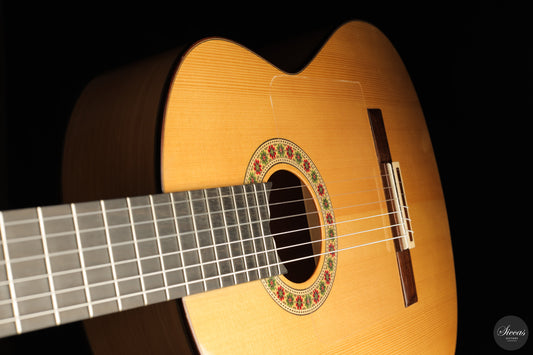
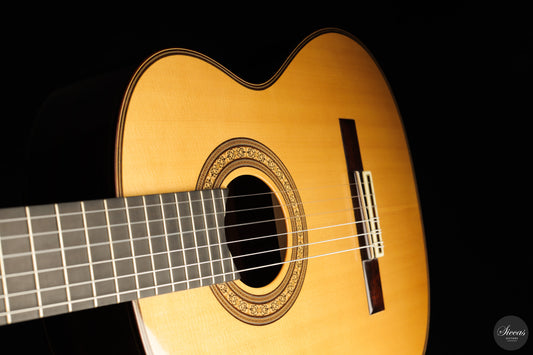
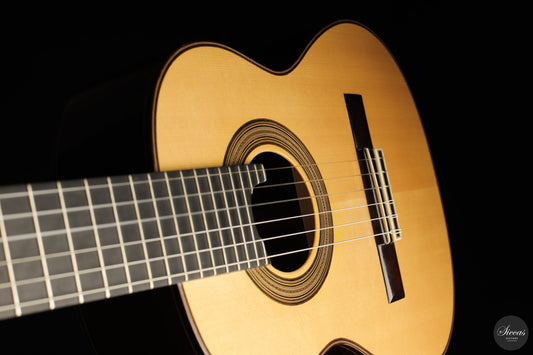
This guitar from 1838 is an exceptional example of Louis Panormo’s mature work and a rare surviving instrument from the golden age of romantic guitar making. It is traditionally constructed with a spruce top and Brazilian rosewood back and sides. The 630 millimetre scale and narrow nut reflect period practice and contribute to the intimate physical presence of the instrument. At just 1140 grams the guitar is remarkably light, underscoring the efficiency of its structure and the sensitivity of its response.
The sound is unmistakably romantic in character. The tone is soft, rounded and slightly nasal, with a calm and deeply soothing quality. Notes emerge gently and decay naturally, encouraging expressive phrasing rather than projection driven playing. The voice feels focused yet restrained, allowing simple melodic lines to carry emotional weight without effort. The guitar responds with clarity and precision while maintaining a dark and introspective colour. Its intonation remains stable and convincing, a remarkable achievement for an instrument of this age. Playing this guitar offers a direct connection to the musical language of the early nineteenth century and evokes a sense of stillness and concentration that is rarely encountered in modern instruments.
Condition
The guitar is in very good condition for its age. There are two cracks on the top which have been professionally repaired and are considered stable. The instrument shows signs of use and normal wear but remains structurally sound and fully functional.

While this one is sold, these are ready for you
-
Classical Guitars
The classical guitar, with its soft nylon strings and characteristic timbre, has become a symbol of chamber music, Spanish tradition, and concert repertoire. Its modern form was shaped by Antonio de Torres in the 19th century, setting the standard for the body, fan bracing, and the 65-centimeter scale length that are still used today. Instruments in this category open up a rich palette from the refined Romantic miniatures of Tárrega to the majestic concertos of Rodrigo. Here you will find guitars that preserve historical continuity and at the same time inspire new interpretations.Look all products of the collection -

 Reserved
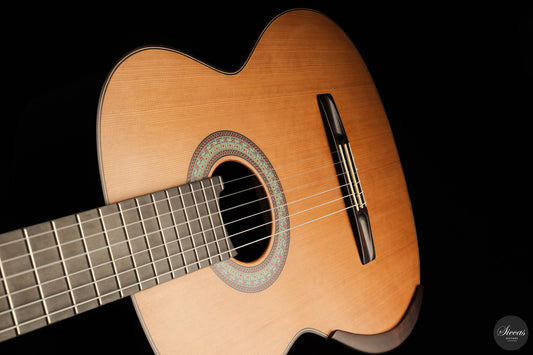
Simon Marty - 2026 Classical Guitar
Price on requestReservedLuthier: Simon Marty -
Gerhard Oldiges - 1993
Price: 4.990 €Unit price per Tax free (0% DE)Luthier: Gerhard OldigesConstruction Type: Traditional -

 Reserved
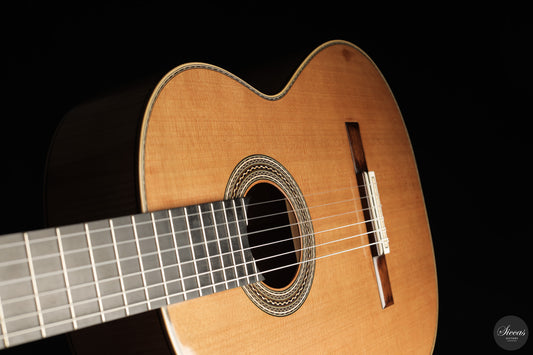
Karel Dedain - 2026 Concert No. 06
Price: 10.990 €Unit price per Tax free (0% DE)ReservedLuthier: Karel DedainConstruction Type: Traditional -
Siccas Luthiers - Halo Traditional Spruce 63 cm
Sale price 1.790 € Price:Unit price per Tax free (0% DE)1.990 €Save: 200 €Pre-OrderManufacturer: Siccas LuthiersManufacturer: Siccas LuthiersConstruction Type: TraditionalConstruction Type: Traditional -
Siccas Luthiers - Halo Traditional Spruce
Sale price 1.790 € Price:Unit price per Tax free (0% DE)1.990 €Save: 200 €Pre-OrderManufacturer: Siccas LuthiersManufacturer: Siccas LuthiersConstruction Type: TraditionalConstruction Type: Traditional -
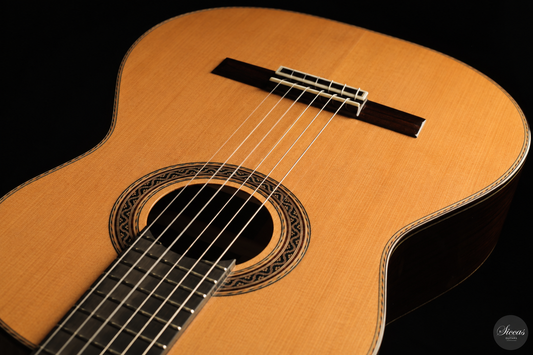
Siccas Luthiers - Halo Traditional Cedar 63 cm
Sale price 1.790 € Price:Unit price per Tax free (0% DE)1.990 €Save: 200 €Pre-OrderManufacturer: Siccas LuthiersManufacturer: Siccas LuthiersConstruction Type: TraditionalConstruction Type: Traditional -

 Pre-Order
Siccas Luthiers - Halo Traditional Cedar
Sale price 1.790 € Price:Unit price per Tax free (0% DE)1.990 €Save: 200 €Pre-OrderManufacturer: Siccas LuthiersManufacturer: Siccas LuthiersConstruction Type: TraditionalConstruction Type: Traditional -
Fernando Moreno - 2019 "Rastrojo"
Price: 3.490 €Unit price per Tax free (0% DE)Construction Type: Flamenco -
Dieter Hense - 1989 "Terz" 82/109 57 cm
Price: 4.190 €Unit price per Tax free (0% DE)Construction Type: Traditional -
Dieter Hense - 1989 "Oktav " 81/109 39 cm
Price: 2.990 €Unit price per Tax free (0% DE)Construction Type: Traditional


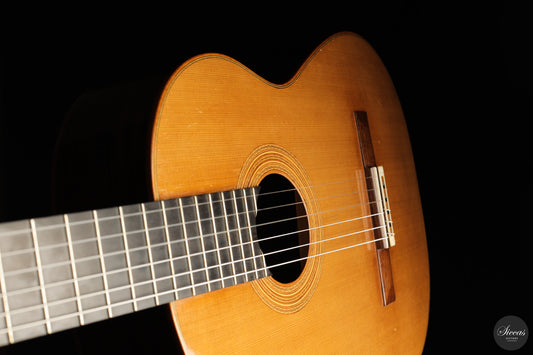


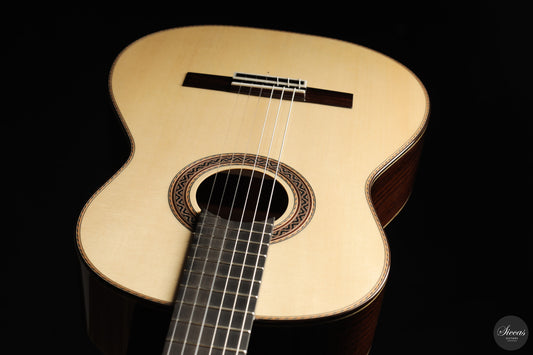

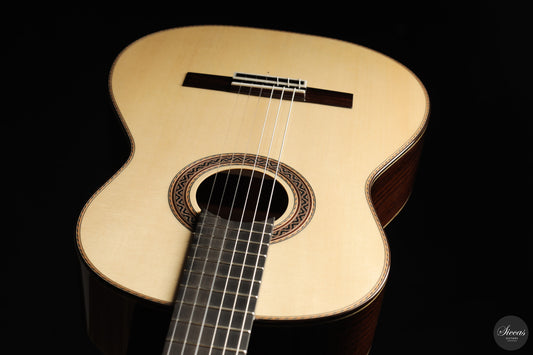

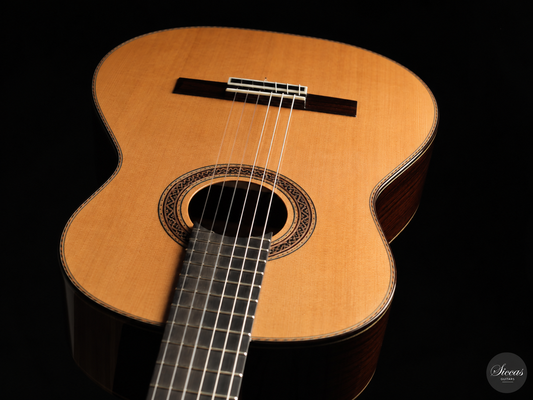






Related guitars
Frequently Asked Questions About Classical Guitars
How do I choose the right classical guitar for my level?
Choosing the right classical guitar depends on your playing level, musical goals, and budget. Beginners benefit from studio-model guitars from renowned workshops, while advanced players and professionals often choose a handmade master guitar. We are happy to advise you personally and can send detailed sound samples and videos on request.
What is the difference between a master guitar and a studio guitar?
Master guitars are built entirely by hand in the workshop of a single luthier, using only high-quality, well-aged tonewoods. Studio guitars are made in small series, often under the supervision of the master luthier, and offer excellent value for students and ambitious amateur players.
Can I try a classical guitar at home for 14 days?
Yes — every guitar you purchase from us comes with a 14-day home approval period. This complimentary trial applies worldwide to all orders, whether you are in Germany, Europe, the USA, Asia or anywhere else. We ship your instrument fully insured in a high-quality case so you can play it under your own acoustic conditions. If the guitar is not the right one for you, simply send it back and receive a full refund of the purchase price.
Can I try a classical guitar before purchasing?
Absolutely. You are warmly invited to visit our showroom in Karlsruhe, Germany, and test the instruments at your leisure. We are happy to schedule a personal appointment. If a visit is not possible, we send detailed videos and sound samples, and offer extensive consultation by phone or video call.
What payment methods and financing options do you offer?
We accept bank transfer, PayPal, major credit cards, and Klarna. For high-value instruments, we offer individual installment plans on request. Please contact us directly — we will find a suitable solution for every budget.
How do I properly care for my classical guitar?
A classical guitar requires constant humidity between 45 and 55 percent. Store the instrument in its case with a humidifier, avoid direct sunlight and large temperature fluctuations. Change the strings regularly and clean the guitar with a soft microfiber cloth.