Early Path to Guitar Making
Walter Verreydt built his first instruments in 1985. As a woodworking teacher and passionate music enthusiast, it was a natural step for him to explore the construction of musical instruments. His fascination with the sound of the classical guitar soon became the driving force behind his dedication to lutherie.
Influences and Craftsmanship
From the beginning, he had the opportunity to study instruments by renowned makers such as Bouchet, Fleta and Hernandez-Aguado. He also maintained valuable contacts with eminent luthiers including Daniel Friedrich and José Romanillos, which provided a rich foundation of knowledge. During his time in Granada he became acquainted with the elegant and refined South-Spanish guitar-making tradition, which continues to influence his aesthetic and structural approach.
Teaching and Philosophy
Since 1988 Walter has taught classical guitar making at the Centrum voor Muziekinstrumentenbouw in Puurs (Belgium). Alongside the technical foundations, he encourages students to develop sensitivity for the instrument and respect for the craftsmanship involved.
Construction and Materials
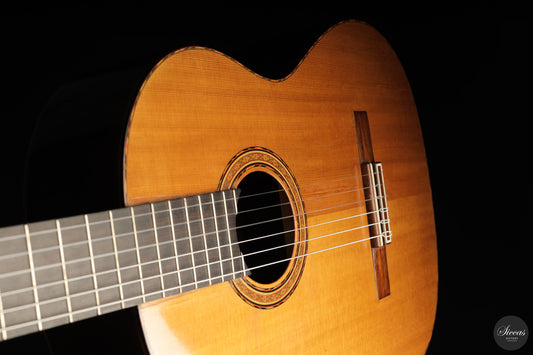
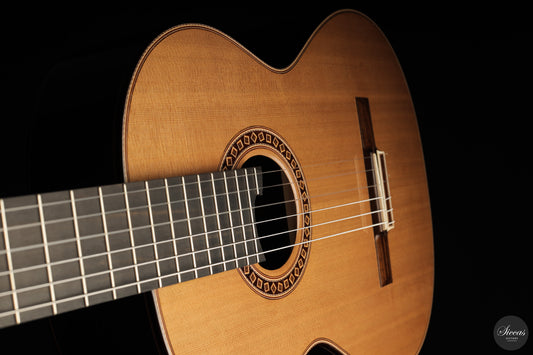
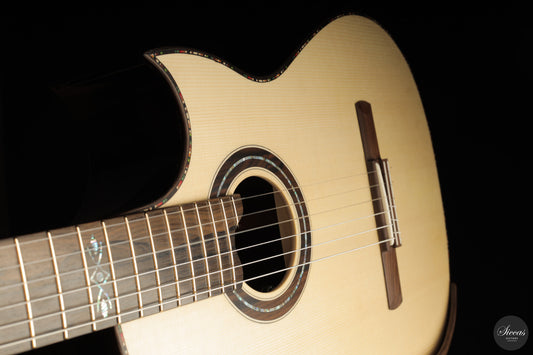
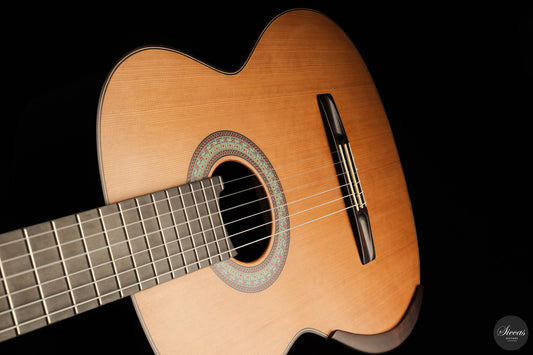
Each guitar is handmade in the Spanish tradition and reflects ongoing personal development and continuous study. For this reason, details such as the head shape or subtle variations in the body outline may differ from instrument to instrument.
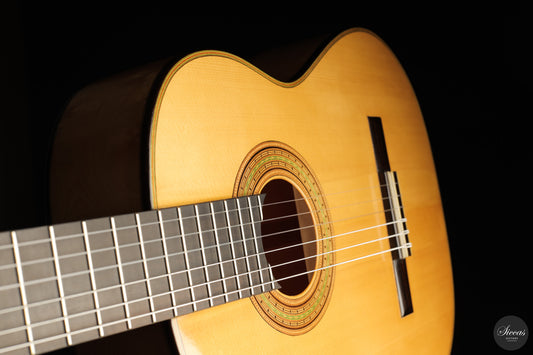
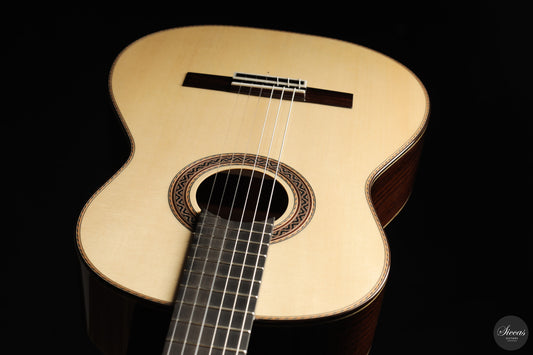
All guitars are built using carefully selected tonewoods that have been aged under optimal conditions for more than ten years. The rosettes are individually designed and crafted in small quantities from boxwood, ebony, maple, mahogany, rosewood and various fruit woods.
Specifications
Standard string length: 650 mm (other lengths available on request)
Machine heads: Irvin Sloane (alternatives available on request)
Choice of woods:
Top: European spruce, Western Red Cedar, Sitka spruce
Back and sides: Rosewood, European maple, Cypress
Neck: Cedar
The Craft
Classical guitar construction at concert level demands years of accumulated knowledge: how individual pieces of timber vibrate, how bracing patterns affect tonal balance, how small changes in geometry shift the character of an instrument. A finished concert guitar typically represents several hundred hours of hand work. Every decision — wood selection, arch height, brace dimensions — shapes what a player can do with the finished instrument.