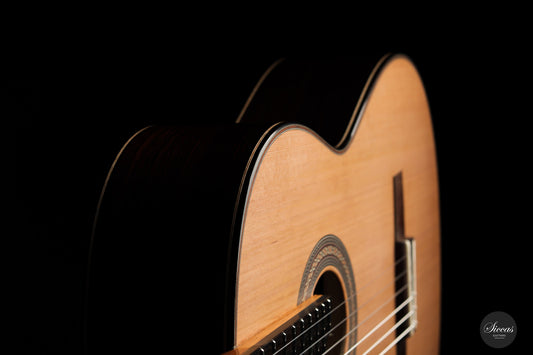
Armin Hanika

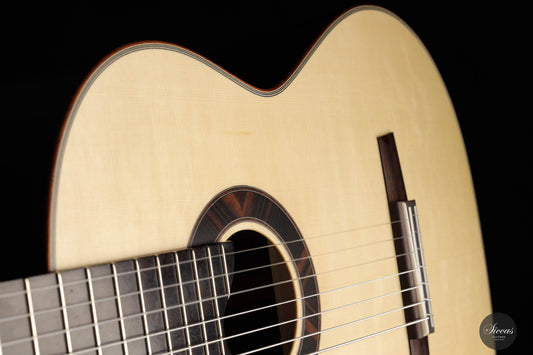
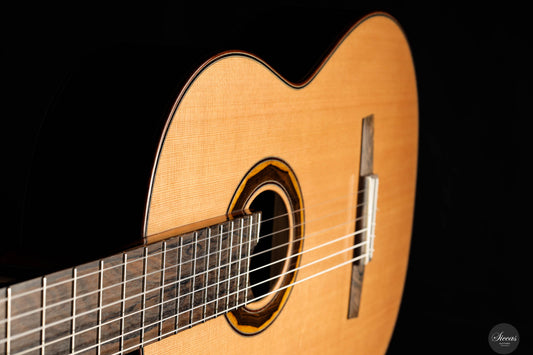
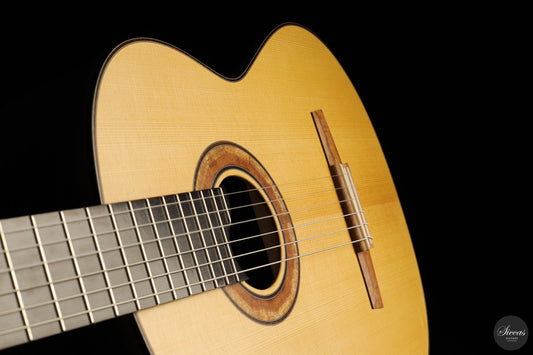
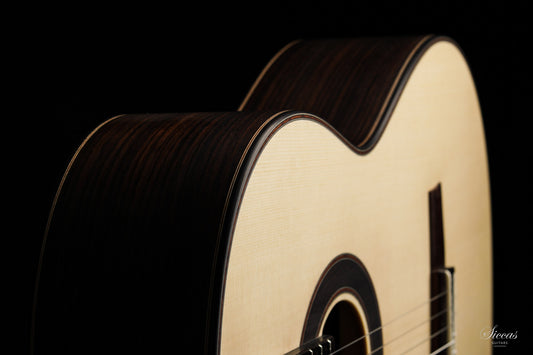
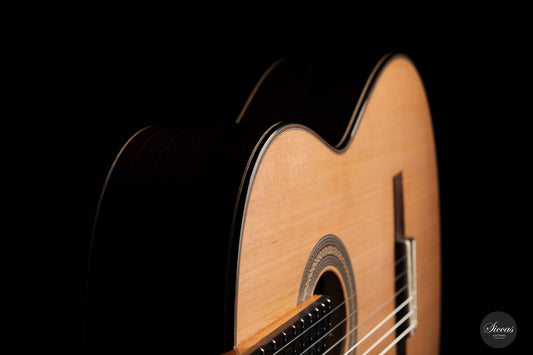
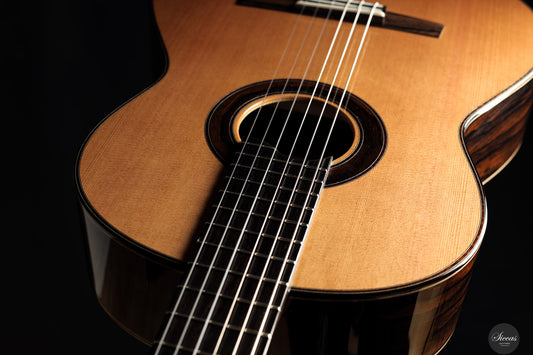
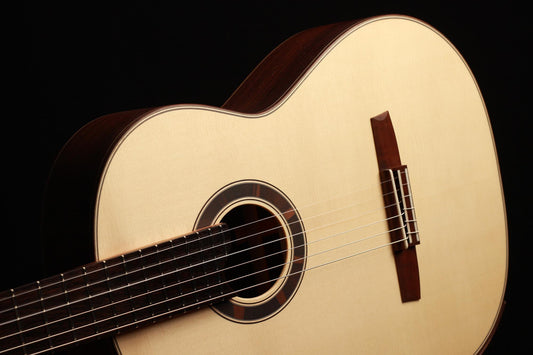
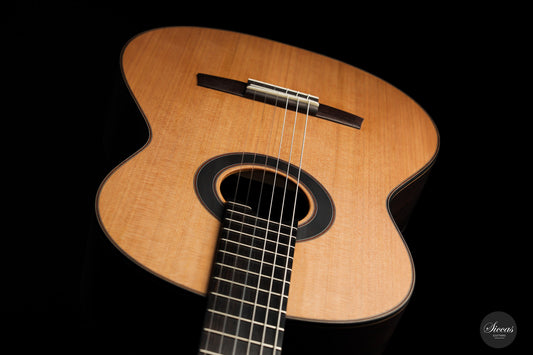
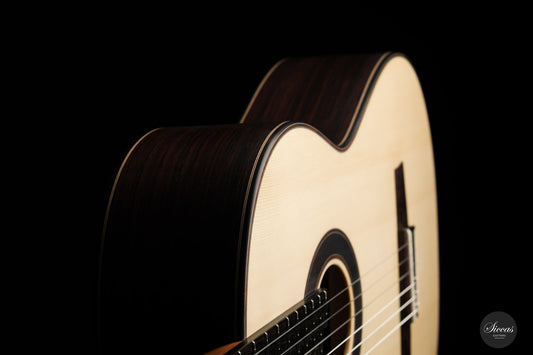
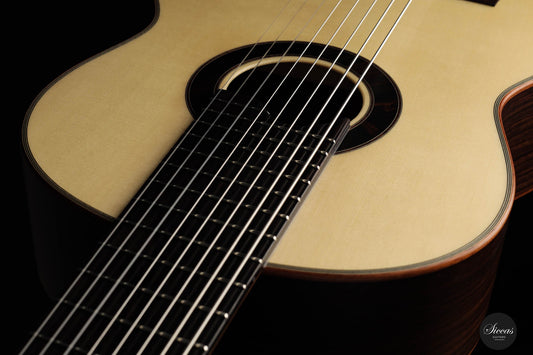
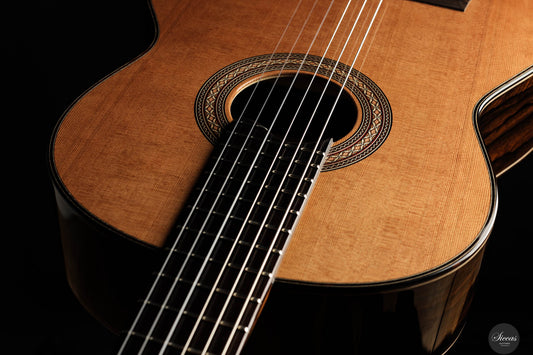
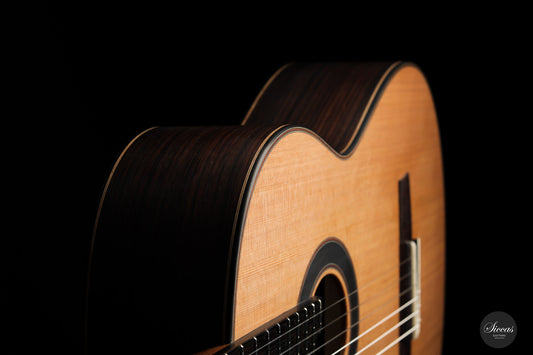
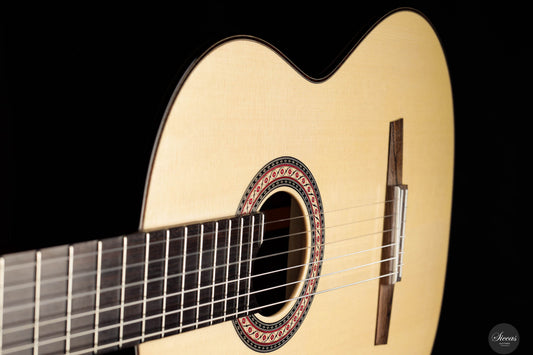
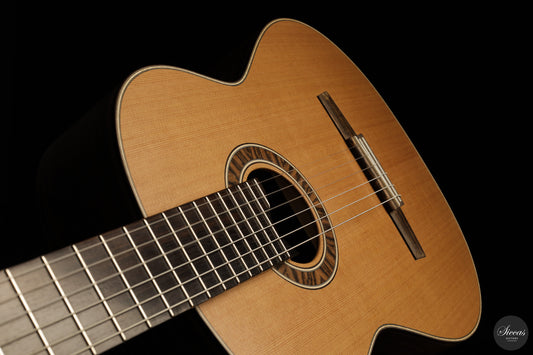
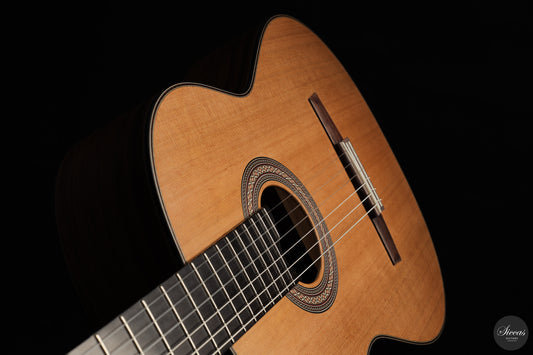
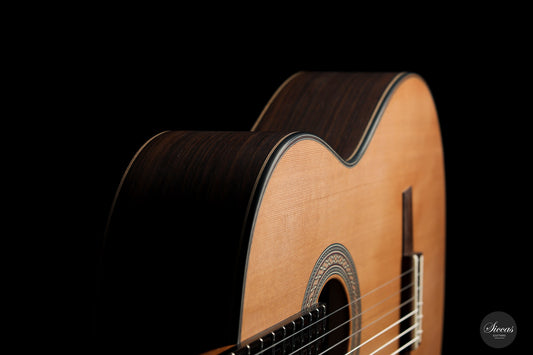
Hanika classical guitars combine German precision manufacturing with Spanish construction principles, built in Baiersdorf, Bavaria. From the traditional Natural Torres to the projecting PC lattice and lightweight DTL double-top series, each instrument is filmed in full at Siccas. Every guitar comes with a 14-day trial period.
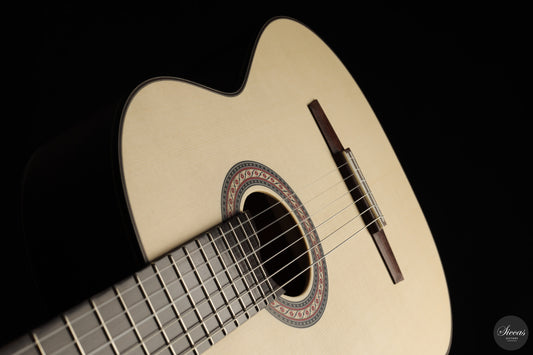
Armin Hanika

Frequently Asked Questions About Classical Guitars

How do I choose the right classical guitar for my level?

Choosing the right classical guitar depends on your playing level, musical goals, and budget. Beginners benefit from studio-model guitars from renowned workshops, while advanced players and professionals often choose a handmade master guitar. We are happy to advise you personally and can send detailed sound samples and videos on request.

What is the difference between a master guitar and a studio guitar?

Master guitars are built entirely by hand in the workshop of a single luthier, using only high-quality, well-aged tonewoods. Studio guitars are made in small series, often under the supervision of the master luthier, and offer excellent value for students and ambitious amateur players.

Can I try a classical guitar at home for 14 days?

Yes — every guitar you purchase from us comes with a 14-day home approval period. This complimentary trial applies worldwide to all orders, whether you are in Germany, Europe, the USA, Asia or anywhere else. We ship your instrument fully insured in a high-quality case so you can play it under your own acoustic conditions. If the guitar is not the right one for you, simply send it back and receive a full refund of the purchase price.

Can I try a classical guitar before purchasing?

Absolutely. You are warmly invited to visit our showroom in Karlsruhe, Germany, and test the instruments at your leisure. We are happy to schedule a personal appointment. If a visit is not possible, we send detailed videos and sound samples, and offer extensive consultation by phone or video call.

What payment methods and financing options do you offer?

We accept bank transfer, PayPal, major credit cards, and Klarna. For high-value instruments, we offer individual installment plans on request. Please contact us directly — we will find a suitable solution for every budget.

How do I properly care for my classical guitar?

A classical guitar requires constant humidity between 45 and 55 percent. Store the instrument in its case with a humidifier, avoid direct sunlight and large temperature fluctuations. Change the strings regularly and clean the guitar with a soft microfiber cloth.

You may also be interested Armin Hanika

## Hanika Classical Guitars — German Precision Meets Spanish Tradition When Josef Hanika established his guitar workshop in Baiersdorf, Bavaria, he set out to prove that the classical guitar could be built with German craftsman discipline without sacrificing the warmth and soul of the Spanish tradition. His son Armin Hanika carried that mission forward, and today the name Hanika stands as one of the most respected in European classical guitar making. At Siccas Guitars, every Hanika we carry is filmed in full so you can hear exactly what you are buying before a single string is touched. ### A Family Workshop in Bavaria Baiersdorf is a small town in the Franconian region of Bavaria, not far from Nuremberg. It is not a place most concert-goers would associate with classical guitars, yet for decades the Hanika workshop has been producing instruments that hold their own on professional stages worldwide. What makes the story compelling is the continuity: a father who built guitars with meticulous attention to tolerances and joinery, and a son who absorbed those standards while also studying the Spanish luthier tradition that defines the instrument's historical character. That combination — Central European engineering culture applied to a form whose roots lie in nineteenth-century Spain — gives Hanika guitars a distinctive identity. The workshop remains small by choice. This is not a factory operation. Each guitar passes through the hands of the same craftspeople across its entire build, which means the person fitting the neck is aware of decisions made at the soundboard graduation stage. In an era where even mid-range instruments are increasingly assembled from components produced in separate facilities, that coherence matters. ### The Model Range Hanika organises its production around several clearly defined series, each addressing a different player profile and tonal philosophy. #### Natural Torres The Natural Torres series looks directly to Antonio de Torres Jurado, the nineteenth-century Spanish maker whose fan-bracing patterns and proportions became the template for the modern classical guitar. Hanika's interpretation uses traditional construction techniques and tonewoods, aiming for instruments that reward players who want an authentic connection to the historical sound. The Natural Torres is not a museum piece, however. It is built to be played, and its voice — warm in the bass, clear and singing in the treble — suits repertoire from the Baroque through the Romantic periods as well as contemporary pieces that benefit from tonal richness over projection. #### HE Series (Handmade) The HE designation marks Hanika's handmade tier, where individual attention to each instrument increases and the tonal character can vary more meaningfully from one guitar to the next. This is the range for players who want a professional instrument without stepping into the bespoke commission process. Top wood choices and bracing refinements at this level start to open up a more complex response — sustain lengthens, dynamic range widens, and the guitar begins to reward expressive nuance in the right hand. #### PC Series (Lattice) The PC series introduces lattice bracing, a system developed in the late twentieth century that replaces the traditional fan-brace arrangement with a grid pattern, typically in combination with a lightweight composite or high-stiffness top. The result is a guitar with notably higher projection and a focused, even response across the full frequency range. PC series guitars are well suited to players who perform in larger venues or who work in amplified contexts where a clear, consistent signal matters. They also appeal to players coming from a steel-string background who want a classical guitar with a more immediate, assertive voice. #### DTL Series (Double Top) Hanika's DTL instruments use double-top construction, a technique in which two thin layers of tonewood — typically cedar or spruce — sandwich a core of Nomex honeycomb material. The resulting soundboard is exceptionally light for its stiffness, which allows it to respond to the lightest touch while still producing substantial volume. Double-top guitars have become a preferred choice among many touring professionals precisely because they cover dynamic extremes so effectively. If you are exploring this technology, the [double-top guitar collection](/collections/double-top-guitars) at Siccas gives useful context for how different makers approach the same principle. #### KF Series (Flamenco) The KF series is Hanika's answer to the flamenco guitar. Flamenco construction differs from classical in several meaningful ways — lower action, a more percussive attack, less sustain by design, and typically cypress back and sides in the blanca tradition. The KF instruments carry the same manufacturing discipline as the rest of the range while being voiced for golpe and rasgueo technique. Players curious about how flamenco guitars differ from their classical counterparts will find the [flamenco guitar collection](/collections/flamenco-guitars) a useful reference point. ### Tonewoods and Sound Character Across the range, Hanika works with both spruce and cedar tops. Spruce tends to produce a brighter, more articulate sound with a longer break-in period — it often sounds better the more it is played. Cedar responds more immediately and with a warmer initial character, which many players find rewarding from the first session. The choice between these two materials is one of the most discussed topics in the classical guitar world, and Siccas has published a detailed comparison at [spruce vs cedar](/blogs/stories/spruce-vs-cedar-classical-guitars-tone-comparison) if you want to work through the question systematically before making a decision. Back and sides on Hanika guitars span rosewood, maple, and cypress depending on the series and price point. Each combination brings its own contribution to the tonal envelope, and the filmed demos on each product page are specifically designed to let you hear those differences in a consistent recording environment. ### Why Buy a Hanika Through Siccas Guitars Siccas Guitars selects instruments individually. When a Hanika arrives at our warehouse, it is tuned, played in, and filmed in full before it goes online. You are not buying a specification — you are buying the specific guitar in the video. That matters more than it might seem: even within a single production run, instruments vary, and the one you hear is the one you receive. Every purchase includes a 14-day trial period. If the guitar does not suit you after living with it, you can return it. We ship with full insurance and secure packaging, and our team is available to answer technical questions before and after purchase. If you are new to the classical guitar entirely, the [classical guitar collection overview](/collections/classical-guitars) is a good place to orient yourself before narrowing to a specific maker. For players who already have strong opinions about top material, the [spruce collection](/collections/spruce) and [cedar collection](/collections/cedar) allow you to filter by that variable directly. ### FAQ **Are Hanika guitars suitable for beginners?** Most of the Hanika range is aimed at intermediate to advanced players. The craftsmanship and materials used position these as serious instruments rather than starter guitars. A player returning to the instrument after years away, or a student moving past entry-level equipment, would be a strong fit. **Which Hanika model is best for concert performance?** The PC (lattice) and DTL (double-top) series are most often chosen for performance contexts where projection and consistency across the dynamic range matter. The HE handmade series is also used professionally by players who prefer a more traditional voice. **How does Hanika compare to Spanish makers?** The comparison is less about quality than character. Spanish makers working in Granada or Madrid carry a specific living tradition and often a more variable, handmade personality in each instrument. Hanika brings German manufacturing discipline to bear on the same form, which means tighter tolerances and more consistency across a series, while still being built by hand in a small workshop. **What is the difference between the Torres and HE series?** The Natural Torres is aimed at players who want a historically informed sound — warm, rounded, and rooted in the nineteenth-century tradition. The HE series moves toward a more contemporary professional profile with expanded dynamic range and more complex overtone content. **Can I try a Hanika guitar before committing?** Yes. Every Hanika at Siccas comes with a 14-day trial period. Watch the full video, read the description, and if anything is unclear contact us before ordering. We are here to help you find the right instrument, not simply to process a transaction.