
Alexandra Whittingham at Siccas Guitars
Alexandra Whittingham is one of the most prominent classical guitarists to have emerged from the United Kingdom in recent years. Her playing is distinguished by technical precision, clarity of tone, and a musical intelligence that has made her performances widely followed — both in concert halls and on digital platforms. Her visit to Siccas Guitars produced a session that captures these qualities in an intimate setting, built around a carefully chosen piece and a remarkable instrument.
Alexandra Whittingham: Artist Profile
Alexandra Whittingham has established herself as a distinctive voice in classical guitar. Her performances are known for their structural clarity and expressive control, with an emphasis on phrasing and tonal differentiation rather than surface brilliance. She appears courtesy of Decca Classics, one of the most established labels in classical recording, which reflects the recognition she has received within the broader classical music world.
Her visibility on YouTube has played a significant role in bringing classical guitar to wider audiences. Across her recordings, she consistently demonstrates how the guitar can be both a lyrical and rhythmically precise instrument. Her work with the repertoire ranges across different eras and styles, and she brings a considered approach to each piece she performs. For listeners interested in the range of artists working in classical guitar today, her recordings offer a reliable point of reference. You can explore further profiles in our overview of great classical guitarists.
Ernest Shand: Varsovie Mazurka
For her session at Siccas Guitars, Alexandra Whittingham chose to perform Varsovie Mazurka by Ernest Shand. Ernest Shand (1868–1924) was a British guitarist and composer who was active during the late nineteenth and early twentieth centuries. He was associated with the revival of classical guitar in England and composed a body of works for the instrument that remain part of the specialist repertoire today.
The mazurka is a Polish dance form with a characteristic rhythmic profile: a triple meter with emphasis typically placed on the second or third beat, giving it a lilting, propulsive quality distinct from a waltz. The Varsovie Mazurka — its title referencing Warsaw — employs these rhythmic characteristics while embedding them within an idiomatic guitar texture. The piece calls for careful balance between rhythmic energy and melodic shaping, requiring the performer to hold the dance impulse without losing the lyrical thread.
Alexandra Whittingham's interpretation places emphasis on articulation and touch. Subtle variations in dynamic weight and timing allow the rhythmic character of the mazurka to emerge naturally, while the melodic lines are given space to breathe. The result is a performance that feels both directed and unhurried, attentive to the internal logic of the piece.
The Instrument: Siccas Luthiers Doubletop Triptych
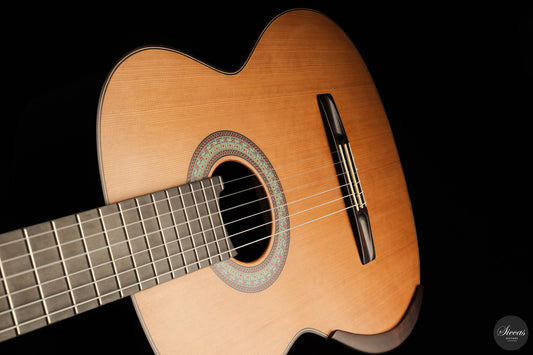
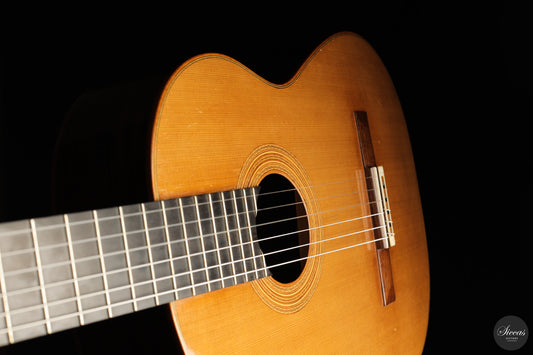
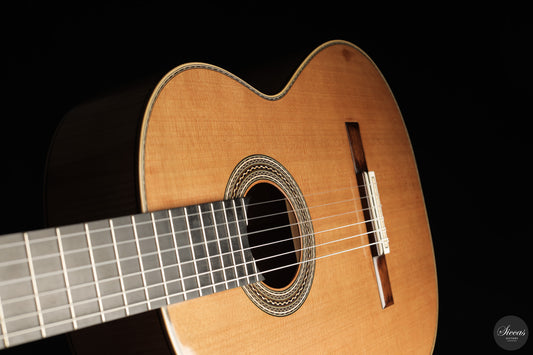
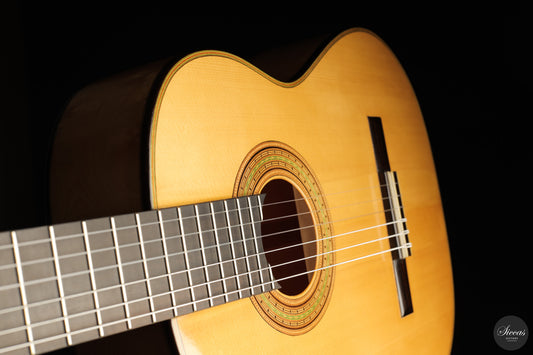
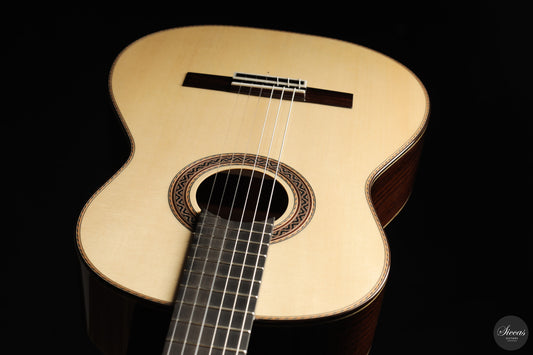
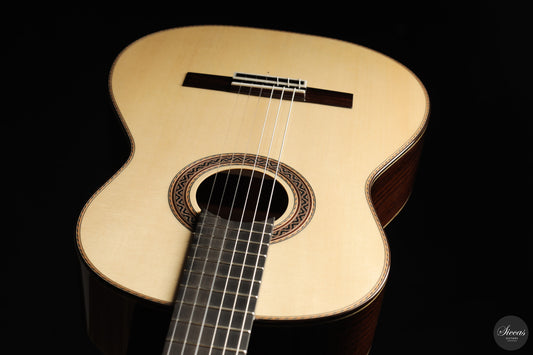
Alexandra Whittingham performs on a Siccas Luthiers Doubletop Triptych for this recording. The double-top construction — using a composite top material sandwiched between two thin layers of traditional tonewoods — is designed to combine the acoustic responsiveness of a lightweight top with enhanced projection and sustain. This construction approach produces an even response across the dynamic range, from softly played passages to more assertive articulations.
For a piece like the Varsovie Mazurka, these qualities are well-suited to the demands of the music. The rhythmic differentiation that the mazurka requires — the careful placement of accents, the slight variations in touch that define the dance — benefits from an instrument that responds clearly to changes in attack without losing tonal clarity. The separation of voices in the double-top construction also supports the interplay between melodic and bass lines that runs through the piece.
If you are interested in exploring double-top guitars further, our double-top guitar collection brings together a range of instruments built using this approach. For a broader view of the instruments available, the full classical guitar collection at Siccas Guitars offers a wide selection across different luthiers and tonewoods.
Recorded at Siccas Guitars
The session was recorded at Siccas Guitars, where the recording environment is designed to capture the acoustic character of each instrument directly and without distraction. The space is used regularly for artist visits, producing recordings that place the relationship between performer and instrument at the centre of the listening experience.
This approach makes the recordings at Siccas Guitars particularly useful for anyone evaluating guitars or seeking to understand the qualities of a specific instrument as played by an accomplished musician. The Siccas Guitars YouTube channel has built a substantial archive of such sessions, covering a range of luthiers, tonewoods, and performers. Alexandra Whittingham's session adds to this archive with a performance that is both musically substantive and acoustically revealing.
Music, Instrument, and Context
The session with Alexandra Whittingham at Siccas Guitars brings together several elements that make it a worthwhile document for both listeners and guitarists. The Varsovie Mazurka by Ernest Shand is an interesting choice of repertoire — a piece that is not among the most frequently performed in the classical guitar canon, but which reveals something specific about the capabilities of an instrument and the sensibility of a performer.
Whittingham's playing on the Siccas Luthiers Doubletop Triptych demonstrates how the tonal and dynamic properties of a well-made guitar interact with the demands of the repertoire. The even response of the double-top construction, the clarity of voice separation, and the instrument's sensitivity to touch are all audible in the recording. At the same time, her interpretive choices — the handling of the mazurka rhythm, the shaping of phrases, the management of dynamics — give the performance its musical character.
For those exploring classical guitar repertoire more broadly, our articles on famous classical guitar pieces and the history of classical guitar provide useful background context. And for anyone curious about the tonal differences between spruce and cedar tops, our comparison of spruce vs cedar classical guitars offers a detailed overview.
This recording stands as a clear example of what the Siccas Guitars sessions are designed to achieve: a focused encounter between an artist, a piece of music, and an instrument, documented in a way that allows the listener to hear all three clearly.