Antonio Raya Pardo — A Granada Luthier of Two Lineages
Granada has produced a remarkable line of guitar makers whose work has shaped the sound of the classical guitar throughout the twentieth and twenty-first centuries. Antonio Raya Pardo is one of the most respected members of the Granada school — a luthier whose instruments have earned the trust of concert performers and serious collectors, and whose workshop represents a living continuation of one of the world's great lutherie traditions.
The Granada School: A Living Tradition
The Granada school of guitar making has its roots in the nineteenth century — in the tradition established by Antonio de Torres (1817–1892) and carried forward by successive generations of craftsmen who worked in the Sacromonte district and in the streets around the Albaicín. What defines the school is not a single method or design but a set of shared values: the primacy of the spruce or cedar soundboard as the guitar's acoustic engine, the importance of light construction that allows the wood to vibrate freely, the use of Spanish cypress for the sides and back in flamenco instruments and Indian rosewood for classical instruments, and the cultivation of tonal qualities — clarity, warmth, projection, depth — that have made these instruments the choice of the world's leading performers for more than a century.
Granada luthiers have historically worked in an environment of community as well as competition: in workshops close to one another, sharing apprentices and knowledge, developing their craft in dialogue with other makers. This environment produced an extraordinary concentration of talent, and Antonio Raya Pardo is one of its genuine products.
Antonio Raya Pardo: Life and Workshop
Antonio Raya Pardo is a Spanish luthier working in Granada in the tradition of the Granada school. His father is Antonio Raya Ferrer — himself a respected maker whose instruments are known to collectors and performers — and his training and development took place within this family context of lutherie knowledge and craft tradition. Growing up with access to the workshop, the materials, and the specific accumulated knowledge of the Raya Ferrer approach gave him a foundation that a formal apprenticeship outside the family could rarely replicate.
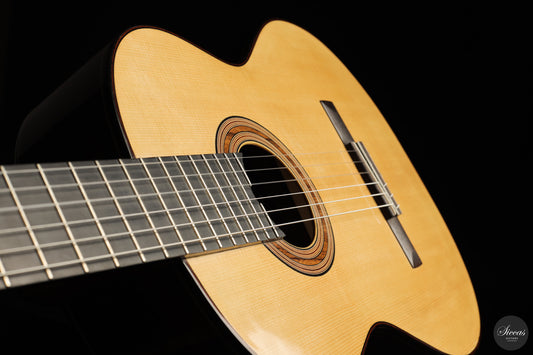
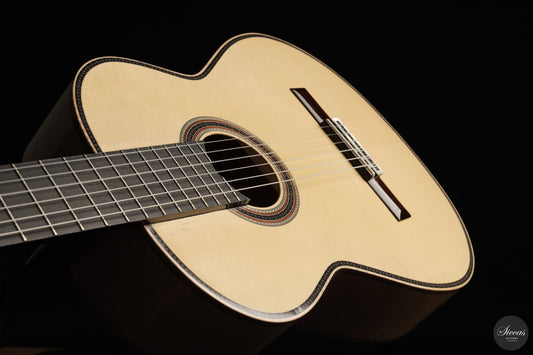
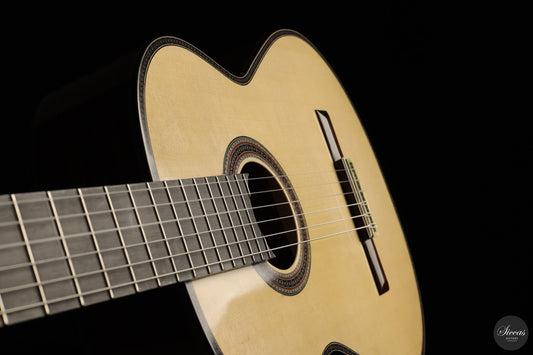
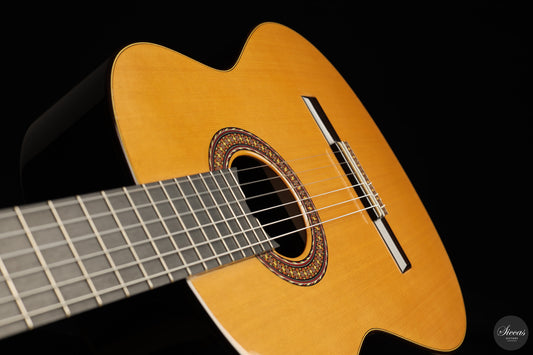
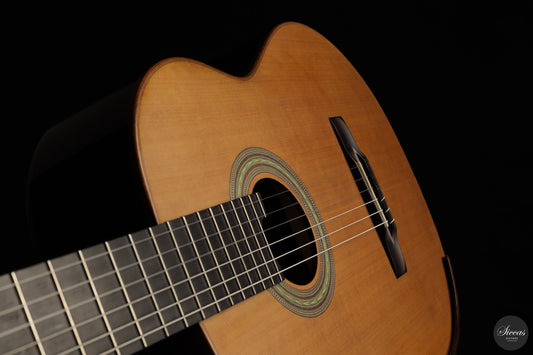
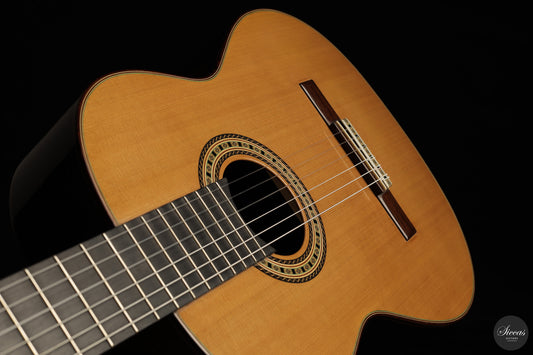
His instruments represent the Granada school's values in their contemporary form: careful attention to the acoustic properties of the tonewoods, construction methods refined through generations of practice, and the particular combination of tonal clarity and warmth that the Granada tradition has consistently produced. His classical guitars are built for players who want the full expressive range of the instrument — not merely a beautiful sound but a sound that can carry musical thought across a concert hall and reveal complexity and nuance in close listening.
Instruments at Siccas Guitars
Siccas Guitars has featured instruments by Antonio Raya Pardo in its collection, reflecting the assessment that his work represents the Granada tradition at a high level of contemporary practice. The presence of his guitars alongside instruments from other Granada and Spanish makers — and alongside fine historical instruments — is a meaningful statement: these are instruments that belong in the company of the best.
For players seeking a new instrument from a living maker in the active Spanish tradition, Raya Pardo's work offers the combination of verifiable craft lineage, consistent quality, and the acoustic properties that the Granada school has cultivated over generations. His guitars are built for music — for concert performance, for the serious study of the full classical guitar repertoire, for the kind of sustained engagement with an instrument that a player makes over decades of work.
The Importance of the Granada Lineage
The fact that Raya Pardo is the son of a respected maker matters in lutherie in a way it would not in most other crafts. Guitar making is a knowledge-intensive practice in which the accumulated learning of decades — about the properties of specific tonewoods, about the acoustic effects of construction details too subtle to measure but clear to the ear, about the relationship between build choices and tonal result — is passed from master to apprentice over years of close observation and practice. A maker who grew up in a workshop, handling materials and watching construction from childhood, has absorbed this knowledge in a way that no formal course of study can fully replicate.
Raya Pardo's position in the lineage — son of Antonio Raya Ferrer, part of the Granada school whose roots reach back through the twentieth century to Torres — is thus not merely a biographical detail. It is a description of where his knowledge comes from and why the instruments he produces have the qualities they have. The Granada tradition is alive in his work in the most literal sense: as the accumulated knowledge of generations, transmitted by the most direct and reliable means available. Explore his instruments and other fine classical guitars at Siccas Guitars.
Frequently Asked Questions
Who is Antonio Raya Pardo?
A Spanish luthier working in Granada, son of Antonio Raya Ferrer, who builds classical guitars in the tradition of the Granada school. His instruments are featured in the Siccas Guitars collection.
What is the Granada school of guitar making?
A tradition of lutherie based in Granada, Spain, rooted in the methods of Antonio de Torres and carried forward by successive generations of craftsmen. It is characterised by light construction, careful attention to tonewood properties, and the cultivation of tonal qualities — clarity, warmth, projection — that have made its instruments the choice of leading concert performers for more than a century.
What makes a Raya Pardo guitar distinctive?
His instruments reflect the Granada school's values in contemporary form: careful acoustics, refined construction methods, and the specific tonal combination of clarity and warmth that the Granada tradition consistently produces. They are built for players who want the full expressive range of the classical guitar.