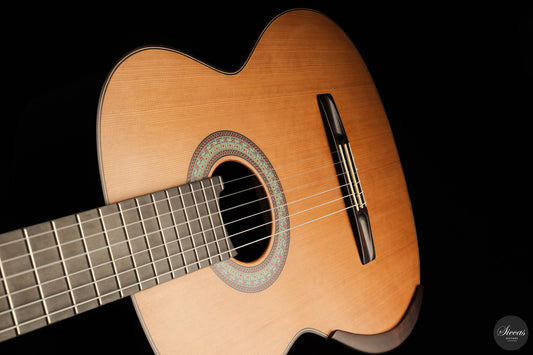
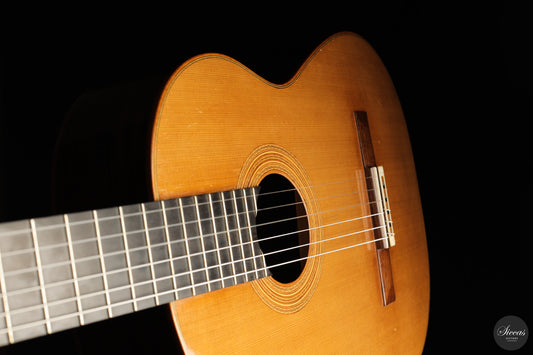
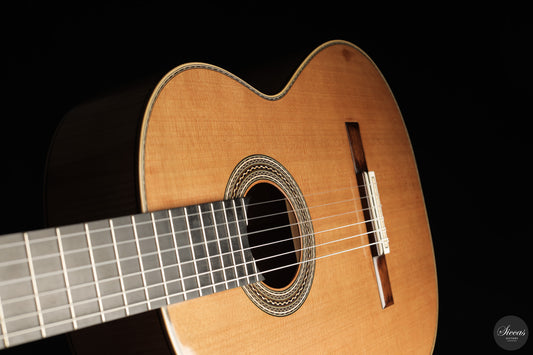
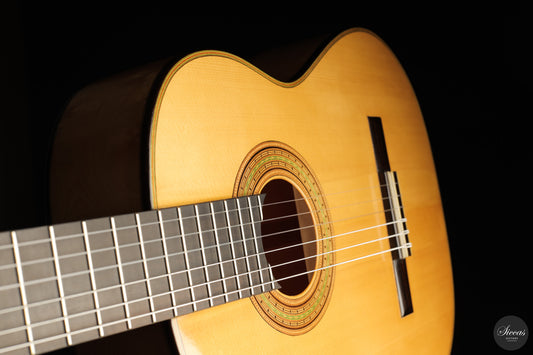
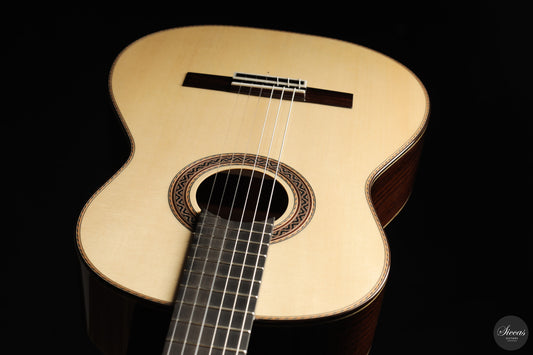
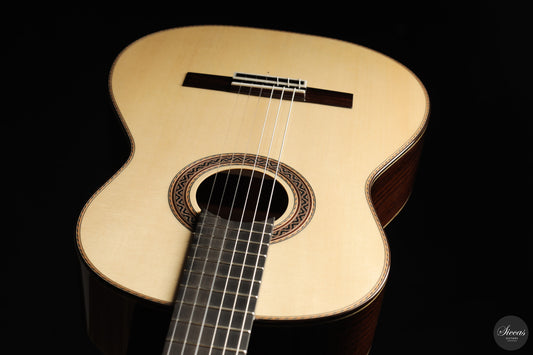
There is a special magic to a vintage classical guitar. An old instrument carries decades of playing in its wood; its top has had years to mature and "open up," and a fine vintage guitar can have a depth and complexity of tone that a new instrument is only beginning to develop. But buying old also means buying risk. This guide walks you through what to look for — and what to be wary of — before you fall in love with an instrument you cannot return.
Why buy vintage at all?
Two reasons, mainly: sound and history. Many players believe a well-made guitar improves with age as the soundboard matures, gaining warmth, resonance and a certain "lived-in" richness. And there is the romance of owning an instrument made by a great maker of the past — a Hauser, a Friederich, a piece of the guitar's living history. For collectors and serious players alike, that combination is irresistible.
Condition: what to inspect
Condition is everything with an old guitar. Check carefully for:
- Cracks in the top, back or sides — small, well-repaired cracks may be fine, but open or poorly mended cracks can affect sound and value.
- The neck angle and relief — a warped or badly bowed neck, or a top that has bellied up excessively behind the bridge, can make a guitar hard or impossible to set up well.
- Loose or repaired bracing — tap the top and listen for buzzes or rattles that suggest loose internal braces.
- The bridge and its glue joint — a lifting bridge is a common and serious issue.
- Frets and fingerboard wear — worn frets can be replaced, but it is a cost to factor in.
- Past repairs — good restoration is fine and often expected in an old guitar; the question is whether it was done well.
Authenticity and provenance
With valuable makers, fakes and misattributions exist. Look for a genuine label, consistent construction details, and ideally documentation or provenance. Buying from a reputable dealer who knows the maker, stands behind the instrument and can authenticate it is the single best protection — especially for high-value guitars where a mistake is expensive.
Sound and playability
However beautiful its history, a guitar has to sound and feel right to you. Play it across all registers, listen for balance and sustain, and make sure the action and neck suit your hands. Remember that vintage instruments are individuals — two guitars from the same maker and year can sound quite different, so judge the specific instrument in front of you, not the reputation on the label.
Value and investment
Fine vintage guitars by celebrated makers can hold or increase their value, but this should rarely be the main reason to buy. Buy a vintage guitar because you love how it plays and sounds; treat any financial upside as a bonus. And factor in the cost of any work it needs — a "bargain" that requires major restoration may be no bargain at all.
FAQ
Do vintage guitars really sound better?
Many players feel a well-made guitar matures and "opens up" with age, but condition and the individual instrument matter more than age alone.
What is the biggest risk?
Hidden condition problems — cracks, neck issues, loose bracing — and, with valuable makers, authenticity. Buying from a trusted dealer reduces both.
Should I buy vintage as an investment?
Buy primarily for sound and playability; treat any rise in value as a bonus, and account for restoration costs.