Charlie Byrd — The Jazz Guitarist Who Studied with Segovia
Charlie Byrd (1925–1999) is one of the most distinctive figures in the history of the guitar. An American jazz musician who trained in the classical tradition under Andrés Segovia himself, Byrd spent his career proving that the nylon-string guitar had a natural home in jazz. More than that, he helped change the direction of popular music in the United States when he introduced bossa nova to American audiences in the early 1960s — a contribution whose influence is still felt today.
Few guitarists have bridged two such demanding worlds as convincingly as Byrd did. His story is one of serious classical preparation applied to improvised music, and of a chance encounter with Brazilian rhythms that would define his legacy.
Early Life and Classical Training
Charlie Byrd was born on September 16, 1925, in Chuckatuck, Virginia. He began playing guitar as a child, encouraged by his father, who was himself a guitarist. His early musical education was rooted in the blues and country styles common to his region, but Byrd's ambitions quickly extended beyond those traditions.
After serving in the United States Army during World War II — where he performed with military bands in Europe — Byrd returned home and began to pursue a more formal approach to the instrument. He studied with the prominent guitar teacher Sophocles Papas in Washington, D.C., who introduced him to the classical repertoire and the technique of the Spanish guitar. This period gave Byrd the technical vocabulary he would later develop with one of the twentieth century's greatest guitarists.
In the early 1950s, Byrd traveled to Italy on a Fulbright scholarship and studied directly with Andrés Segovia. The experience was transformative. Segovia's approach — rooted in tone production, right-hand control, and an absolute commitment to musical expression over mere virtuosity — left a lasting mark on the way Byrd conceived the guitar. He returned to the United States not only with improved technique but with a changed philosophy: the guitar was a serious concert instrument, and it deserved to be treated as such, even in a jazz context.
To read more about the man who shaped so many generations of classical guitarists, visit our article on Andrés Segovia.
The Nylon-String Guitar in Jazz
When Byrd returned from his studies with Segovia, he made a choice that set him apart from virtually every other jazz guitarist of his era: he continued to play the nylon-string classical guitar rather than switching to the amplified steel-string or archtop instruments that dominated jazz performance at the time. This was not a compromise or a gimmick. Byrd genuinely believed that the nylon-string guitar offered qualities — warmth of tone, clarity of individual voices, a natural sustain that suited melodic lines — that made it ideal for the kind of music he wanted to make.
He settled in Washington, D.C., where he led a trio and performed regularly at the Showboat Lounge. His playing incorporated jazz harmony and improvisation while his right-hand technique reflected his classical training: rest strokes, free strokes, and an attention to timbre that was unusual in jazz. He became an influential local figure and attracted national attention from musicians and critics who recognized that he was doing something genuinely new.
The decision to play nylon-string also had sonic consequences that became especially significant when Byrd encountered Brazilian music. The warmth and intimacy of the classical guitar suited bossa nova's quieter, more conversational character in a way that a steel-string instrument might not have.
Jazz Samba and the Introduction of Bossa Nova
In 1961, Charlie Byrd toured South America as part of a United States State Department cultural exchange program. In Brazil, he heard bossa nova — a new style that had emerged in Rio de Janeiro in the late 1950s, fusing traditional samba rhythms with cool jazz harmonics and a soft, intimate vocal and guitar style associated with musicians such as João Gilberto and Antônio Carlos Jobim. Byrd was immediately captivated. He returned to the United States with recordings and a conviction that American audiences would respond to the music.
He contacted the tenor saxophonist Stan Getz, who shared his enthusiasm. The two recorded together in Washington, D.C. in late 1961. The resulting album, Jazz Samba, was released in 1962 on Verve Records. It was the first major bossa nova album to reach a wide American audience. The track Desafinado became a hit, and Jazz Samba reached number one on the Billboard jazz chart. It won the Grammy Award for Best Jazz Performance and introduced millions of American listeners to Brazilian rhythmic and harmonic language for the first time.
The cultural impact was enormous. Jazz Samba triggered a wave of bossa nova recordings by American artists throughout the 1960s and established a lasting dialogue between Brazilian popular music and American jazz. Byrd and Getz are widely credited as the musicians most directly responsible for this transatlantic exchange.
Career and Continued Work
Charlie Byrd's career continued for decades after the bossa nova breakthrough. He recorded prolifically, both as a leader and in collaboration with other prominent jazz musicians. He worked with bassist Keter Betts and drummer Bertell Knox in a long-running trio format that allowed him to develop the acoustic, nylon-string sound he preferred without competition from amplified instruments.
He returned periodically to his classical roots. He recorded interpretations of Spanish and Latin repertoire, and his technical approach always retained the marks of his Segovia training. He was also a dedicated educator and performed at universities and festivals throughout the United States and internationally.
In the 1970s and 1980s, Byrd remained active on the concert circuit and continued recording. He formed the group Great Guitars alongside Barney Kessel and Herb Ellis, performing informal trio concerts that emphasized the acoustic guitar in a variety of styles. The format was popular and ran for many years.
Byrd's home base remained Washington, D.C., where he co-founded Blues Alley, a jazz club that became one of the most respected venues in the city. His connection to the Washington music scene was deep and lasting.
Legacy and Significance
Charlie Byrd's place in guitar history is secured by several distinct contributions. First, he demonstrated over a long career that the nylon-string classical guitar could function effectively in jazz — not as a novelty but as a full participant in the improvised music tradition. This was a genuinely unusual achievement that required both classical competence and jazz fluency, and Byrd possessed both.
Second, his role in bringing bossa nova to the United States made him one of the key figures in the internationalisation of American popular music during the twentieth century. Jazz Samba remains a landmark recording, and its influence on subsequent decades of fusion between jazz and world music is difficult to overstate.
Third, Byrd's training with Segovia connects him directly to the classical guitar tradition explored throughout our overview of great classical guitarists. He is one of very few figures who lived and worked at the intersection of that tradition and the jazz world, and his career illustrates how deeply the techniques and philosophy of the classical guitar can inform music far beyond the concert hall.
For anyone interested in the classical guitar and its wider cultural reach, Byrd is an essential figure. His recordings demonstrate what a serious engagement with Segovia's teaching can produce when applied with musical curiosity and openness.
Charlie Byrd at Siccas Guitars
The following video captures the spirit of the music Charlie Byrd championed — nylon-string guitar playing that draws on both the classical tradition and the rhythmic warmth of Latin American music. It illustrates why the instrument Byrd devoted his career to remains one of the most expressive tools available to any guitarist, whether working in jazz, classical, or the rich territory between the two.
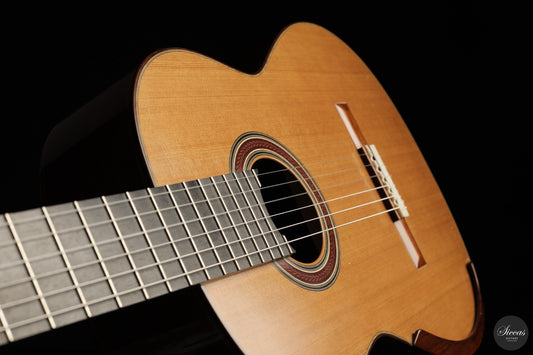
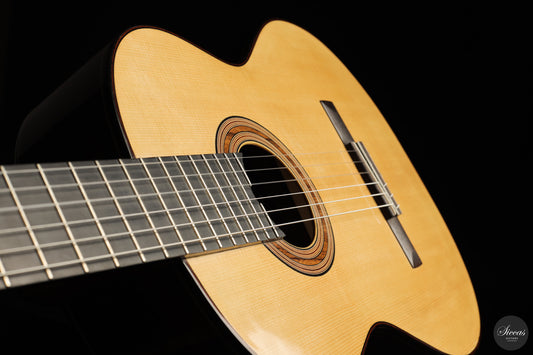
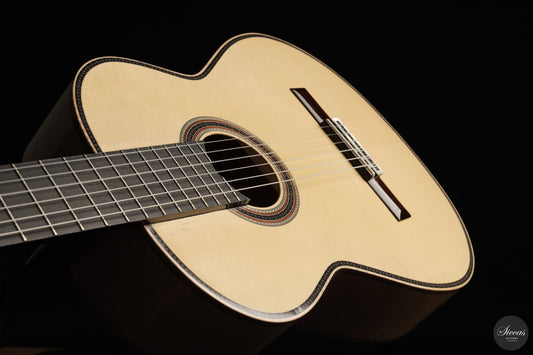
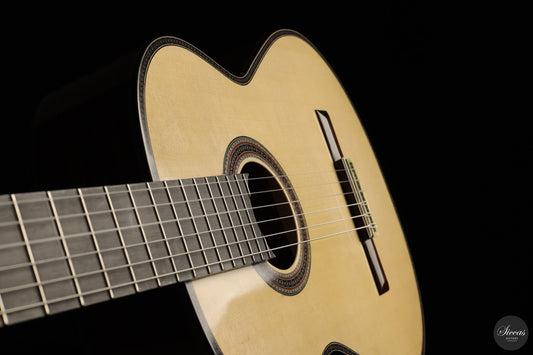
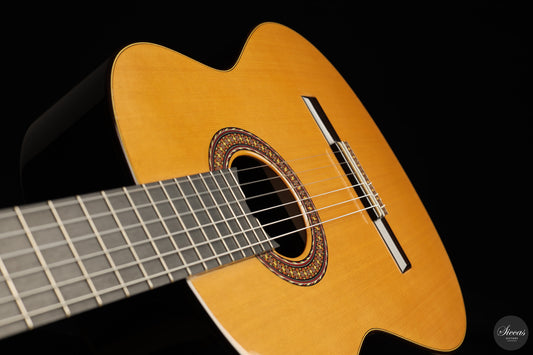
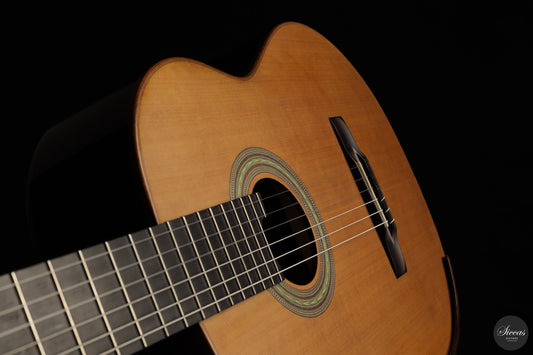
The nylon-string guitar that Byrd played throughout his career belongs to the same family as the instruments available in our collection of classical guitars. Whether you are drawn to the concert hall or to the intimacy of a jazz trio setting, the classical guitar offers a range of expression that rewards serious study.
Further Reading
Charlie Byrd's story connects to several broader threads in the guitar world. The influence of Francisco Tárrega on the development of classical guitar technique shaped the tradition that Segovia passed on to Byrd. The repertoire that defines the classical guitar canon is explored in our article on famous classical guitar pieces. And for listeners approaching the guitar from a different direction, our guide to the differences between acoustic and classical guitars offers a clear introduction to the instrument Byrd chose.
Byrd died on December 2, 1999, in Annapolis, Maryland. He left behind a body of recordings that spans jazz, bossa nova, and the classical tradition — and a reminder that the most interesting musicians are often the ones who refuse to stay within a single category.