
Cinema Paradiso holds a lasting place in film and music history. The score by Ennio Morricone, written for the film directed by Giuseppe Tornatore, is closely associated with themes of memory, nostalgia, and personal reflection. The music is built on clear melodic lines and restrained harmony, leaving space for interpretation and nuance. Rather than relying on complexity, Morricone’s writing draws its strength from balance, pacing, and tonal sensitivity.
These qualities make Nuovo Cinema Paradiso particularly well suited to the classical guitar. The instrument’s ability to shape phrasing and color allows the melody to unfold with intimacy. Each note carries weight, and small variations in touch or dynamics become part of the narrative. This places responsibility on both the performers and the instruments, as the music leaves little room to conceal inconsistencies.
Recording at the Siccas Guitars Studio
This interpretation of Nuovo Cinema Paradiso was recorded at the Siccas Guitars studio. The space is designed to capture sound with clarity and precision, without artificial emphasis. The recording environment supports a natural acoustic response, allowing the guitars to speak with their full range of overtones and sustain.
Rather than shaping the sound through production, the studio setting places focus on the interaction between musicians and instruments. This approach aligns with the philosophy of Siccas Guitars, where the character of a guitar is revealed through playing rather than technical processing. The result is a recording that reflects how the instruments respond in a direct musical context.
The Performers and Their Approach
Jan Depreter and Johan Fostier approach Morricone’s music with a chamber music perspective. Their interpretation emphasizes dialogue and balance, with both parts carrying equal weight. Instead of foregrounding one voice, the arrangement allows the melody to move naturally between the guitars.
Their playing is characterized by controlled dynamics and careful timing. Transitions are shaped gradually, and silences are treated as structural elements rather than interruptions. This approach supports the reflective nature of the composition and keeps the focus on musical continuity.
Guitars by Sylvain Balestrieri and Bertrand Ligier
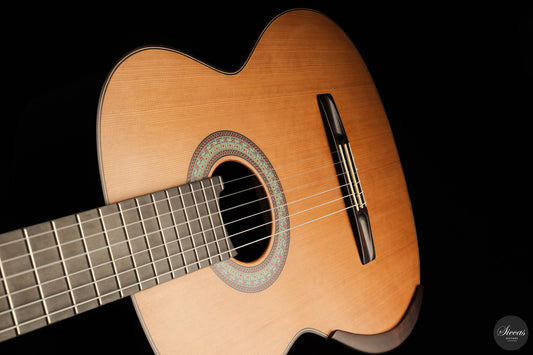
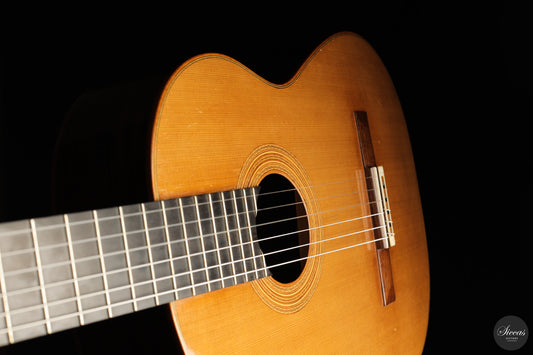
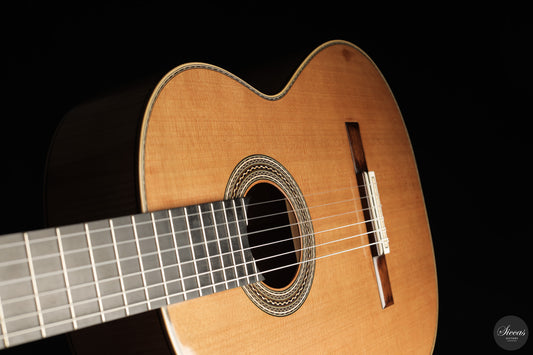
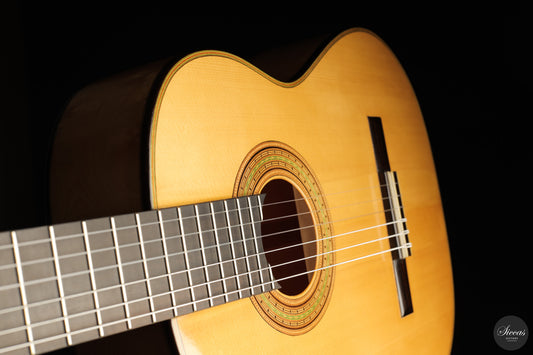
For this recording, Jan Depreter performs on a classical guitar by Sylvain Balestrieri, while Johan Fostier plays a guitar by Bertrand Ligier. Both luthiers are known for instruments that combine responsiveness with structural clarity. Their guitars offer different tonal profiles, which becomes apparent in a duet setting.
The Balestrieri guitar provides a warm and rounded tonal foundation, supporting long melodic phrases with stability and depth. The Ligier guitar contributes clarity and focus, particularly in the upper registers. Together, these characteristics create a complementary sound spectrum that enhances the interplay between the two parts.
Expressive Depth and Tonal Interaction
The arrangement highlights the expressive depth of Morricone’s composition. Sustained lines rely on the guitars’ natural resonance, while subtle variations in attack shape the emotional contour of the piece. The instruments respond evenly across registers, allowing dynamics to remain controlled even at lower volumes.
Rather than aiming for contrast, the performance focuses on cohesion. The guitars blend while retaining their individual identities, making the interaction between the two voices clearly perceptible. This balance supports the lyrical quality of the music and reinforces its introspective character.
Handcrafted Instruments in a Musical Setting
This recording illustrates how handcrafted classical guitars function within an interpretative context. Instruments by Sylvain Balestrieri and Bertrand Ligier are shaped by specific construction choices that influence response, projection, and tonal balance. In this session, these qualities become audible through sustained phrasing and controlled dynamics.
The performance demonstrates how lutherie and musicianship intersect. The guitars support the performers without drawing attention away from the music, allowing Morricone’s composition to remain central. This interaction reflects the role of the instrument as a medium rather than a statement.
Music, Craftsmanship, and Interpretation
Recorded at Siccas Guitars, this session documents the close relationship between music, instrument, and craftsmanship. It shows how carefully built guitars can support nuanced interpretation and how experienced musicians bring out these qualities through attentive playing.
The result is a focused interpretation of Nuovo Cinema Paradiso that connects Morricone’s music with the traditions of classical guitar making. It reflects a shared attention to detail, balance, and sound, qualities that define both the composition and the instruments used in this recording.