


Enrique Garcia
-
Luthier: Enrique GarciaLuthier: Rare Guitars
-
Luthier: Enrique GarciaLuthier: Rare GuitarsLuthier: Seltene Gitarren
-
Luthier: Enrique Garcia
-
Luthier: Enrique Garcia
-
Luthier: Enrique GarciaLuthier: Rare GuitarsLuthier: Seltene Gitarren
-
Luthier: Enrique Garcia
-
Luthier: Enrique Garcia








Frequently Asked Questions About Classical Guitars
How do I choose the right classical guitar for my level?
Choosing the right classical guitar depends on your playing level, musical goals, and budget. Beginners benefit from studio-model guitars from renowned workshops, while advanced players and professionals often choose a handmade master guitar. We are happy to advise you personally and can send detailed sound samples and videos on request.
What is the difference between a master guitar and a studio guitar?
Master guitars are built entirely by hand in the workshop of a single luthier, using only high-quality, well-aged tonewoods. Studio guitars are made in small series, often under the supervision of the master luthier, and offer excellent value for students and ambitious amateur players.
Can I try a classical guitar at home for 14 days?
Yes — every guitar you purchase from us comes with a 14-day home approval period. This complimentary trial applies worldwide to all orders, whether you are in Germany, Europe, the USA, Asia or anywhere else. We ship your instrument fully insured in a high-quality case so you can play it under your own acoustic conditions. If the guitar is not the right one for you, simply send it back and receive a full refund of the purchase price.
Can I try a classical guitar before purchasing?
Absolutely. You are warmly invited to visit our showroom in Karlsruhe, Germany, and test the instruments at your leisure. We are happy to schedule a personal appointment. If a visit is not possible, we send detailed videos and sound samples, and offer extensive consultation by phone or video call.
What payment methods and financing options do you offer?
We accept bank transfer, PayPal, major credit cards, and Klarna. For high-value instruments, we offer individual installment plans on request. Please contact us directly — we will find a suitable solution for every budget.
How do I properly care for my classical guitar?
A classical guitar requires constant humidity between 45 and 55 percent. Store the instrument in its case with a humidifier, avoid direct sunlight and large temperature fluctuations. Change the strings regularly and clean the guitar with a soft microfiber cloth.
You may also be interested Enrique Garcia
About the Guitar Maker
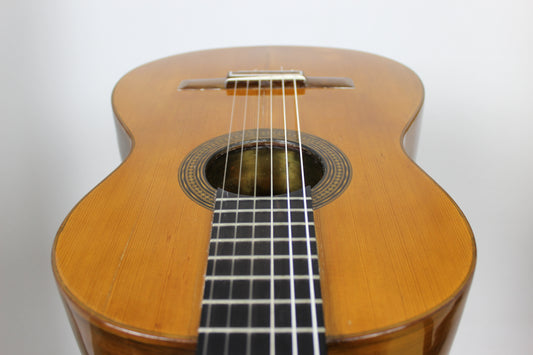
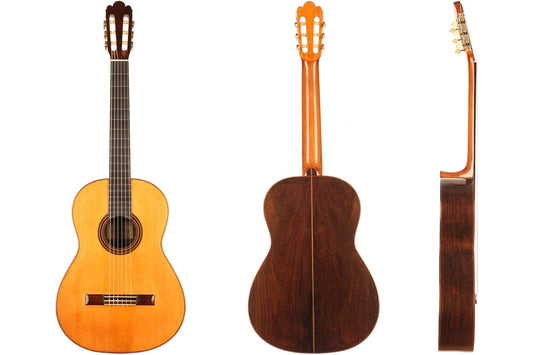
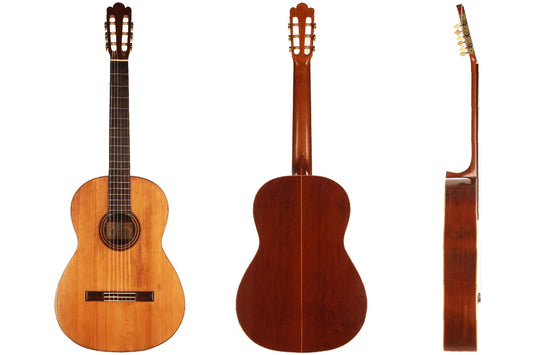
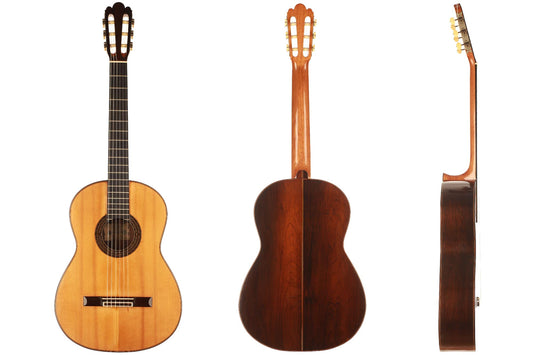
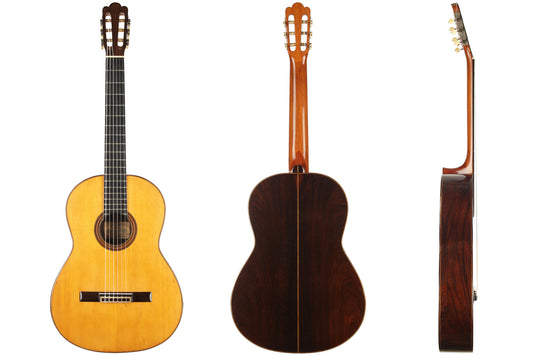
Enrique García is regarded as one of the most important figures in the history of classical guitar making, known for his masterful craftsmanship, tonal excellence, and dedication to perfection. His instruments, celebrated for their beauty and sound, continue to captivate musicians and collectors around the world more than a century after their creation.
Life and Background
Born in 1868 in Madrid, Enrique García began his apprenticeship with José Ramírez I. In 1893, he moved to Barcelona, where he established his own workshop and developed a distinct style that would later define the “Barcelona School” of guitar making. García’s refined sense of form and tonal design influenced many future luthiers, including Francisco Simplicio. He became known for combining the deep Spanish tonal tradition with an elegant and precise aesthetic.
Craftsmanship and Sound
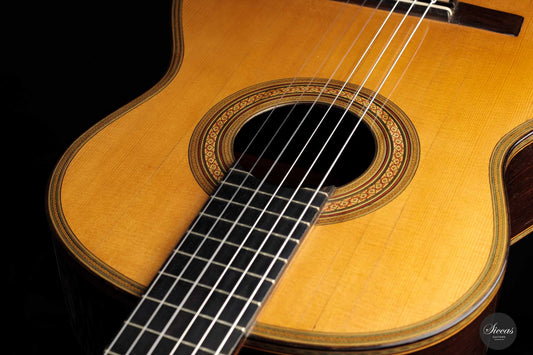
García’s guitars are admired for their clear, powerful, and balanced tone—characterized by warmth, projection, and remarkable clarity. He selected only the finest tonewoods, such as spruce and rosewood, and executed every detail with exceptional precision. His instruments are instantly recognizable for their elegant proportions, meticulous bracing, and beautifully crafted rosettes.
Tradition and Innovation
While deeply rooted in Spanish tradition, Enrique García was also an innovator. He refined bracing patterns and construction techniques to enhance the response and projection of his guitars. This fusion of traditional craftsmanship and forward-thinking design made him one of the early pioneers of the modern concert guitar.
Influence and Legacy
García’s influence extended far beyond his own workshop. His instruments served as models for later luthiers, shaping the evolution of the classical guitar throughout the 20th century. The Catalan School of luthiery, particularly in Barcelona, owes much of its foundation to his work. His guitars were played by leading performers of his time and remain prized by collectors and museums worldwide.
Conclusion
Enrique García (1868–1922) was not only a master craftsman but an artist who redefined the classical guitar. His instruments represent a perfect harmony between sound, aesthetics, and soul. Through his meticulous craftsmanship and visionary spirit, García established a legacy that continues to inspire generations of luthiers and musicians around the globe.