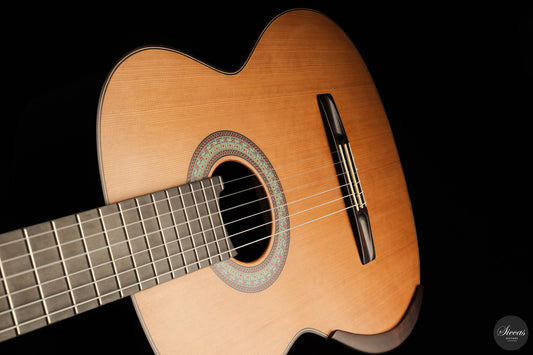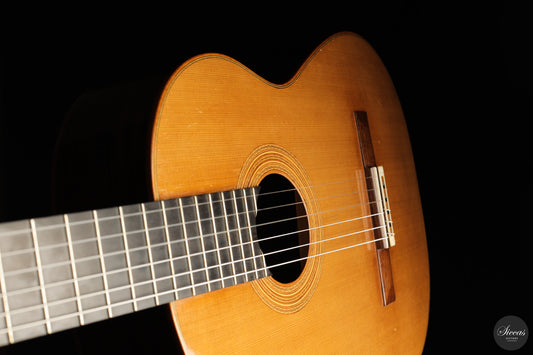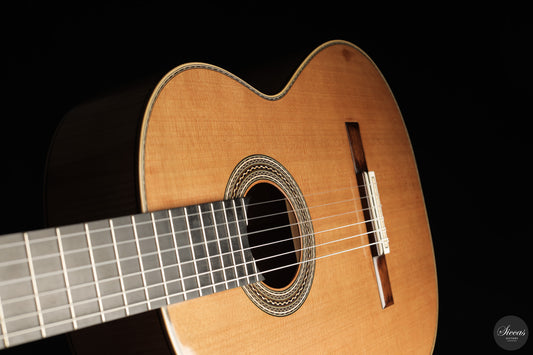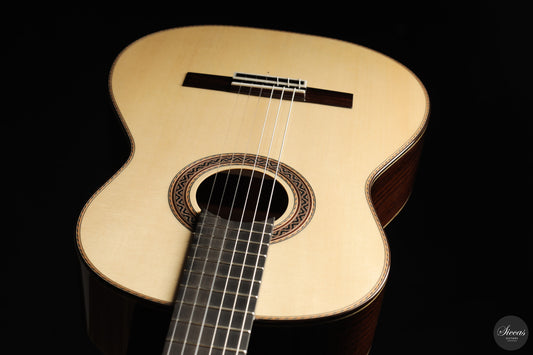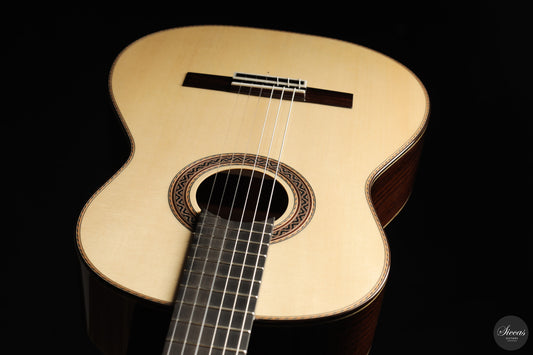

The setup of a classical guitar is the final and decisive step that determines how an instrument performs in real musical use. Even the finest guitar, built from exceptional materials and executed with precision, can fall short of its potential without careful final adjustment. At Siccas Guitars, setup is treated as an integral part of the instrument, not as a secondary or standardized procedure.
Setup as the Link Between Maker and Player
Guitar makers design instruments with specific structural and tonal intentions. The final setup translates these intentions into physical playability. String height, neck relief, saddle shaping, and nut work directly influence how the guitar responds under the hands.
At Siccas Guitars, setup is understood as the interface between the luthier’s work and the guitarist’s technique. Small adjustments can significantly alter comfort, articulation, and dynamic control.
Action Height and Playing Resistance
Action, the distance between strings and fingerboard, is one of the most critical setup parameters. Too high, and the guitar becomes physically demanding. Too low, and clarity and headroom may suffer.
Rather than applying fixed measurements, action is adjusted in relation to the guitar’s construction, top stiffness, and intended use. A concert-oriented instrument may require slightly different parameters than a guitar intended for recording or teaching.
Nut and Saddle Precision
The nut and saddle are central to both tone and intonation. Accurate string spacing at the nut supports relaxed left-hand technique and consistent articulation. Poor nut work can introduce tension, uneven response, or intonation issues in first position.
Saddle shaping influences break angle, string balance, and transmission of energy to the soundboard. At Siccas Guitars, saddles are individually adjusted rather than treated as interchangeable parts.
Balancing Sound Across the Strings
Setup directly affects string balance. Minor variations in saddle height or compensation can alter the perceived strength of basses and trebles.
The goal is not uniform loudness, but musical balance. Each string should contribute naturally to the overall sound without dominating or disappearing in different registers.
Playability and Long-Term Comfort
Professional and dedicated players often spend many hours per day with their instrument. Setup decisions therefore take long-term comfort into account. Neck relief, fingerboard accuracy, and fretwork all influence fatigue and control.
A well-set-up guitar allows the player to focus on phrasing and articulation rather than compensating for physical resistance.
Adapting to Different Construction Concepts
Modern construction methods such as double-top or lattice-braced guitars respond differently to setup adjustments than traditional fan-braced instruments. The final adjustment must respect these structural differences.
Applying identical setup parameters across all guitars ignores how construction influences response and stability. At Siccas Guitars, each instrument is evaluated individually.
Climate, Strings, and Real-World Conditions
Setup also considers climate and string choice. Changes in humidity and temperature affect wood movement and tension. Instruments are adjusted with realistic playing conditions in mind rather than idealized laboratory settings.
String selection influences tension, color, and feel. Setup adjustments are made in relation to the chosen strings rather than independently of them.
Final Adjustment as Quality Control
The final setup at Siccas Guitars serves as a form of quality control. Each guitar is evaluated for playability, balance, and consistency before being offered to a player.
This process ensures that instruments leave the workshop in a state that reflects their full musical potential rather than requiring immediate correction.
Why Setup Is Never Generic
There is no universal setup that suits every guitar or every player. Treating setup as a standardized checklist undermines the individuality of the instrument.
At Siccas Guitars, setup is a considered, responsive process shaped by experience with a wide range of instruments and players.
Setup as the Final Voice of the Guitar
The final adjustment is where construction, materials, and craftsmanship become tangible in the player’s hands. It determines whether a guitar feels resistant or responsive, rigid or flexible, restrained or open.
By treating setup as a central part of the instrument rather than an afterthought, Siccas Guitars ensures that each guitar speaks with clarity, balance, and reliability from the first note onward.