
Sevilla — subtitled Sevillanas — is the third movement of Isaac Albéniz's Suite Española, Op. 47, a piano suite begun in 1886 as a tribute to Spain's regions. Like the rest of the suite, it was written for piano, yet it sounds so natural on the classical guitar that the transcription feels inevitable.
The Dance and the City
The sevillanas is a lively Andalusian folk dance originating in Seville, performed in 3/4 time and deeply tied to the city's flamenco tradition. Each sevillana moves through four coplas (verses), alternating between a rhythmic drive and more song-like passages. Albéniz was not himself from Seville but was profoundly shaped by the music of southern Spain, and his setting captures both the festive energy and the lyrical warmth of the form. The outer sections carry the characteristic flamenco underpulse beneath a singing melody; the contrasting middle section moves through a more intimate mood before the dance returns.
On the Guitar
Albéniz's piano writing for the Suite Española is full of rasgueado-like strummed patterns, open-string pedal points, and repeated-note figures that sit awkwardly at the keyboard but flow naturally on the guitar. Guitar arrangements of the suite typically employ Drop-D-and-G scordatura tuning — lowering both the sixth and fifth strings — which allows open strings to ring as bass drones, giving the piece the resonance it deserves. The result is one of the most Spanish-sounding pieces in the guitar repertoire, even though Albéniz never wrote a note specifically for the instrument.
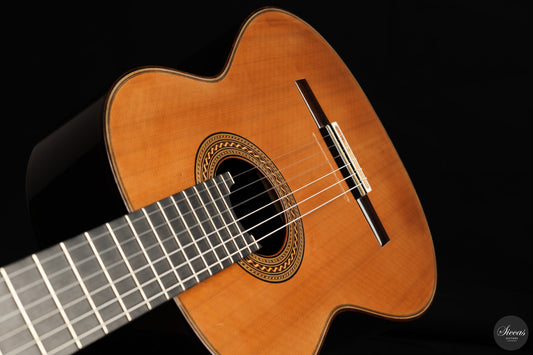
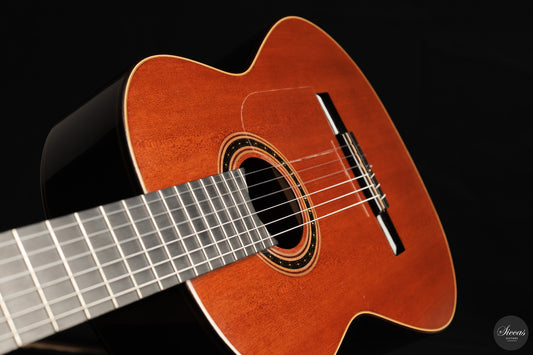
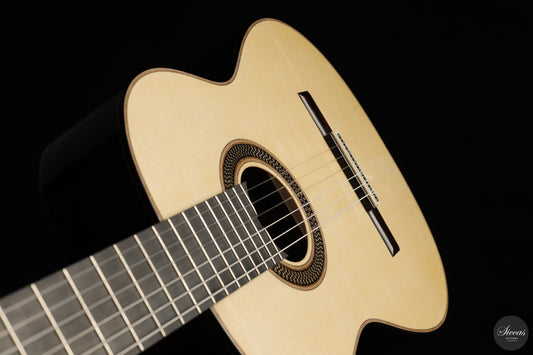
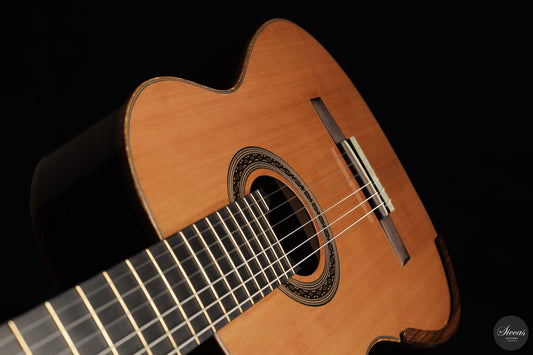
Performed at Siccas Guitars
Playing it
The dance character must always feel present — even in the lyrical passages, the rhythmic pulse should breathe underneath. The scordatura tuning, once set up, transforms the piece's resonance. Advanced intermediate.
See the full Albéniz guide and Asturias.