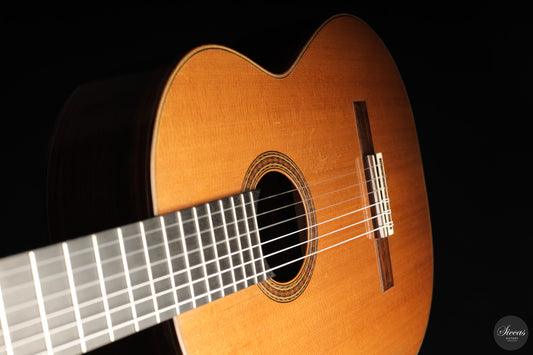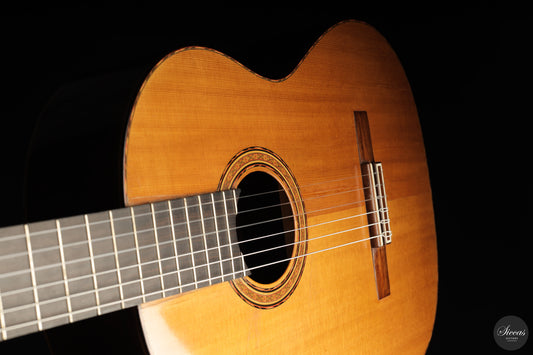

Ana Vidović plays the Vals Venezolano No. 3 by Antonio Lauro, the waltz known as Natalia. Of Lauro's four Venezuelan waltzes it is the one guitarists play most, and nearly a million people have watched this performance on our channel.
About the Valses Venezolanos
Lauro wrote four Valses venezolanos, known by the names Tatiana, Andreína, Natalia and Yacambú. The first three were composed sometime between 1938 and 1940. They grew out of the waltzes of colonial Venezuela, and their signature is a rhythmic sleight of hand, in which two bars of three beats are suddenly heard as one long bar of three slower beats. This hemiola gives the music its typical lilt, a waltz that keeps leaning forward and pulling back.
Natalia is the most lyrical of the four. Its melody is long-breathed and tender, and the rhythmic shifts that make the other waltzes feel restless here give the music a gentle sway instead. It is also the most widely taught, because it sits well under the hands while still asking for real control. The melody has to sing over an accompaniment that never stops moving, and the hemiola has to be felt rather than counted. Many guitarists meet Lauro through this piece and stay with him for life.
The shortest and most compact of the set is the second waltz, which you can hear in our article on Ana Vidović playing the Vals Venezolano No. 2.
About Antonio Lauro
Antonio Lauro was born in Ciudad Bolívar in 1917 and died in Caracas in 1986. He studied composition with Vicente Emilio Sojo, and it was hearing Agustín Barrios in concert in 1932 that turned him towards the guitar; from 1933 he studied the instrument with Raúl Borges. Today he counts among the leading guitar composers of the twentieth century. John Williams called him the Strauss of the guitar, a fitting name for a composer whose best-known works are waltzes. Our Lauro repertoire guide introduces his music, and our portrait of Agustín Barrios tells the story of the guitarist who inspired him.
About Ana Vidović
Ana Vidović grew up in Karlovac near Zagreb and began playing at five. At thirteen she was the youngest student at the National Musical Academy in Zagreb, where she studied with Istvan Romer, and she later graduated from the Peabody Conservatory. First prizes in Bath, Rome and Spain marked the start of a career that has taken her to the Concertgebouw in Amsterdam and the Musikverein in Vienna.
Watch the Performance
Find more works in our overview of famous classical guitar pieces.