

Edgar Mönch
-
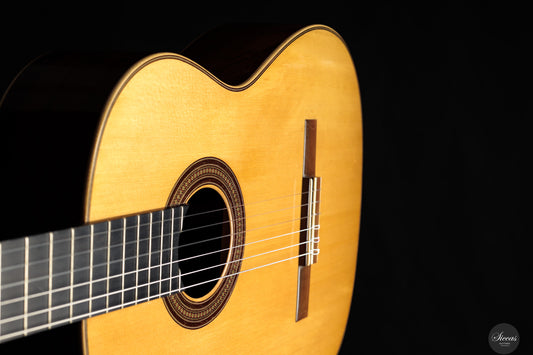
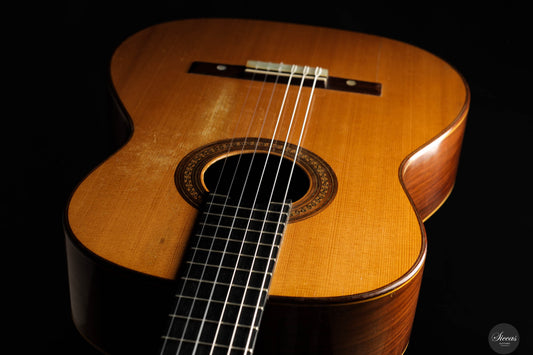
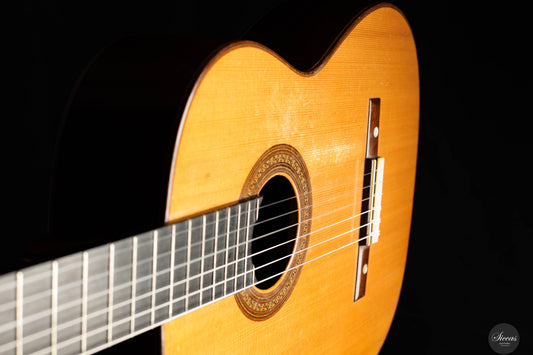
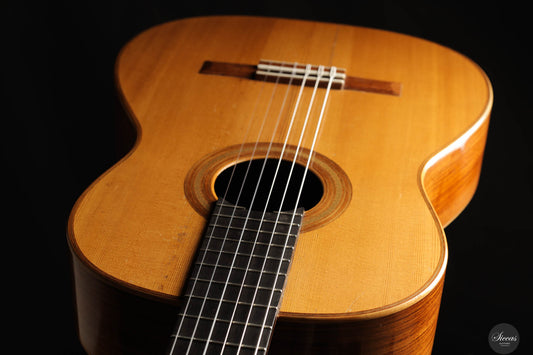
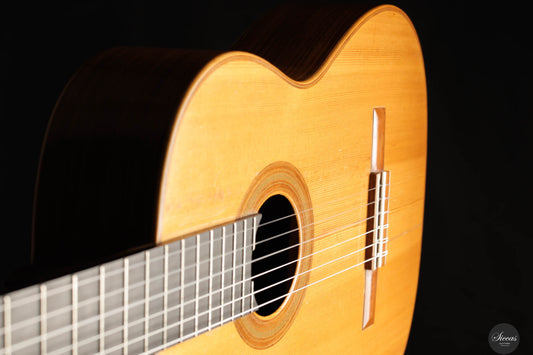
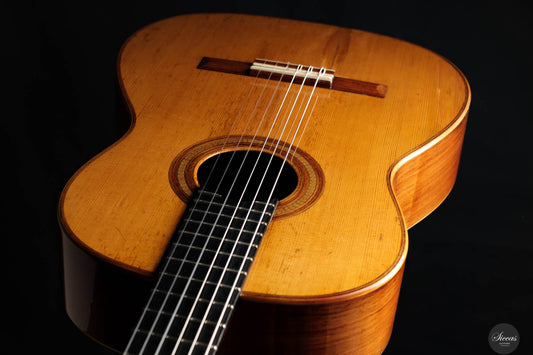
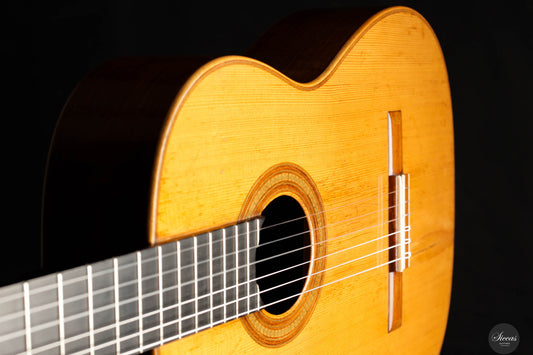
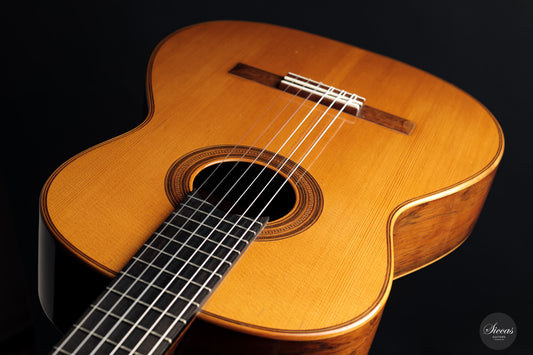
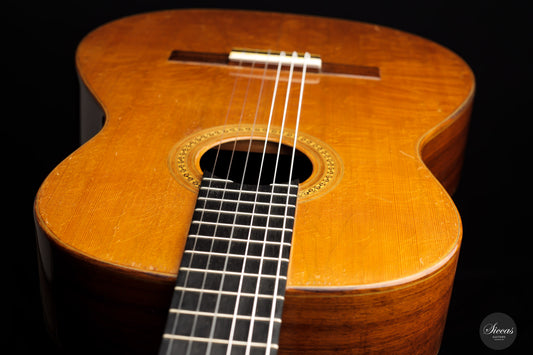
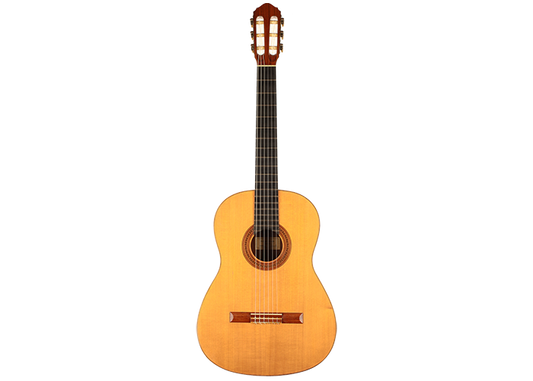
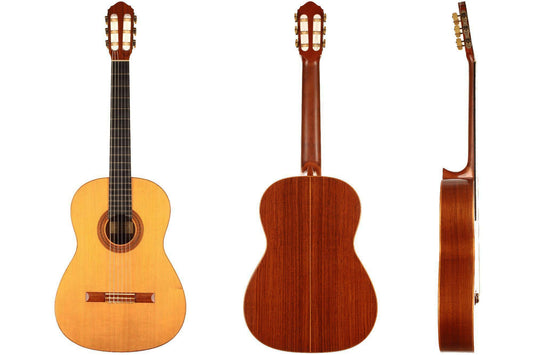
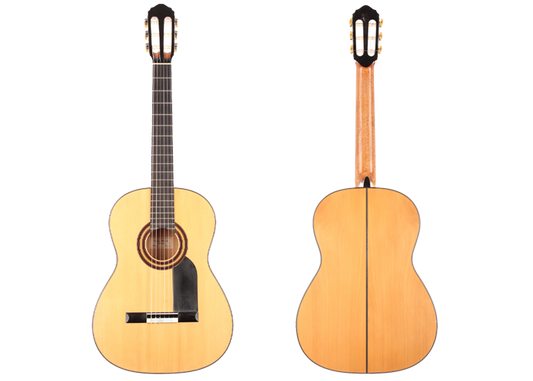
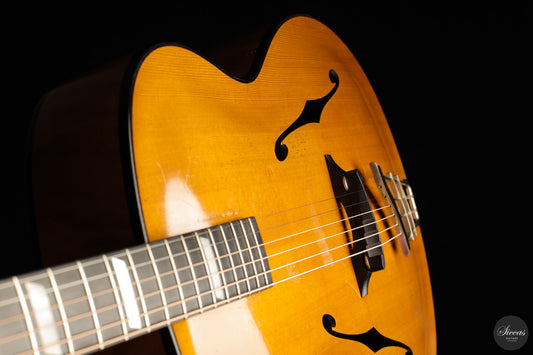
Edgar Mönch - 1953 Jazz Guitar
Price: 6.490 €Unit price per Tax free (0% DE)Luthier: Edgar Mönch -

 SoldSoldLuthier: Edgar Mönch
 -
 SoldSoldLuthier: Edgar Mönch
 -
 SoldSoldLuthier: Edgar Mönch
 -
 SoldSoldLuthier: Edgar MönchLuthier: Seltene Gitarren
 -
 SoldSoldLuthier: Edgar Mönch
 -
 SoldSoldLuthier: Edgar MönchLuthier: La Canada
 -
 SoldSoldLuthier: Edgar MönchLuthier: Rare GuitarsLuthier: Seltene Gitarren
 -
 SoldSoldLuthier: Edgar Mönch
 -
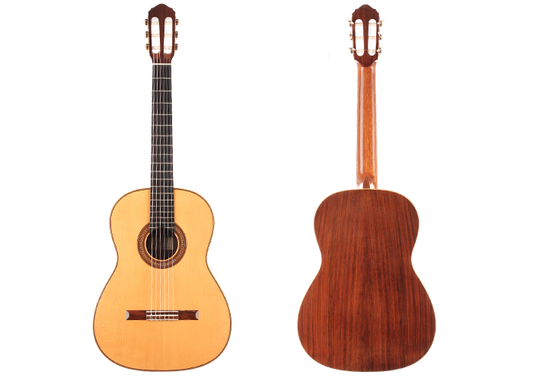 SoldSoldLuthier: Edgar Mönch
 -
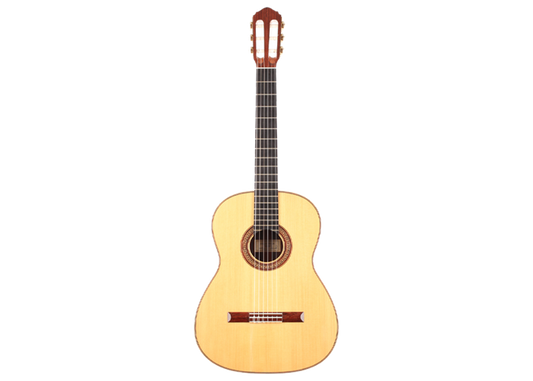
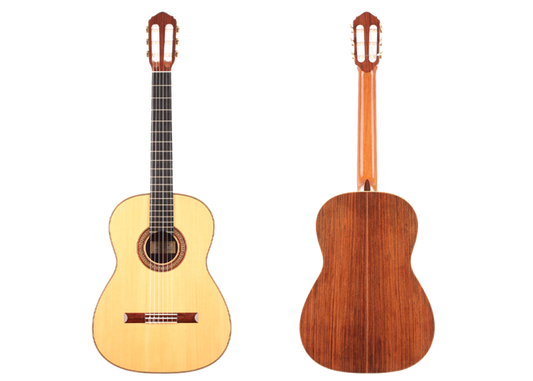 SoldSoldLuthier: Edgar Mönch
 -
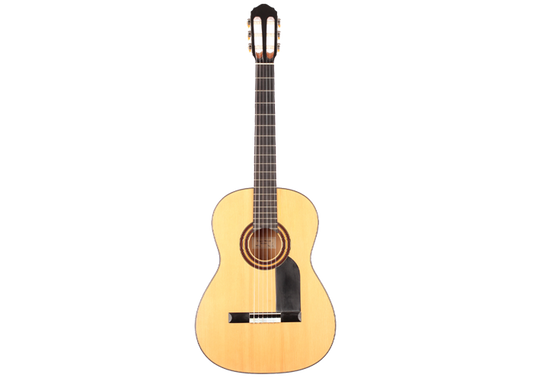
 SoldSoldLuthier: Edgar Mönch
 -
Luthier: Edgar MönchLuthier: Kolya Panhuyzen


Ask us - right here.
Enrico, our AI team member, replies around the clock.
Instant reply · free · no obligation Rather use WhatsApp
Frequently Asked Questions About Classical Guitars
How do I choose the right classical guitar for my level?
Choosing the right classical guitar depends on your playing level, musical goals, and budget. Beginners benefit from studio-model guitars from renowned workshops, while advanced players and professionals often choose a handmade master guitar. We are happy to advise you personally and can send detailed sound samples and videos on request.
What is the difference between a master guitar and a studio guitar?
Master guitars are built entirely by hand in the workshop of a single luthier, using only high-quality, well-aged tonewoods. Studio guitars are made in small series, often under the supervision of the master luthier, and offer excellent value for students and ambitious amateur players.
Can I try a classical guitar at home for 14 days?
Yes — every guitar you purchase from us comes with a 14-day home approval period. This complimentary trial applies worldwide to all orders, whether you are in Germany, Europe, the USA, Asia or anywhere else. We ship your instrument fully insured in a high-quality case so you can play it under your own acoustic conditions. If the guitar is not the right one for you, simply send it back and receive a full refund of the purchase price.
Can I try a classical guitar before purchasing?
Absolutely. You are warmly invited to visit our showroom in Karlsruhe, Germany, and test the instruments at your leisure. We are happy to schedule a personal appointment. If a visit is not possible, we send detailed videos and sound samples, and offer extensive consultation by phone or video call.
What payment methods and financing options do you offer?
We accept bank transfer, PayPal, major credit cards, and Klarna. For high-value instruments, we offer individual installment plans on request. Please contact us directly — we will find a suitable solution for every budget.
How do I properly care for my classical guitar?
A classical guitar requires constant humidity between 45 and 55 percent. Store the instrument in its case with a humidifier, avoid direct sunlight and large temperature fluctuations. Change the strings regularly and clean the guitar with a soft microfiber cloth.
You may also be interested Edgar Mönch
Early Years: From Musician to Guitar Maker
Edgar Mönch was born on October 29, 1907, in Leipzig. His mother was a Russian pianist, and his father was a violinist and conductor – music was therefore an integral part of his life from the very beginning. Mönch spent his childhood in Russia, where he attended school, and later studied mechanical engineering at the Technical University of Danzig as well as violin at the Conservatory in Prague. This rare combination of technical precision and musical sensitivity would later define his work as a guitar maker.
Mönch discovered guitar making during his prisoner-of-war years in England (1944–1947). In a Y.M.C.A. camp, a violin maker from Breslau set up a musical instrument workshop: he repaired string instruments, while Mönch took care of the plucked instruments – and learned how to build a guitar from scratch. Due to a lack of tonewood, old, irreparable guitars were dismantled, and usable parts were reassembled into new instruments. After his repatriation in 1947, Mönch met his future wife, Toni, and they married in 1948.
The Beginnings of Guitar Making in Munich
Mönch’s first guitars were reportedly made in Ludwigsburg; from 1948 onward, he worked in Munich. In a small boarding room – both workshop and living space – he began with minimal equipment: a workbench, a self-made table, and a few hand tools obtained through bartering (his fiancée’s wedding dress was traded for a plane). Every single step was done by hand, including the hand-polished shellac finish, which had to be sourced from Holland. Each guitar required approximately 120 hours of labor. After many experiments, he finally settled on a Spanish form, which he used for the rest of his career, firmly believing that the body shape was essential to the tone.
The instruments from his “Munich period” (1948–1964) are still considered emblematic: marked by meticulous craftsmanship, refined material selection, a consciously simple aesthetic, and exceptional tonal potential.
Influence from Spain – Study with Marcelo Barbero
In 1952, Mönch deepened his knowledge in Madrid under the renowned Spanish luthier Marcelo Barbero. There he learned, among other things, the Spanish art of rosette making and studied Barbero’s distinctive soundboard bracing. Unlike many of his German contemporaries, Mönch sought inspiration directly in Spain – a rare decision at the time. Barbero, who had worked for the widow of Santos Hernández after his death, was highly respected for both his concert and flamenco guitars.
Barbero’s later apprentice, Arcángel Fernández, recalled that his master often spoke of Mönch with great respect. Mönch even adapted the bracing pattern from a 1948 Barbero cypress guitar for his own 1952 Rio rosewood model – an example of the fruitful exchange between German precision and Spanish tonal ideals.
The Famous 1959 Cypress Guitar
One of Mönch’s most remarkable instruments is his 1959 cypress guitar (spruce top; cypress back and sides) – highly unusual for Germany at the time, since cypress wood was typically associated with flamenco guitars. Historically, however, cypress had long been used for Spanish concert guitars (for instance, Antonio de Torres’ “La Leona” from 1856). The choice reflects Mönch’s experience in Spain and his openness to exploring new tonal materials.
Until recently, few knew that there was a second cypress instrument – the first Mönch guitar built in Canada (1965) also featured cypress back and sides. Both are now regarded as among the rarest Mönch guitars.
International Recognition and Emigration to Canada
In 1964/65, Mönch traveled to Toronto to visit his sister and met a German music shop owner who offered him an exclusive contract: he would purchase every guitar Mönch made. Since his main market was already in America, the family emigrated to Canada in 1965 and stayed there until 1971. Previously, Albert Augustine (New York) had served as Mönch’s sole distributor for North and South America.
During this period, Mönch generously shared his expertise. Among his students were John (Jean-Claude) Larrivée, Kolya Panhuyzen (his nephew), Ken Bowen, and Joseph Kurek. While Larrivée went on to establish a major guitar company, Panhuyzen became one of the world’s leading concert guitar makers.
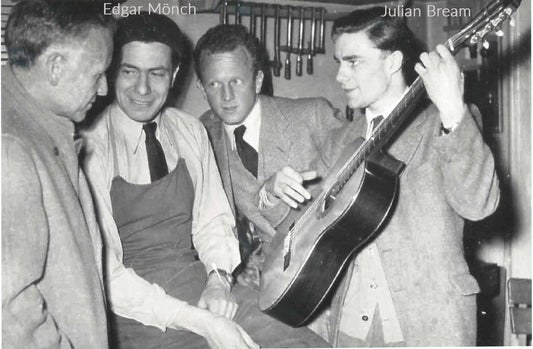
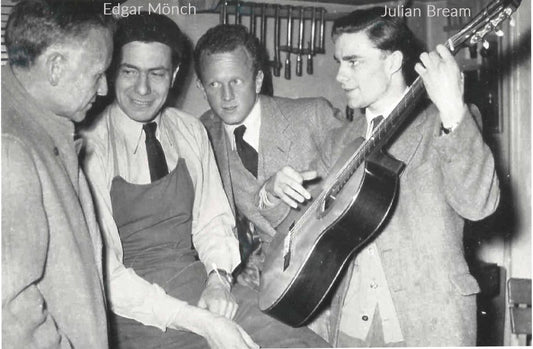
Many of the greatest guitarists performed on Mönch guitars: Andrés Segovia, Julian Bream, John Williams, and Vicente Gomez, among others. A special document exists in which Segovia says on tape, “I have the pleasure of playing a guitar belonging to John Williams, made by the great guitar maker Mr. Mönch.” Bream also played Mönch instruments extensively in the late 1950s and used a 1959 Mönch guitar for his 1960 RCA recordings of Malcolm Arnold’s Concerto (Op. 67) and Mauro Giuliani’s Concerto (Op. 30).
Return to Germany and Later Years
In 1971, Mönch returned to Germany and settled in Freiburg/Staufen. He maintained his Canadian business model: his guitars were sold in bulk to a local music store, reducing direct contact with players. Many instruments were promptly exported to Japan and the United States, which contributed to his gradual decline in recognition within Central Europe.
For his son, Edgar “Edi” Mönch Jr., he built several beloved instruments: two rosewood guitars (one spruce, one cedar) and a rare maple guitar – reportedly the only Mönch made from flamed maple. In his final years, Mönch increasingly worked with cedar soundboards; his last known instrument was a cedar/Rio rosewood guitar from 1976. The sudden death of his son on December 16, 1976, devastated the family. Just two months later, on February 16, 1977, Edgar Mönch passed away at the age of 69.
Legacy and Importance
Edgar Mönch built around 350 guitars and 17 lutes during his lifetime. His instruments are defined by master craftsmanship, intentional simplicity and elegance, and exceptional tonal character. They were distributed worldwide – across Europe, North Africa, Hawaii, Australia, and especially Japan. Many guitars from his Freiburg period were sold directly into these markets.
The fact that Mönch’s name is less often mentioned today than those of Hauser I & II or Richard Jacob “Weissgerber” has more to do with his distribution strategy than with quality. Exclusive sales agreements and export-oriented production meant that few of his instruments circulated in Germany. Technically and artistically, Mönch remained steadfastly committed to excellence; claims that his Canadian guitars were “more standardized” or “economically built” are inaccurate and undervalue his legacy.
Conclusion
Edgar Mönch uniquely combined German precision with the Spanish tonal ideal. From his experimental early years in Munich to his pragmatic Toronto period and his focused work in Freiburg, his body of work remained stylistically consistent and acoustically exceptional. His guitars – from the 1959 cypress to the 1976 cedar/Rio rosewood – are prized collector’s pieces and benchmarks for players. Rightfully regarded as the “Stradivari of Guitar Making”, Edgar Mönch has earned his place in the Hall of Fame of great guitarreros.