

Sakurai Kohno
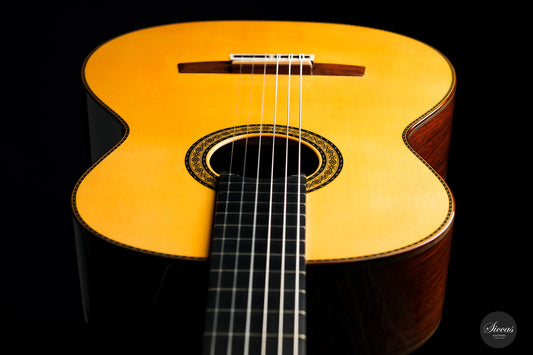
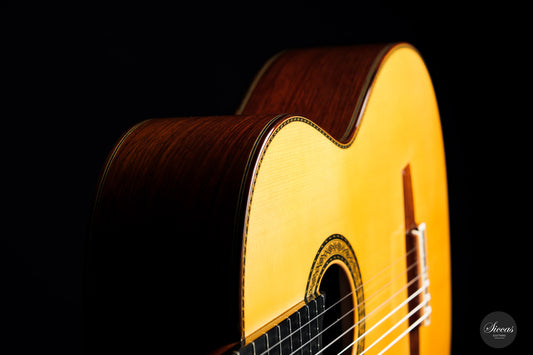
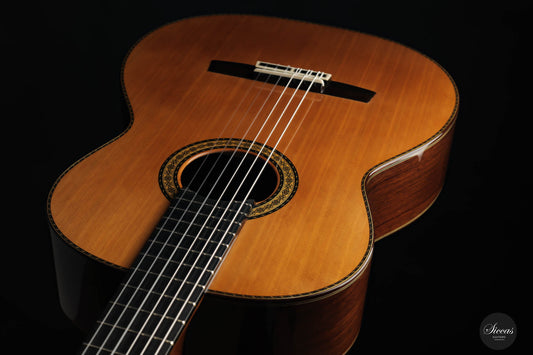
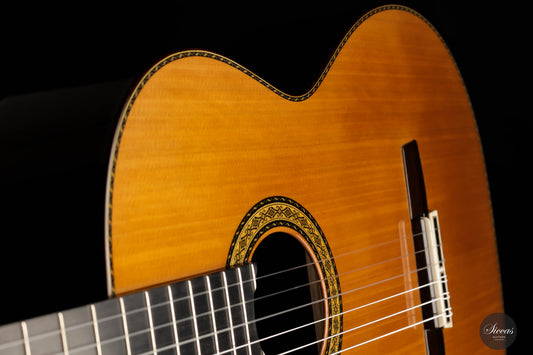
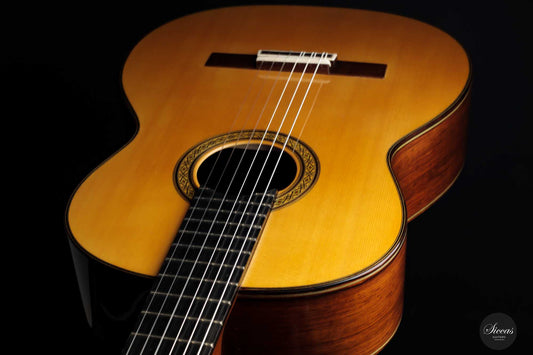
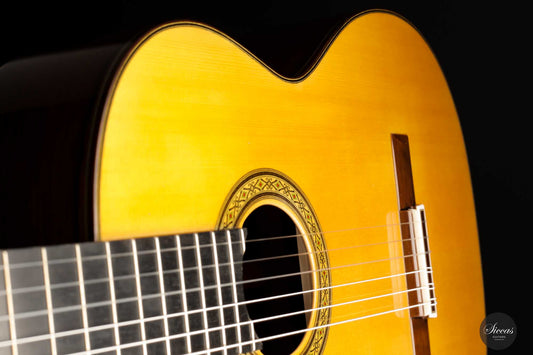
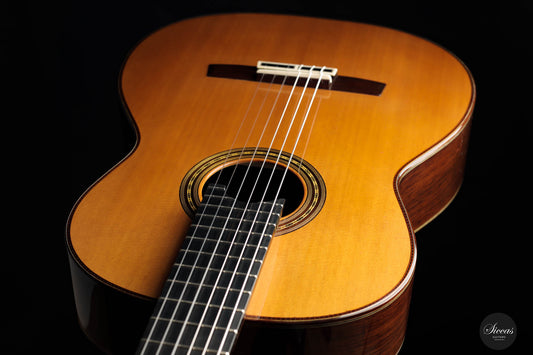
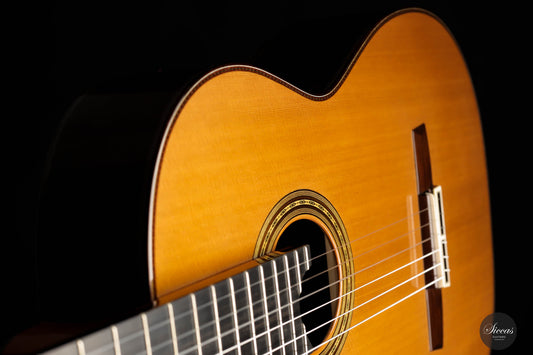
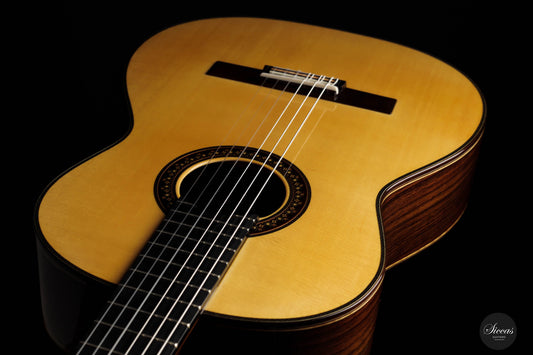
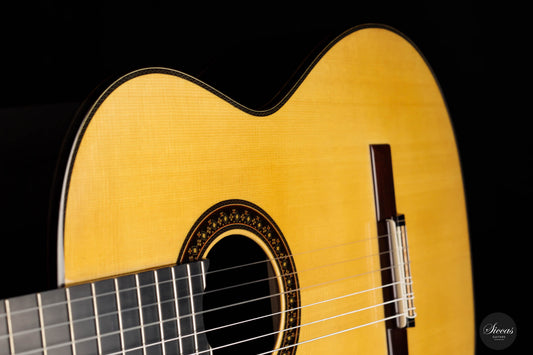
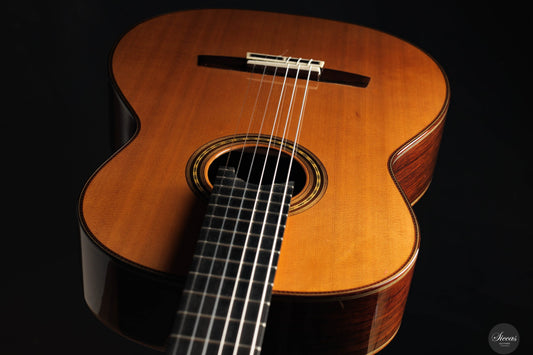
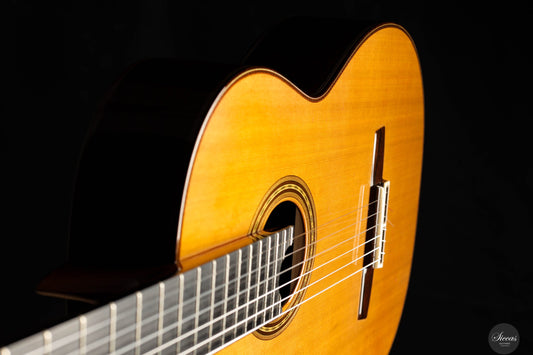
Sakurai Kohno has been building classical guitars in Tokyo for over 60 years. Founded by Masaru Kohno, continued by Masaki Sakurai — both trained in Spain, both committed to the Spanish construction principles that produce balanced, consistent, concert-ready instruments at every level of the model range. If you want Japanese precision applied to classical guitar making, this is where to start.
-
Luthier: Sakurai KohnoConstruction Type: Short Scale
-
Luthier: Sakurai Kohno
-
Luthier: Sakurai KohnoConstruction Type: Short Scale
-
Luthier: Sakurai KohnoConstruction Type: Short Scale
-
Luthier: Sakurai Kohno
-
Luthier: Sakurai Kohno
-
Luthier: Sakurai Kohno
-
Luthier: Sakurai KohnoConstruction Type: Short Scale
-
Luthier: Sakurai Kohno
-
Luthier: Sakurai Kohno
-
Luthier: Sakurai Kohno
-
Luthier: Sakurai Kohno
-
Luthier: Sakurai Kohno
-
Luthier: Sakurai Kohno
-
Luthier: Sakurai KohnoConstruction Type: Short Scale
-
Luthier: Sakurai KohnoConstruction Type: Short Scale
-
Luthier: Sakurai KohnoConstruction Type: Short Scale
-
Luthier: Sakurai Kohno
-
Luthier: Sakurai Kohno
-
Luthier: Sakurai Kohno






Ask us - right here.
Enrico, our AI team member, replies around the clock.
Instant reply · free · no obligation Rather use WhatsApp
Frequently Asked Questions About Classical Guitars
How do I choose the right classical guitar for my level?
Choosing the right classical guitar depends on your playing level, musical goals, and budget. Beginners benefit from studio-model guitars from renowned workshops, while advanced players and professionals often choose a handmade master guitar. We are happy to advise you personally and can send detailed sound samples and videos on request.
What is the difference between a master guitar and a studio guitar?
Master guitars are built entirely by hand in the workshop of a single luthier, using only high-quality, well-aged tonewoods. Studio guitars are made in small series, often under the supervision of the master luthier, and offer excellent value for students and ambitious amateur players.
Can I try a classical guitar at home for 14 days?
Yes — every guitar you purchase from us comes with a 14-day home approval period. This complimentary trial applies worldwide to all orders, whether you are in Germany, Europe, the USA, Asia or anywhere else. We ship your instrument fully insured in a high-quality case so you can play it under your own acoustic conditions. If the guitar is not the right one for you, simply send it back and receive a full refund of the purchase price.
Can I try a classical guitar before purchasing?
Absolutely. You are warmly invited to visit our showroom in Karlsruhe, Germany, and test the instruments at your leisure. We are happy to schedule a personal appointment. If a visit is not possible, we send detailed videos and sound samples, and offer extensive consultation by phone or video call.
What payment methods and financing options do you offer?
We accept bank transfer, PayPal, major credit cards, and Klarna. For high-value instruments, we offer individual installment plans on request. Please contact us directly — we will find a suitable solution for every budget.
How do I properly care for my classical guitar?
A classical guitar requires constant humidity between 45 and 55 percent. Store the instrument in its case with a humidifier, avoid direct sunlight and large temperature fluctuations. Change the strings regularly and clean the guitar with a soft microfiber cloth.
You may also be interested Sakurai Kohno
The Sakurai Kohno classical guitar is the standard against which Japanese guitar making is measured. Founded in Tokyo by Masaru Kohno after his training with José Ramírez III in Madrid, continued by his nephew Masaki Sakurai — both makers brought Spanish construction principles home to Japan and applied to them a Japanese commitment to consistency and quality control that has produced some of the most reliable instruments in the classical guitar world.
The History: Spain to Tokyo
Masaru Kohno (1926–1998) trained with José Ramírez III in Madrid in the early 1960s, studying the Spanish construction methods that had produced the instruments Segovia played. Returning to Tokyo, he began building guitars that combined these methods with the material precision and quality consistency characteristic of Japanese craft. His instruments won the Gold Medal at the Queen Elizabeth Competition in 1967 — announcing the arrival of Japanese guitar making on the world stage. By the 1970s, Kohno guitars were played by leading performers globally.
After Kohno's death in 1998, his nephew Masaki Sakurai continued the workshop — his name now forming the first half of the current brand. Sakurai trained alongside Kohno for decades; the transition was seamless. The instruments maintained their character while Sakurai introduced refinements based on his own accumulated experience.
The Model Range Explained
Professional series — The entry point to the Sakurai Kohno range: solid cedar or spruce tops, rosewood back and sides, Spanish construction. These are not student instruments in any derogatory sense — they are professionally built instruments at an accessible price point that consistently outperform their competition.
Concert series — Higher-grade tonewoods, more intensive construction, individually selected tops. These instruments suit professional performance and studio recording. The step up from Professional is audible: more projection, more tonal complexity, more dynamic range.
Maestro / RF series — The workshop's finest instruments. Hand-selected European or Japanese spruce or cedar tops, individually voiced, built with the full craft of the workshop at its most attentive. These are concert-level instruments by any standard — comparable in quality to the finest European handmade guitars, at often more accessible prices.
What Sakurai Kohno Guitars Sound Like
The defining characteristic of Sakurai Kohno instruments is consistency — not monotony, but the reliability of quality. A Professional will sound like a well-made Professional; a Maestro will sound like a Maestro. There are no surprises, no lottery of individual instruments varying wildly from the stated quality level. This consistency is precisely why performers who need to rely on their instrument night after night have trusted Sakurai Kohno throughout their careers.
Tonally: balanced, focused, clear. Not the most brilliant treble in the world, not the deepest bass — but a coherent, useful, musical instrument that works well across the full classical repertoire. The sound improves meaningfully with playing time: many players report that their Sakurai Kohno sounds significantly better at five years than at one year, and better still at ten.
Frequently Asked Questions
What is the difference between Masaru Kohno and Masaki Sakurai instruments?
Masaru Kohno built until 1998; instruments bearing his name are from that period. Masaki Sakurai continued the workshop from 1998 onward, with instruments bearing his name or the combined Sakurai Kohno brand. Both are high-quality instruments; Kohno instruments from his peak years (1970s–1990s) are particularly sought after as collector's pieces.
Is a Sakurai Kohno a good first concert guitar?
Yes — particularly the Concert and Maestro series. They offer reliable quality, consistent performance, and the kind of tonal character that rewards developing technique without demanding the maintenance attention of a handmade European instrument.
Browse Sakurai Kohno Guitars
Every instrument filmed in full. 14-day home trial, worldwide insured shipping. Browse Sakurai Kohno classical guitars or speak to our team.