






Domingo Esteso - 1933
Details
Details
Overview
Overview
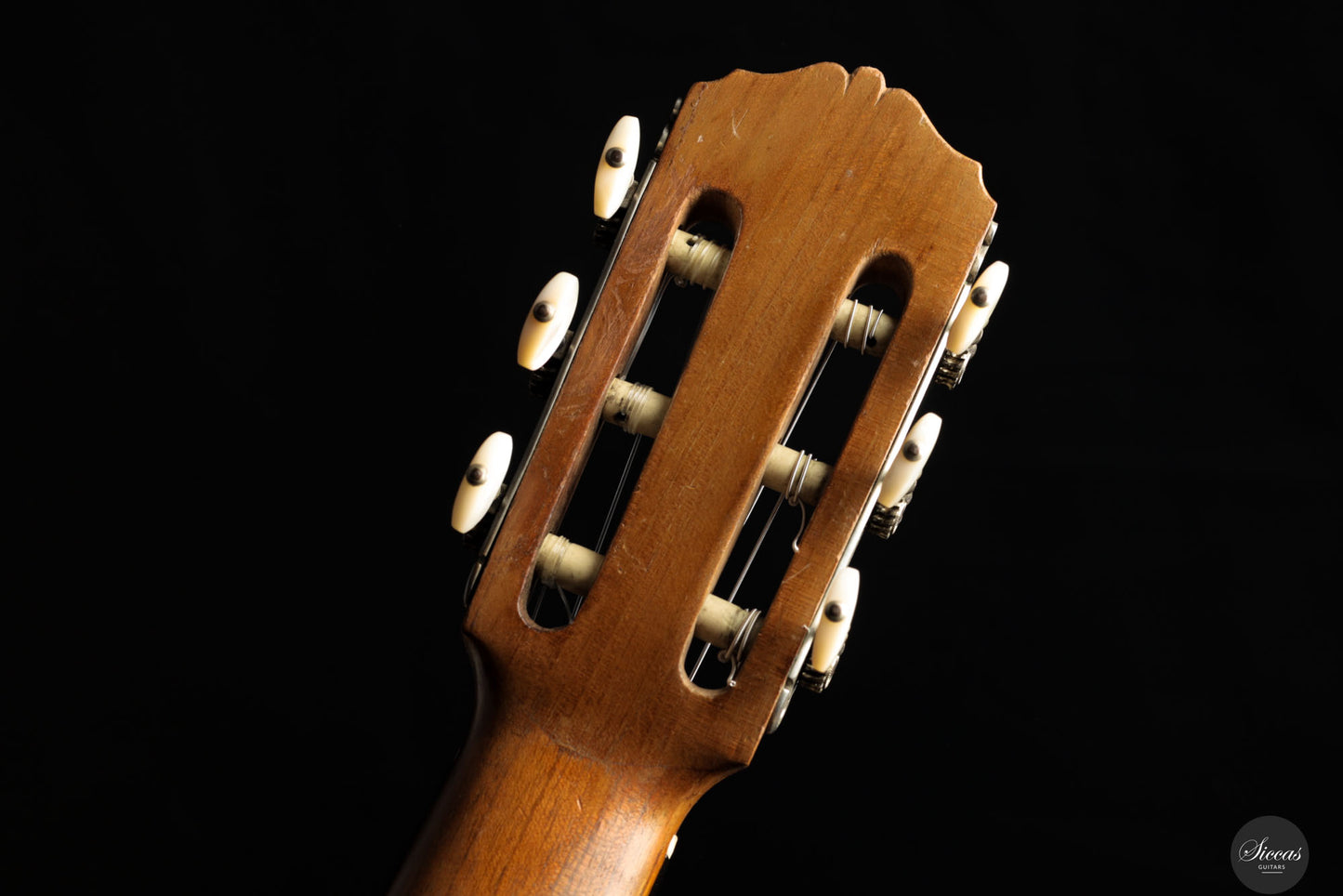
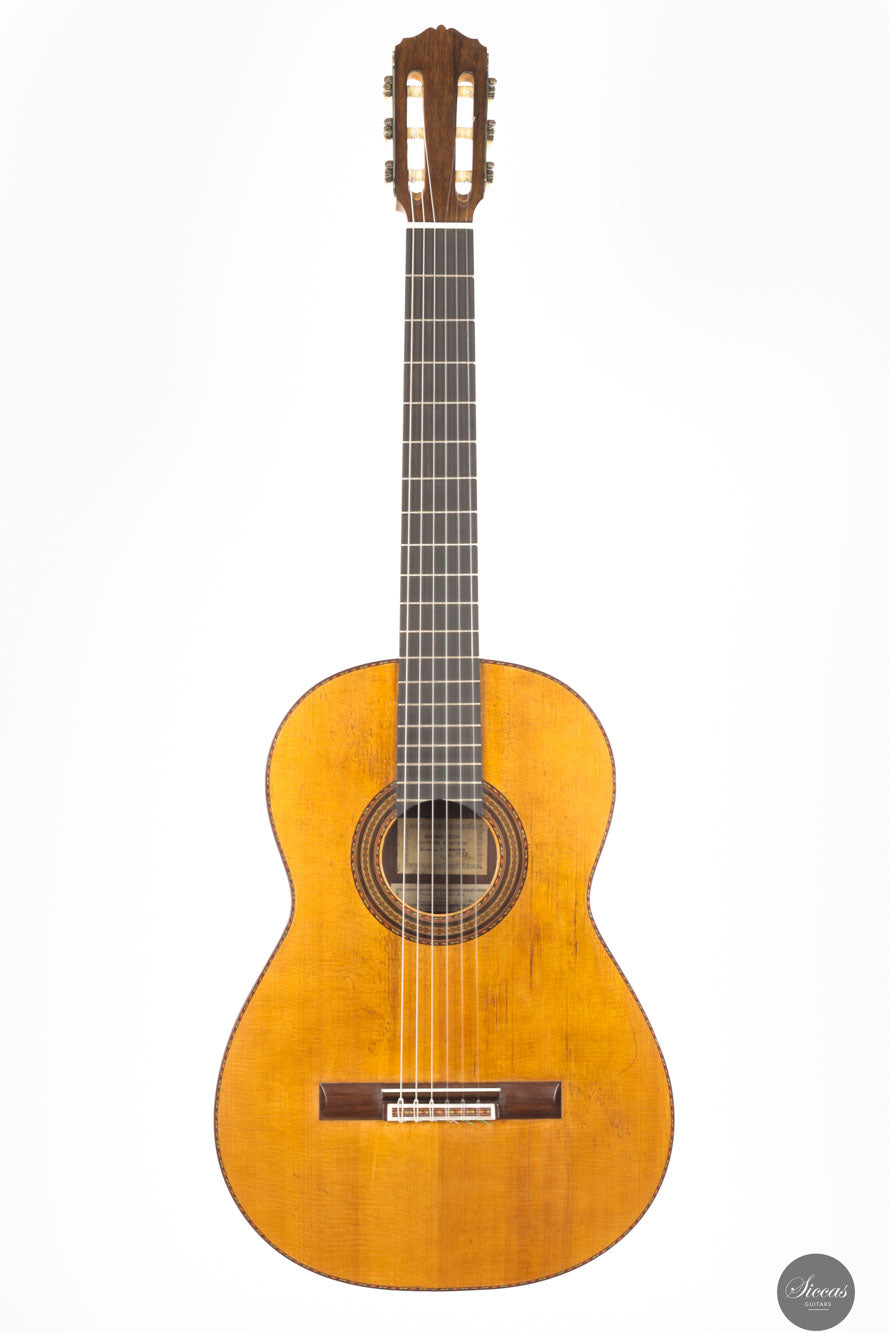
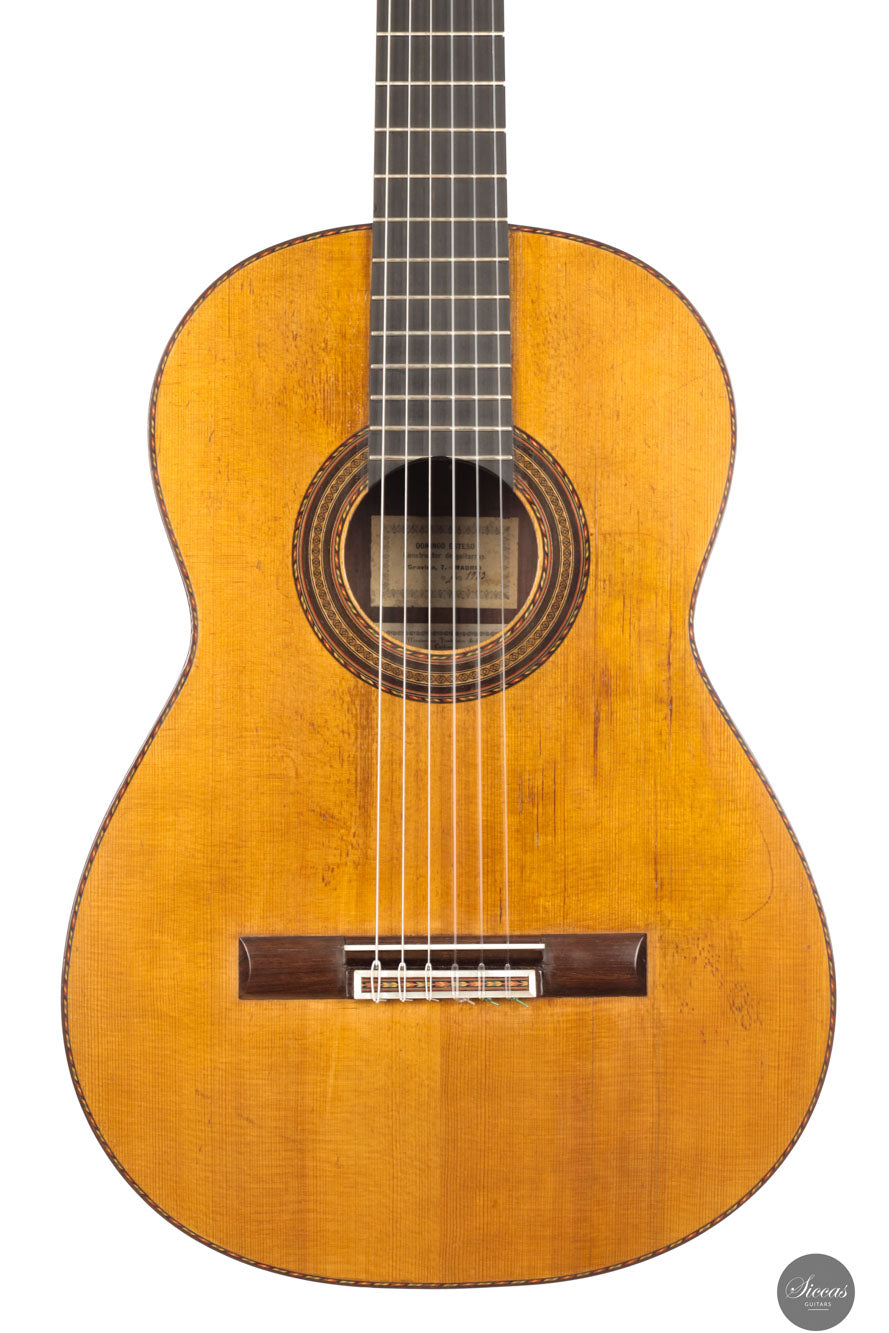
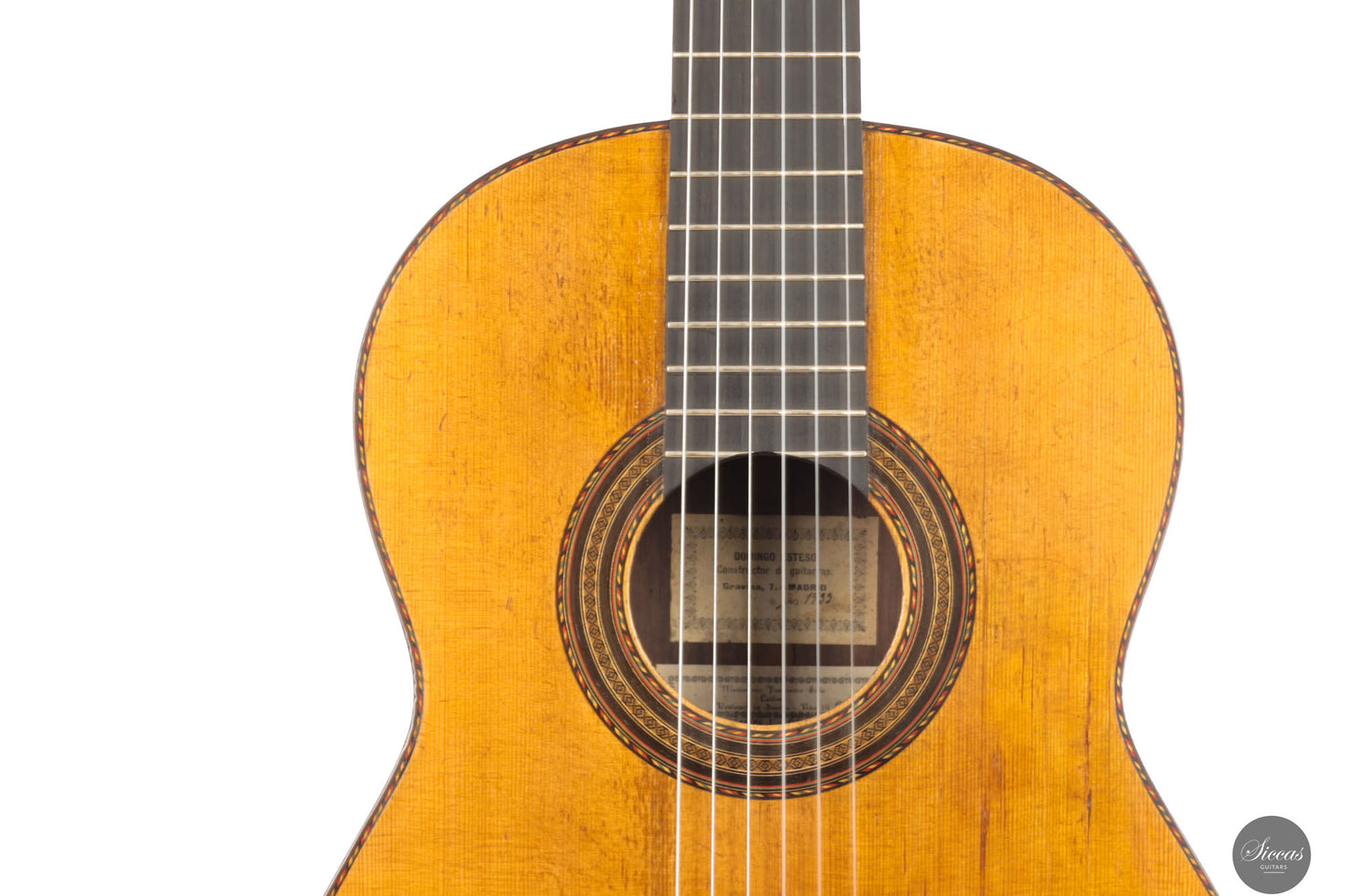
Video overview


More details about the guitar
About the luthier
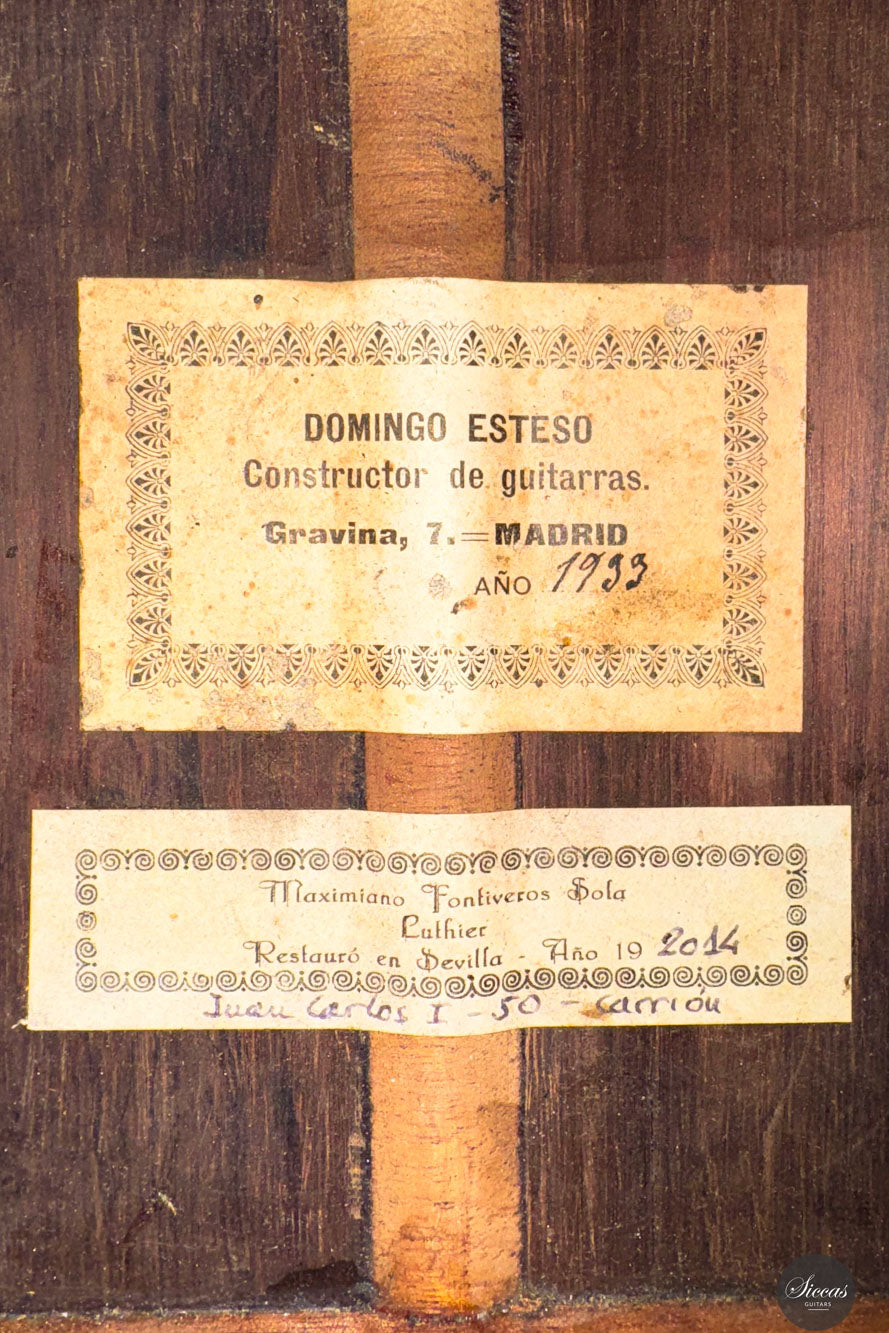
Domingo Esteso López, born in San Clemente in 1882, was one of the most influential luthiers of the early 20th century. In the 1890s, he began his apprenticeship in the workshop of Manuel Ramirez in Madrid, working alongside other renowned luthiers such as Modesto Borreguero and Santos Hernandez. Following the death of Manuel Ramirez in 1916, Domingo worked for Ramirez’s widow before establishing his own workshop in 1917 on Calle Gravina in Madrid. In 1926, his nephew Faustino Conde joined the workshop, followed by his brothers Mariano Conde in 1929 and eventually Julio Conde. After Domingo Esteso’s passing in 1937, the three brothers continued crafting guitars under the name “Vda y Sobrinos de Domingo Esteso,” ensuring the legacy of his craft.About the guitar
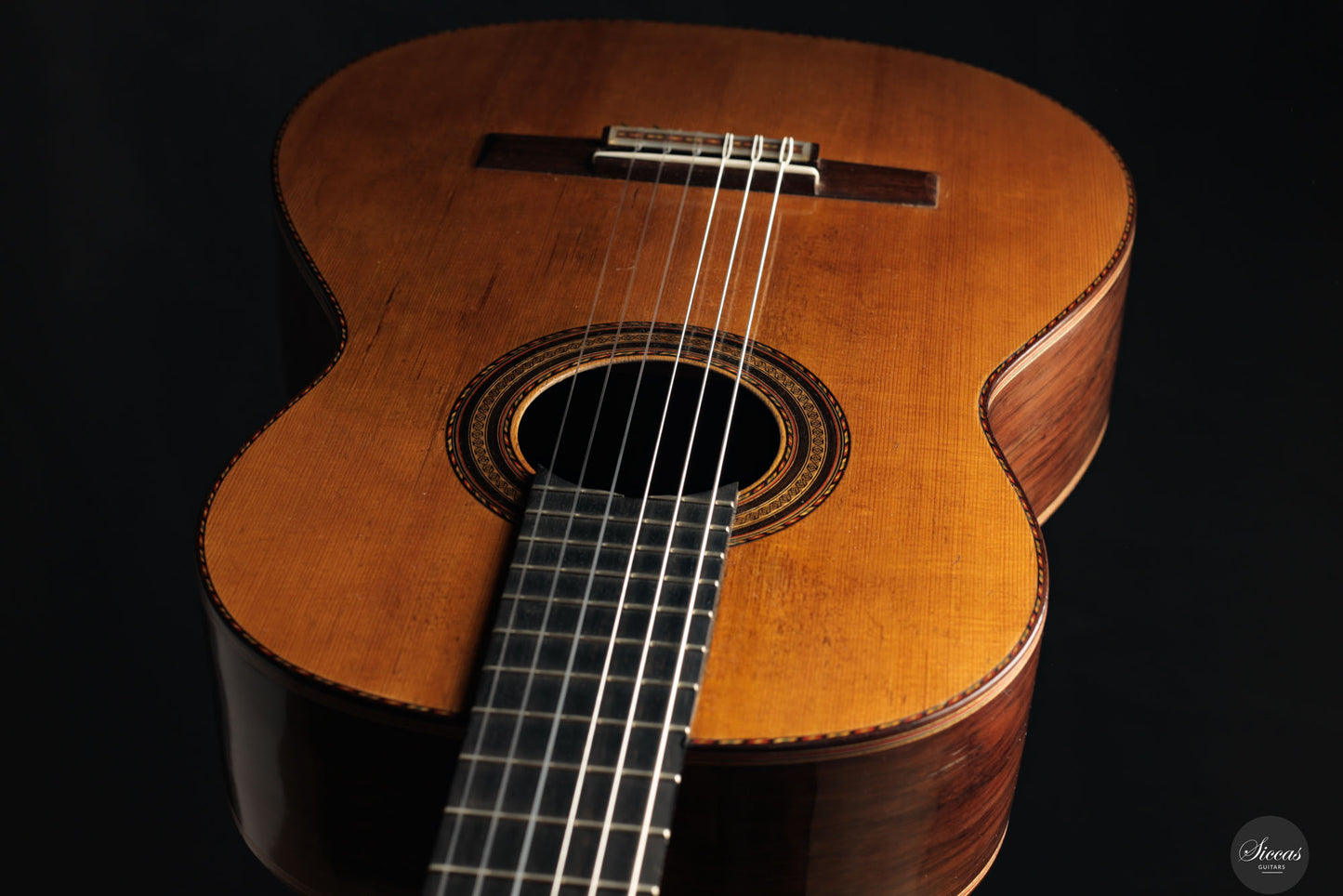
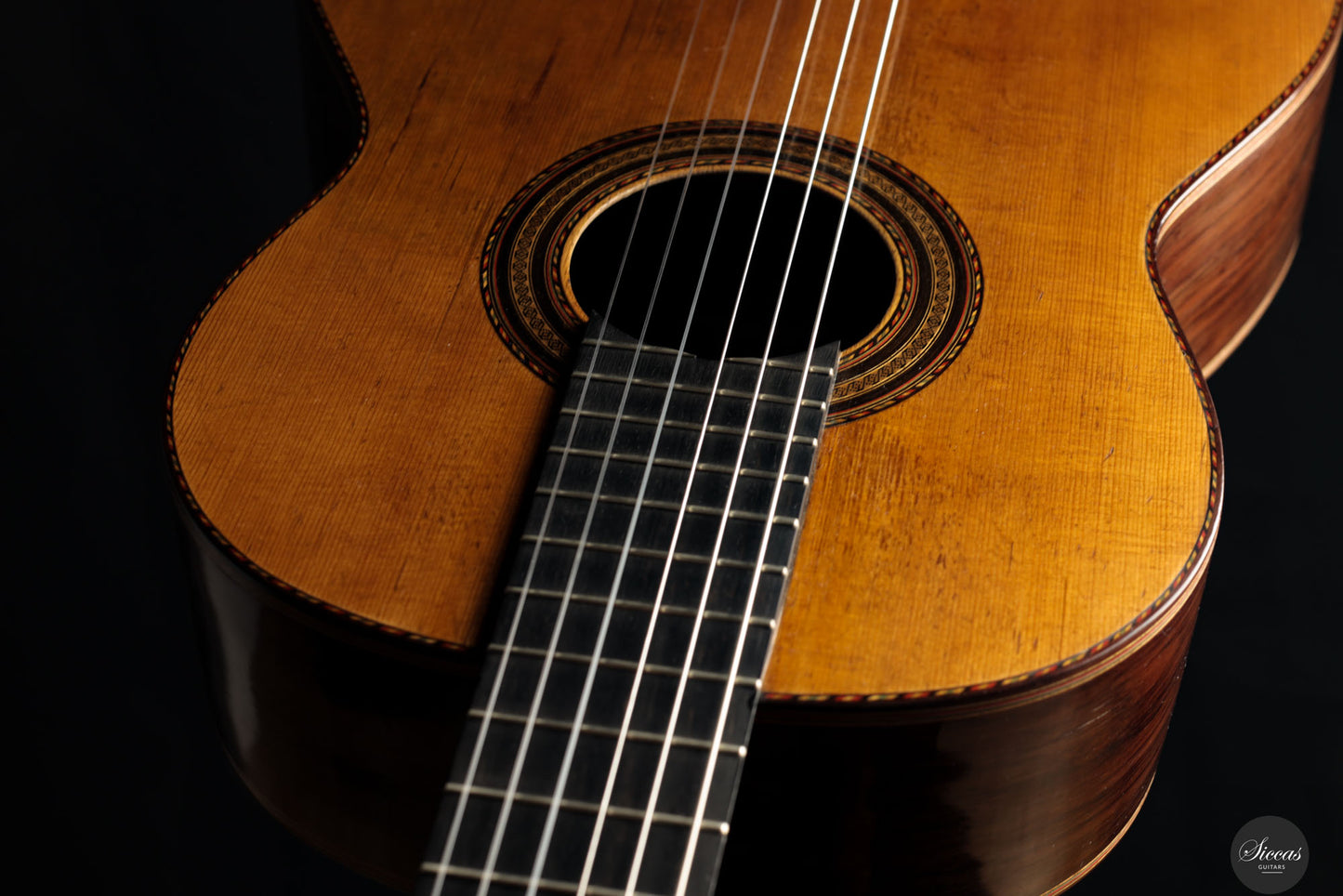
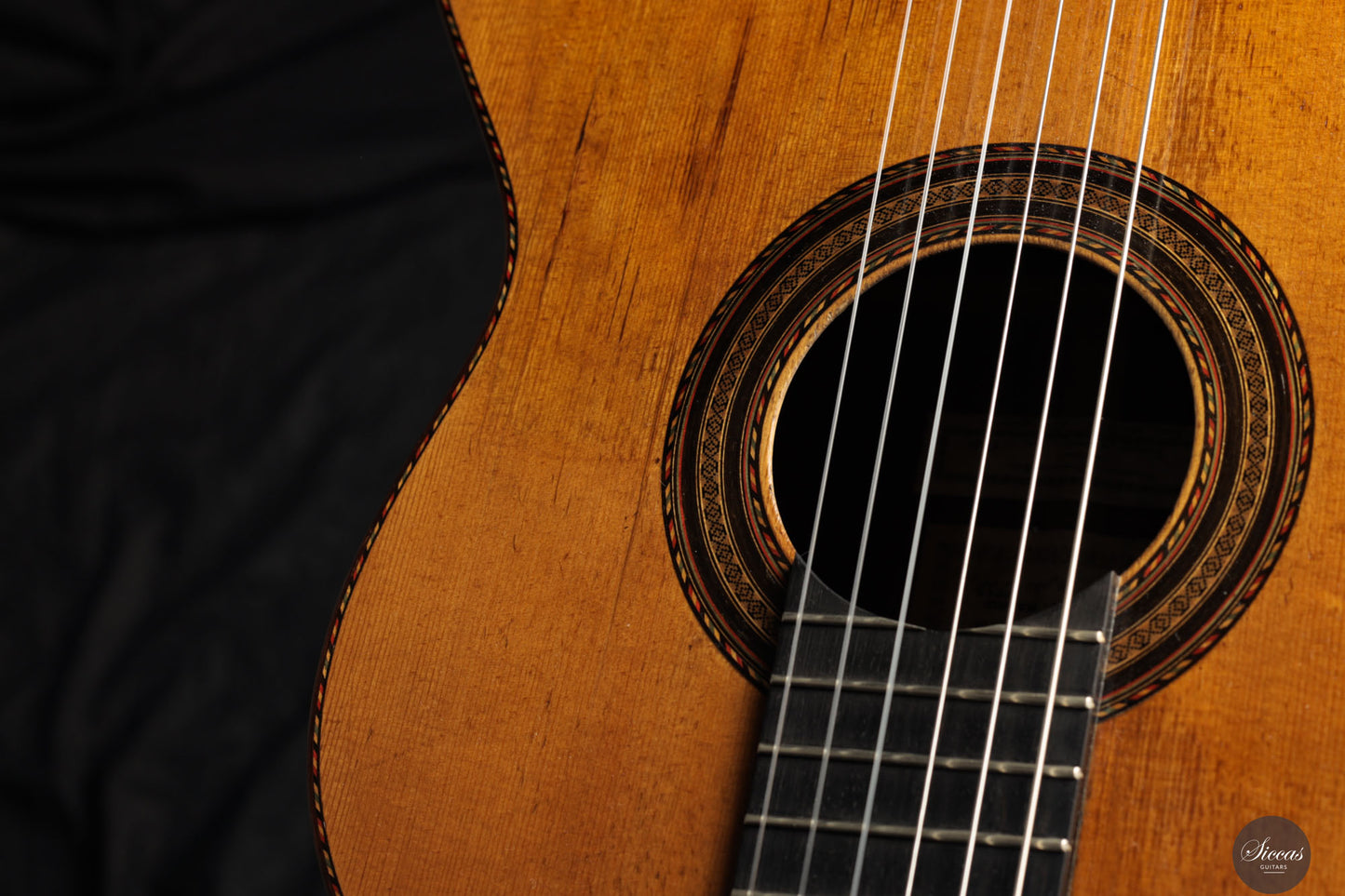
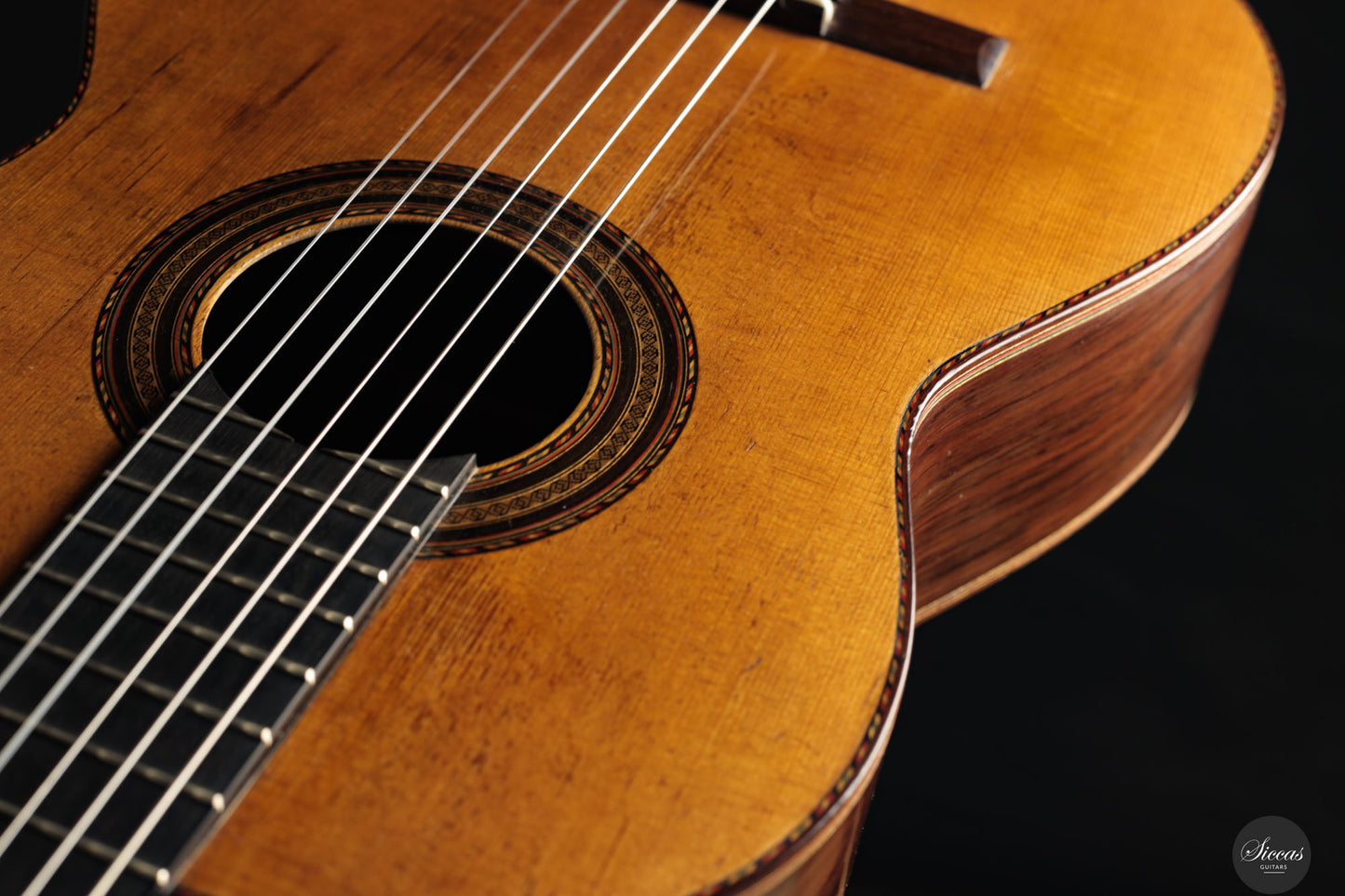
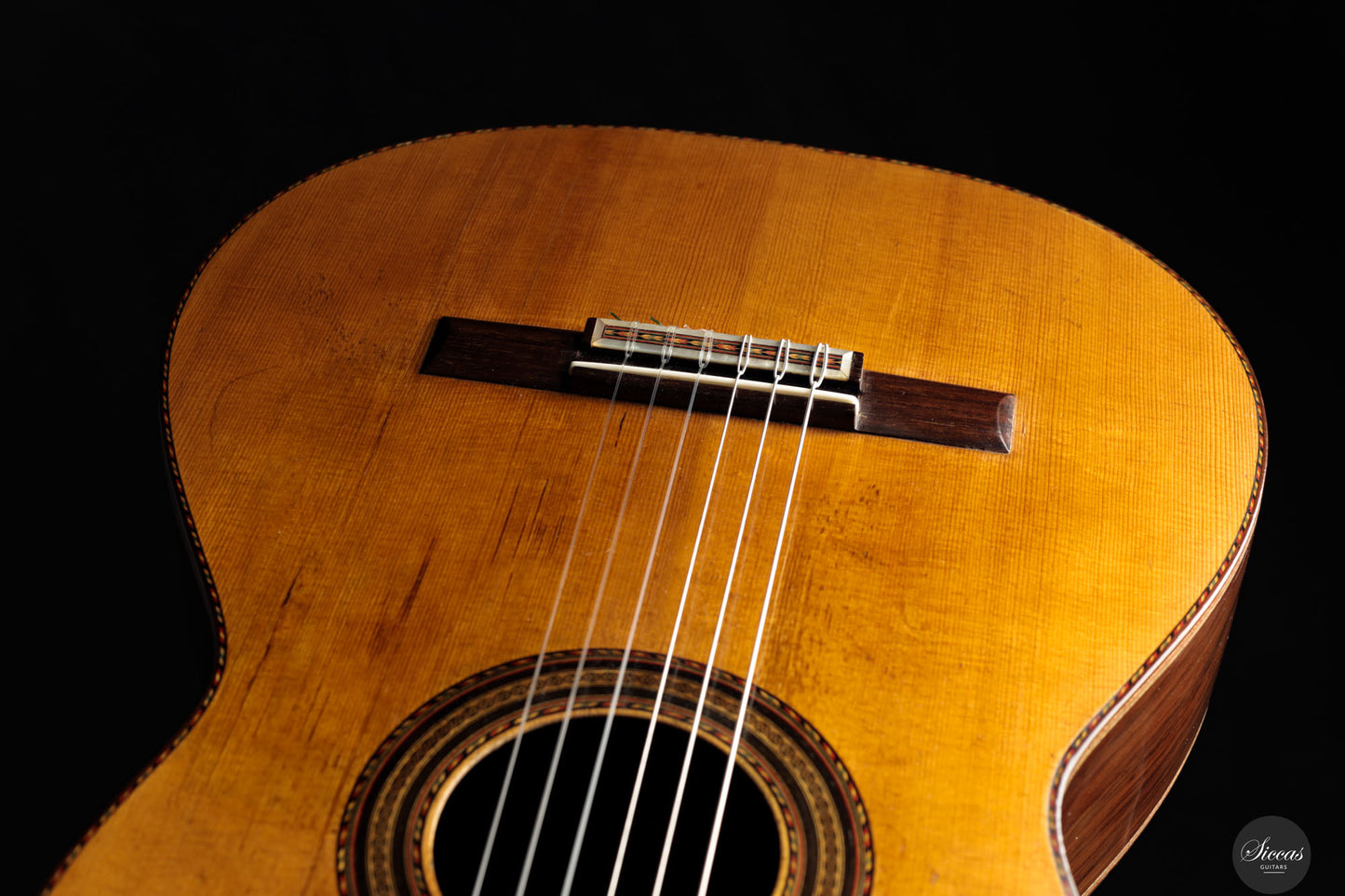
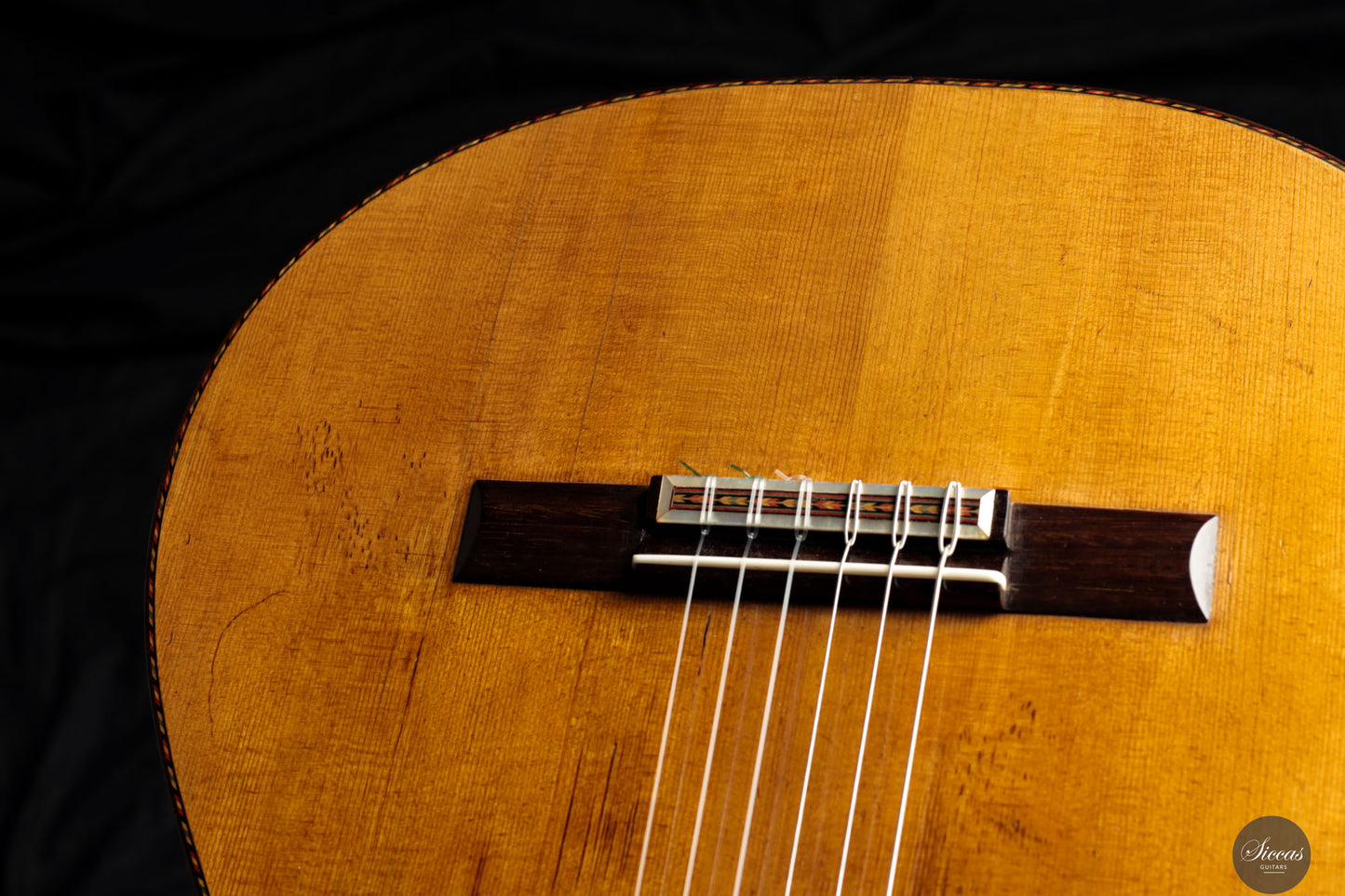
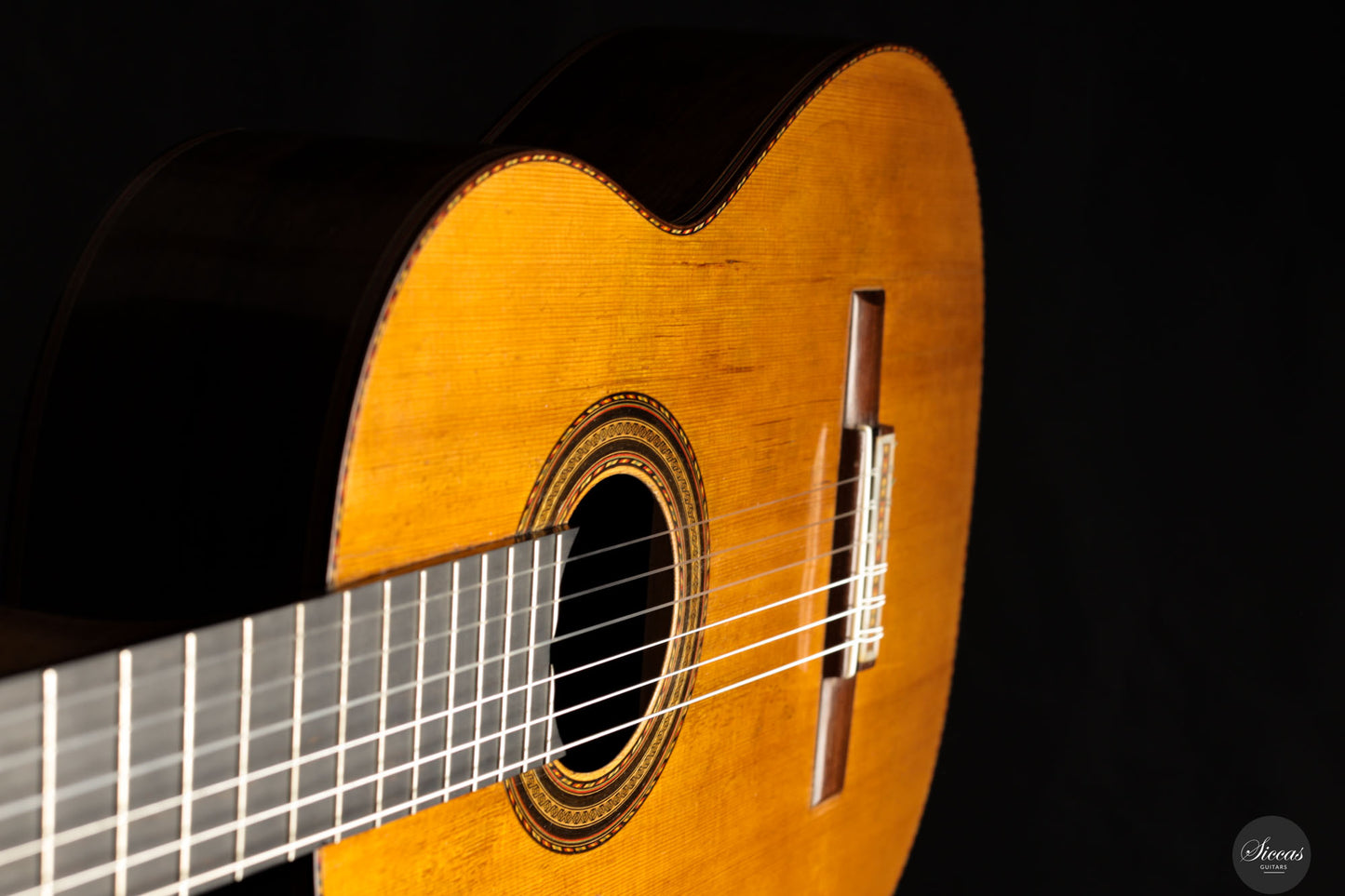
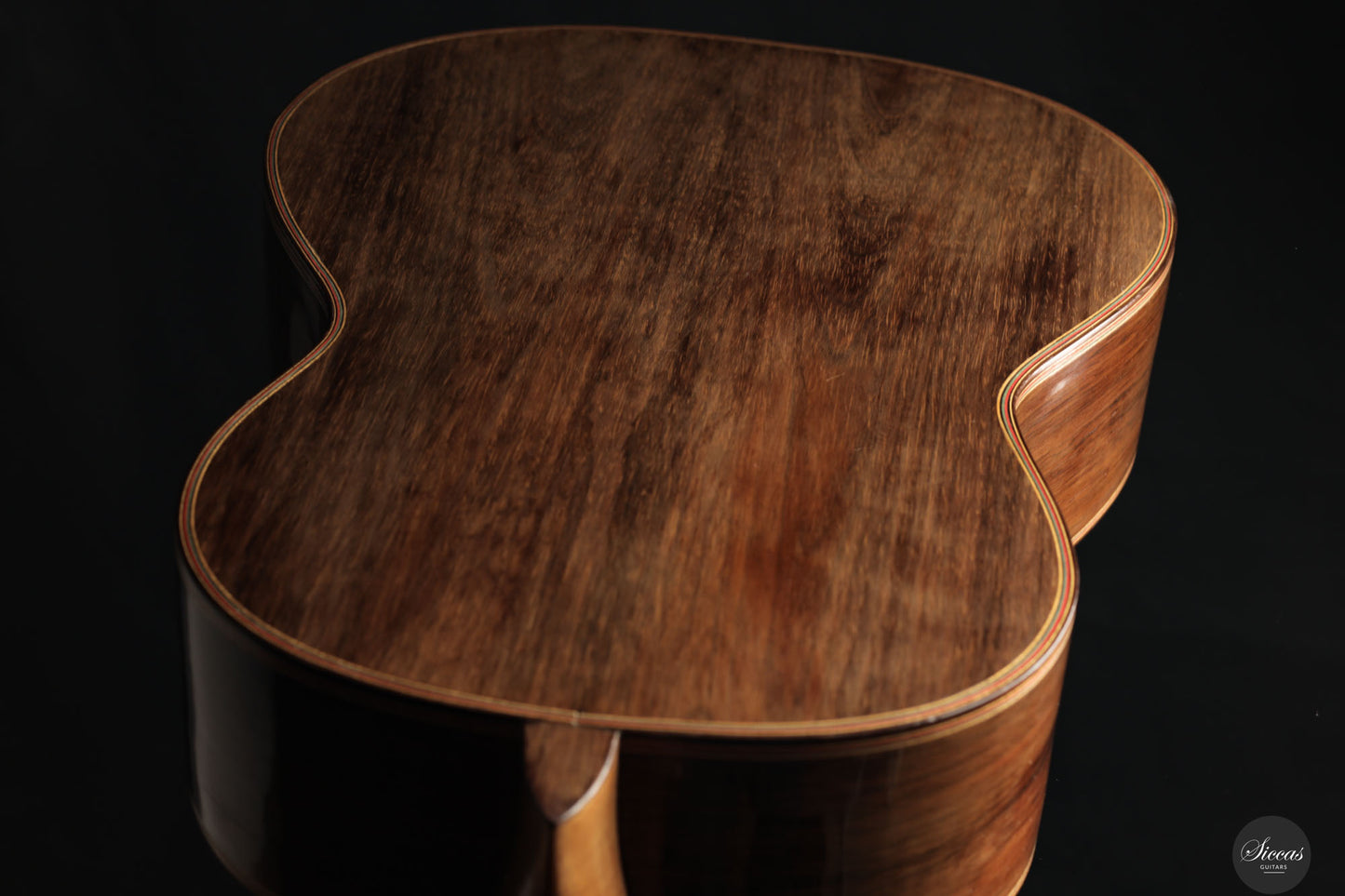
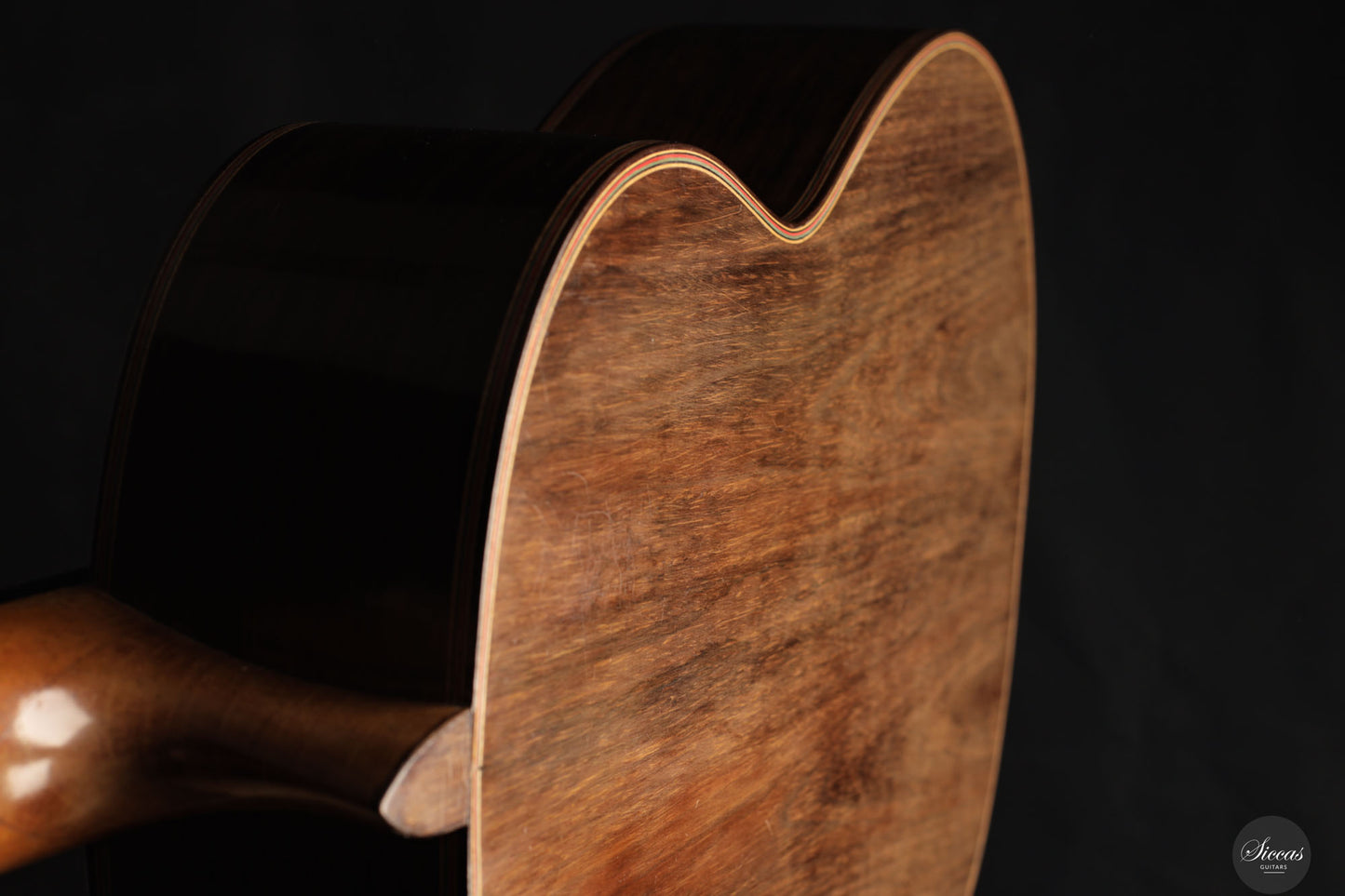
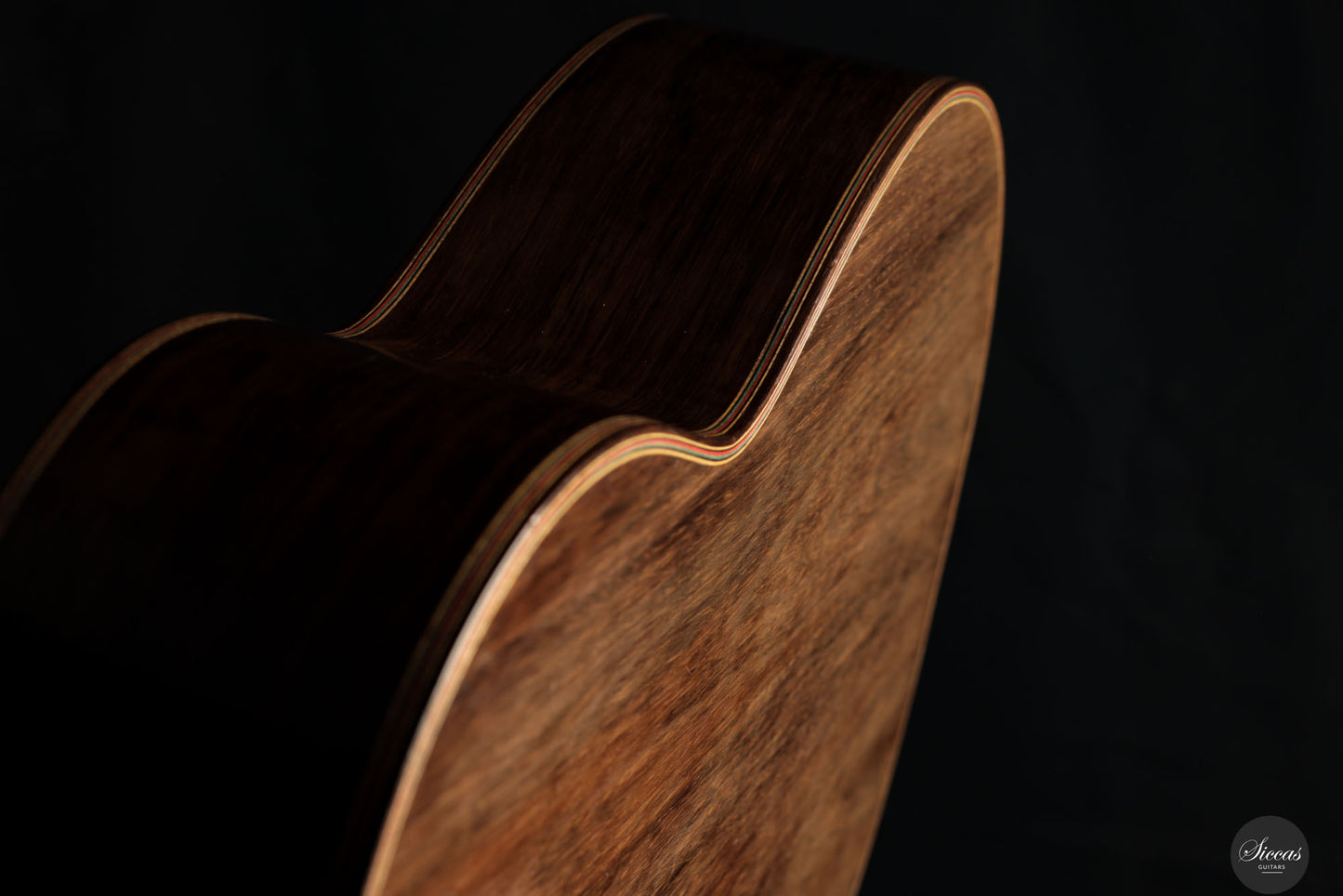
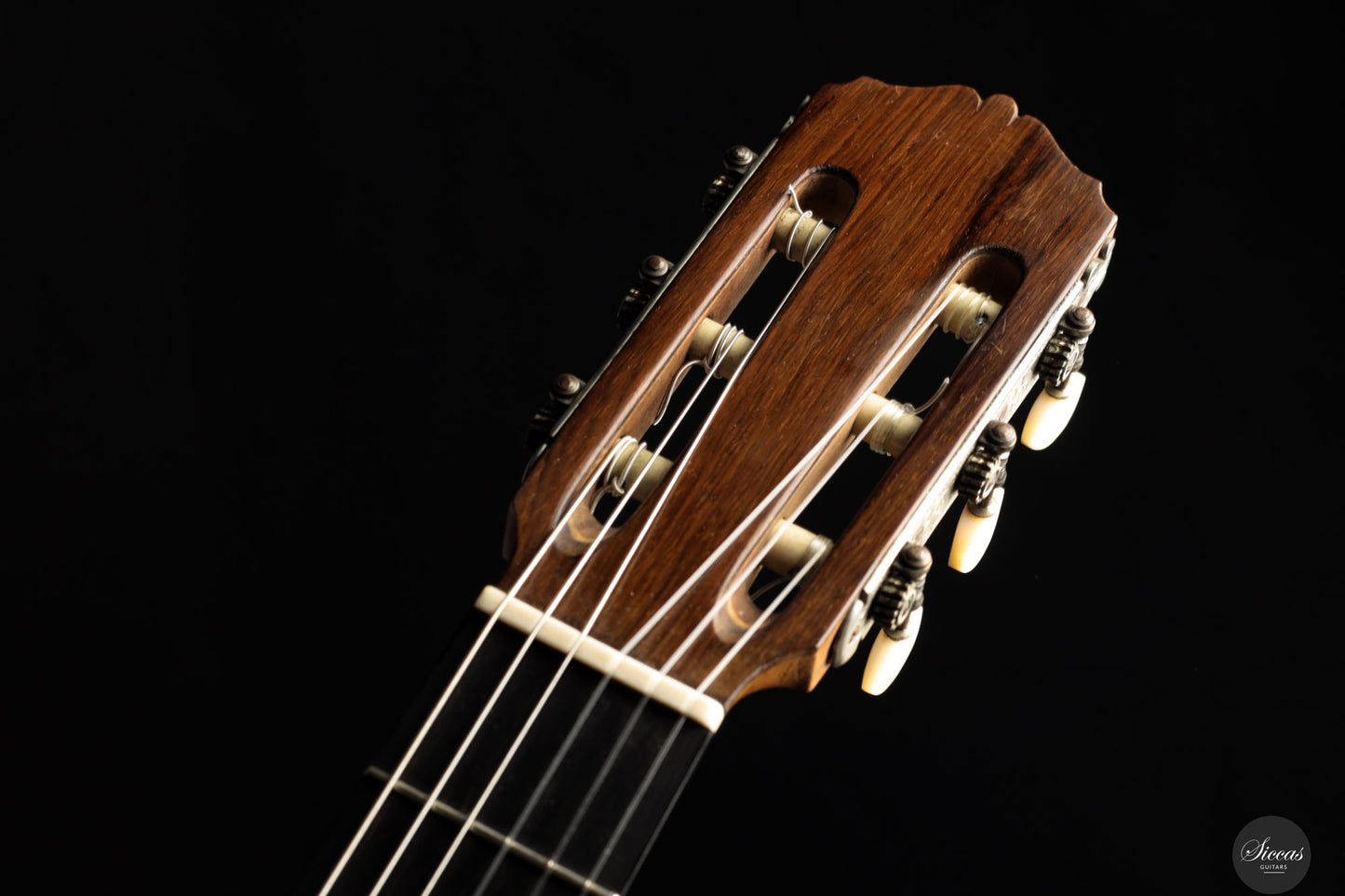
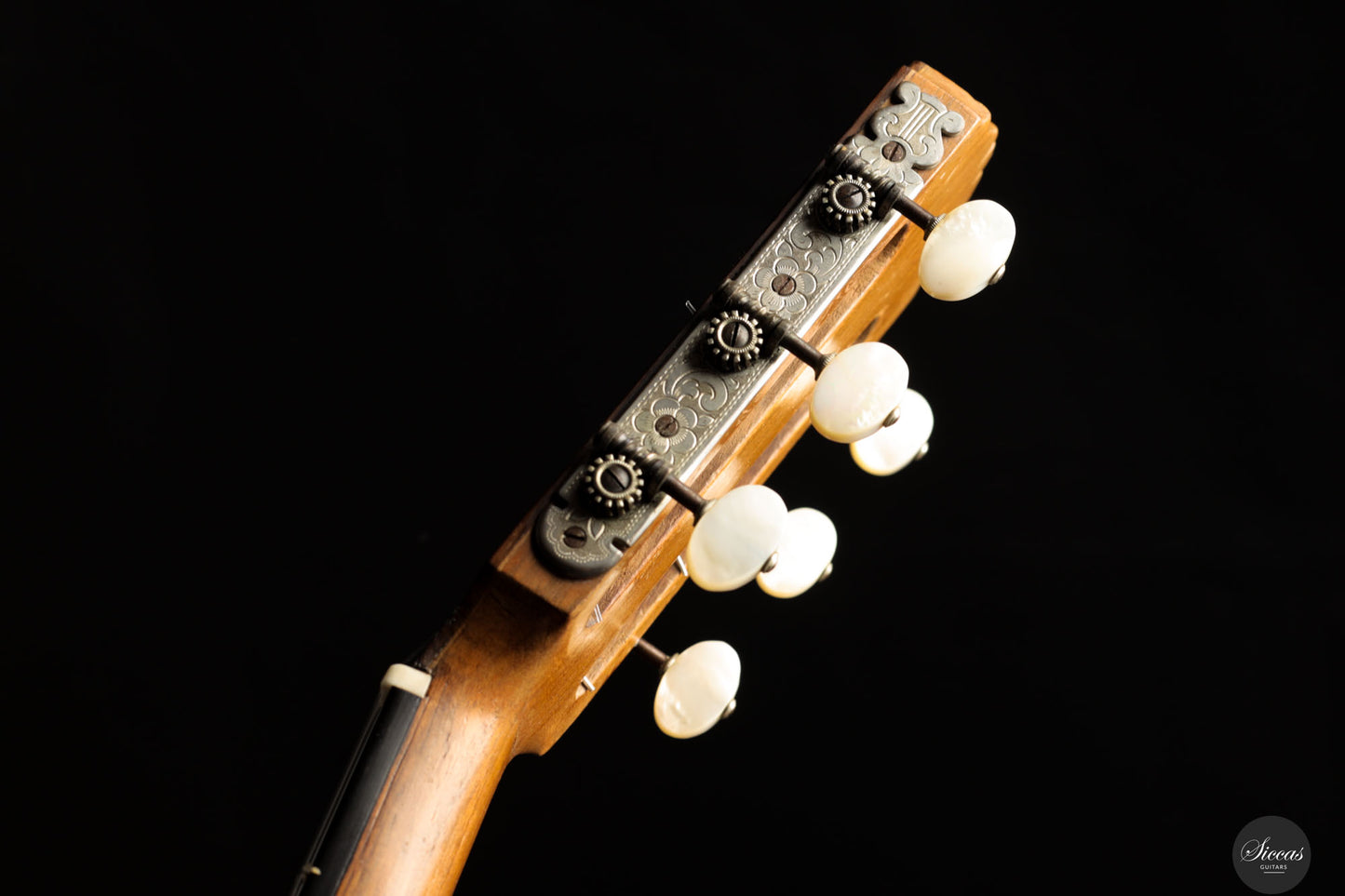
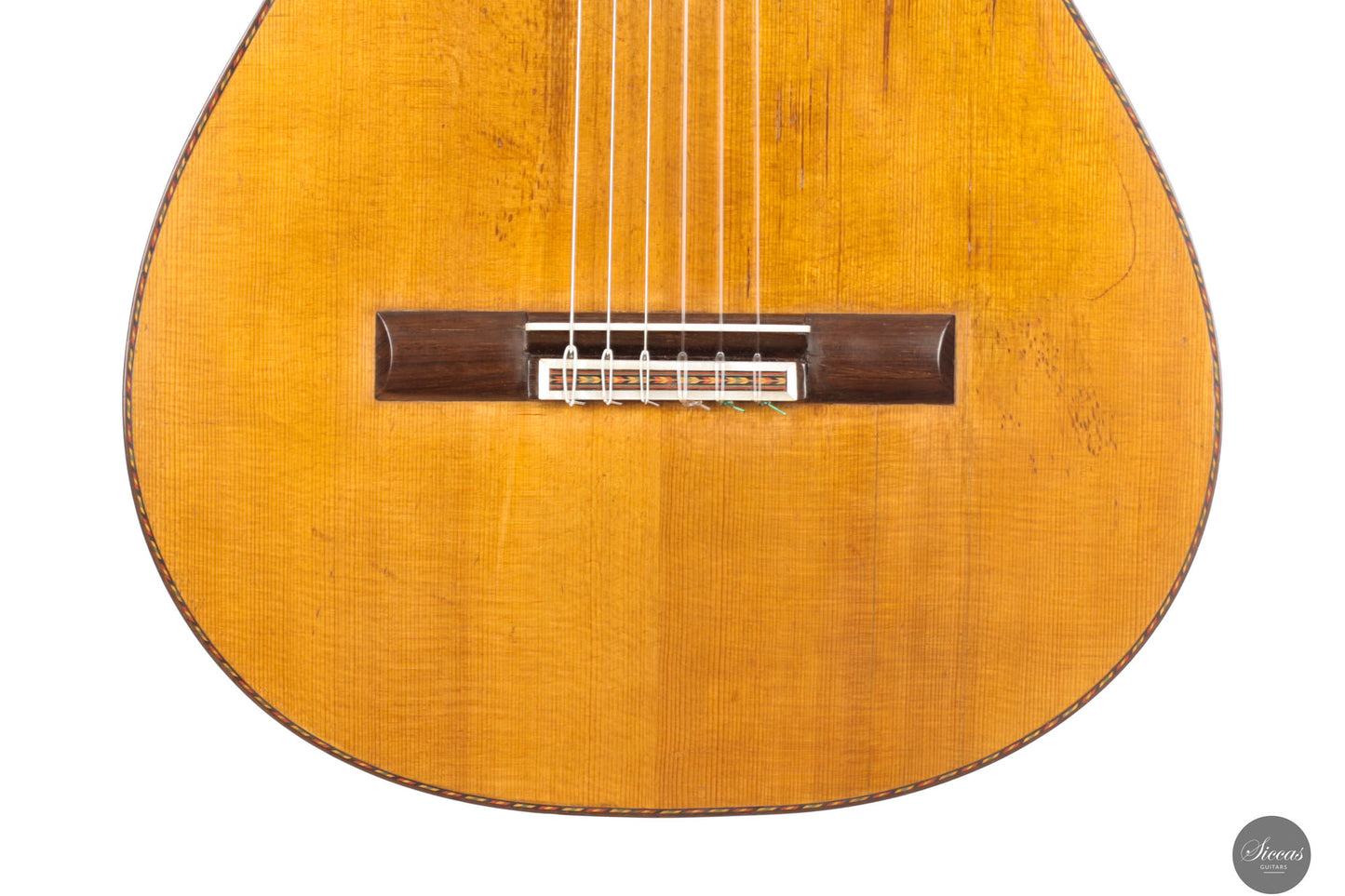
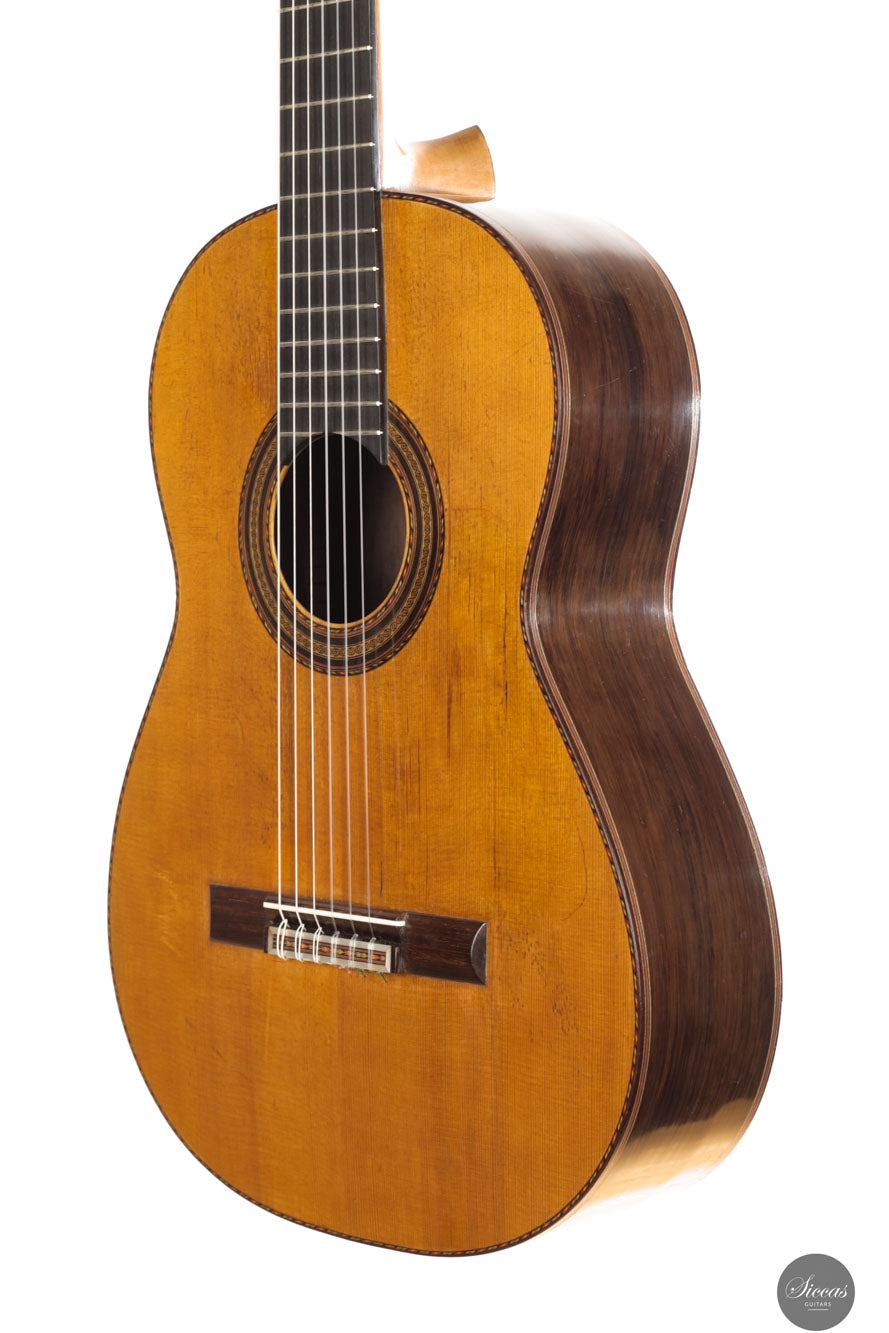
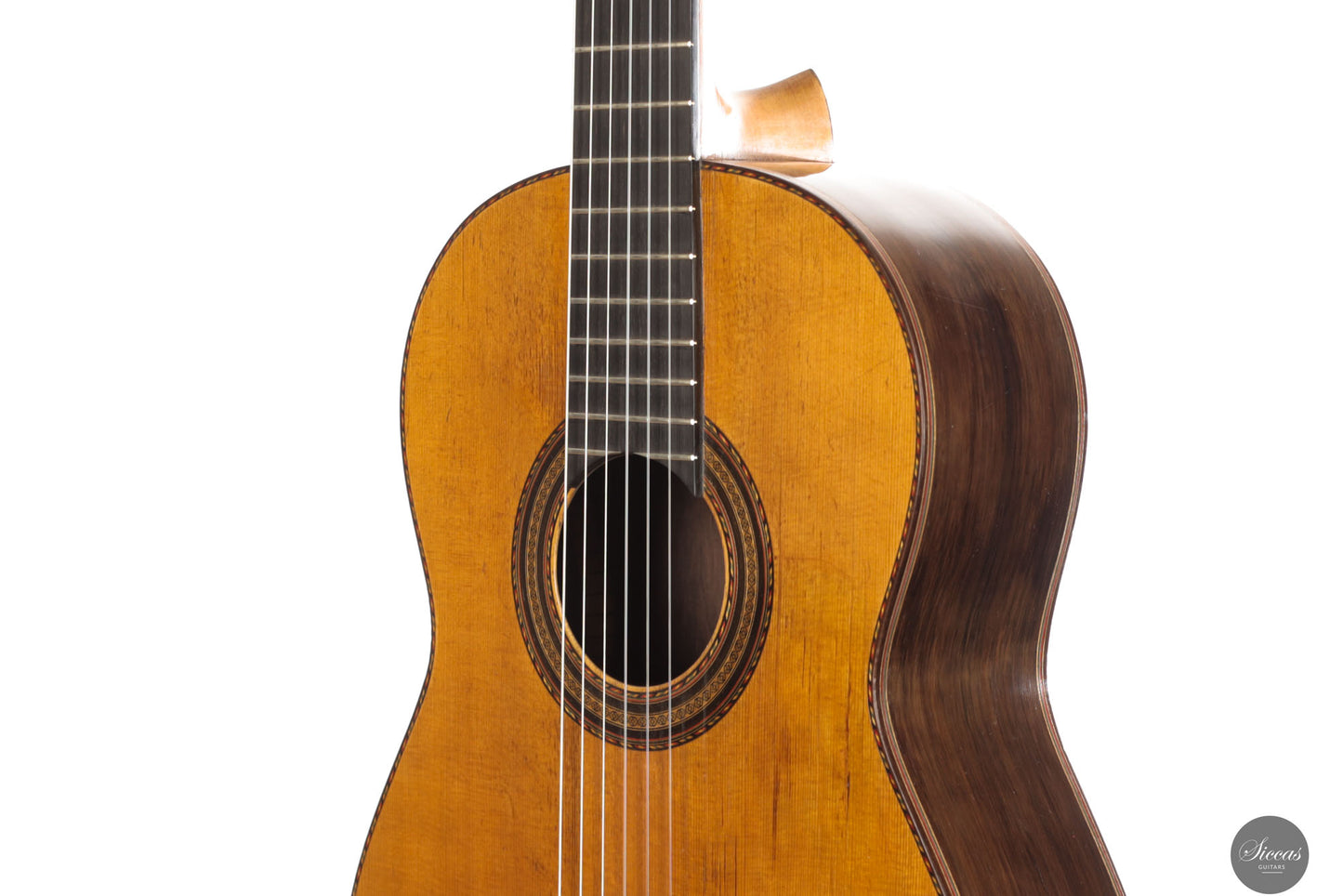
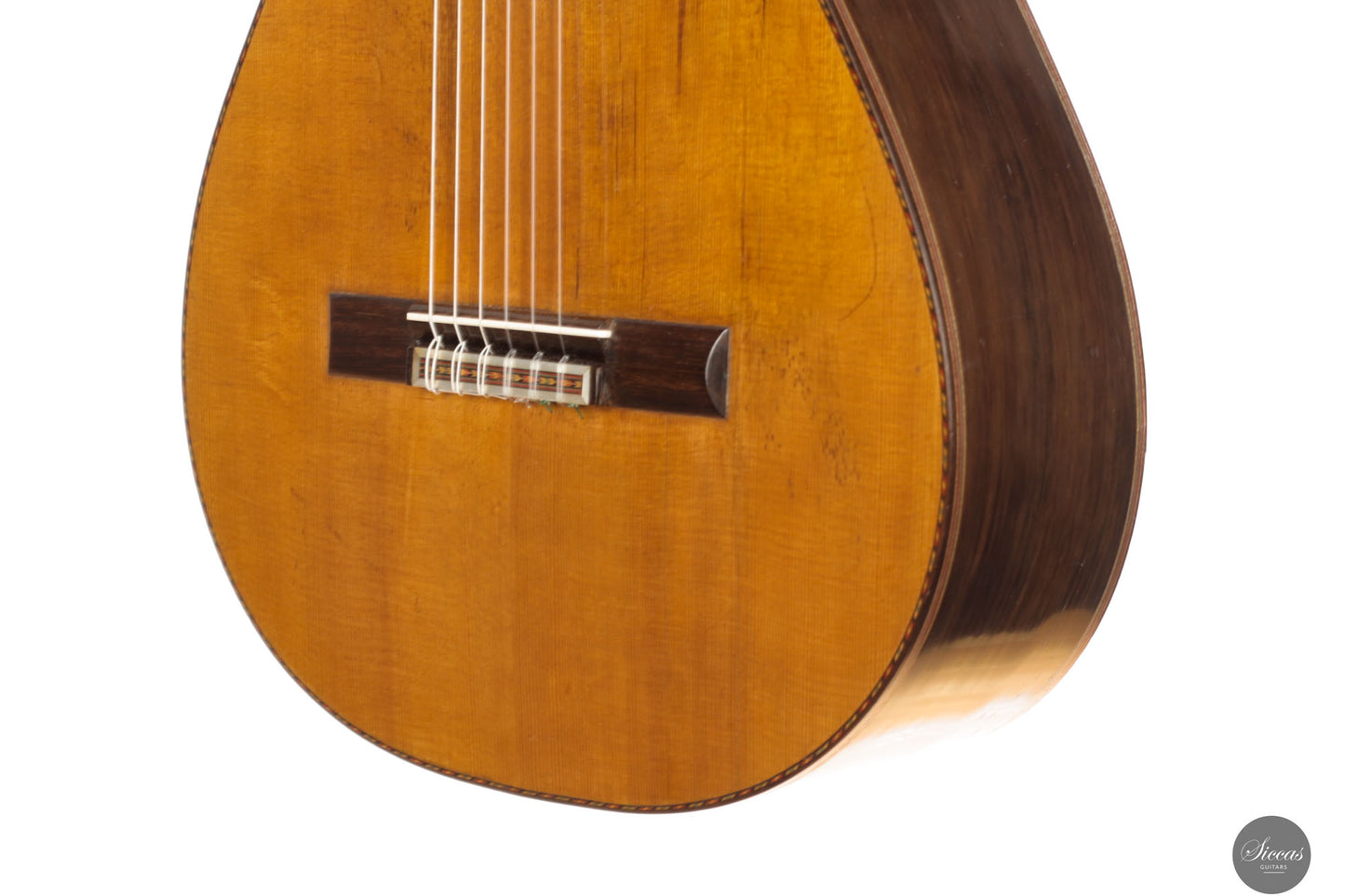
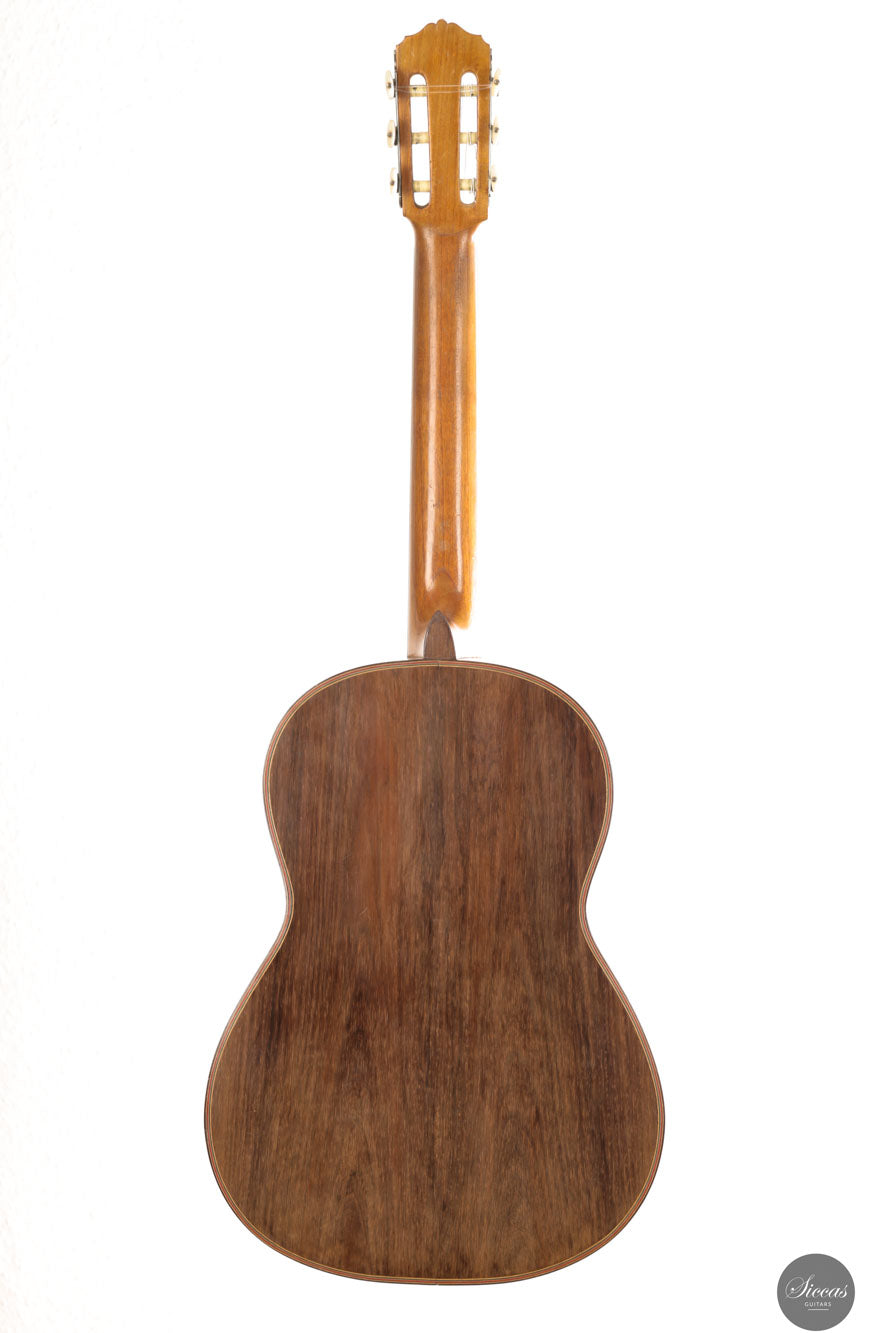
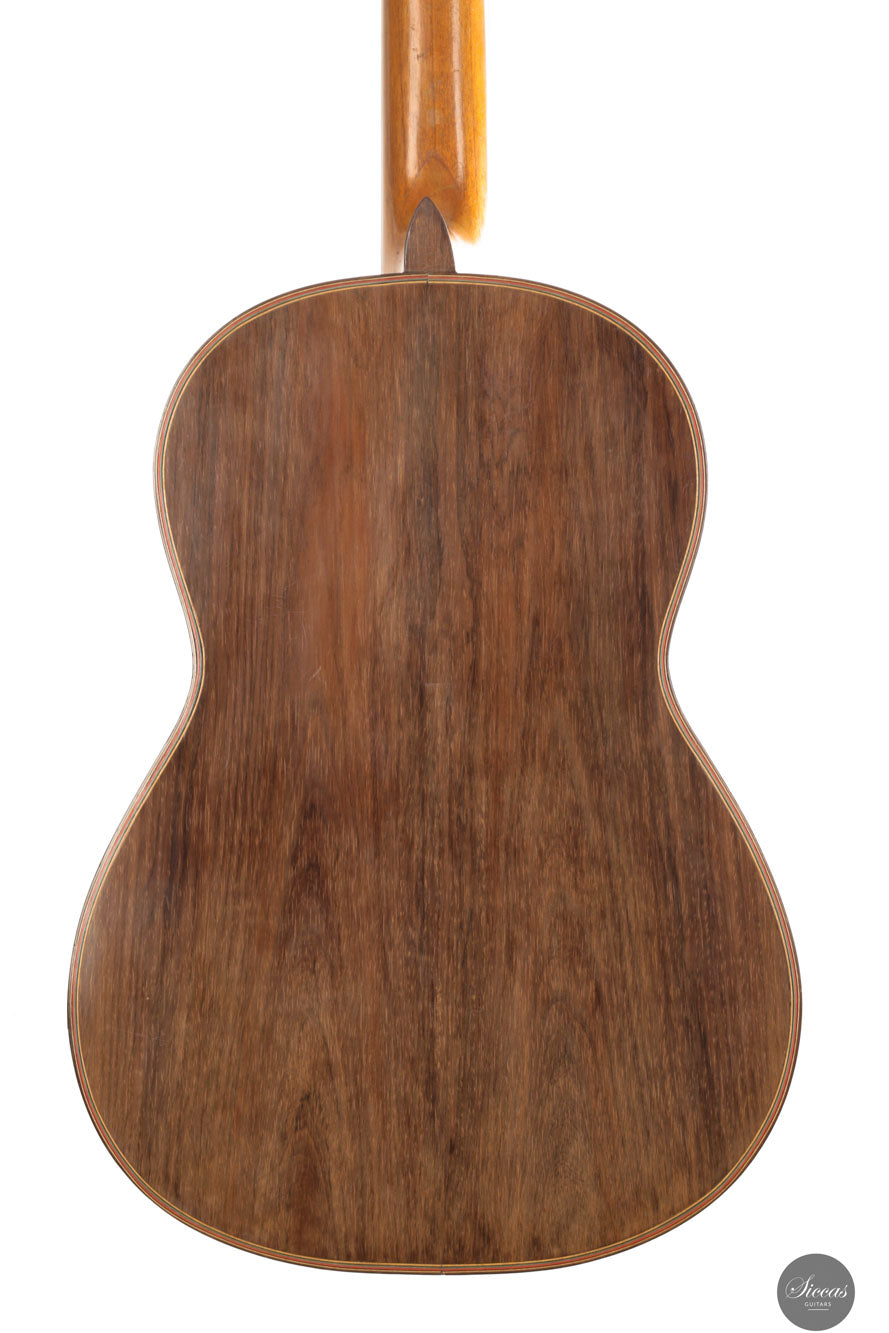
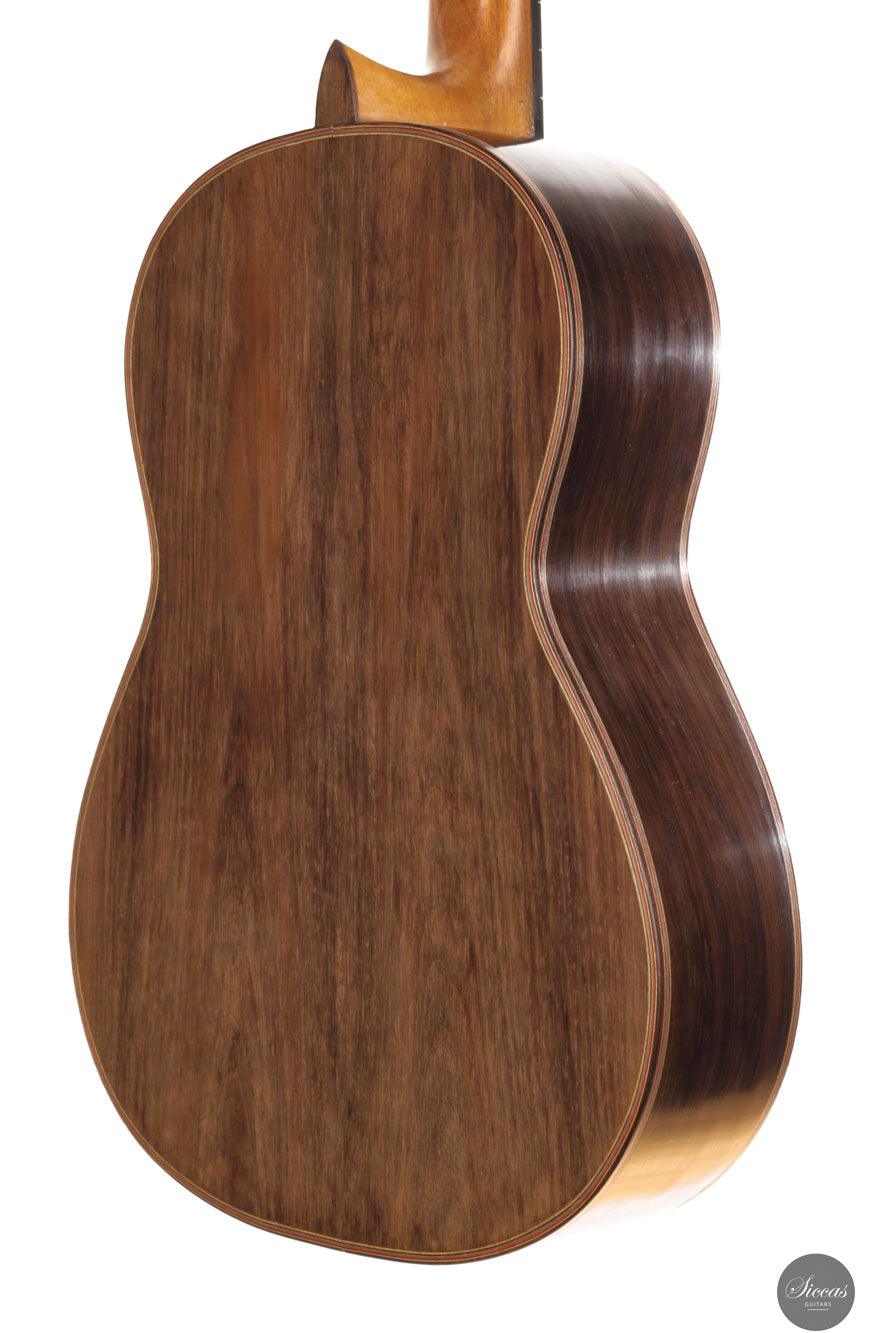
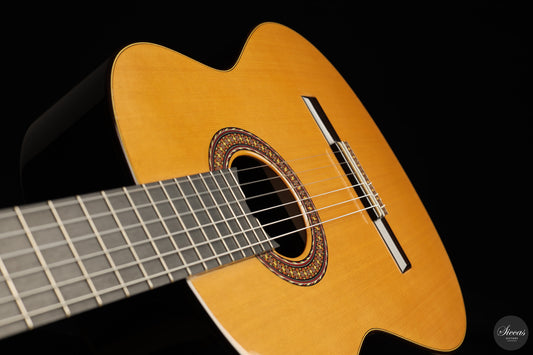
Built in 1933 at the height of Domingo Esteso’s career, this extraordinary guitar is a rare and exquisite model with Brazilian rosewood back and sides. It embodies Esteso’s renowned purist design, characterized by simple yet elegant lines and intricate inlays. The French-style rosette exudes sophistication, while the headstock stands out as the most elaborate of Esteso’s models, reminiscent of the finest creations from the workshop of Manuel Ramirez. This guitar underwent a meticulous restoration by a professional luthier is Sevilla, in 2014. The expertly repaired cracks are not easily visible from the outside: two cracks located behind the bridge, three cracks located between the bridge and the soundhole, and two cracks located to the right of the soundhole. All cracks have been reinforced with cleats to ensure the long term stability of the repair, preserving both its structural integrity and its authentic, brilliant sound. There is also a very small crack on the side that has been glued as a preventive measure. Despite nearing its centenary, this instrument is vibrant, playful, and rich in tonal colors, a testament to its timeless craftsmanship. This guitar is a masterpiece of craftsmanship and a tonal treasure, representing the quintessence of Spanish sound from the early 20th century.
While this one is sold, these are ready for you
-
Classical Guitars
The classical guitar, with its soft nylon strings and characteristic timbre, has become a symbol of chamber music, Spanish tradition, and concert repertoire. Its modern form was shaped by Antonio de Torres in the 19th century, setting the standard for the body, fan bracing, and the 65-centimeter scale length that are still used today. Instruments in this category open up a rich palette from the refined Romantic miniatures of Tárrega to the majestic concertos of Rodrigo. Here you will find guitars that preserve historical continuity and at the same time inspire new interpretations.Look all products of the collection -
Antonio Marin Montero - 2011 Flamenca No. 670
Price: 7.490 €Unit price per Tax free (0% DE)Luthier: Antonio Marin MonteroConstruction Type: Traditional -
Jialan Chen - 2026 Coclea Thucea "Fibonacci"
Price: 9.990 €Unit price per Tax free (0% DE)Luthier: Jialan ChenConstruction Type: Traditional -
Lucio Antonio Carbone - 2026
Price: 8.400 €Unit price per Tax free (0% DE)Luthier: Lucio Antonio CarboneConstruction Type: Traditional -
Solveig & Andreas Kirschner - 2016 Studio
Price: 4.990 €Unit price per Tax free (0% DE)Luthier: Andreas KirschnerConstruction Type: Traditional -
Richard Jacob Weissgerber - 1944 Biedermeier 35.1/3
Price: 4.990 €Unit price per Tax free (0% DE)Luthier: Richard Jacob WeissgerberConstruction Type: Traditional -

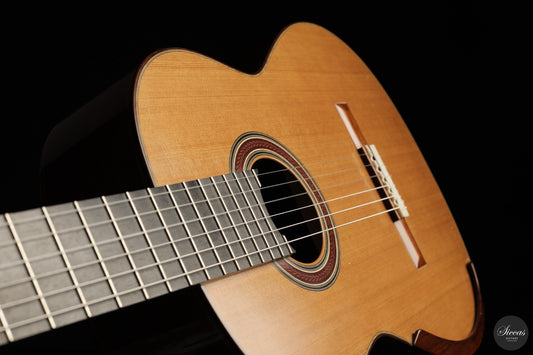 Reserved
Zbigniew Gnatek - 2023
Price: 11.990 €Unit price per Tax free (0% DE)ReservedLuthier: Zbigniew GnatekConstruction Type: Lattice -

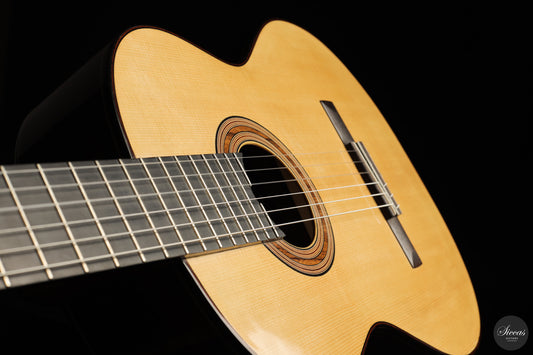 Reserved
Andreas Kraus - 2025-01 Double-Top
Price: 6.990 €Unit price per Tax free (0% DE)ReservedConstruction Type: Double-Top Guitars -
Kenneth Brögger - 2025 Maple "Mosaic"
Price: 8.990 €Unit price per Tax free (0% DE)ReservedConstruction Type: Traditional -
Kenneth Brögger - 2026 Rosewood "Mosaic"
Price: 8.990 €Unit price per Tax free (0% DE)Construction Type: Traditional -
José Salinas - 2026 Cedar 64 cm
Price: 5.990 €Unit price per Tax free (0% DE)Luthier: José SalinasConstruction Type: Traditional

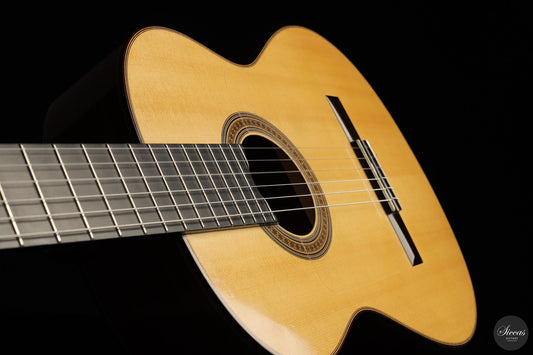

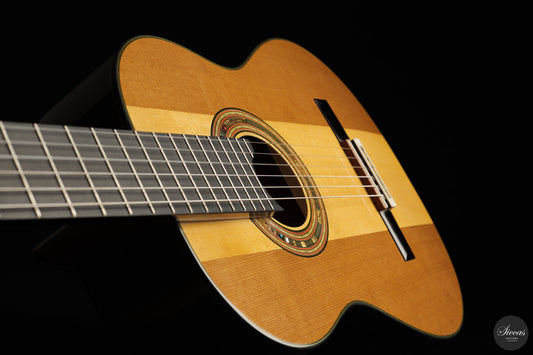


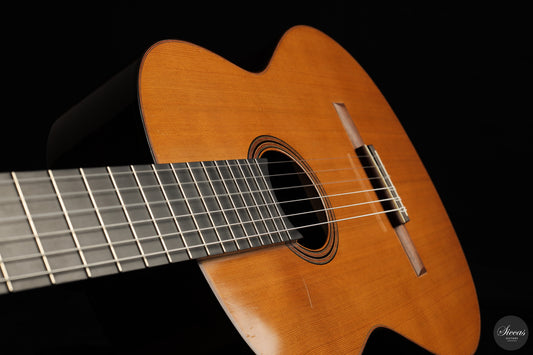

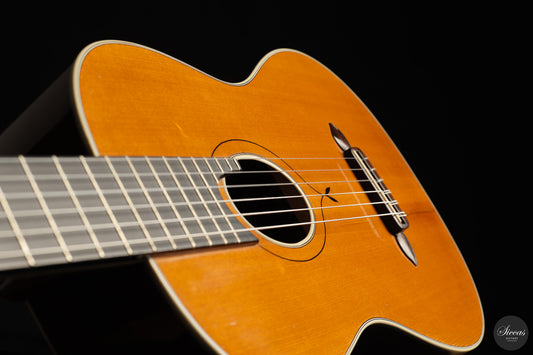


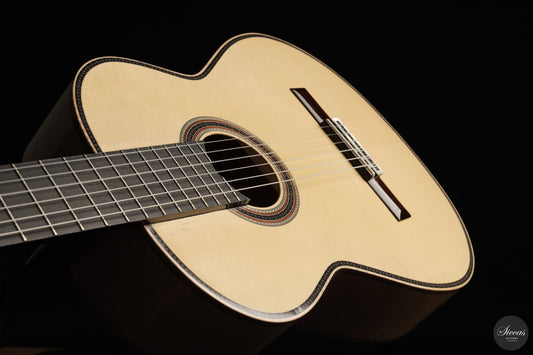

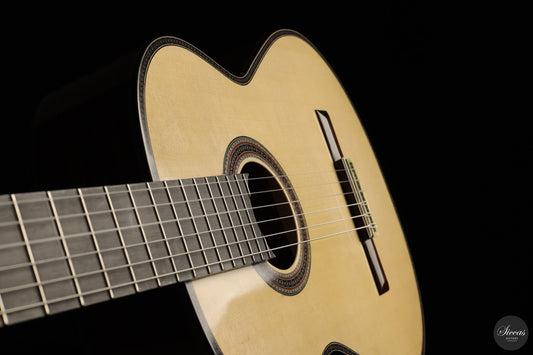



Related guitars
Frequently Asked Questions About Classical Guitars
How do I choose the right classical guitar for my level?
Choosing the right classical guitar depends on your playing level, musical goals, and budget. Beginners benefit from studio-model guitars from renowned workshops, while advanced players and professionals often choose a handmade master guitar. We are happy to advise you personally and can send detailed sound samples and videos on request.
What is the difference between a master guitar and a studio guitar?
Master guitars are built entirely by hand in the workshop of a single luthier, using only high-quality, well-aged tonewoods. Studio guitars are made in small series, often under the supervision of the master luthier, and offer excellent value for students and ambitious amateur players.
Can I try a classical guitar at home for 14 days?
Yes — every guitar you purchase from us comes with a 14-day home approval period. This complimentary trial applies worldwide to all orders, whether you are in Germany, Europe, the USA, Asia or anywhere else. We ship your instrument fully insured in a high-quality case so you can play it under your own acoustic conditions. If the guitar is not the right one for you, simply send it back and receive a full refund of the purchase price.
Can I try a classical guitar before purchasing?
Absolutely. You are warmly invited to visit our showroom in Karlsruhe, Germany, and test the instruments at your leisure. We are happy to schedule a personal appointment. If a visit is not possible, we send detailed videos and sound samples, and offer extensive consultation by phone or video call.
What payment methods and financing options do you offer?
We accept bank transfer, PayPal, major credit cards, and Klarna. For high-value instruments, we offer individual installment plans on request. Please contact us directly — we will find a suitable solution for every budget.
How do I properly care for my classical guitar?
A classical guitar requires constant humidity between 45 and 55 percent. Store the instrument in its case with a humidifier, avoid direct sunlight and large temperature fluctuations. Change the strings regularly and clean the guitar with a soft microfiber cloth.