Philosophy and Construction
My overarching goal in building guitars is to achieve a consistent expressive character while preserving the unique personality of each instrument. This balance results from a cohesion between sound and appearance. Both are shaped by the form and materials, which I select according to their acoustic, structural and aesthetic qualities. When choosing the wood for the soundboard, which is crucial for the instrument’s acoustics, I complement traditional methods such as tapping and bending with additional physical measurements.
Design and Structural Features
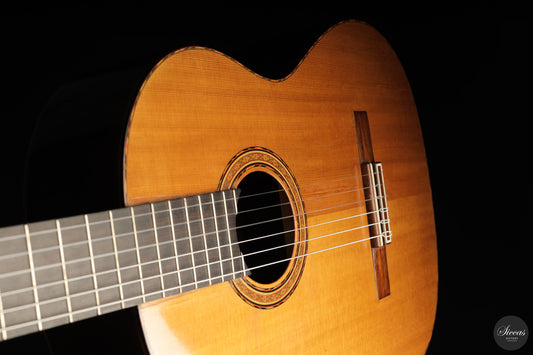
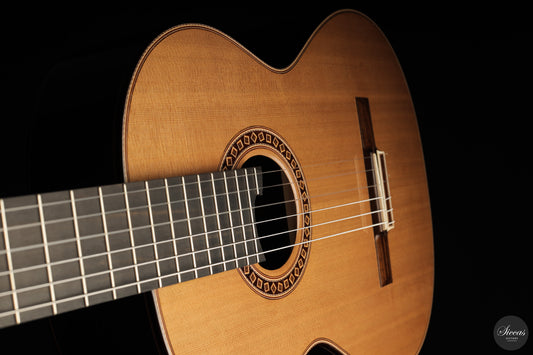
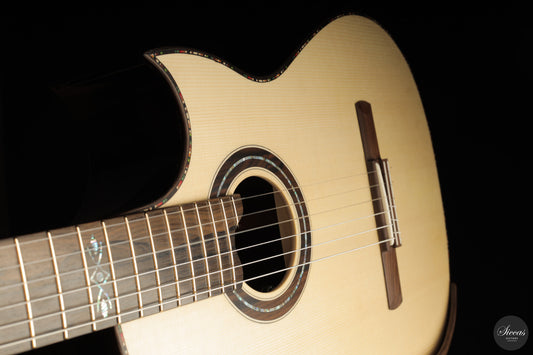
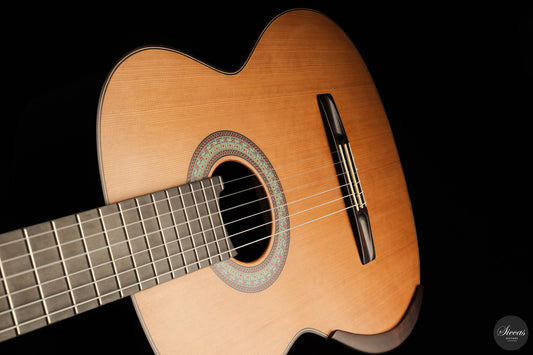
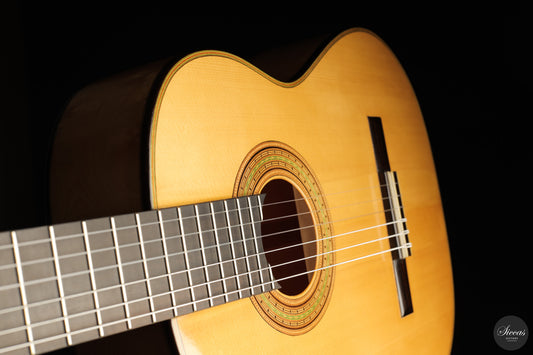
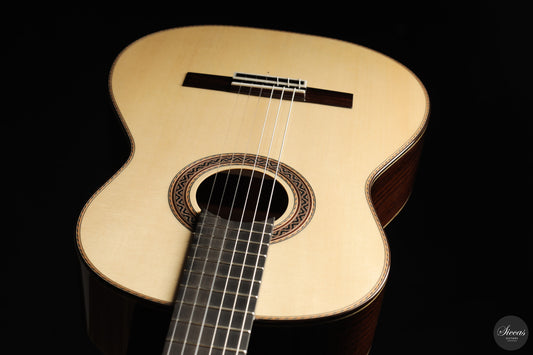
The basic construction follows the traditional Spanish concert guitar. The bracing system of the soundboard is inspired by the concept of Robert Bouchet, yet realised in a significantly more delicate manner. Subtle structural and visual refinements extend beyond conventional standards. The soundboard slopes downward on the treble side above the soundhole, creating a one-sided elevated fingerboard that improves playability and enhances projection in the higher registers.
The relatively narrow outline produces a slightly reduced soundboard area, which decreases the vibrating mass and contributes to a quick response. To balance this, high sides increase the body volume, giving the bass its deep character. The sides are doubled yet kept thin to support sustain without adding unnecessary weight. All instruments feature a hand-polished French polish finish.
Sound Characteristics and Aesthetic Concept
My concert guitars offer strong projection, a wide tonal palette, warm basses and singing trebles. I create visual unity through recurring shapes, materials and a restrained colour palette. I offer two design variations: one more modern and one slightly more traditional. Although their construction is nearly identical, they differ subtly in outline, with the rosette serving as the most distinctive element.
The Craft
Classical guitar construction at concert level demands years of accumulated knowledge: how individual pieces of timber vibrate, how bracing patterns affect tonal balance, how small changes in geometry shift the character of an instrument. A finished concert guitar typically represents several hundred hours of hand work. Every decision — wood selection, arch height, brace dimensions — shapes what a player can do with the finished instrument.