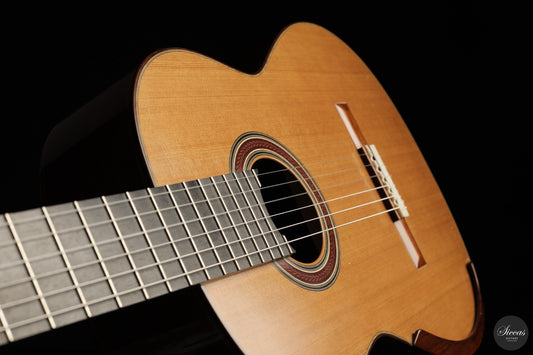
Selecting the right strings is an essential part of shaping both the sound and the physical response of a classical guitar. Strings form the direct connection between the player and the instrument, and even small changes can significantly alter tone, projection, and playing comfort. Because the market offers a wide variety of options, understanding the fundamental differences between string types helps guitarists make informed decisions that suit their instrument, repertoire, and technique.
The Role of Strings in Sound and Feel
Classical guitar strings influence far more than volume or brightness. They affect attack, sustain, tuning stability, and the way the instrument reacts to different right-hand techniques. A guitar that feels stiff and resistant with one set of strings may feel flexible and responsive with another. For this reason, string choice should be seen as an integral part of the overall setup rather than as a simple accessory.
Because strings interact directly with the soundboard, their properties influence how efficiently the guitar converts string energy into sound. Matching strings to the construction and voicing of the instrument is therefore essential. If you are still deciding on an instrument itself, our guide on classical guitars offers a detailed starting point.
String Materials: Nylon, Carbon, and Composite
The material from which treble strings are made has a profound effect on tone. Understanding the three main categories — nylon, carbon/fluorocarbon, and composite — helps narrow down what will suit your playing style and instrument.
Nylon Strings
Nylon strings became the standard for classical guitar during the twentieth century and remain the most widely used choice today. They typically deliver a warm, rounded tone with reliable tuning stability. Nylon trebles can vary in transparency, warmth, and resistance depending on their formulation, but they share a characteristic softness of attack that many players associate with the traditional classical sound.
Nylon is particularly well-suited to music of the Baroque and Classical periods, where clarity and articulation are valued. Prominent brands such as Savarez, , Hannabach, and La Bella all produce highly regarded nylon string sets, each with a slightly different tonal character.
Carbon and Fluorocarbon Strings
Carbon and fluorocarbon strings represent a modern alternative to nylon. They are made from denser synthetic polymers, which results in a brighter, more focused tone with greater projection and longer-lasting intonation stability. Carbon strings tend to have a slightly thinner diameter compared to nylon strings of the same tension, which can feel more comfortable for players with a lighter touch.
These strings respond well on guitars with a cedar top, where the additional brightness can complement the instrument's naturally warm character. Brands such as Knobloch and Savarez (Alliance series) are well known for their carbon and fluorocarbon offerings, and both are popular choices among advanced and professional players.
Composite Strings
Composite strings combine different materials — often a nylon core with various outer wrappings or coatings — to achieve a tonal balance between warmth and brightness. They aim to offer the depth and complexity of traditional nylon with some of the projection and clarity associated with carbon strings. Composite trebles are a practical middle ground for players who find pure nylon too soft and carbon too bright.
String Tension: Normal, High, and Extra-High
Tension is one of the most important variables in string selection. It describes the amount of force the string exerts on the guitar under pitch, and it directly affects playability, volume, and tonal character.
Normal Tension
Normal tension strings offer a balanced response that suits a wide range of players and instruments. They are comfortable to play for extended periods and allow for nuanced dynamic control. Most student and intermediate players begin with normal tension strings, and many experienced guitarists continue to prefer them throughout their careers.
Normal tension strings are also gentler on the guitar's structure, which can be a consideration on older or more lightly built instruments.
High Tension
High tension strings produce more volume and projection than normal tension strings. They require a firmer touch and greater finger strength, but reward the player with a fuller, more resonant tone. Many concert guitarists favor high tension strings when performing in larger venues where projection is critical.
High tension strings are particularly effective on guitars with stiffer soundboards, such as those made from spruce. If you are interested in how soundboard material affects tone, our article on spruce vs cedar classical guitars explores this in depth.
Extra-High Tension
Extra-high tension strings deliver maximum power and projection. They are less commonly used but can be appropriate for players with a very strong technique and for instruments specifically built to handle the increased string load. These strings demand precise right-hand control, as their resistance can make subtle dynamic shading more challenging.
Leading Brands and Their Characteristics
Several manufacturers have established strong reputations in the classical guitar world. Each brand brings a distinct tonal philosophy and a range of products for different needs.
Savarez
Savarez is a French manufacturer with a long history of producing classical guitar strings. Their range spans traditional nylon sets as well as modern carbon trebles. The Alliance series, using fluorocarbon trebles, is among the most widely used in professional performance.
. Their Pro-Arte series is one of the most popular choices globally, offering consistent quality and a well-balanced tone..
Hannabach
Hannabach is a German manufacturer known for precision manufacturing and a wide selection of tensions. Their 815 series is particularly well regarded among players who value a warm, full-bodied tone. Hannabach also produces strings for specific instrument types and musical periods.
Knobloch
Knobloch has become a preferred choice among dedicated and professional players for their consistency and tight quality control. Their strings are available in multiple tensions and materials, including carbon and composite options. Knobloch strings are frequently recommended by luthiers and pedagogues for their reliable behavior on high-quality instruments.
La Bella
La Bella is an American company with a heritage stretching back to the 1940s. Their classical string sets are known for a warm, traditional tone and are used by players who favor a more rounded, organic sound. La Bella also produces gut strings for historically informed performance.
Coating and Durability
Some classical guitar strings are coated to increase durability and resistance to wear. Coated strings generally last longer, making them practical for players who practice daily or perform frequently.
However, coatings can slightly alter feel and tonal response. Some players appreciate the smoother surface, while others prefer the direct contact and immediacy of uncoated strings. Tonally, coated strings may sound marginally less open at first but retain their character for a longer period. Players should weigh how often they are willing to change strings against whether long-term stability is more important than peak performance during the first days of use.
Matching Strings to Guitar and Repertoire
Each guitar reacts differently to the same strings. Construction method, soundboard stiffness, body size, and setup all influence how strings behave on a given instrument. A set that sounds outstanding on one guitar may feel dull or harsh on another.
Repertoire also matters. Music from the Baroque and Classical periods often benefits from clarity and articulation — nylon strings at normal tension tend to suit this material well. Romantic and modern works, such as those by Agustín Barrios or Heitor Villa-Lobos, may favor warmth and sustain, where high-tension carbon or composite strings can add presence and depth.
If you are exploring the classical guitar repertoire more broadly, our collection of famous classical guitar pieces provides a useful reference for the range of musical styles the instrument encompasses.
How to Restring a Classical Guitar
Once you have chosen a new set of strings, correct installation is equally important. Classical guitar strings require a specific tying technique at both the bridge and tuning pegs. Improperly tied strings can slip out of tune, reduce sustain, or even damage the bridge over time. The following video demonstrates the restringing process step by step using Knobloch strings:
Price and Practical Considerations
Classical guitar strings vary widely in price, from affordable sets aimed at students to premium options designed for concert use. Higher cost does not automatically guarantee suitability, but premium strings often offer improved materials and tighter quality control.
Balancing performance and cost is a personal decision. Frequent string changes may justify more economical options, while recording sessions or concert performances may benefit from higher-end sets. As a general rule, it is worth spending slightly more on strings than might seem necessary, since they have a disproportionate effect on the instrument's sound and feel relative to their cost.
Practical Tips for Choosing and Testing Strings
There is no universal answer to which strings are best. The most reliable approach is systematic experimentation: begin with a trusted brand at normal tension, note how the guitar responds, then adjust one variable at a time. Keep a record of which strings you have tried and your impressions of each set.
When testing new strings, allow at least 24 to 48 hours for them to settle before making a final judgment. Nylon strings in particular stretch considerably when new and may require frequent retuning during the first few days. Once stable, their tonal character becomes more consistent and predictable.
If you are still developing your technique and are curious about the broader journey of learning the instrument, our guide on how long it takes to learn classical guitar may offer useful context.
Conclusion
The best classical guitar strings are those that complement the individual instrument, the player's technique, and musical priorities. Material, tension, brand, coating, and price all play a role, but no single set suits every situation. Nylon remains the warm, traditional choice; carbon and fluorocarbon offer brightness and longevity; composite strings bridge the two. Normal tension suits most players; high tension rewards stronger technique with greater projection; extra-high tension delivers maximum power for those built for it.
Experimentation remains essential. By testing different combinations over time, guitarists gain a clearer understanding of how strings influence sound and comfort. Thoughtful string selection allows the classical guitar to respond naturally and consistently, supporting long-term musical development. For players ready to take the next step, browsing our selection of classical guitars alongside the right string set can transform the playing experience entirely.