
How Long Does It Take to Learn Classical Guitar?
One of the most common questions from aspiring classical guitarists is simple but surprisingly hard to answer honestly: how long will it take? The internet is full of vague reassurances — "anyone can learn guitar!" — but rarely do you get a straight, realistic breakdown. This article gives you exactly that: honest timelines, the factors that genuinely matter, and what you can expect at each stage of the journey.
Classical guitar is one of the most rewarding instruments you can study. It is also one of the most technically demanding. Unlike strumming pop songs on an acoustic guitar, classical technique requires both hands to work with independence and precision. The right hand plucks individual strings with shaped fingernails or the fingertips, while the left hand navigates complex chord shapes, barre positions, and rapid position shifts up the neck. That complexity is part of the beauty — but it also means progress takes time and commitment.
Beginner Stage: Your First 3 to 6 Months
If you practice consistently — meaning at least 20 to 30 minutes per day — most beginners will play their first simple pieces within three to six months. In this phase you are building foundations: correct posture, right-hand tone production, basic left-hand fretting, and reading standard notation or tablature.
The pieces you will tackle at this level are simple melodies and études — think short Renaissance-style pieces, beginner Carcassi exercises, or simplified folk melodies arranged for classical guitar. They may sound modest, but each one trains specific technical skills. Sloppy foundations at this stage create problems that are hard to undo later, so do not rush.
A few things that make this phase easier:
- Nylon strings. Classical guitars use nylon strings, which are significantly easier on the fingertips than the steel strings found on acoustic or electric guitars. You will still develop calluses on your left-hand fingertips, but nylon strings cause far less initial discomfort. If you have ever tried steel-string guitar and found it painful, classical guitar may feel like a revelation.
- A teacher. Even a few lessons per month with a qualified classical guitar teacher can save you months of bad habits. Posture, nail care, hand position — all of these are much harder to self-diagnose than to observe from the outside.
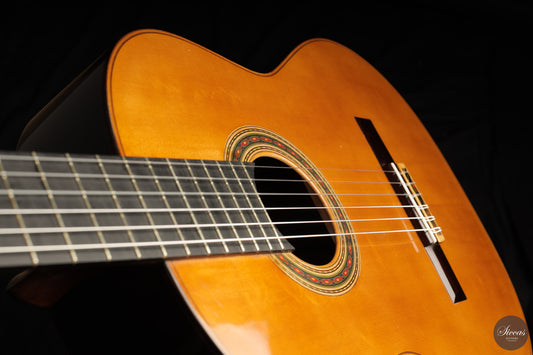
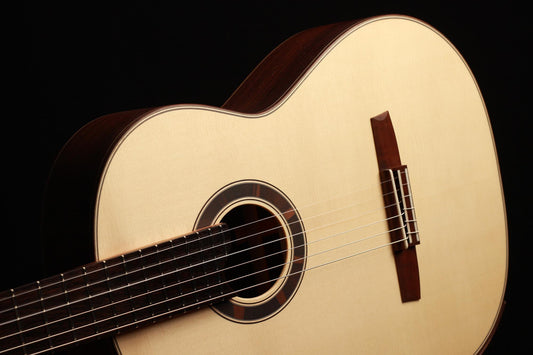
- A quality instrument. You do not need an expensive concert guitar to start, but a poorly made student guitar with high action (the string height above the frets) will make everything harder and more painful than it needs to be. See the range of classical guitars at Siccas Guitars for instruments suited to every stage of learning.
Intermediate Stage: 2 to 4 Years of Practice
After consistent work over two to four years, a diligent student reaches what most teachers would call an intermediate level. This is a meaningful milestone: you can perform a coherent 30-minute repertoire, navigate full barre chords across the neck, play in multiple positions, and handle moderately complex pieces with musical expression — not just mechanical accuracy.
At this stage, the pieces become genuinely satisfying to play and to listen to. You might be working on etudes by Fernando Sor or Mauro Giuliani, early Romantic guitar repertoire, or introductory pieces from the 20th century Spanish tradition. You are beginning to develop your own musical voice and sound, rather than simply executing notes.
Two to four years is a wide range, and the variation is real. Players who practice 45 minutes to an hour daily, with consistent teacher feedback, will progress faster than those who practice irregularly or without guidance. The quality of your practice matters as much as the quantity. Mindless repetition builds bad habits; deliberate, focused practice builds technique.
Key skills that define the intermediate level include:
- Clean barre chords across all six strings at multiple fret positions
- Right-hand independence: simultaneous melody, bass, and inner voice lines (the hallmark of classical guitar writing)
- Basic tremolo technique, scales, and arpeggios at moderate tempo
- Position shifts without hesitation or audible string noise
- Sight-reading simple to moderate difficulty repertoire
If you want to understand what great intermediate and advanced repertoire sounds like, explore the great classical guitarists featured at Siccas Guitars — hearing professionals play the pieces you are working toward is one of the most powerful forms of musical motivation.
Advanced and Professional Level: 7 to 10+ Years
Reaching an advanced or professional level on classical guitar typically requires seven to ten years of dedicated, high-quality practice — and for concert-level mastery, often considerably more. This is not a discouraging fact; it is simply the nature of an instrument that rewards lifelong study.
At the advanced level you are tackling the core of the classical guitar canon: the Chaconne and lute suites of J.S. Bach arranged for guitar, the complete Études by Villa-Lobos, the Grand Sonata of Sor, the works of Francisco Tárrega including Recuerdos de la Alhambra and Capricho Árabe, or the extraordinary compositions of Agustín Barrios Mangoré. These works demand not only technical command but deep musical understanding and interpretive maturity.
Professional guitarists who perform at the concert level have typically studied music formally — often at conservatory level — and continue to refine their technique throughout their careers. The physical demands of high-level classical guitar playing include extremely well-developed finger strength, nail maintenance (or the mastery of nail-free technique), and the ability to sustain focused physical practice without injury.
The Factors That Affect Your Progress
Timeline estimates are averages. Your own progress will depend heavily on several factors that you can influence:
Daily Practice Quality
Thirty minutes of fully focused, deliberate practice — working on specific technical problems, listening critically to your own sound, using a metronome — is worth more than ninety minutes of unfocused playing. Classical guitar responds to attention. If you sit down knowing exactly what you are going to work on and why, you will progress faster.
Teacher Guidance
A teacher does not just correct your mistakes; they sequence your learning intelligently. They know which étude will address your weak right-hand fingers, which repertoire pieces are just beyond your current reach (in the best way), and when you are ready to move on. Self-teaching is possible, but it is significantly slower and more prone to ingrained technical errors that become hard to fix.
Instrument Quality
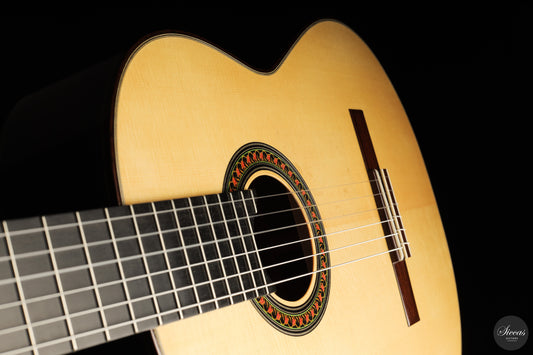
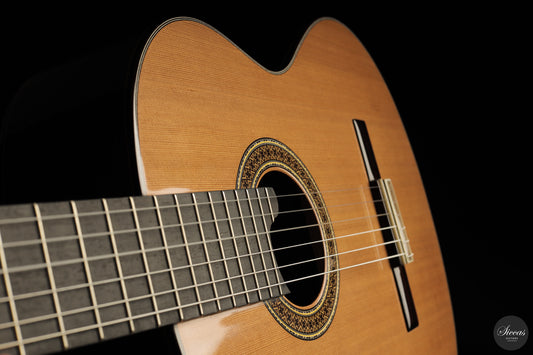
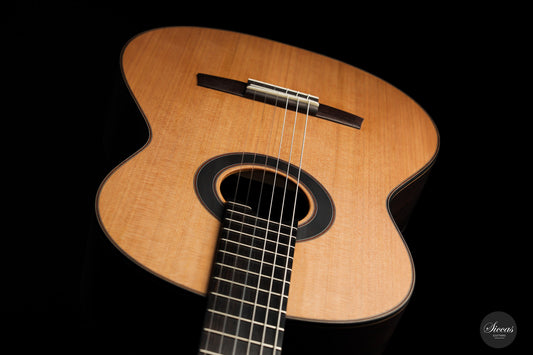
Playing a guitar that responds well — clear tone, comfortable action, balanced string tension — makes practice more rewarding and helps you develop better listening habits. Luthier-built instruments using quality tonewoods like cedar or spruce tops respond differently to technique, and learning on a fine instrument trains your ear as well as your hands. Explore the difference between spruce and cedar classical guitars to understand how tonewood affects your sound.
Finger Strength and Physical Conditioning
Classical guitar is physically demanding. The left hand must develop strength and flexibility to hold barre chords cleanly and execute stretches across four or five frets. The right hand must develop independence between fingers that in everyday life move together. This physical conditioning cannot be rushed — it develops over months and years of regular playing, and attempting to force it too quickly leads to injury. Pace yourself, especially in the first year.
Musical Background
Players who already read music notation, have studied another instrument, or have ear-training experience start with an advantage. If you are coming to classical guitar with no prior musical experience, you are learning the instrument and music literacy simultaneously — which is entirely doable, but adds time to the early stages.
What You Can Realistically Achieve at Each Stage
Here is a concrete summary of what consistent practice delivers:
- 3–6 months: First simple pieces, basic technique established, left-hand calluses formed, reading simple notation
- 1–2 years: Small repertoire of beginner-intermediate pieces, basic arpeggios and scales, musical phrasing emerging
- 2–4 years: 30-minute coherent repertoire, barre chords, multiple positions, intermediate Romantic and classical pieces
- 5–7 years: Advanced repertoire, strong sight-reading, technical fluency, performance-ready for recitals
- 7–10+ years: Concert repertoire, professional-level technique, interpretive depth
How to Get Started the Right Way
If you are just beginning, focus on three things above all else: correct posture and hand position, consistent daily practice (even 20 minutes counts), and choosing the right instrument. A decent classical guitar with low action and quality nylon strings is the single most important investment you can make at the start.
For guidance on the early repertoire, our article on the 10 easiest classical guitar pieces for beginners is a practical starting point. If you are weighing classical guitar against other options, the guide on acoustic vs classical guitar explains the key differences in instrument, technique, and repertoire.
And if you want a sense of the destination — the music that awaits after years of dedicated study — browse the most famous classical guitar pieces in the repertoire. Hearing what is possible is one of the most powerful reasons to begin.
The Honest Answer
Learning classical guitar takes longer than most people expect — and is more rewarding than most people imagine. The beginner phase is months, not weeks. A satisfying intermediate level takes a few years. True mastery takes a decade or more. None of that should discourage you. Classical guitar offers musical richness at every level of playing, and the journey itself — the gradual development of skill, ear, and musicality — is genuinely fulfilling.
Start with good foundations, practice daily, find a teacher if you can, and choose an instrument that inspires you to play. The time will pass either way. You might as well spend it learning classical guitar.
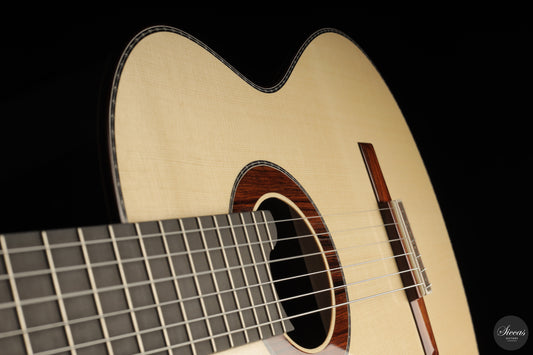
Browse our full collection of classical guitars, including double-top models and flamenco guitars, to find the right instrument for where you are in your journey.