
Julian Bream & Karl Scheit — Two Giants of the Classical Guitar
Julian Bream (July 15, 1933 – August 14, 2020) stands as one of the most influential classical guitarists of the twentieth century. The English musician not only shaped the sound of the instrument through his extraordinary technique and musicality, but also expanded the guitar repertoire by commissioning dozens of new works from leading composers of his time. His friend and contemporary Karl Scheit (1909–1993) was a towering figure in the Austrian guitar tradition — a professor, editor, and performer who helped establish the classical guitar as a serious concert instrument in the German-speaking world. The friendship between these two artists offers a rare window into the international guitar community of the mid-twentieth century.
Julian Bream: Life and Career
Born in Battersea, London, Julian Bream began playing guitar as a young child, initially inspired by his father, who was an amateur musician. He came to the attention of Andrés Segovia, who became a major influence on Bream's development as a guitarist. Bream later studied at the Royal College of Music in London, where he also studied the piano and cello, broadening his musicianship well beyond the guitar alone.
Bream's career was distinguished not only by his technical mastery but by his relentless drive to expand the guitar's place in concert life. He became closely associated with the legacy of Andrés Segovia while charting his own course — exploring Elizabethan lute music, Baroque repertoire, and twentieth-century compositions with equal conviction. He was a masterful lutenist as well as guitarist, and his recordings of lute music by Dowland and others remain benchmarks of the genre.
Among the instruments that defined his sound were guitars made by José Romanillos, the Spanish-born luthier who settled in England. The partnership between Bream and Romanillos became one of the celebrated collaborations between player and maker in the instrument's modern history — a connection explored in depth in the Siccas Guitars video below, which features makers who built instruments for Bream. Bream's exacting standards and sensitivity to tone influenced Romanillos's development as a builder in profound ways.
Karl Scheit: The Vienna Professor
Karl Scheit was born in 1909 and went on to become one of the foremost guitar pedagogues of his era. As a professor at the University of Music and Performing Arts Vienna, he shaped generations of Austrian and international guitarists over several decades. His work as an editor was equally significant: Scheit prepared critical editions and arrangements of repertoire ranging from Renaissance lute music to classical-era works, many of which became standard teaching material across Europe.
Scheit was also an active performer, bringing the guitar to Austrian concert audiences at a time when the instrument was still establishing its place on the serious concert stage. His encyclopedic knowledge of the instrument's history and literature, combined with his gifts as a teacher, made him a central figure in the guitar world of central Europe. The archive at gitarre-archiv.at preserves much of the documentary legacy of his life and work, and it is through this archive that the photographs accompanying this article — taken by English press photographer and Scheit student David Hermges — have been made available.
A Friendship Across Borders
The friendship between Julian Bream and Karl Scheit was warm and practical in equal measure. Bream gave numerous concerts in Austria during his career and made a point of visiting Scheit when he was in Vienna. Their shared passion for the guitar and its history gave them a common language, and the relationship was one of mutual respect between two artists who had each done so much for the instrument in their respective countries.
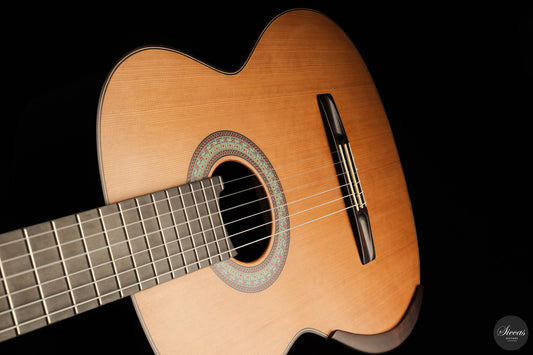
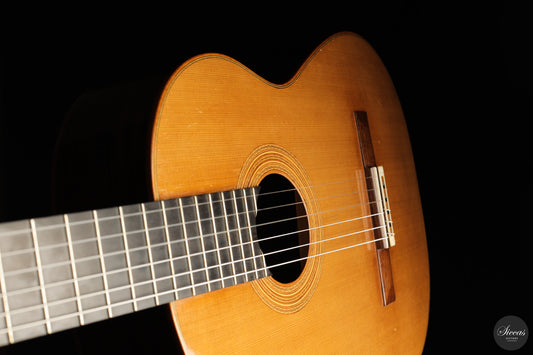
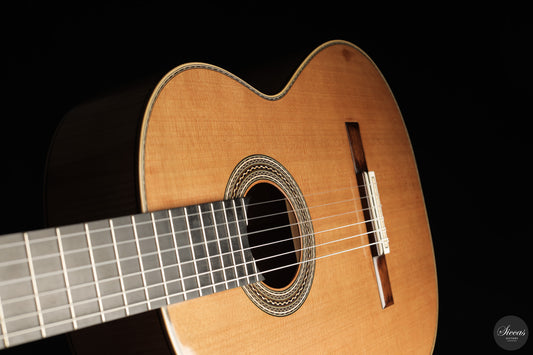
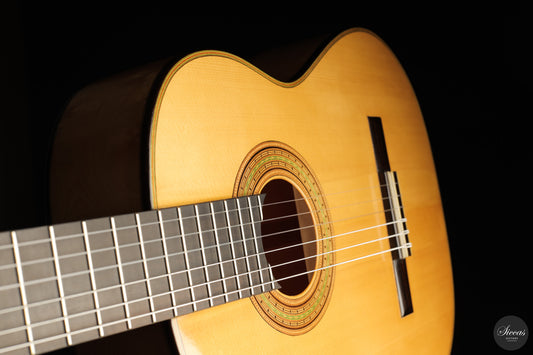
One of the most tangible expressions of their friendship was Bream's borrowing of Scheit's Hermann Hauser guitar for an extended period. The Hauser instruments — built by the Munich-based dynasty of luthiers whose work is inseparable from the modern classical guitar — were among the most prized concert instruments of the twentieth century. Andrés Segovia famously played a Hauser, and the instruments were known for their powerful, singing tone and exceptional response. That Bream would turn to a Hauser from Scheit's personal collection speaks to the closeness of their relationship and to the esteem in which Bream held the instrument. You can explore the work of Hermann Hauser I in the Siccas Guitars collection.
The photographs taken by David Hermges document moments from this friendship — images that bring to life an era in classical guitar history that might otherwise exist only in recordings and written accounts. Hermges, who was both a professional press photographer and a student of Scheit, occupied a unique position at the intersection of the guitar world and documentary photography.
Bream's Repertoire and Legacy
Julian Bream's contribution to the guitar repertoire is difficult to overstate. He commissioned or premiered works by Benjamin Britten, William Walton, Hans Werner Henze, Lennox Berkeley, Richard Rodney Bennett, and many others. In doing so, he ensured that the twentieth-century concert guitar had a body of serious, ambitious new works to stand alongside the classical and Romantic repertoire inherited from Francisco Tárrega and the generations before him.
His recorded legacy is vast. His interpretations of works by Bach, explored in depth through Bach on classical guitar, set standards that remain influential today. His recordings of the music of Agustín Barrios helped introduce that composer's work to wider audiences at a time when Barrios was not yet as widely recognized as he is today.
Bream was also instrumental in reviving interest in the Renaissance and Baroque lute, performing on period instruments and recording landmark surveys of English lute music. This breadth — from Dowland to Britten, from the lute to the modern classical guitar — sets Bream apart as one of the most versatile and historically minded string musicians of his century.
He was appointed Commander of the Order of the British Empire (CBE) and later received further honors in recognition of his contribution to British musical life. He retired from performing in 2002 and passed away on August 14, 2020, at the age of 87.
The Guitar They Shared: Hermann Hauser and the Concert Tradition
The instrument at the heart of the Bream–Scheit story — the Hermann Hauser guitar — represents one of the peaks of twentieth-century lutherie. Hermann Hauser I (1882–1952) developed his approach to guitar construction in dialogue with Andrés Segovia, who visited his workshop and provided feedback on his instruments over many years. The resulting instruments combined the structural principles of the Spanish tradition with Hauser's own craftsmanship, producing guitars of exceptional tonal depth and projection.
That both Scheit and Bream valued these instruments so highly reflects the broader consensus among the great guitarists of their generation: a Hauser was among the finest tools a concert guitarist could have. The tradition of building classical guitars to the highest standards — the tradition in which Romanillos, Hauser, and their peers worked — continues to define the instrument at its best.
Performing at Siccas Guitars: The Builders Who Knew Bream
The video below, from the Siccas Guitars channel, brings together guitar makers who built instruments for Julian Bream — a direct continuation of the tradition that connected Bream to the finest luthiers of his era. The episode is part of the ongoing World Guitar Meeting series and offers a unique perspective on Bream's relationship with instrument makers and the guitars he chose to play.
Further Reading
To explore more about the great guitarists who shaped the classical guitar tradition, visit the Siccas Guitars overview of great classical guitarists. For a deeper look at the repertoire Bream championed, see our articles on famous classical guitar pieces and Recuerdos de la Alhambra. The David Russell and Ana Vidovic profiles offer further portraits of artists who carry this tradition forward today.
Many thanks to www.gitarre-archiv.at for providing the article and photographs. Photos by David Hermges.