
This guide is part of our overview of the essential classical guitar repertoire.
No composer sits closer to the heart of the classical guitar repertoire than Johann Sebastian Bach (1685–1750) — even though Bach never wrote a single note for the modern guitar. His music reaches the instrument through transcription, and few experiences reveal a guitar's depth like a Bach prelude or fugue voiced across six nylon strings. This guide maps the Bach a guitarist actually plays, with performances filmed at Siccas Guitars by some of today's leading players.
Why Bach suits the guitar
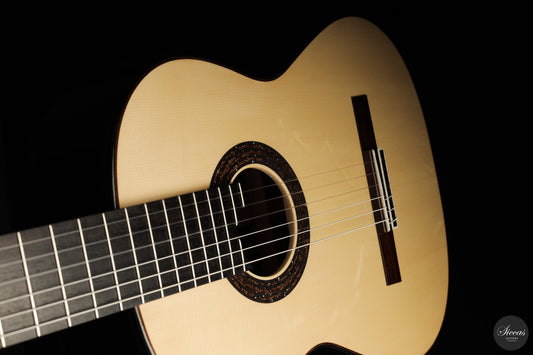
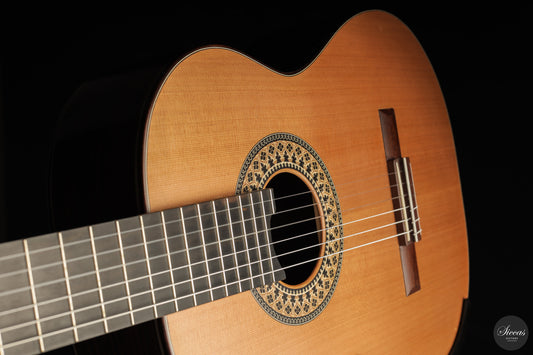
Bach wrote for instruments that, like the guitar, carry melody, bass and harmony at once: the lute, the solo violin, the solo cello. That self-sufficient, polyphonic writing is exactly what the guitar does best — a single player can sustain a walking bass, an inner voice and a singing line at the same time. This is why his solo-string and lute music transfers to the guitar more naturally than almost any other Baroque repertoire, and why it sounds so complete on instruments with a warm cedar top or a clear, projecting spruce top.
The lute works (BWV 995–1000 and 1006a)
Bach's music associated with the lute is the most direct bridge to the guitar. The Prelude, Fugue and Allegro BWV 998 is a cornerstone — though its original instrument is debated, since Bach likely conceived it for lute or lute-harpsichord rather than the guitar we know today. Hear how two artists shape its outer movements:
The violin works — and the Chaconne
The Cello Suites
Bach's six Cello Suites (BWV 1007–1012) are beloved by guitarists. The Prelude of the First Suite — originally in G major, usually played on guitar in D — is among the most recognisable melodies in all of music, and it sits beautifully under the fingers.
Keyboard music, reimagined
Guitarists also borrow from Bach's keyboard output. The Aria from the Goldberg Variations (BWV 988) becomes an intimate, song-like meditation on the guitar.
Go deeper: the key works in detail
Three works deserve a closer look — we've written a dedicated guide for each:
- Bach's Chaconne (BWV 1004) on the guitar — the Everest of the repertoire.
- The Prelude of the First Cello Suite (BWV 1007) — the most beloved entry point.
- Prelude, Fugue and Allegro BWV 998 — Bach's polyphony on six strings.
Where to start
Beginning your Bach journey, start with the shorter Prelude BWV 999 and the Prelude of the First Cello Suite — both approachable and deeply rewarding. From there, the Prelude, Fugue and Allegro BWV 998 opens Bach's polyphonic world, and the Chaconne becomes the lifelong goal that keeps guitarists returning to the practice room.
Every instrument in our collection is filmed in a professional video review, so you can hear exactly how a fine guitar brings Bach to life before you play a note. Explore our classical guitars and try one for 14 days at home.