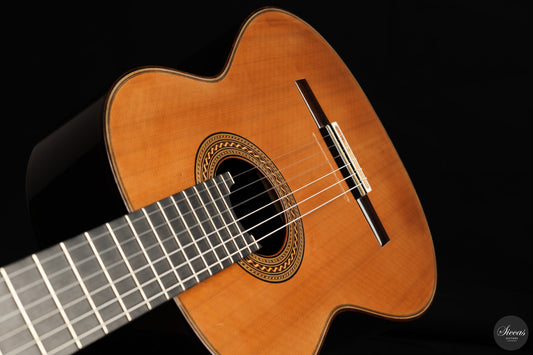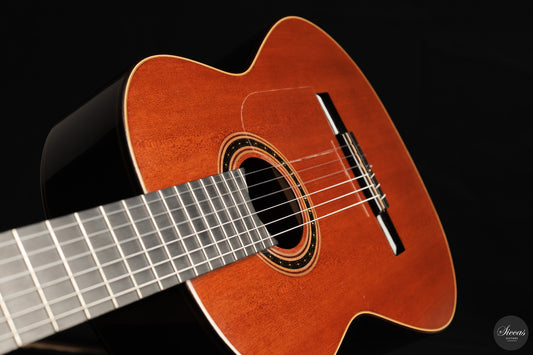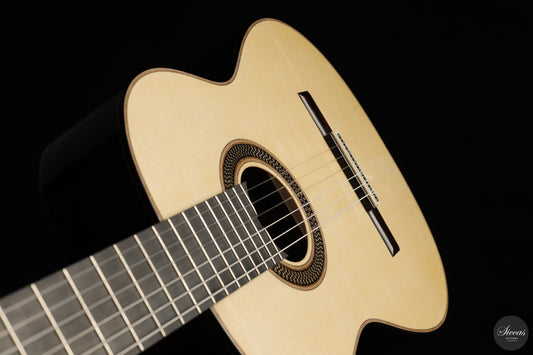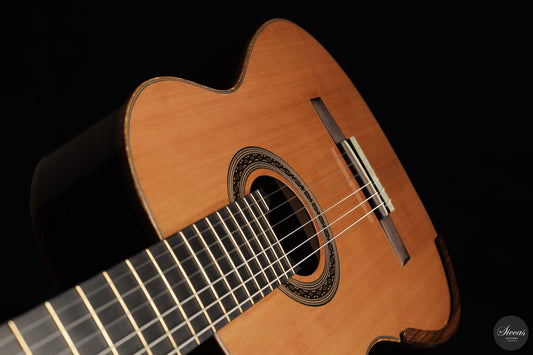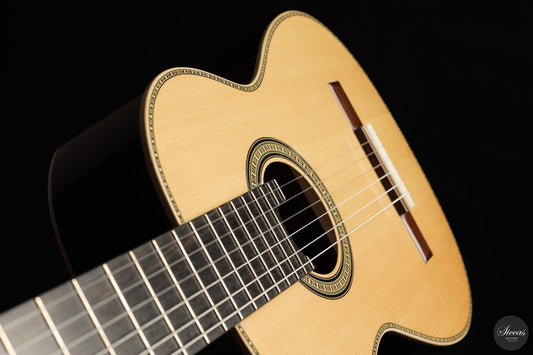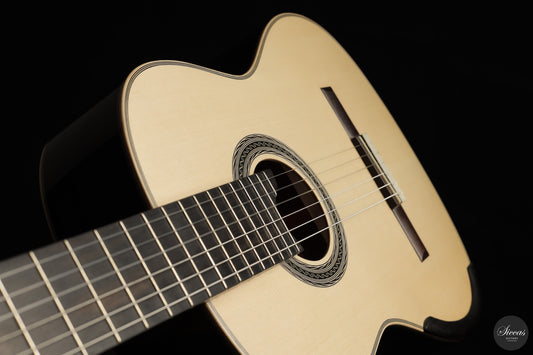

It is one of the first questions every buyer asks: cedar or spruce? The choice of top wood shapes a classical guitar's sound more than almost any other single factor. This guide explains the real differences — with side-by-side video comparisons filmed at Siccas Guitars — so you can decide what suits your playing.
The short answer
As a broad tendency, cedar tops sound warm, dark and immediate, with a quick response that flatters lyrical, romantic playing. Spruce tops tend to be brighter and more transparent, with greater projection, clarity between voices and dynamic headroom that rewards a strong technique. These are tendencies, not rules — a great luthier can make a cedar guitar project or a spruce guitar sing.
Hear it on the same model
The fairest test is the same model built with each top. Listen closely:
Cedar in depth
Cedar (usually Western Red Cedar) is softer and lighter. It speaks instantly and gives a warm, rounded, slightly darker tone with rich overtones — wonderful for Romantic Spanish music and singing melody. The trade-off is a little less headroom at full volume and a slightly shorter, warmer sustain.
Spruce in depth
Spruce is harder and stiffer, with a tighter grain. It typically offers more clarity, separation and projection, a longer sustain and more dynamic range — qualities prized in polyphonic Bach and large concert halls. Many spruce tops also "open up" and improve over their first months and years of playing.
Which should you choose?
If you love warmth, immediacy and a romantic voice, lean cedar. If you want clarity, projection and dynamic range, lean spruce. But the only real test is your own ears and hands: every instrument is individual. That is why each of our guitars is filmed in a professional video review and offered with a 14-day home trial.
Explore our cedar-top guitars and spruce-top guitars, or browse the full collection and try one at home for 14 days. Not sure? Our team is happy to advise.