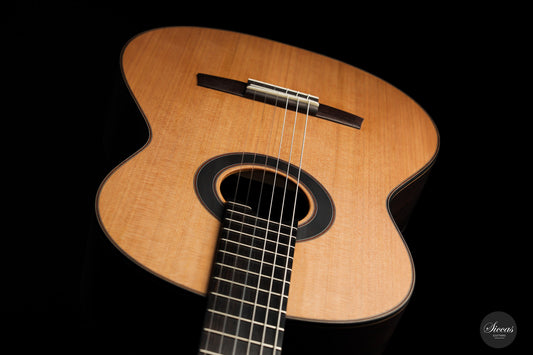
Torroba: Torija (Castillos de España) on the Classical Guitar

Torroba: Torija (Castillos de España) on the Classical Guitar

Torija is one of the most quietly beautiful pieces Federico Moreno Torroba ever wrote — an elegy for a ruined Castilian castle, tender, intimate and deeply Spanish. It belongs to Castillos de España (Castles of Spain), his most ambitious suite for solo guitar.

The Castle

Torija Castle stands in Guadalajara province, on the old road between Madrid and the east of Spain. Built by the Knights Templar in the eleventh century, it was deliberately blown up in 1810 by the guerrilla leader El Empecinado to deny it to French forces during the Peninsular War. It lay as a ruin for over 150 years until the Spanish government restored it in 1962 — just years before Torroba composed the suite. The subtitle Elegía (Elegy) speaks directly to that history: this is music for a place that was lost and only partly recovered.

The Suite

Castillos de España spans two volumes (1970 and 1978) and fourteen pieces in all, each evoking a different Spanish castle — Sigüenza, Manzanares el Real, Alba de Tormes, and others across Castile and Aragon. Together they form Torroba's late-career masterwork for the instrument, a companion to the famous Sonatina but more programmatic and introspective in character.

The Music

Torija uses Drop D tuning (the sixth string lowered to D), which gives the bass a darker, more resonant colour suited to the elegiac mood. The melody sings over a gentle, flowing accompaniment — Torroba at his most intimate. The piece runs to around thirty measures: short enough to feel like a single thought, long enough to say something lasting. Rated at approximately Trinity Grade 6, it is accessible to advancing students while rewarding the most experienced performers with its demand for singing tone and breathing rubato.

Performed at Siccas Guitars

Ana Vidović — Torija
Donia Foglia — Torija · 1992 Matthias Dammann
Maya Kazarina — Torija

Playing it

The art of Torija is restraint. The melody must sing — long-bowed and unhurried — while the accompaniment remains underneath it, never competing. The F# on the second string wants vibrato; the block chords want patience. Let the nostalgia speak without sentimentality.

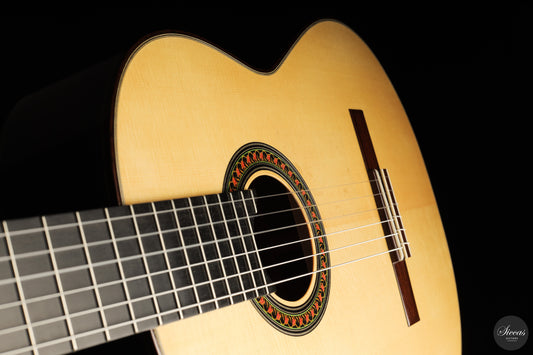
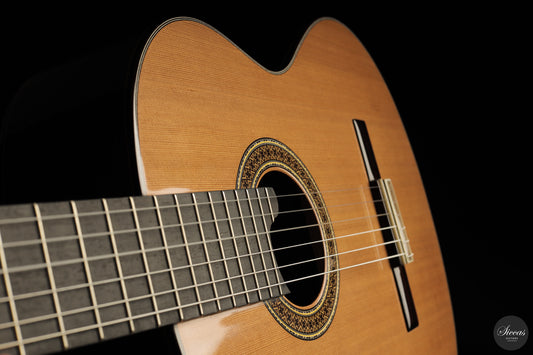
See the full Torroba guide and the companion piece Sonatina. Explore our cedar-top guitars, each filmed in a video review, and try one for 14 days at home.

The Library
  • Classical Guitars

    The classical guitar, with its soft nylon strings and characteristic timbre, has become a symbol of chamber music, Spanish tradition, and concert repertoire. Its modern form was shaped by Antonio de Torres in the 19th century, setting the standard for the body, fan bracing, and the 65-centimeter scale length that are still used today. Instruments in this category open up a rich palette from the refined Romantic miniatures of Tárrega to the majestic concertos of Rodrigo. Here you will find guitars that preserve historical continuity and at the same time inspire new interpretations.
    Explore all classical guitars
  • Luthier: Vicente Carrillo
    Construction Year: 2026
    Construction Type: Double-Top Guitars
    Top: Spruce
    Back and Sides: Madagascar rosewood
    Soundboard Finish: Nitrocellulose
    Body Finish: Nitrocellulose
    Air Body Frequency: G sharp / A
    Weight (g): 1670
    Tuner: Aparicio
    Condition: New
  • Luthier: Vicente Carrillo
    Construction Year: 2026
    Construction Type: Double-Top Guitars
    Top: Cedar
    Back and Sides: Madagascar rosewood
    Soundboard Finish: Nitrocellulose
    Body Finish: Nitrocellulose
    Air Body Frequency: G sharp / A
    Weight (g): 1845
    Tuner: Aparicio
    Condition: New
  • Luthier: Gary Southwell
    Construction Year: 2008
    Top: Spruce
    Back and Sides: Flamed Maple
    Soundboard Finish: French polish
    Body Finish: French polish
    Air Body Frequency: D / D sharp
    Weight (g): 1560
    Tuner: Rodgers
    Condition: Very good
  • Luthier: Vicente Carrillo
    Construction Year: 2026
    Construction Type: Double-Top Guitars
    Top: Spruce
    Back and Sides: Madagascar rosewood
    Soundboard Finish: Nitrocellulose
    Body Finish: Nitrocellulose
    Air Body Frequency: G sharp / A
    Weight (g): 1760
    Tuner: Aparicio
    Condition: New
  • Luthier: Vicente Carrillo
    Construction Year: 2026
    Construction Type: Double-Top Guitars
    Top: Cedar
    Back and Sides: Madagascar rosewood
    Soundboard Finish: Nitrocellulose
    Body Finish: Nitrocellulose
    Air Body Frequency: G sharp / A
    Weight (g): 1680
    Tuner: Aparicio
    Condition: New
  • Luthier: Gary Southwell
    Construction Year: 2024
    Construction Type: Traditional
    Top: Spruce
    Back and Sides: Indian rosewood
    Soundboard Finish: French polish
    Body Finish: French polish
    Air Body Frequency: E / F
    Weight (g): 1300
    Tuner: Rodgers
    Condition: Excellent

Exclusive Offers and Insights

Stay in tune with exclusive updates and offers from Siccas Guitars! Subscribe to our weekly newsletter and be the first to hear about new arrivals, special promotions, and expert insights into guitar craftsmanship. Enter your email below to join our community.