





This guitar is sold – but we may have something similar.
Our experts know every guitar in the house and are happy to advise you personally.
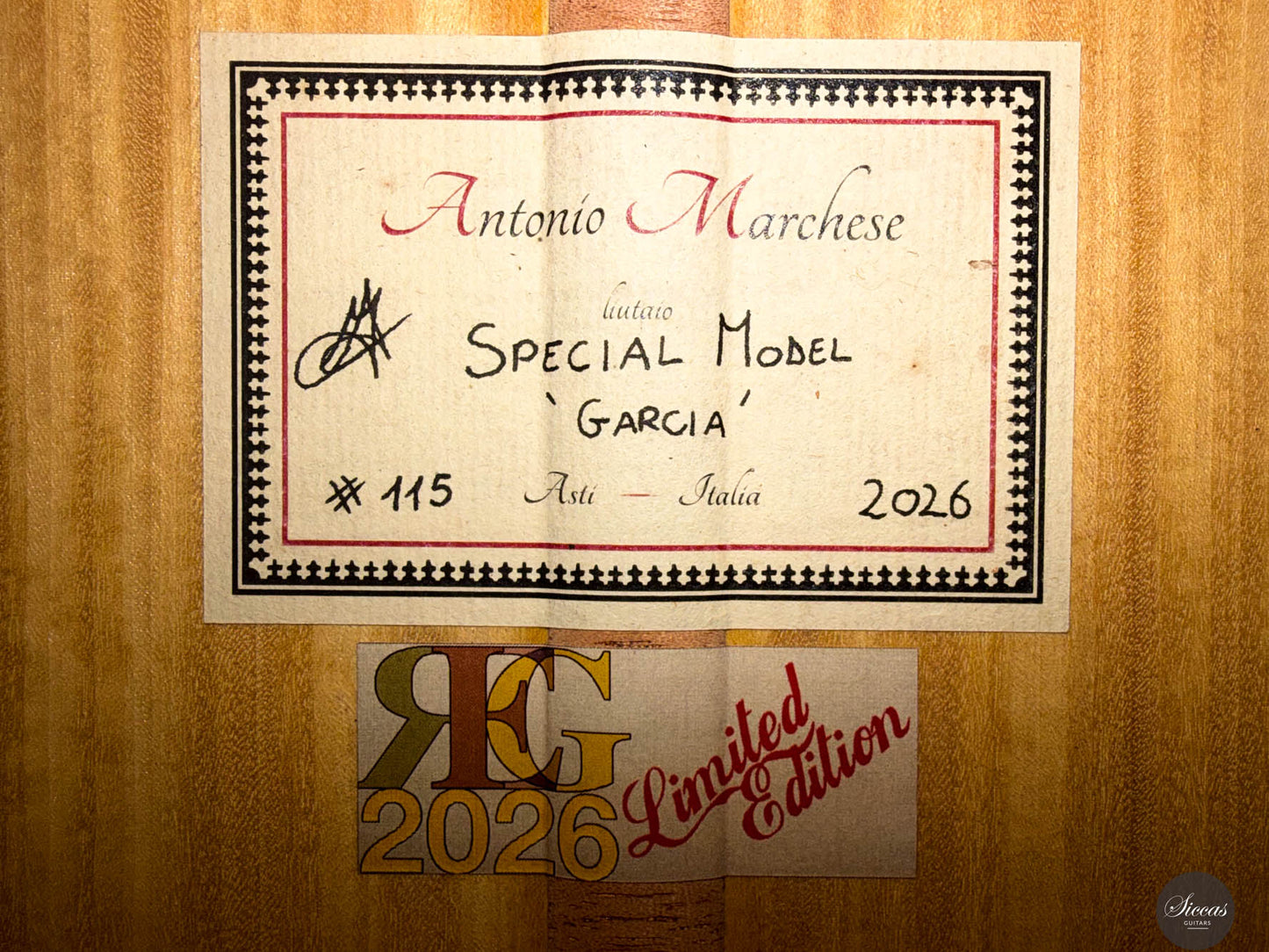
Ask about similar guitarsAntonio Marchese - 2026 Garcia REG Limited Edition
Details
Details
Overview
Overview


Video overview


More details about the guitar
About the luthier
Antonio Marchese was born in Aosta, Italy, in 1992 and is dedicated to the construction of traditional classical guitars as well as the restoration of historical and contemporary plucked instruments. His formal training at the Civica Scuola di Liuteria in Milan lasted six years, beginning with the construction of plucked instruments, organology, and the fundamentals of acoustic physics and chemistry, followed by a further specialisation in musical instrument restoration.
After completing his studies, Marchese continued his formation in the workshop of Enrico Bottelli in Voghera, first as an apprentice and later as a collaborator. Bottelli’s teaching deepened his interest in the instruments of the Spanish tradition and became an important reference in his continuing search for sound, proportion, and aesthetic clarity. In 2019, Marchese opened his own workshop in Montafia, Piedmont, where he builds classical guitars and historically inspired instruments, working with traditional methods such as hand assembled wooden mosaics and shellac finishing. Since 2020, he has also taught varnishing for plucked instruments at the Civica Scuola di Liuteria in Milan.
About the guitar
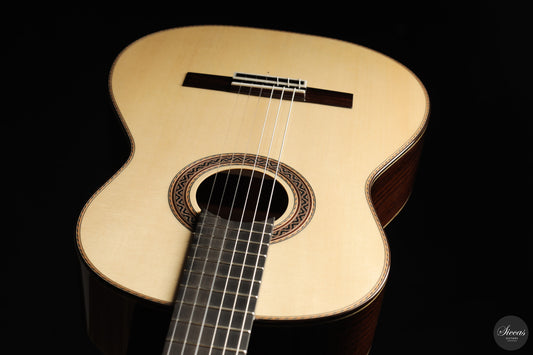
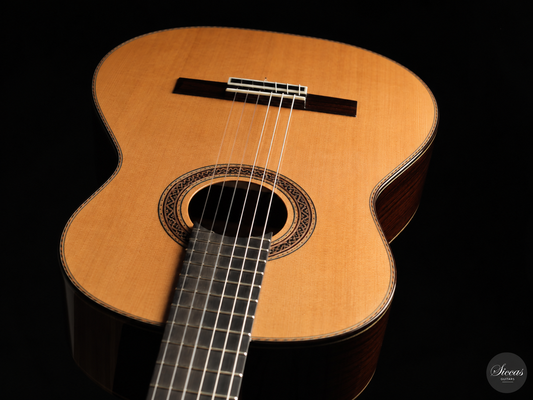
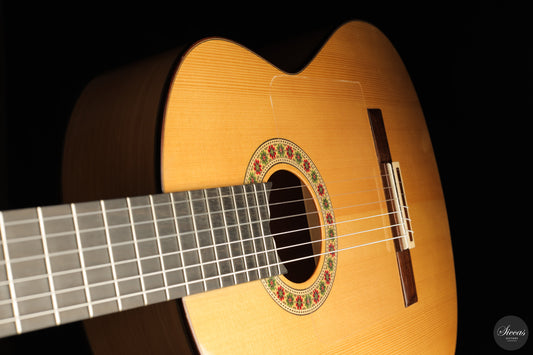
This 2026 Antonio Marchese Garcia REG Limited Edition is a traditionally constructed classical guitar inspired by Enrique Garcia. It pairs a spruce top with satinwood back and sides, a mahogany neck, an ebony fingerboard, and a rosewood bridge. The instrument carries a Garcia style rosette, rosewood bindings, and carefully coordinated purfling across the soundboard, sides, back, and headstock, giving it a refined historical identity with a particularly elegant visual presence.
The voice is round, calm, and smooth, with a strong sense of balance across registers and positions. Notes speak with even intensity, and chords gather into a compact, unified sound in which the individual tones remain clear without separating from the musical line. The satinwood back and sides contribute a luminous character and a gentle softness around the attack, while the spruce top preserves clarity and response. With good sustain, a relaxed resonance, and a comfortable musical feel, this Garcia inspired REG Limited Edition presents Marchese’s historical approach in a voice of poise, warmth, and controlled elegance.

While this one is sold, these are ready for you
-
Classical Guitars
The classical guitar, with its soft nylon strings and characteristic timbre, has become a symbol of chamber music, Spanish tradition, and concert repertoire. Its modern form was shaped by Antonio de Torres in the 19th century, setting the standard for the body, fan bracing, and the 65-centimeter scale length that are still used today. Instruments in this category open up a rich palette from the refined Romantic miniatures of Tárrega to the majestic concertos of Rodrigo. Here you will find guitars that preserve historical continuity and at the same time inspire new interpretations.Look all products of the collection -

 Reserved
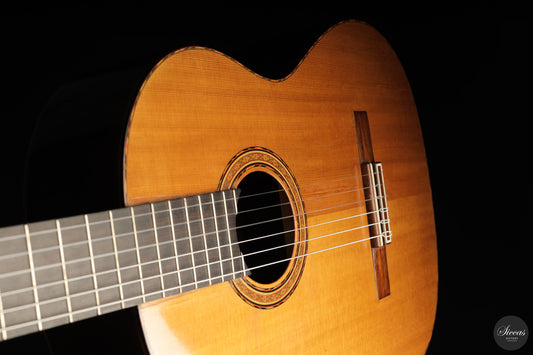
César Vera - 1964
Price: 6.990 €Unit price per Tax free (0% DE)ReservedConstruction Type: Traditional -
Friederike Linscheid - 2026 Doubletop
Price on requestReservedLuthier: Friederike LinscheidConstruction Type: Double-Top Guitars -
Martin Bretscher - 2026 Flow-Cut Crossover
Price: 7.490 €Unit price per Tax free (0% DE)ReservedLuthier: Martin Bretscher -

 Reserved
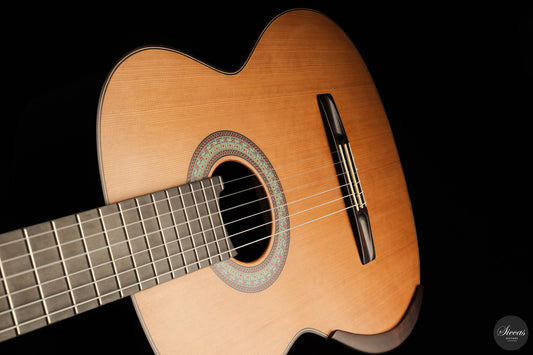
Simon Marty - 2026 Classical Guitar
Price on requestReservedLuthier: Simon Marty -

 Reserved
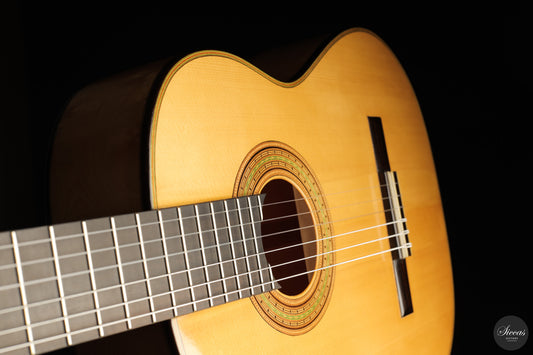
Davide Scacchi - 2026
Price: 5.990 €Unit price per Tax free (0% DE)ReservedLuthier: Davide ScacchiConstruction Type: Traditional -
Siccas Luthiers - Halo Traditional Spruce 63 cm
Sale price 1.790 € Price:Unit price per Tax free (0% DE)1.990 €Save: 200 €Pre-OrderManufacturer: Siccas LuthiersManufacturer: Siccas LuthiersConstruction Type: TraditionalConstruction Type: Traditional -
Siccas Luthiers - Halo Traditional Spruce
Sale price 1.790 € Price:Unit price per Tax free (0% DE)1.990 €Save: 200 €Pre-OrderManufacturer: Siccas LuthiersManufacturer: Siccas LuthiersConstruction Type: TraditionalConstruction Type: Traditional -
Siccas Luthiers - Halo Traditional Cedar 63 cm
Sale price 1.790 € Price:Unit price per Tax free (0% DE)1.990 €Save: 200 €Pre-OrderManufacturer: Siccas LuthiersManufacturer: Siccas LuthiersConstruction Type: TraditionalConstruction Type: Traditional -

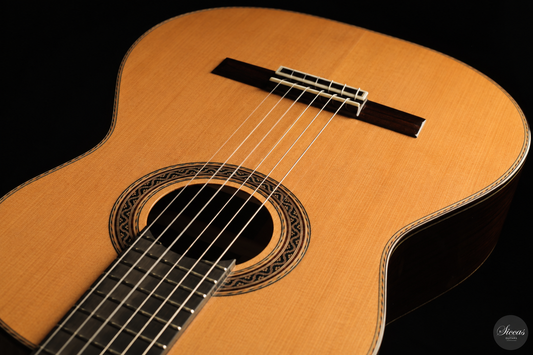 Pre-Order
Siccas Luthiers - Halo Traditional Cedar
Sale price 1.790 € Price:Unit price per Tax free (0% DE)1.990 €Save: 200 €Pre-OrderManufacturer: Siccas LuthiersManufacturer: Siccas LuthiersConstruction Type: TraditionalConstruction Type: Traditional -
Fernando Moreno - 2019 "Rastrojo"
Price: 3.490 €Unit price per Tax free (0% DE)Construction Type: Flamenco


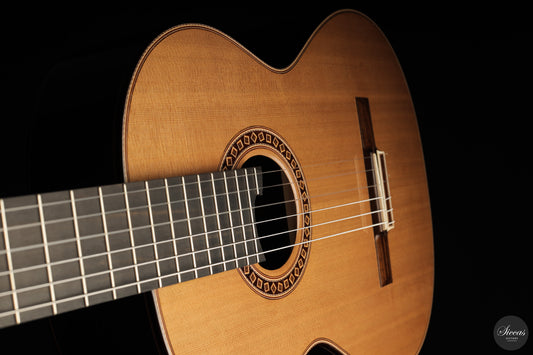

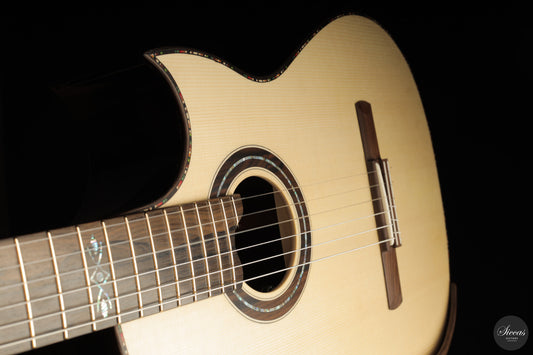


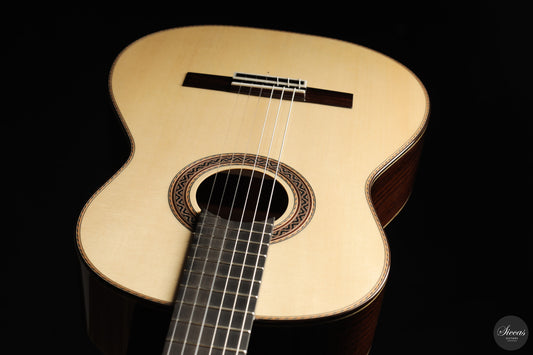






Related guitars
Frequently Asked Questions About Classical Guitars
How do I choose the right classical guitar for my level?
Choosing the right classical guitar depends on your playing level, musical goals, and budget. Beginners benefit from studio-model guitars from renowned workshops, while advanced players and professionals often choose a handmade master guitar. We are happy to advise you personally and can send detailed sound samples and videos on request.
What is the difference between a master guitar and a studio guitar?
Master guitars are built entirely by hand in the workshop of a single luthier, using only high-quality, well-aged tonewoods. Studio guitars are made in small series, often under the supervision of the master luthier, and offer excellent value for students and ambitious amateur players.
Can I try a classical guitar at home for 14 days?
Yes — every guitar you purchase from us comes with a 14-day home approval period. This complimentary trial applies worldwide to all orders, whether you are in Germany, Europe, the USA, Asia or anywhere else. We ship your instrument fully insured in a high-quality case so you can play it under your own acoustic conditions. If the guitar is not the right one for you, simply send it back and receive a full refund of the purchase price.
Can I try a classical guitar before purchasing?
Absolutely. You are warmly invited to visit our showroom in Karlsruhe, Germany, and test the instruments at your leisure. We are happy to schedule a personal appointment. If a visit is not possible, we send detailed videos and sound samples, and offer extensive consultation by phone or video call.
What payment methods and financing options do you offer?
We accept bank transfer, PayPal, major credit cards, and Klarna. For high-value instruments, we offer individual installment plans on request. Please contact us directly — we will find a suitable solution for every budget.
How do I properly care for my classical guitar?
A classical guitar requires constant humidity between 45 and 55 percent. Store the instrument in its case with a humidifier, avoid direct sunlight and large temperature fluctuations. Change the strings regularly and clean the guitar with a soft microfiber cloth.