






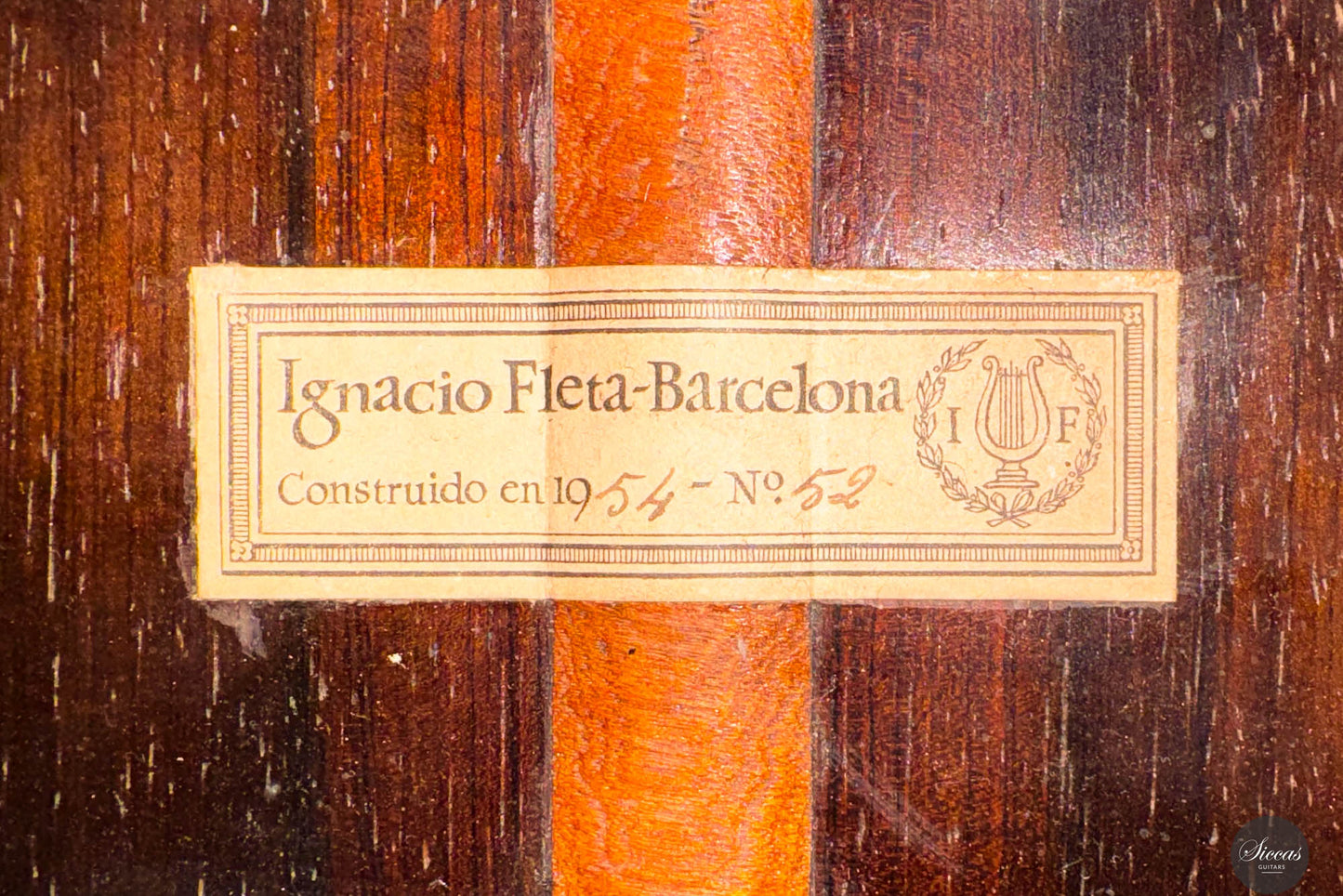
Ignacio Fleta - 1954 - N°52
Ignacio Fleta - 1954 - N°52
Details
Details
Overview
Overview


Video overview
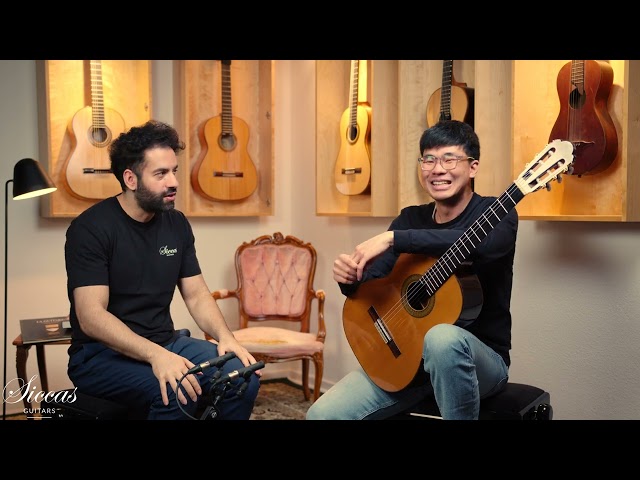

More details about the guitar
About the luthier
Ignacio Fleta (1897–1977) is considered one of the most important classical guitar makers of the twentieth century. Born in a small village in the Spanish province of Teruel, Fleta was raised in a family of cabinetmakers and developed his woodworking skills from an early age. After moving to Barcelona around 1910, he entered the world of musical instrument making, initially focusing on violins, violas, and cellos. This early work in violin making deeply shaped his approach when he eventually turned to the guitar. Already in the 1930s, Domingo Prat’s “Diccionario de guitarristas”, published in 1934, notes that Fleta had distinguished himself in guitar making, producing instruments of such solid and beautiful construction, with such delicate voices, that they stood on equal footing with the best examples by Antonio de Torres and Enrique García. The decisive moment came in the early 1940s, when Fleta heard Andrés Segovia perform Bach on the radio. Deeply moved by the sound of the guitar in a concert setting, he decided to focus exclusively on building guitars. His goal was to create instruments that could meet the acoustic demands of the modern concert stage while preserving the expressive nuance of the Spanish masters. By the mid-1950s, his instruments were gaining international recognition. In 1957, Segovia received his first Fleta and later described it as the best guitar he had played since his legendary 1937 Hauser. From 1965 onward, Fleta’s sons joined the family workshop, and the label evolved into “Ignacio Fleta e hijos.” Today, the legacy continues with his grandson Gabriel Fleta, who remains dedicated to the family’s tradition of excellence.About the guitar
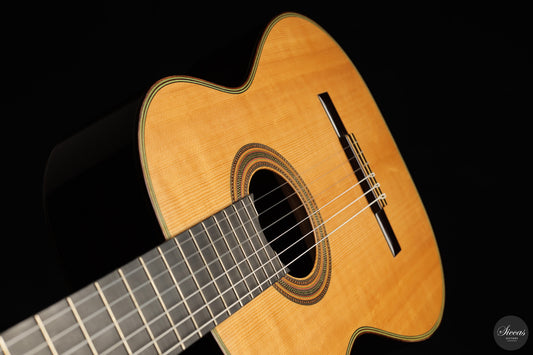
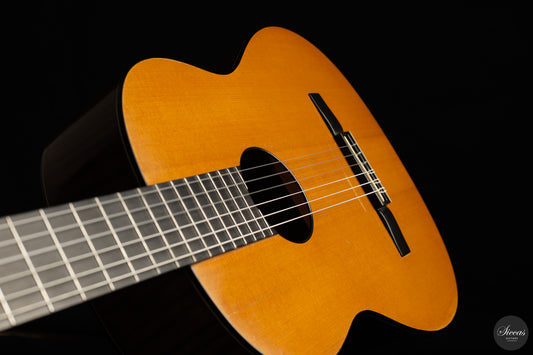
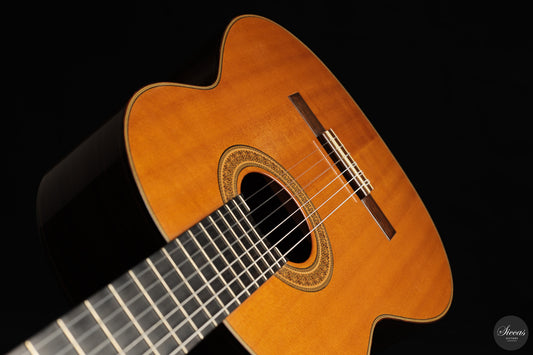
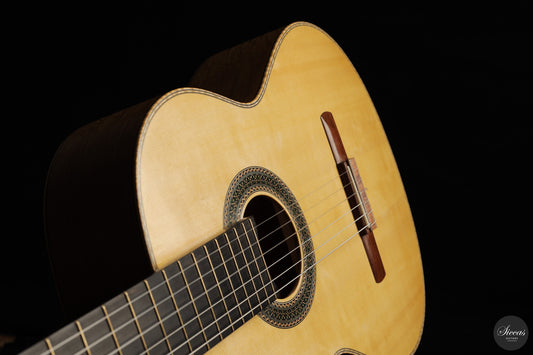
This instrument, built in 1954 and bearing the number 52, is a fine example of Fleta’s early mature work. It reflects a moment in his career when his craftsmanship and artistic vision were fully developed, yet still rooted in the foundational concepts of Antonio de Torres. The guitar features a spruce top paired with beautifully figured Brazilian rosewood back and sides, a tonewood combination that has become synonymous with classical guitar excellence. The top is finished in traditional French polish, lending a delicate sheen and acoustic transparency, while the rest of the body is protected with a carefully applied nitrocellulose lacquer. As expected from Fleta’s first period, this guitar features a seven-fan bracing system complemented by two closing harmonic bars. This layout would later evolve in his work toward more complex eight- and nine-fan systems. At this stage, however, Fleta remained strongly influenced by Torres, not only through design but also through direct experience, having restored several original Torres guitars in collaboration with Francisco Simplicio (Domingo Prat, Diccionario de guitarristas, Buenos Aires: Romero y Fernández, 1934; reprint in Columbus: Editions Orphée, 1986, p. 368). The nut has a width of 50 millimeters. In terms of tonal character, this guitar delivers a thick, warm sound with an especially nuanced low end that enriches the entire register. The resulting voice is deep and full without sacrificing clarity, offering exceptional complexity. The instrument also plays with great ease, thanks to a comfortable neck profile and a pleasant, responsive feel. This particular guitar was acquired directly from Ignacio Fleta by the guitarist Ramón de Herrera when he was only ten years old, making it not only a significant instrument in terms of construction but also in terms of provenance. It remained with de Herrera throughout his artistic life and was later restored with great care by Gabriel Fleta, Ignacio’s grandson, ensuring that the instrument retains both its structural integrity and its original voice. Today, it stands as a beautifully preserved and historically rich example of one of the most iconic makers in guitar history.Condition
This instrument has been carefully restored by Gabriel Fleta and is in very good condition. It shows professionally repaired cracks on both sides of the fretboard and two on the back. These restorations have been executed with expertise, ensuring full structural stability and aesthetic continuity. In addition, the finish has been refreshed, and the top exhibits wear consistent with long-term concert use, including nail marks and signs of regular playing, testimony to a life of active musical service. Despite these cosmetic marks, the guitar remains a compelling and well-preserved example of Ignacio Fleta’s early work.
While this one is sold, these are ready for you
-
Classical Guitars
The classical guitar, with its soft nylon strings and characteristic timbre, has become a symbol of chamber music, Spanish tradition, and concert repertoire. Its modern form was shaped by Antonio de Torres in the 19th century, setting the standard for the body, fan bracing, and the 65-centimeter scale length that are still used today. Instruments in this category open up a rich palette from the refined Romantic miniatures of Tárrega to the majestic concertos of Rodrigo. Here you will find guitars that preserve historical continuity and at the same time inspire new interpretations.Look all products of the collection -
Antonius Müller - 2013 VI Doubletop
Price on requestLuthier: Antonius MüllerConstruction Type: Double-Top Guitars -
Luthier: Jakob LebischConstruction Type: Double-Top Guitars
-
Daniele Marrabello - 2026 No. 193
Price: 8.990 €Unit price per Tax free (0% US)Luthier: Daniele MarrabelloConstruction Type: Traditional -
Patrick Mailloux - 2026 Palomée Doubletop 64 cm
Price: 5.873,95 €Unit price per Tax free (0% US)Construction Type: Double-Top Guitars -
Adrien Savary-Freestone - 2020 Arias
Price: 4.490 €Unit price per Tax free (0% US)Luthier: Adrien Savary-FreestoneConstruction Type: Traditional -
Jose Marques - 2026 Lattice
Price: 4.613,45 €Unit price per Tax free (0% US)Luthier: Jose MarquesConstruction Type: Lattice -
Hermann Hauser II - 1976 1014/a
Price on requestLuthier: Hermann Hauser IILuthier: Rare GuitarsConstruction Type: Traditional -
Richard Jacob Weissgerber - 1940 34. 1./7.
Price: 5.990 €Unit price per Tax free (0% US)Luthier: Richard Jacob WeissgerberConstruction Type: Traditional -
Walter Vogt - ca. 1970
Price: 3.990 €Unit price per Tax free (0% US)Construction Type: Traditional -
Stephan Connor - 2024 Lattice 64 cm
Price on requestLuthier: Stephan ConnorConstruction Type: Lattice



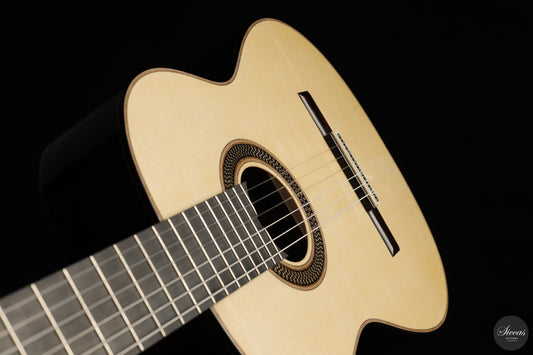

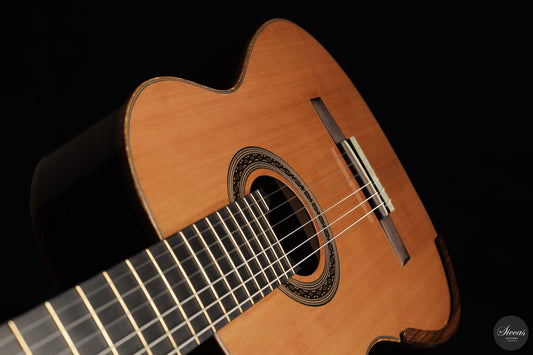

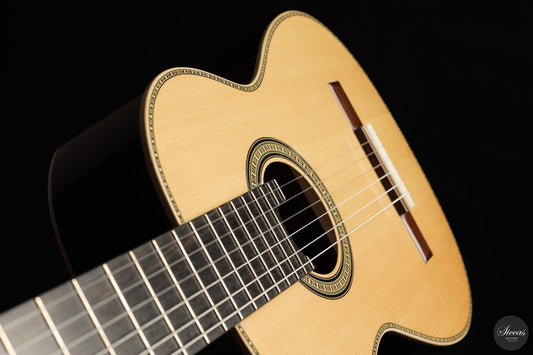

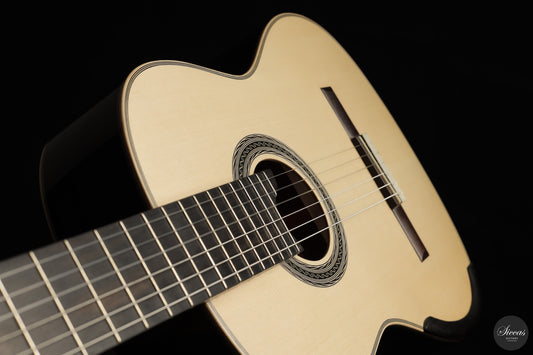






Related guitars
Frequently Asked Questions About Classical Guitars
How do I choose the right classical guitar for my level?
Choosing the right classical guitar depends on your playing level, musical goals, and budget. Beginners benefit from studio-model guitars from renowned workshops, while advanced players and professionals often choose a handmade master guitar. We are happy to advise you personally and can send detailed sound samples and videos on request.
What is the difference between a master guitar and a studio guitar?
Master guitars are built entirely by hand in the workshop of a single luthier, using only high-quality, well-aged tonewoods. Studio guitars are made in small series, often under the supervision of the master luthier, and offer excellent value for students and ambitious amateur players.
Can I try a classical guitar at home for 14 days?
Yes — every guitar you purchase from us comes with a 14-day home approval period. This complimentary trial applies worldwide to all orders, whether you are in Germany, Europe, the USA, Asia or anywhere else. We ship your instrument fully insured in a high-quality case so you can play it under your own acoustic conditions. If the guitar is not the right one for you, simply send it back and receive a full refund of the purchase price.
Can I try a classical guitar before purchasing?
Absolutely. You are warmly invited to visit our showroom in Karlsruhe, Germany, and test the instruments at your leisure. We are happy to schedule a personal appointment. If a visit is not possible, we send detailed videos and sound samples, and offer extensive consultation by phone or video call.
What payment methods and financing options do you offer?
We accept bank transfer, PayPal, major credit cards, and Klarna. For high-value instruments, we offer individual installment plans on request. Please contact us directly — we will find a suitable solution for every budget.
How do I properly care for my classical guitar?
A classical guitar requires constant humidity between 45 and 55 percent. Store the instrument in its case with a humidifier, avoid direct sunlight and large temperature fluctuations. Change the strings regularly and clean the guitar with a soft microfiber cloth.