





This guitar is sold – but we may have something similar.
Our experts know every guitar in the house and are happy to advise you personally.
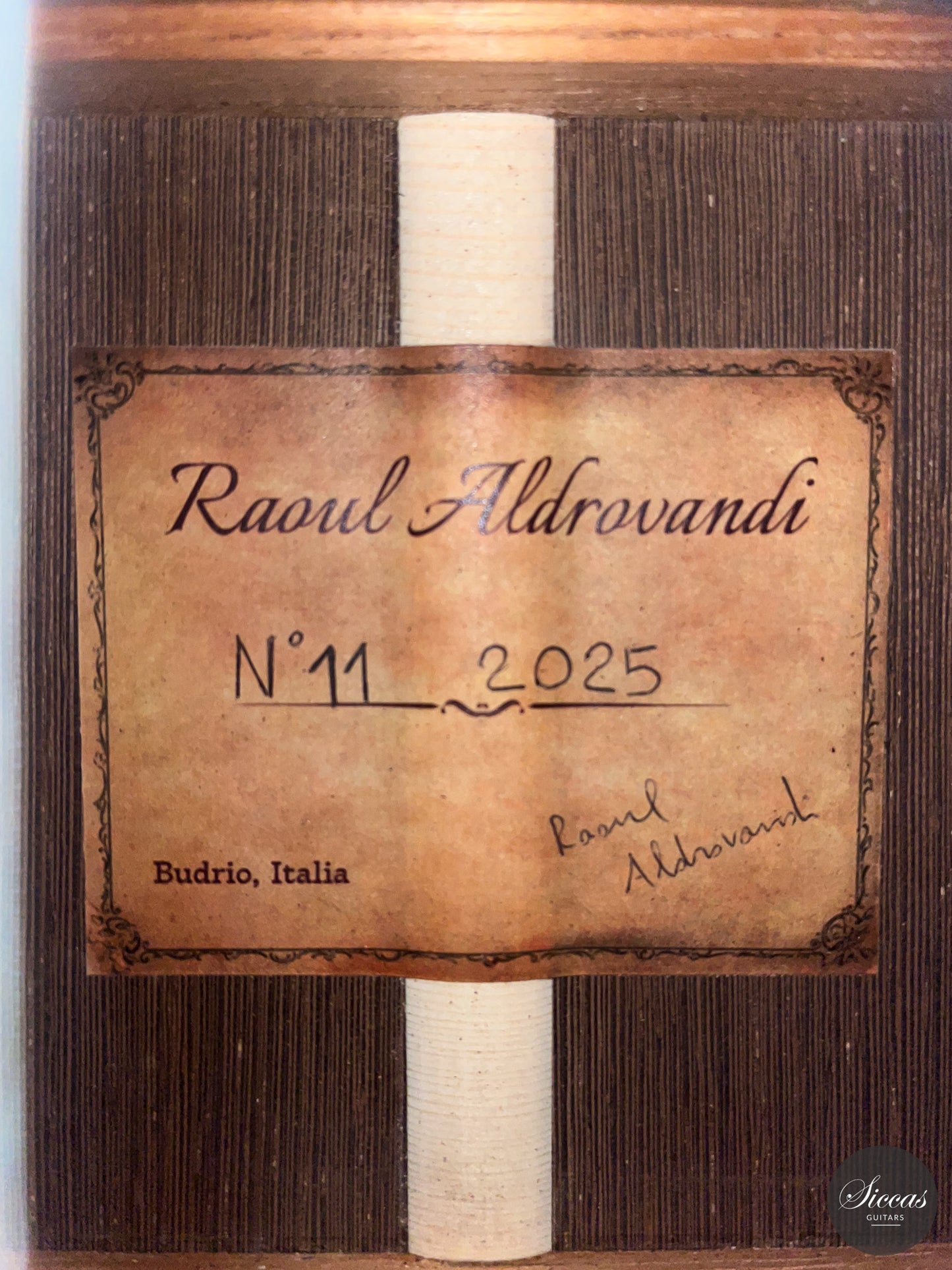
Ask about similar guitarsRaoul Aldrovandi - 2025 No. 11 "Marea"
Details
Details
Overview
Overview


Video overview


More details about the guitar
About the luthier
Raoul Aldrovandi did not arrive at guitar making by a conventional route. After initially beginning university studies in engineering, he soon recognised that his real interests lay in working with wood and shaping objects by hand. He left his studies and developed practical experience in carving, sculpture, and turning while working as a carpenter. A decisive turning point came when he attended a classical guitar concert, an experience that led him first to the instrument itself and then to the idea of uniting craftsmanship and sound through guitar making.
He later completed a guitar making course with Pablo Requena and gradually established an approach that reflects both technical discipline and artistic curiosity. Influenced by makers such as Mario Garrone, Giuseppe Cuzzucoli, and Trevor Gore, Aldrovandi approaches the guitar as a system in which each structural decision has an acoustic consequence. His instruments are informed by careful observation of materials, measured evaluation of their properties, and a clear wish to connect traditional handwork with a thoughtful, investigative design process.
About the guitar
This 2026 guitar, No. 11 “Marea”, is a modern instrument with spruce top, wenge back and sides, radial bracing, and French polish. Aldrovandi chose the radial bracing concept מתוך a particular fascination with the possibilities this structure offers. In his own account, the scheme appealed to him because it can partly compensate for the orthotropic nature of spruce, while also allowing the use of a slightly thinner soundboard with reduced internal friction. He also designed the bracing so that all areas of the top are connected directly to the bridge through the structure itself. These decisions are central to the guitar’s behaviour and help explain its immediacy, openness, and ease of response.
The name “Marea”, meaning “Tide”, comes from a personal and symbolic line of thought that accompanied the making of the instrument. Aldrovandi associated the image of the tide with the cyclical movement of emotions emerging from the depths, an idea linked in his reflection to the sea as a symbol of the unconscious. He describes this as a wish entrusted to the player, that emotions may flow freely and naturally through the instrument. The name therefore does not function as decoration, but as a poetic extension of the guitar’s identity.
In sound, “Marea” is notably responsive and easy under the hand. The notes speak quickly and the guitar offers a powerful, open voice filled with overtones, yet without losing clarity or becoming heavy. There is real presence in the sound, but also enough definition to follow each note individually. The sustain is strong, including in registers that can sound short on other guitars, and the instrument maintains a natural sense of projection without hardness. The overall impression is of a guitar that combines modern responsiveness with tonal richness and a comfortable, cooperative playing feel.

While this one is sold, these are ready for you
-
Classical Guitars
The classical guitar, with its soft nylon strings and characteristic timbre, has become a symbol of chamber music, Spanish tradition, and concert repertoire. Its modern form was shaped by Antonio de Torres in the 19th century, setting the standard for the body, fan bracing, and the 65-centimeter scale length that are still used today. Instruments in this category open up a rich palette from the refined Romantic miniatures of Tárrega to the majestic concertos of Rodrigo. Here you will find guitars that preserve historical continuity and at the same time inspire new interpretations.Look all products of the collection -
Siccas Luthiers - Halo Traditional Spruce 63 cm
Sale price 1.790 € Price:Unit price per Tax free (0% DE)1.990 €Save: 200 €Pre-OrderManufacturer: Siccas LuthiersManufacturer: Siccas LuthiersConstruction Type: TraditionalConstruction Type: Traditional -
Siccas Luthiers - Halo Traditional Spruce
Sale price 1.790 € Price:Unit price per Tax free (0% DE)1.990 €Save: 200 €Pre-OrderManufacturer: Siccas LuthiersManufacturer: Siccas LuthiersConstruction Type: TraditionalConstruction Type: Traditional -
Siccas Luthiers - Halo Traditional Cedar 63 cm
Sale price 1.790 € Price:Unit price per Tax free (0% DE)1.990 €Save: 200 €Pre-OrderManufacturer: Siccas LuthiersManufacturer: Siccas LuthiersConstruction Type: TraditionalConstruction Type: Traditional -

 Pre-Order
Siccas Luthiers - Halo Traditional Cedar
Sale price 1.790 € Price:Unit price per Tax free (0% DE)1.990 €Save: 200 €Pre-OrderManufacturer: Siccas LuthiersManufacturer: Siccas LuthiersConstruction Type: TraditionalConstruction Type: Traditional -
Fernando Moreno - 2019 "Rastrojo"
Price: 3.490 €Unit price per Tax free (0% DE)Construction Type: Flamenco -
Dieter Hense - 1989 "Terz" 82/109 57 cm
Price: 4.190 €Unit price per Tax free (0% DE)Construction Type: Traditional -
Dieter Hense - 1989 "Oktav " 81/109 39 cm
Price: 2.990 €Unit price per Tax free (0% DE)Construction Type: Traditional -
Jose Ramirez - 1968 "MT" Mariano Tezanos No. 2957
Price: 8.990 €Unit price per Tax free (0% DE)Luthier: Jose RamirezLuthier: Jose Ramirez IIIConstruction Type: Traditional -
Lorenzo Frignani - 2026 Classical Guitar No. 275
Price: 13.990 €Unit price per Tax free (0% DE)Luthier: Lorenzo Frignani -
Dragan Neshic - 2026 Especial No. 3
Price: 7.490 €Unit price per Tax free (0% DE)Construction Type: Double-Top Guitars



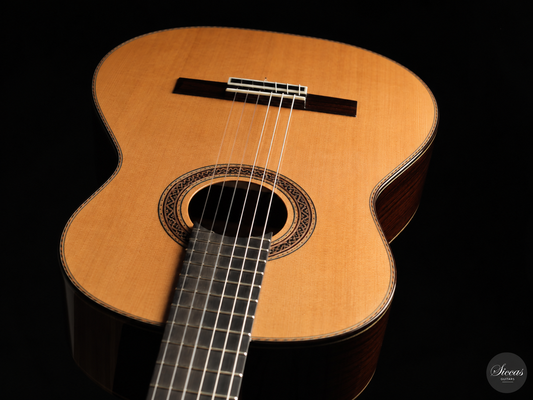


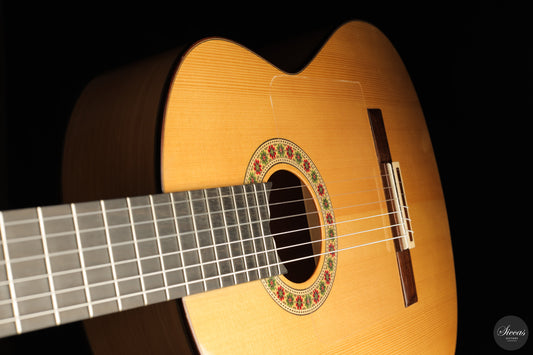

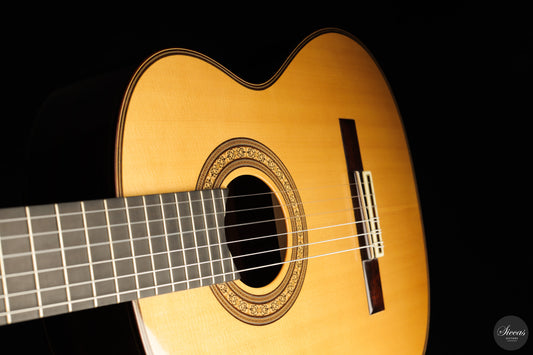

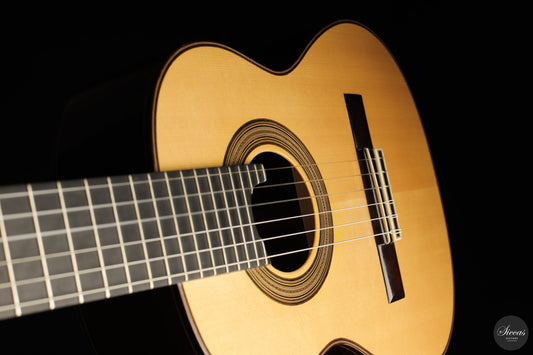

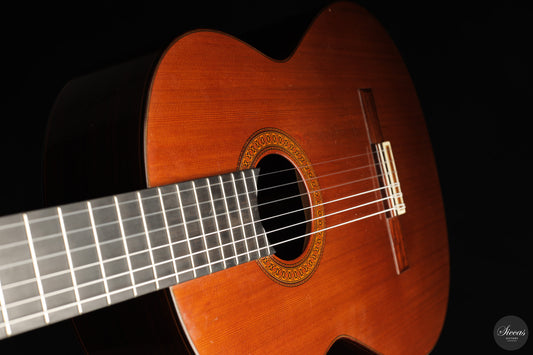

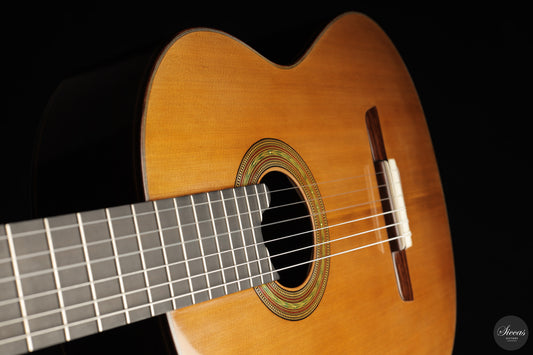

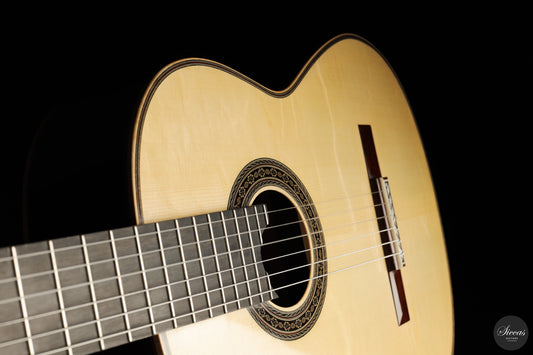


Related guitars
Frequently Asked Questions About Classical Guitars
How do I choose the right classical guitar for my level?
Choosing the right classical guitar depends on your playing level, musical goals, and budget. Beginners benefit from studio-model guitars from renowned workshops, while advanced players and professionals often choose a handmade master guitar. We are happy to advise you personally and can send detailed sound samples and videos on request.
What is the difference between a master guitar and a studio guitar?
Master guitars are built entirely by hand in the workshop of a single luthier, using only high-quality, well-aged tonewoods. Studio guitars are made in small series, often under the supervision of the master luthier, and offer excellent value for students and ambitious amateur players.
Can I try a classical guitar at home for 14 days?
Yes — every guitar you purchase from us comes with a 14-day home approval period. This complimentary trial applies worldwide to all orders, whether you are in Germany, Europe, the USA, Asia or anywhere else. We ship your instrument fully insured in a high-quality case so you can play it under your own acoustic conditions. If the guitar is not the right one for you, simply send it back and receive a full refund of the purchase price.
Can I try a classical guitar before purchasing?
Absolutely. You are warmly invited to visit our showroom in Karlsruhe, Germany, and test the instruments at your leisure. We are happy to schedule a personal appointment. If a visit is not possible, we send detailed videos and sound samples, and offer extensive consultation by phone or video call.
What payment methods and financing options do you offer?
We accept bank transfer, PayPal, major credit cards, and Klarna. For high-value instruments, we offer individual installment plans on request. Please contact us directly — we will find a suitable solution for every budget.
How do I properly care for my classical guitar?
A classical guitar requires constant humidity between 45 and 55 percent. Store the instrument in its case with a humidifier, avoid direct sunlight and large temperature fluctuations. Change the strings regularly and clean the guitar with a soft microfiber cloth.