
Beginner's Guide to Classical Guitar: Everything You Need to Get Started
Classical guitar is one of the most rewarding instruments you can pick up. Its repertoire spans centuries, its technique is precise and elegant, and the sound it produces — warm, intimate, resonant — is unlike anything else. But getting started can feel overwhelming. Which guitar should you buy? How long will it take to learn? What should you practice first?
This guide answers all of those questions honestly. Whether you are completely new to music or switching from another instrument, you will find practical advice here to help you take your first confident steps on the classical guitar.
Choosing Your First Classical Guitar
The first decision every beginner faces is which guitar to buy. This matters more than many people realize: a poor-quality instrument makes learning harder, sounds discouraging, and can damage your motivation before you have even begun.
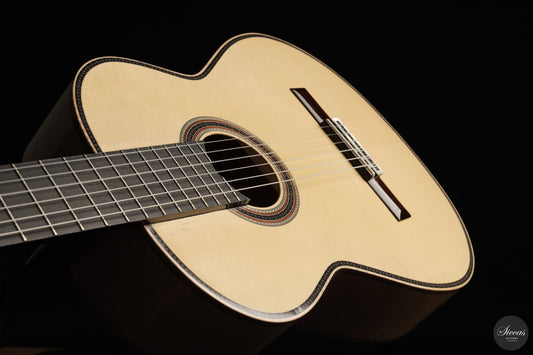
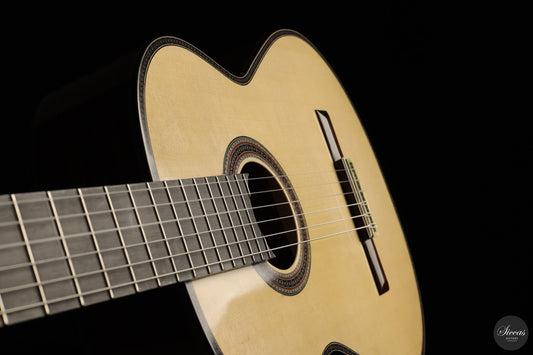
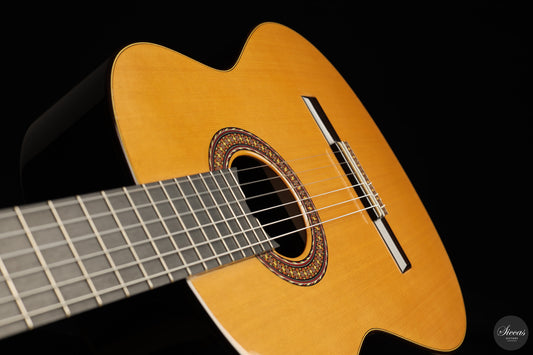
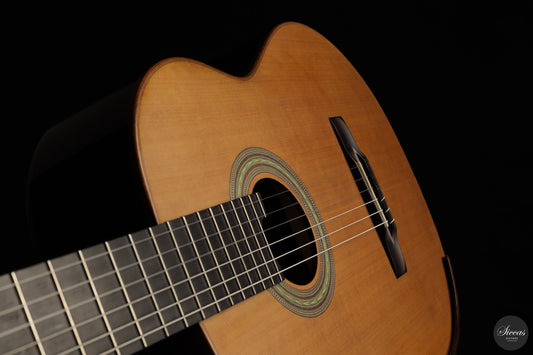
Classical guitars differ from acoustic and electric guitars in important ways. They use nylon strings rather than steel, which are gentler on the fingertips and produce the characteristic warm, rounded tone. The neck is also wider, which supports the proper right-hand and left-hand technique that classical playing demands. If you are unsure whether classical guitar is the right choice for you, read our comparison of acoustic vs classical guitar before committing.
What to Look for as a Beginner
For a first classical guitar, look for the following:
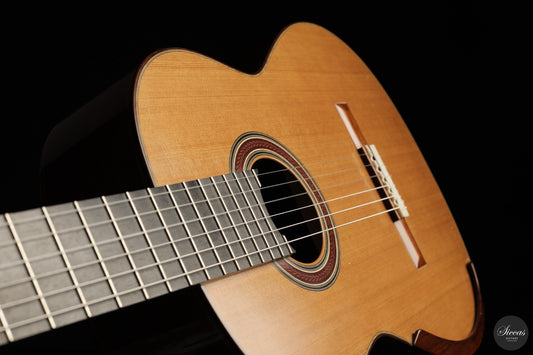
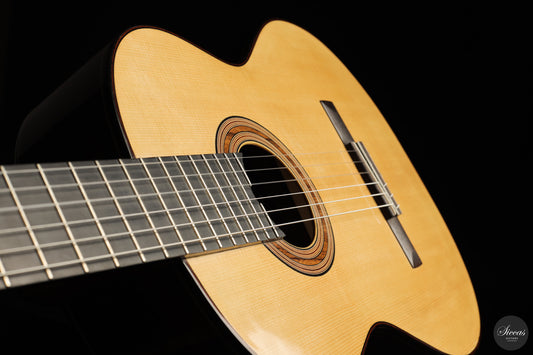
- Solid spruce or cedar top: Even at entry level, a solid top makes a noticeable difference in tone and projection compared to laminate. Spruce tends to be brighter and more articulate; cedar is warmer and responds more easily — useful to know as your ear develops.
- Comfortable scale length: Most full-size classical guitars have a scale length of around 650 mm. If you have smaller hands, a 640 mm or even a 3/4 size guitar may be more comfortable to start with.
- Good action setup: The action — how high the strings sit above the fretboard — should be neither too high nor too low. High action is tiring and painful; low action causes buzzing. A well-set-up guitar from a reputable dealer makes a real difference.
- Tuning stability: Machine heads should turn smoothly and hold their position. Cheap tuners drift constantly and make early practice frustrating.
Explore our range of classical guitars to see instruments suited to every stage of development, including carefully selected options for beginners.
First Steps: Posture and Hand Position
Classical guitar technique is built on a foundation of correct posture. This is not optional — it affects everything from your tone to your long-term physical health. Many beginners skip this step and develop habits that take years to undo.
Sitting Position
The traditional classical position involves sitting on a firm chair with the guitar resting on the left thigh, elevated by a footstool under the left foot. The neck of the guitar points upward at roughly a 45-degree angle. Alternatively, many modern players use a guitar support or cushion that attaches to the guitar body, avoiding the need for a footstool and reducing strain on the back and hips.
Your back should remain straight but relaxed. The guitar comes to you — you do not hunch over the guitar.
Right-Hand Technique
The right hand (or left hand for left-handed players) is responsible for tone production. In classical guitar, you play with the fingernails and the flesh of the fingertip together, using the thumb (p), index (i), middle (m), and ring (a) fingers. The wrist should be slightly arched, keeping the fingers free to move independently.
Sound production starts here. A good right-hand stroke — angled correctly, with the right combination of nail and flesh — produces a full, singing tone. A poor stroke produces a thin, scratchy sound no matter how expensive the guitar is.
Left-Hand Technique
The left hand presses the strings against the fretboard. The thumb should rest lightly behind the neck, roughly behind the middle finger. Fingers curve naturally so that the tips — not the pads — press down firmly just behind each fret. Avoid letting the thumb creep over the top of the neck, which collapses the arch and limits your reach.
How Long Does It Take to Learn Classical Guitar?
This is the question every beginner asks, and the honest answer is: it depends on how much you practice, how you practice, and what your goals are. Our detailed article on learning timelines explores this in depth, but here is a practical overview:
- First few weeks: Basic posture, right-hand arpeggios, simple melodies, tuning the guitar.
- 3–6 months: First complete pieces, basic scales, reading notation or tablature, simple chord shapes.
- 1–2 years: Intermediate repertoire, more complex right-hand patterns, beginning to develop your own tone and musical expression.
- 3–5 years: Advanced repertoire, polished technique, ability to learn new pieces independently.
Consistent daily practice of 30 to 45 minutes will take you further than sporadic two-hour sessions. Quality of attention matters more than quantity of time.
Using a Metronome
A metronome is one of the most powerful tools available to a beginner. It is also one of the most ignored. Classical guitar technique requires rhythmic precision — not just keeping a steady beat, but placing notes exactly where they belong within that beat.
Start every new piece or exercise slowly enough that you can play it cleanly and in time. Gradually increase the tempo as accuracy becomes reliable. Never practice mistakes at speed — your muscle memory will learn whatever you repeat, good or bad.
Free metronome apps are perfectly adequate for beginners. Use one every time you practice.
Learning to Read Music
Classical guitar has a rich tradition of written notation, and learning to read music opens up that entire tradition. Many beginners start with guitar tablature (tab), which shows you where to put your fingers but tells you nothing about rhythm or musical phrasing. Tab is a useful shortcut for learning a specific piece quickly, but it has real limitations.
Reading standard notation takes time to learn, but even a basic level of sight-reading will make you a more capable and independent musician. Invest a few minutes of each practice session in reading exercises — it pays dividends quickly.
Easy Pieces to Start With
One of the great pleasures of classical guitar is that even very early pieces sound genuinely beautiful. You do not have to wait years before playing music that is worth listening to. Our list of the easiest classical guitar pieces for beginners gives you a curated starting point with pieces that are both achievable and rewarding.
Some styles and composers worth exploring early:
- Renaissance lute music arranged for guitar: Simple textures, beautiful melodies, excellent for developing right-hand independence.
- Fernando Sor's studies: Fernando Sor wrote dozens of progressive studies specifically designed to build technique while remaining musical.
- Francisco Tárrega's shorter pieces: Tárrega is one of the defining figures of classical guitar. His simpler works are accessible to intermediate beginners and immediately recognizable.
- Baroque arrangements: Bach on classical guitar may sound ambitious, but several of his simpler pieces and arrangements are within reach for developing players.
For reference as your playing develops, our overview of famous classical guitar pieces shows you where the repertoire can take you.
Tuning Your Classical Guitar
Nylon strings go out of tune more readily than steel strings, especially when they are new. Learning to tune accurately and quickly is an essential early skill. Our guide to tuning a classical guitar covers the standard methods including clip-on tuners, tuning apps, and tuning by ear.
New strings in particular require a break-in period of several days before they hold their pitch reliably. During this time, tune before every practice session.
Exploring Styles and Broadening Your Ears
Classical guitar sits at the intersection of many musical traditions. The instrument has absorbed influences from Renaissance and Baroque Europe, Spanish folk and flamenco music, Latin American concert music, and much more. Exploring these different branches enriches your playing and keeps your curiosity alive.
If the flamenco tradition interests you, our flamenco guitar collection shows how the instrument's construction changes to suit that style. The difference in tone and responsiveness is immediately audible.
Listen widely. The great interpreters — players like Andrés Segovia, Julian Bream, David Russell, and Ana Vidovic — show what the instrument is capable of at the highest level. Listening to great playing shapes your own musical imagination, even as a beginner.
Working With a Teacher
Self-teaching is possible, and many resources exist to support it. But a good teacher accelerates your progress significantly, catches technical problems before they become ingrained habits, and provides the kind of musical feedback that no video or book can fully replace.
If regular lessons are not possible, even occasional sessions — once a month, say — can help you course-correct and set clear goals for independent practice.
Staying Motivated
Every serious classical guitarist goes through periods of frustration. A difficult passage that won't come together, a plateau where progress seems to stall, a technique problem that feels impossible to fix — these are universal experiences, not signs that you are failing.
A few things that help:
- Keep a practice log. Writing down what you worked on and noting small improvements makes progress visible.
- Record yourself occasionally. Recordings reveal both problems and improvements that you cannot hear in the moment of playing.
- Connect with other players. Whether through a local guitar society, an online community, or simply a friend who plays, shared enthusiasm sustains motivation through difficult stretches.
- Perform when you can. Playing for others — even informally — builds confidence and gives your practice a concrete goal.
Choosing the Right Guitar as You Progress
As your playing develops, so will your understanding of what you want from a guitar. Tone, responsiveness, projection, string tension — qualities you may not have noticed at first become increasingly important. This is a natural and enjoyable part of the journey.
When you are ready to step up to a more serious instrument, our classical guitar collection includes handmade instruments from some of the world's finest luthiers, including guitars with double tops that offer exceptional projection and responsiveness. The right guitar at the right stage of development genuinely transforms the playing experience.
Classical guitar rewards patience, curiosity, and consistent effort. The journey from first notes to genuine musical expression is one of the most satisfying things a musician can undertake. Start well, practice thoughtfully, and enjoy every step of it.