
Classical Guitar Festivals and Competitions: Where the Art Form Comes Alive
Classical guitar festivals and competitions are among the most powerful forces keeping this centuries-old art form dynamic, relevant, and growing. Every year, thousands of musicians, students, educators, and passionate listeners gather at events around the world to celebrate the classical guitar in all its depth. Whether you are an aspiring performer chasing your first stage, or a devoted listener searching for the finest playing on the planet, these events offer something irreplaceable.
This guide covers the most important classical guitar competitions and festivals worldwide — what makes each one special, what you can expect to experience, and why attending (or competing) can be a turning point in a guitarist's life.
Why Classical Guitar Competitions Matter
Competitions are not just about winning. At the highest level, they are catalysts that launch careers, connect emerging artists with audiences, and push technical and musical standards forward. The pressure of a competition stage accelerates growth in ways that years of private practice simply cannot replicate.
For audiences and the broader guitar community, competitions are talent discovery events. Many of today's most celebrated concert artists first came to international attention through competition wins or strong placements. If you follow the great classical guitarists of our time, you will often find a competition prize somewhere near the beginning of their story.
GFA International Concert Artist Competition
The Guitar Foundation of America (GFA) Competition is one of the most prestigious classical guitar competitions in the world. Organized by the Guitar Foundation of America, it draws applicants from across the globe and is held as part of the larger GFA Convention — a week-long gathering that also includes concerts, masterclasses, exhibitions, and lectures.
Winning or placing highly in the GFA competition typically opens doors to concert engagements, recording opportunities, and international visibility. The GFA has been instrumental in shaping the careers of numerous artists who went on to perform on the world's major stages.
Queen Elisabeth Competition – Guitar
The Queen Elisabeth Competition in Brussels is one of the most renowned classical music competitions in existence, covering piano, violin, cello, and — more recently — voice and classical guitar. When guitar was added to the rotation, it immediately became one of the highest-profile competitions in the guitar world.
The Queen Elisabeth brings the classical guitar onto the same stage as the other great instruments of the classical tradition. It carries enormous prestige, attracts top-level international jurors, and receives serious media coverage. A prize here places a guitarist firmly in the international concert circuit.
Parkening International Guitar Competition
The Parkening International Guitar Competition, associated with Pepperdine University in the United States, is one of the leading competitions in North America. Named after the legendary American guitarist Christopher Parkening, it places a particular emphasis on artistry alongside technical command. The competition draws strong international participation and is known for its rigorous standards and the quality of its jury.
The World's Great Classical Guitar Festivals
If competitions are about excellence under pressure, festivals are about community, discovery, and immersion. A well-designed classical guitar festival can transform your relationship with the instrument — whether you attend as a performer, a student in a masterclass, or simply as an audience member.
Córdoba Guitar Festival
The Córdoba Guitar Festival in Spain is one of the most celebrated guitar events in the world. Held in the historic city of Córdoba — a place deeply intertwined with the history of the guitar — the festival presents an extraordinary range of guitar music, from classical and flamenco to Latin American and contemporary styles.
The atmosphere in Córdoba during the festival is unlike anything else in the guitar world. Performances take place in stunning historic venues, and the city itself breathes guitar music for the duration of the event. For anyone serious about the guitar, a trip to Córdoba is close to a pilgrimage. The flamenco connection is particularly strong — if you are curious about that world, explore our flamenco guitar collection alongside the festival program.
GFA Convention and Competition
Beyond the competition itself, the GFA Convention functions as the annual gathering of the North American classical guitar world. It brings together performers, educators, luthiers, publishers, and students for a full week of concerts, workshops, lectures, and exhibitions. The exhibit hall alone — where guitar makers from across the world display their instruments — is worth the trip for any serious player or collector.
The GFA Convention is also where important conversations about pedagogy, repertoire, and the future of the instrument take place. If you want to understand where classical guitar is heading, this is one of the best places to listen.
Toronto Guitar Weekend
Toronto Guitar Weekend is one of Canada's premier classical guitar events, combining high-level concerts with educational programming. The festival has hosted many of the world's finest guitarists and serves as an important platform for both established artists and emerging talent. Its location in one of North America's most culturally vibrant cities gives it a particular energy and accessibility.
Masterclasses: The Heart of Festival Education
One of the greatest gifts a classical guitar festival can offer is direct access to world-class teaching. Masterclasses led by major concert artists are a fixture at virtually every significant festival, and they offer something that no recording or online video can replicate — the immediate, personalized exchange between teacher and student in front of an engaged audience.
Watching a masterclass is itself a learning experience, even for those not playing. Hearing a great artist describe how they approach famous classical guitar pieces — the technical decisions, the interpretive choices, the historical context — can reshape your entire understanding of the repertoire. If you are still early in your journey, our guide on how long it takes to learn classical guitar may help you set realistic goals before your first festival visit.
Repertoire Discovery: Festivals as Musical Laboratories
One of the most valuable and underappreciated functions of classical guitar festivals is repertoire expansion. The standard concert circuit tends to favor familiar works — and rightly so, since audiences love them. But festivals create space for themed programs, premieres of new compositions, and deep dives into underrepresented composers and traditions.
You might attend a concert dedicated entirely to the music of Agustín Barrios, or a program exploring the connection between Bach and the classical guitar. You might hear the premiere of a newly commissioned work alongside a beloved piece by Francisco Tárrega. This breadth is what keeps the repertoire alive and growing.
The Instrument Question: What Guitars Do Festival Artists Play?
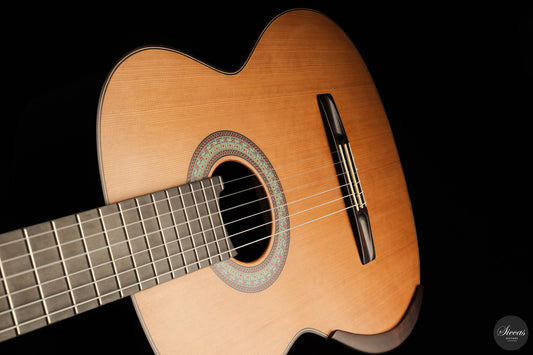
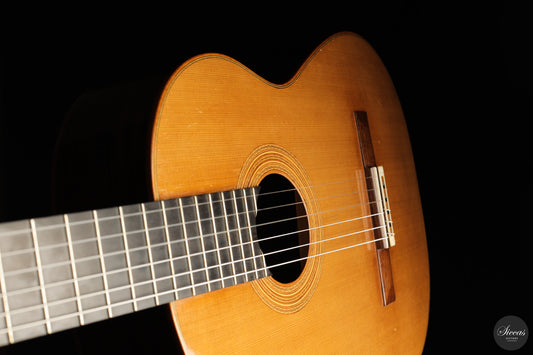
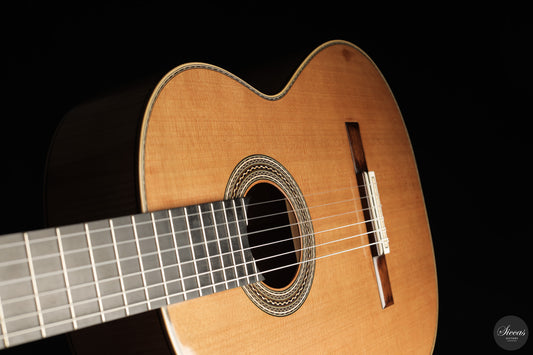
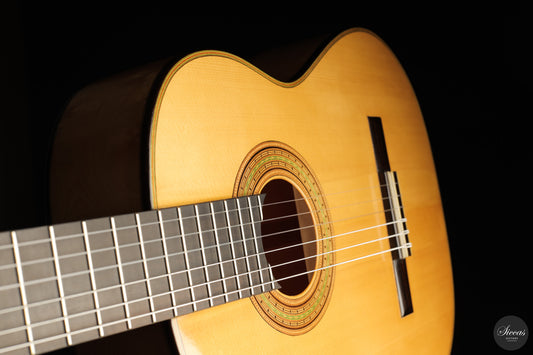
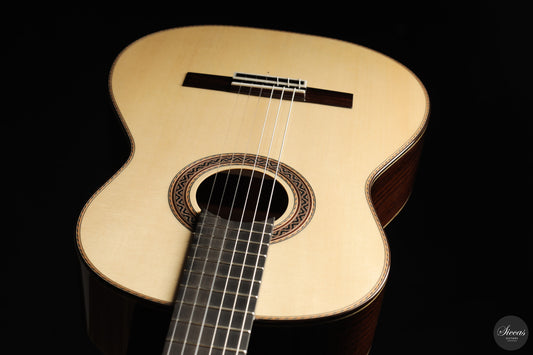
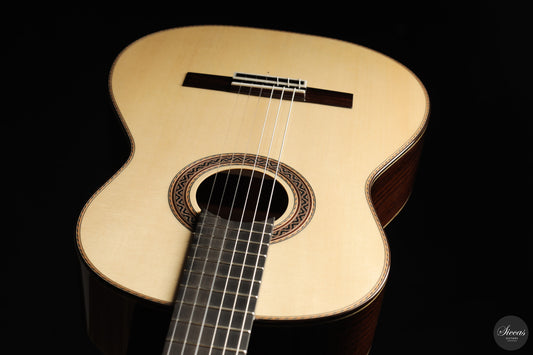
If you attend enough classical guitar festivals, you will quickly become fascinated by the instruments on stage. Top-level concert artists are extraordinarily particular about their guitars, and festivals are one of the best places to observe — and sometimes try — instruments at the highest level.
Many of the world's finest concert guitars are built in the Spanish tradition pioneered by makers like Hermann Hauser I, while the French school represented by Daniel Friederich has produced some of the most sought-after instruments ever made. Spanish workshops like José Ramírez have been putting concert-level instruments into the hands of players for generations.
If you are considering your next instrument, exploring our full range of classical guitars is a natural starting point. The choice between a spruce top and a cedar top is one of the most important tonal decisions you will make — and hearing those differences live at a festival is one of the best ways to develop your ear.
Youth Programs: The Next Generation
The best classical guitar festivals invest seriously in the next generation. Youth competitions, student concerts, and dedicated educational programs create pathways for young players to engage with the classical guitar world at a formative stage. These programs are not just about identifying exceptional talent — they are about building a community of informed, passionate players and listeners who will carry the tradition forward.
Many professional guitarists trace their first serious encounter with the classical guitar world back to a youth competition or a festival masterclass they attended as a teenager. The combination of inspiration, instruction, and community that a well-run festival provides is genuinely difficult to replicate in any other context.
Cultural Exchange and the Global Guitar Community
Classical guitar is a genuinely global art form. Its roots reach deep into Spain and Latin America, its historical development runs through Europe, and today its finest practitioners come from every corner of the world. Festivals reflect and celebrate this diversity.
When you attend an international classical guitar festival, you encounter not just different playing styles and technical schools, but different musical traditions, different repertoires, and different ways of thinking about what the guitar can do. This cross-pollination is one of the great engines of the art form's continued development.
Planning Your First Festival Visit
If you have never attended a major classical guitar festival, the experience can feel overwhelming at first — there is simply so much happening. The key is to choose deliberately. Prioritize the concerts of artists whose recordings you already love. Attend at least one masterclass. If the festival has an instrument exhibition, spend time there. Talk to other attendees.
And if you are a player yourself, consider entering a competition or signing up for a masterclass slot. The growth that comes from performing under pressure, or from receiving direct feedback from a world-class artist, is worth far more than any prize or certificate.
Conclusion: Why These Events Are Essential
Classical guitar festivals and competitions are not peripheral events in the life of the instrument — they are central to it. They discover and launch talent. They educate and inspire players at every level. They expand the repertoire and keep the conversation about the guitar's future alive. And they create communities of people who share a deep love for one of the world's most expressive and intimate instruments.
Whether you come as a competitor, a student, a listener, or simply a curious traveler, these events will deepen your relationship with the classical guitar in ways that recordings and lessons alone never can.