
Brandon Acker presents a solo performance of Lachrimae Pavan by John Dowland, one of the most enduring works of Renaissance lute literature. Originally composed at the turn of the 17th century, the piece is closely associated with Dowland’s expressive language, marked by restrained melancholy, clarity of line, and careful harmonic balance. Transferred to the classical guitar, Lachrimae Pavan retains its introspective character while gaining a distinct timbral dimension.
John Dowland and the Lachrimae Tradition
John Dowland remains one of the most influential composers for lute music, and Lachrimae Pavan occupies a central position in his output. The descending motif that defines the work became emblematic of the period’s expressive style and appeared in several related compositions by Dowland. The music unfolds in measured phrases, relying on subtle variation rather than dramatic contrast. This structure places emphasis on control of tone, articulation, and pacing.
When performed on the classical guitar, Lachrimae Pavan demands particular attention to voice leading and sustain. The guitar must balance polyphonic clarity with lyrical continuity, ensuring that the music remains transparent while preserving its contemplative atmosphere.
A Performance by Brandon Acker
Brandon Acker approaches Lachrimae Pavan with a clear sense of historical awareness and instrumental sensitivity. His interpretation focuses on shaping long phrases and allowing the music’s natural breathing to guide tempo and dynamics. Rather than imposing strong contrasts, the performance emphasizes consistency and tonal coherence, aligning closely with the character of Dowland’s writing.
Acker’s playing highlights the polyphonic structure of the piece, giving each voice sufficient presence without disrupting the overall balance. Ornamentation and articulation remain understated, supporting the reflective quality of the music.
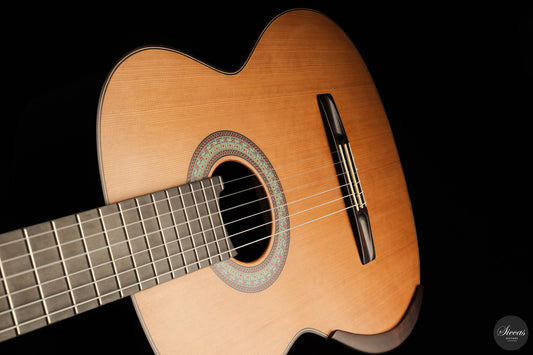
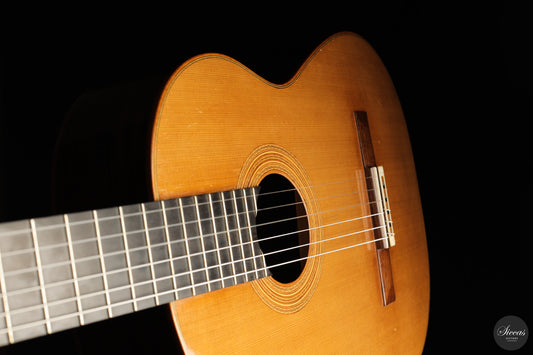
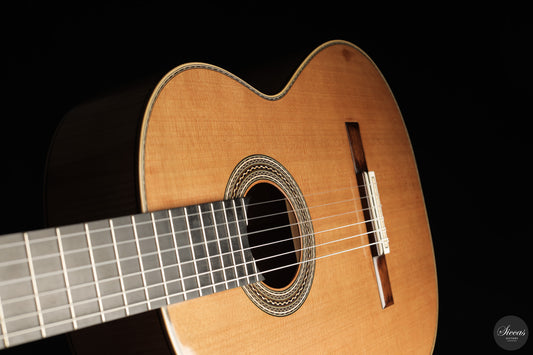
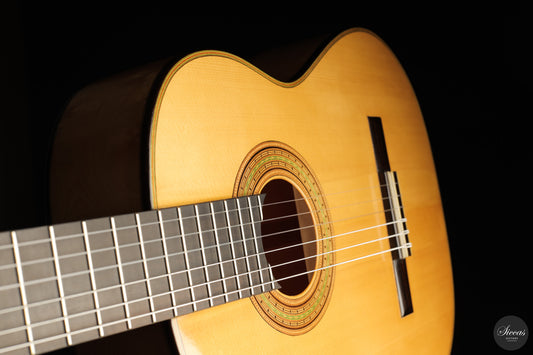
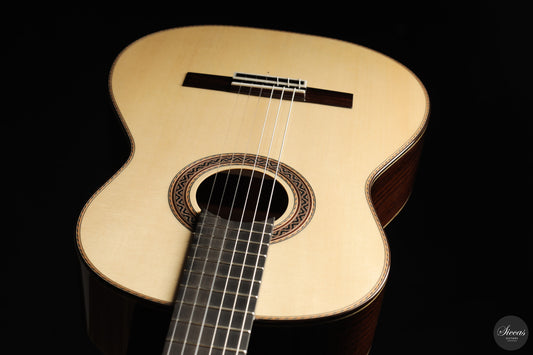
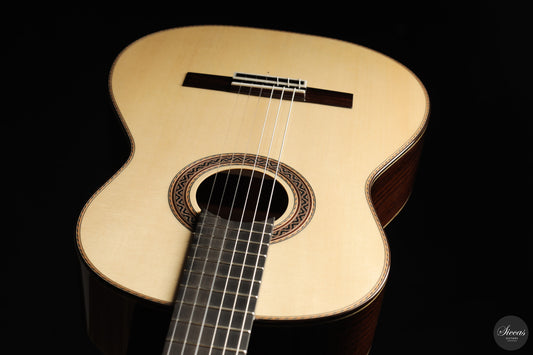
The Siccas Luthiers Creation Doubletop Cedar
This performance is played on a Siccas Luthiers Creation Doubletop classical guitar with a cedar top. The double-top construction offers increased responsiveness and sustain, qualities that support the long melodic lines and gentle harmonic movement of Lachrimae Pavan. Cedar contributes warmth and immediacy, allowing the instrument to respond clearly at lower dynamic levels.
The guitar’s tonal balance supports the clarity required for Renaissance repertoire while maintaining a rounded, cohesive sound. Subtle shifts in touch are translated directly into changes in color, making the instrument well suited to music that relies on nuance rather than projection.
Sound, Structure, and Interpretation
Lachrimae Pavan unfolds through repetition and variation, and its expressive impact depends largely on how these elements are shaped over time. In this performance, dynamics are restrained and carefully graded, allowing the harmonic language to speak without interruption. The natural resonance of the guitar supports sustained notes while preserving separation between voices.
The combination of Brandon Acker’s measured approach and the characteristics of the Siccas Luthiers Creation Doubletop Cedar results in a performance that remains focused on musical substance. The guitar does not draw attention to itself, instead serving as a medium through which Dowland’s music can unfold with clarity.
Renaissance Music in a Modern Context
Performing John Dowland’s music on the classical guitar places Renaissance repertoire within a contemporary instrumental framework. While the original lute sonorities differ from those of the modern guitar, careful interpretation allows the essential qualities of the music to remain intact. This performance demonstrates how historically informed awareness and modern instrument design can coexist.
Brandon Acker’s interpretation of Lachrimae Pavan, supported by the Siccas Luthiers Creation Doubletop Cedar, presents the work as a living piece of repertoire. It highlights the enduring relevance of Dowland’s music and the role of thoughtfully built classical guitars in shaping historically grounded yet contemporary performances.