
Capricho Árabe is one of Francisco Tárrega's most celebrated compositions and a cornerstone of the classical guitar repertoire. Composed around 1892 and dedicated to the Spanish composer Tomás Bretón, the piece is cast as a serenata in free fantasia style — a form that gave Tárrega room to blend Romantic expressivity with the Moorish and Arabic musical idioms that had shaped the cultural landscape of his native Spain. More than 130 years after its creation, Capricho Árabe remains one of the most performed and emotionally resonant works ever written for the instrument, standing alongside Recuerdos de la Alhambra as a defining statement of the Tárrega canon.
Francisco Tárrega: The Composer Behind the Piece
Francisco Tárrega (1852–1909) was born in Villarreal, in the Valencia region of Spain. Often described as the father of modern classical guitar technique, he transformed what had largely been a salon instrument into a vehicle for serious concert music. He studied at the Royal Conservatory of Music in Madrid, developed an influential right-hand technique based on the use of the fingertips, and transcribed dozens of orchestral and piano works for the guitar — bringing Chopin, Bach, and Beethoven into the guitarist's hands.
Tárrega's original compositions, however, are what secured his lasting place in the repertoire. Works like Recuerdos de la Alhambra, Capricho Árabe, and his broader catalogue established a distinctly Spanish voice for the instrument. He taught a generation of students who would go on to shape twentieth-century guitar playing, and his influence flows through virtually every classical guitarist working today.
For a deeper portrait of the composer, visit our dedicated article on Francisco Tárrega.
Origins and Musical Context of Capricho Árabe
The title tells us two important things. "Capricho" — from the Italian capriccio — signals a piece of free, improvisatory character, one that does not bind itself to a strict classical form. "Árabe" points directly to the Moorish and Arabic musical traditions that had permeated Andalusian culture for centuries and that were experiencing a renewed artistic fascination in nineteenth-century Spain. The Alhambra palace in Granada, the flamenco tradition, and the legacy of Al-Andalus were all touchstones for Spanish Romantic artists, and Tárrega was no exception.
Composed around 1892, the piece was dedicated to Tomás Bretón (1850–1923), one of the leading Spanish composers of the era — best known today for his opera La verbena de la Paloma. The dedication situates Capricho Árabe firmly within the cultured, professional musical world of late-nineteenth-century Spain, and it suggests that Tárrega regarded the work as among his most accomplished.
Musically, the piece draws on exotic scales and modal inflections that evoke Arabic and Moorish idioms without quoting any specific folk source. Tárrega uses ornamentation, chromatic passing tones, and a sinuous melodic contour to create an atmosphere that is simultaneously Spanish and Other — familiar yet distant. The "free fantasia" designation reflects the piece's episodic, rhapsodic structure, which moves through contrasting sections of mood and texture rather than following a fixed formal scheme.
Structure and Musical Character
Capricho Árabe unfolds in a series of contrasting episodes. The opening melody is tender and introspective, introduced over a gentle accompaniment that rocks back and forth in a way that recalls the sway of a serenade. As the piece develops, Tárrega introduces more dramatic passages — fuller textures, bolder harmonies, and a greater sense of rhythmic drive — before returning to the delicate character of the opening.
Throughout, the guitar is asked to do several things at once: carry a singing melodic line, provide harmonic support, and sometimes suggest a bass voice as well. This polyphonic layering is one of the defining features of Tárrega's writing and one of the reasons the piece remains technically demanding. The melody must sing clearly above the inner voices, and the inner voices must move with their own logic without smothering the tune.
The piece's emotional range is wide. At its most intimate, it sounds like a private reverie; at its most expansive, it takes on a quality of longing and drama that reaches well beyond the salon. This range is precisely what has kept Capricho Árabe in active concert use for over a century.
Technical Challenges: How to Approach the Piece
For guitarists working on Capricho Árabe, the central technical challenge is one of voice balance: maintaining a legato, expressive melody while clearly articulating the inner voices beneath it. This demands a high degree of right-hand control, with each finger operating semi-independently in terms of tone production and dynamic weight.
Legato and Slurs
Tárrega's melodic writing relies heavily on smooth, connected lines. Hammer-ons and pull-offs (slurs) are integral to achieving the flowing quality the piece requires. Practising slurs in isolation — building speed and evenness before reintegrating them into the full texture — is a reliable approach.
Dynamic Contrast
The piece covers a wide dynamic range, from soft, intimate piano passages to more assertive forte sections. Conscious practice of dynamic shaping — playing through sections at exaggerated extremes before settling on a musically balanced version — helps develop the expressive control the piece demands.
Finger Independence
Because the piece frequently asks the guitar to function as a small ensemble — melody, inner voices, and bass all present simultaneously — right-hand finger independence is essential. Slow-practice exercises that isolate each voice separately before combining them are particularly effective.
Tone Colour
The Arabic and Moorish character of the piece is partly a matter of scale and harmony, but tone colour plays a significant role as well. Experimenting with right-hand position — playing closer to the soundhole for warmth, closer to the bridge for a more penetrating tone — allows a guitarist to differentiate the piece's contrasting episodes and bring out their distinct characters.
For those building toward pieces of this level, our guide on how long it takes to learn classical guitar offers useful context, and the collection of easier pieces for beginners is a good starting point for developing the underlying skills.
Ana Vidovic Performs Capricho Árabe
Siccas Guitars has had the privilege of publishing a performance of Capricho Árabe by the Croatian classical guitarist Ana Vidovic. Widely regarded as one of the most accomplished guitarists of her generation, Vidovic brings exceptional technical precision and emotional depth to everything she plays. Her interpretation of the piece balances the flowing lyricism of Tárrega's melody with a clear command of the harmonic and contrapuntal layers beneath it. The result is a performance that feels both intimate and authoritative — and that serves as an excellent reference point for anyone studying the work.
You can find more about Ana Vidovic and her work on our dedicated artist page.
Gaëlle Solal: Another Perspective
The following performance offers a further perspective on the Spanish Romantic guitar tradition, showing the kind of expressive range and instrumental colour that this repertoire demands.
Capricho Árabe in the Wider Tárrega Repertoire
Capricho Árabe occupies a particular place in Tárrega's output. It is more immediately expressive and less technically forbidding than Recuerdos de la Alhambra, which makes it accessible to a wider range of players while still offering genuine interpretive depth. At the same time, it is more substantial and emotionally complex than many of Tárrega's shorter character pieces, which makes it a rewarding concert work rather than merely a study.
Together with Recuerdos de la Alhambra and the broader Spanish Romantic tradition, Capricho Árabe helped define what the classical guitar could be: a solo instrument capable of evoking atmosphere, narrative, and a full range of human emotion. That legacy runs through the entire subsequent history of the instrument, from Andrés Segovia's concert programming to the present day. You can read more about that history in our overview of famous classical guitar pieces.
Choosing a Guitar for This Repertoire
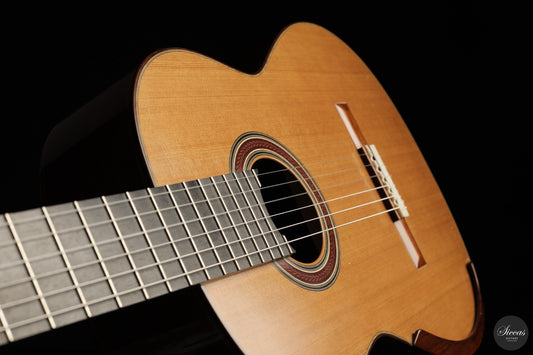
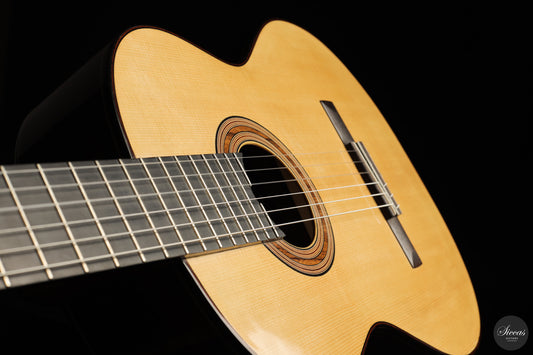
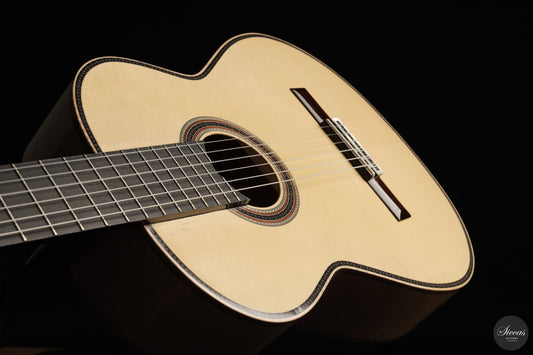
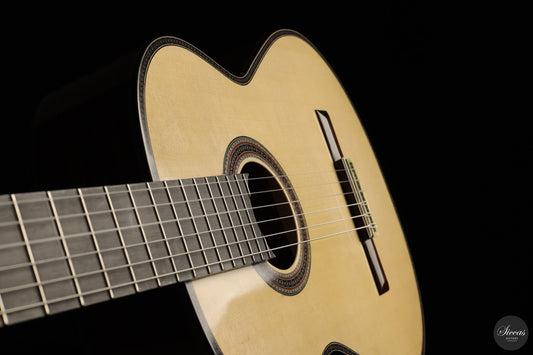
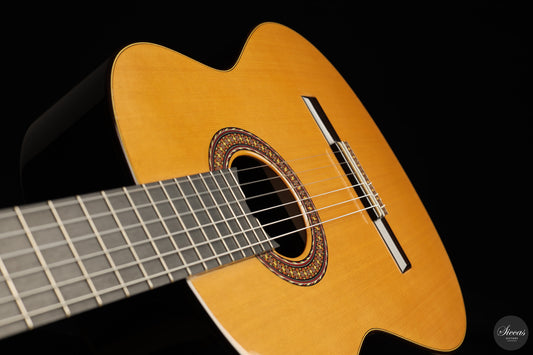
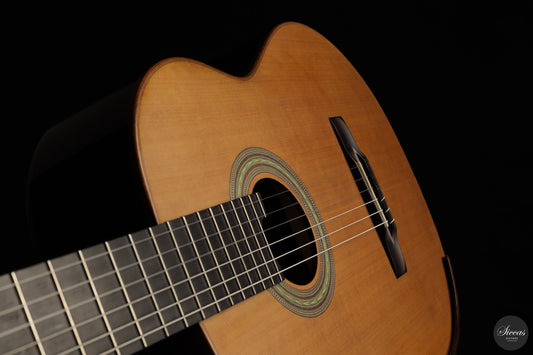
Tárrega composed for gut-strung instruments of the Torres school, and the warm, rounded tone of a traditional Spanish classical guitar suits this music particularly well. Cedar-top guitars, with their immediate warmth and responsiveness, often feel especially natural for this repertoire. Spruce tops bring a slightly brighter, more projected sound that can also work beautifully, particularly in larger rooms.
Browse our selection of classical guitars, explore guitars by cedar top or spruce top, or read our guide on spruce vs. cedar tone to find the right instrument for your playing.
Why Capricho Árabe Endures
The staying power of Capricho Árabe rests on a combination of factors that rarely align so perfectly in a single piece. It is technically demanding without being gratuitously difficult. It is emotionally rich without being melodramatic. It draws on a specific cultural tradition — the Moorish heritage of Andalusia — while speaking a musical language that listeners everywhere can feel. And it exploits the particular qualities of the classical guitar — its intimacy, its ability to sustain a singing line, its capacity for polyphonic texture — more fully than almost any other short work in the repertoire.
For anyone exploring the world of classical guitar, whether as a player or a listener, Capricho Árabe is essential. It is one of those pieces that, once heard in a good performance, stays with you.