
The Capricho Árabe — subtitled Serenata — is one of the most beloved works Francisco Tárrega ever composed: a guitar piece that evokes the Moorish world of southern Spain through melody, harmony, and texture all at once. It was composed around 1888 and dedicated to the Spanish composer Tomás Bretón. When Tárrega died in 1909, three separate ensembles played it during his funeral procession.
The Moorish Atmosphere
Tárrega wrote the piece while living in Valencia, a city shaped by centuries of intermingling between Islamic, Castilian, and Christian cultures. The introduction evokes the melodic quality of Middle Eastern music, with scales and ornaments that carry the sound of a culture beyond the Pyrenees. Throughout, the guitar takes on an almost orchestral quality: the bass provides a supporting accompaniment while the upper voices carry an expressive, singing melody. Dark minor passages alternate with warmer major sections, and the whole carries a fluid, improvisatory quality — as if being invented in the moment rather than read from a page.
The Music
The piece is in D minor, using Drop D tuning. It follows an AABA form with an extended introduction. The B section lifts briefly into F major and D major before returning to the darker home key. The technical demands are intermediate to advanced: the piece requires legato technique, finger independence for layered harmonies, subtle dynamic control, and expressive timing that keeps the improvisatory quality alive.
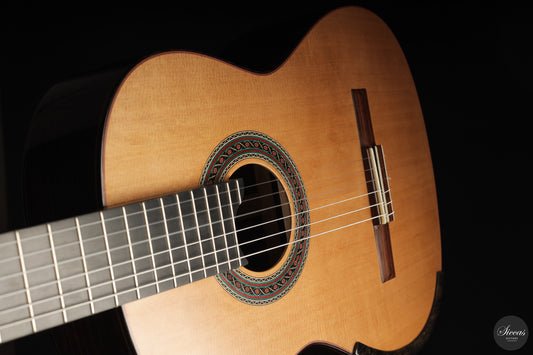
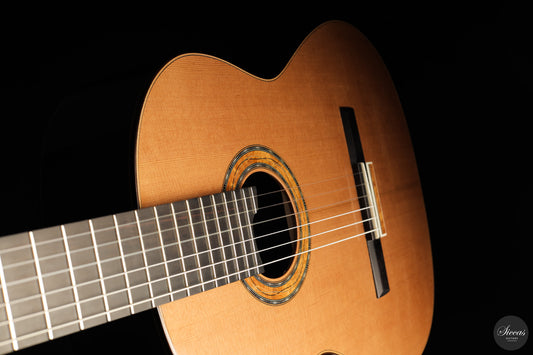
Performed at Siccas Guitars
Playing it
The Capricho Árabe rewards a guitarist who can sustain the improvisatory quality throughout — letting the melody float above the accompaniment rather than pressing through the notes. Sudden pianissimo moments followed by full-voiced chords are central to the piece's drama.
See the full Tárrega guide and Recuerdos de la Alhambra.