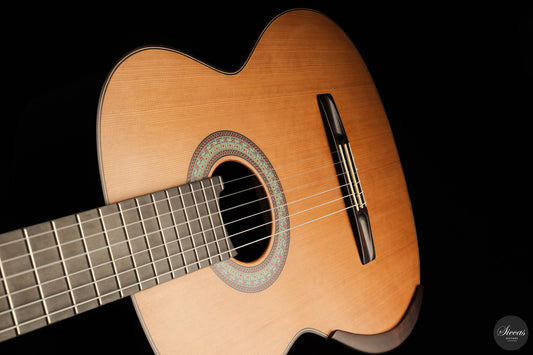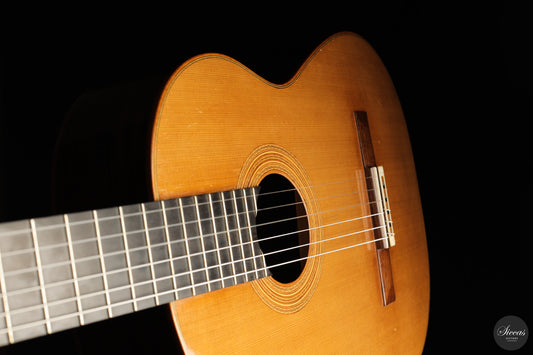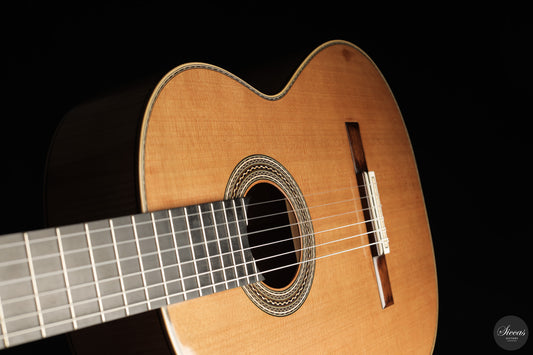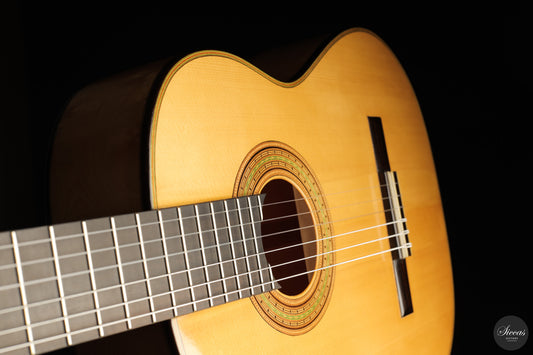

Two small things have an outsized effect on your tone: where your right hand sits, and how long your nails are. In this masterclass at Siccas Guitars, Ana Vidović discusses nail size and right-hand position. Here is what to take from it for your own playing.
Right-hand position shapes the sound
Where you place the right hand along the string changes the tone dramatically. Play near the bridge (ponticello) and the sound is bright and metallic; play over the fingerboard (tasto) and it turns soft and flute-like. The "home" position for a full, round tone is usually somewhere over the end of the soundhole. A controlled right hand can move deliberately between these zones for colour.
The angle of the hand and fingers
The forearm and wrist should stay relaxed, with the wrist neither collapsed flat nor arched high. The fingers approach the strings at a slight angle so that flesh and nail meet the string together — this combination gives both warmth and clarity. A square-on attack tends to catch and scratch; a slight angle lets the string roll off the nail.
Nail length is personal — but it has logic
There is no single correct nail length, and players with different hands settle on different lengths. The principle is that the nail must be long enough to contact the string and shape the release, but not so long that it hooks, slows you down, or forces an awkward hand angle. The right length works with your hand position rather than fighting it — which is why Vidović discusses the two together.
Find your combination
Treat hand position and nail length as one system. Experiment: adjust the length, then the angle and position, and listen for the point where the tone is full, clear and effortless and the hand feels relaxed. Once you find it, keep it consistent. For the filing and polishing side of this, see our guides to filing nails and the complete nail-care guide.
FAQ
Where should the right hand be on a classical guitar?
Usually over the end of the soundhole for a full, round tone; move toward the bridge for brightness or over the fingerboard for a softer sound.
How long should classical guitar nails be?
Personal, but long enough to contact the string and shape the release without hooking or forcing an awkward hand angle.
Why do hand position and nail length go together?
Because the right nail length depends on how your hand and fingers meet the string — they form one system that produces your tone.