

Francois R. Leonard
-
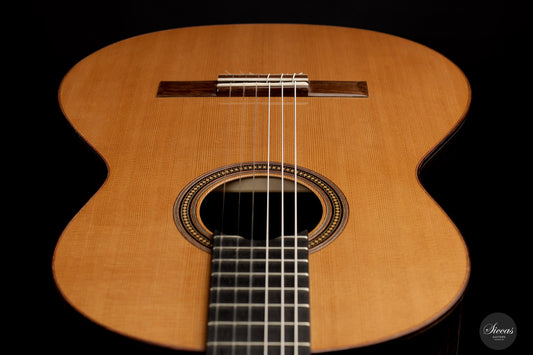
Francois R. Leonard - 2026 No. 113 64 cm
Price: 8.990 €Unit price per Tax free (0% DE)SoldLuthier: Francois R. LeonardConstruction Type: Lattice -
Francois R. Leonard - 2024 No. 95 Lattice 64 cm
Price: 7.990 €Unit price per Tax free (0% DE)SoldLuthier: Francois R. LeonardConstruction Type: Lattice -
Luthier: Francois R. Leonard
-
Luthier: Francois R. Leonard
-
Luthier: Francois R. Leonard
-
Luthier: Francois R. Leonard
-
Luthier: Francois R. LeonardConstruction Type: Lattice
-
Luthier: Francois R. LeonardConstruction Type: Lattice
-
Luthier: Francois R. Leonard
-
Luthier: Francois R. LeonardConstruction Type: Lattice
-
Luthier: Francois R. LeonardConstruction Type: Lattice
-
Luthier: Francois R. Leonard
-
Luthier: Francois R. Leonard
-
Luthier: Francois R. Leonard
-
Luthier: Francois R. LeonardConstruction Type: Lattice
-
Luthier: Francois R. LeonardConstruction Type: Lattice
-
Luthier: Francois R. Leonard
-
Luthier: Francois R. Leonard
-
Luthier: Francois R. Leonard
-
Luthier: Francois R. Leonard











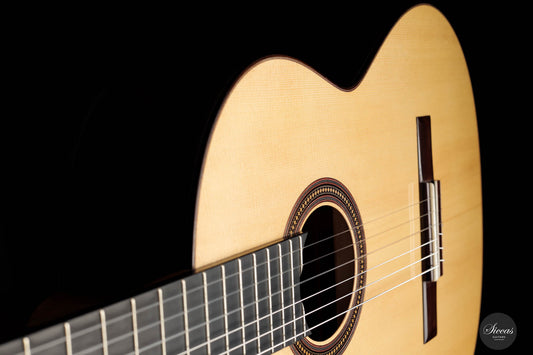

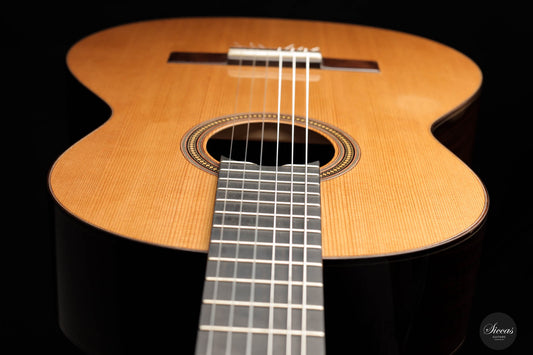

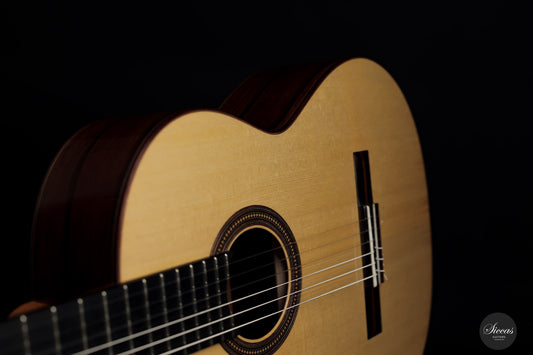

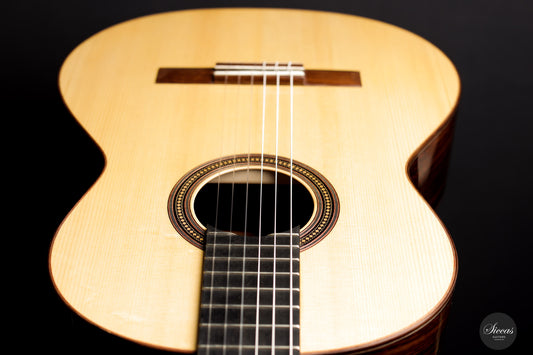




Ask us - right here.
Enrico, our AI team member, replies around the clock.
Instant reply · free · no obligation Rather use WhatsApp
Frequently Asked Questions About Classical Guitars
How do I choose the right classical guitar for my level?
Choosing the right classical guitar depends on your playing level, musical goals, and budget. Beginners benefit from studio-model guitars from renowned workshops, while advanced players and professionals often choose a handmade master guitar. We are happy to advise you personally and can send detailed sound samples and videos on request.
What is the difference between a master guitar and a studio guitar?
Master guitars are built entirely by hand in the workshop of a single luthier, using only high-quality, well-aged tonewoods. Studio guitars are made in small series, often under the supervision of the master luthier, and offer excellent value for students and ambitious amateur players.
Can I try a classical guitar at home for 14 days?
Yes — every guitar you purchase from us comes with a 14-day home approval period. This complimentary trial applies worldwide to all orders, whether you are in Germany, Europe, the USA, Asia or anywhere else. We ship your instrument fully insured in a high-quality case so you can play it under your own acoustic conditions. If the guitar is not the right one for you, simply send it back and receive a full refund of the purchase price.
Can I try a classical guitar before purchasing?
Absolutely. You are warmly invited to visit our showroom in Karlsruhe, Germany, and test the instruments at your leisure. We are happy to schedule a personal appointment. If a visit is not possible, we send detailed videos and sound samples, and offer extensive consultation by phone or video call.
What payment methods and financing options do you offer?
We accept bank transfer, PayPal, major credit cards, and Klarna. For high-value instruments, we offer individual installment plans on request. Please contact us directly — we will find a suitable solution for every budget.
How do I properly care for my classical guitar?
A classical guitar requires constant humidity between 45 and 55 percent. Store the instrument in its case with a humidifier, avoid direct sunlight and large temperature fluctuations. Change the strings regularly and clean the guitar with a soft microfiber cloth.
You may also be interested Francois R. Leonard
About the Luthier
François Regis Leonard was introduced to the arts at a young age by his father-in-law, a passionate admirer and specialist of the composer Hector Berlioz. He began playing the guitar and quickly developed a love for this intimate and nuanced instrument. In 1995, he enrolled at the Newark School of Violin Making in England, where he remained for five years. Working closely with members of the quartet and numerous instrument makers, he learned a wide range of techniques in an environment that valued handcraft over machinery. In addition to classical guitars, he also builds other instruments such as the dulcimer and the Swedish nyckelharpa.
In 2000, he began a five-year collaboration with the Lakewood guitar workshop in Germany. Thousands of pieces of wood, whose physical and acoustic properties he could test, became the basis for his later research and expertise. During these years in Germany, he reconnected with his friend Tobias Berg, whom he had met in Newark, and worked alongside him. He also learned the meditative and subtle pad-varnishing techniques from Michel Brück, the German violin maker.
After spending several months in Lyon, where he had the opportunity to present his instruments at the Chamber of Crafts, he moved to Lorient in 2006.
For several years now, annual meetings with acousticians have further shaped his approach to sound. It has become more personal—physically, through the measurement of densities and deformations of different parts of the instrument, and aesthetically, through a pronounced appreciation for harmonic presence and clarity. He also exchanges ideas with violin maker Dominique Field, whose precision, approach, and aesthetic he greatly admires.
Since settling in Brittany, François Regis Leonard has been building six to eight guitars each year, hoping that his “creations” will flourish in the knowledgeable and sensitive hands of musicians.
He is especially fond of a quote by George Sand, which reflects his philosophy in guitar making: “Simplicity is the most difficult thing to achieve in this world; it is the ultimate limit of experience.”