

Hermann Hauser I
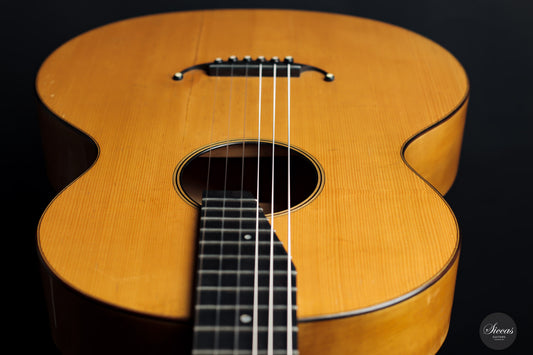
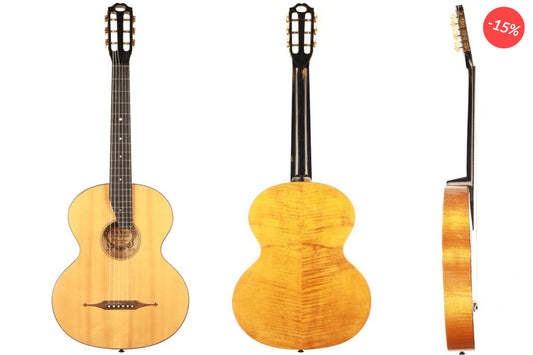
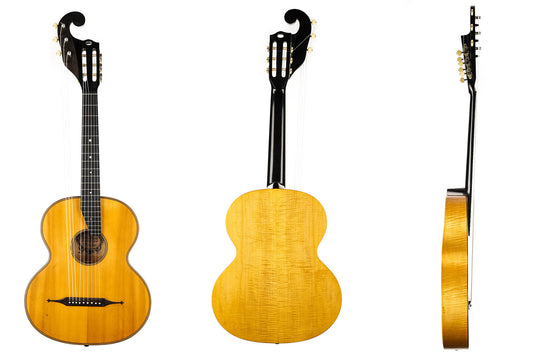
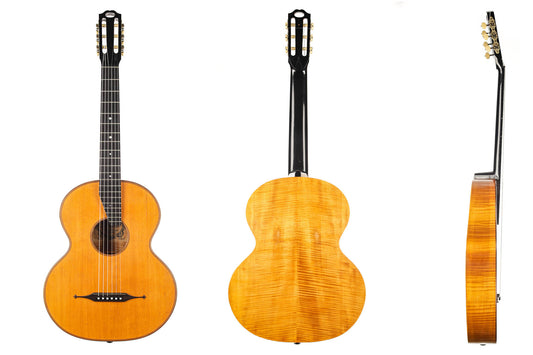
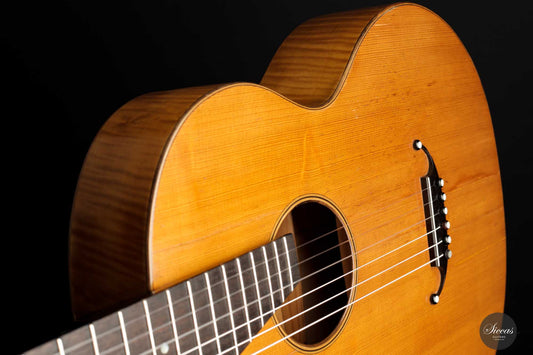
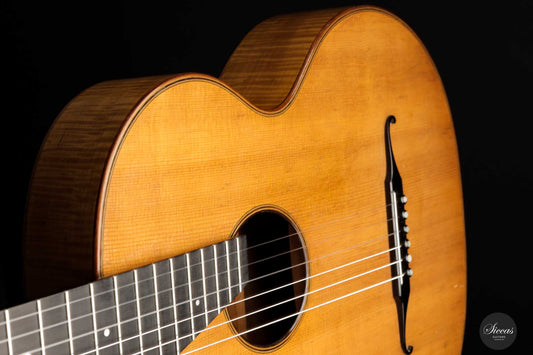
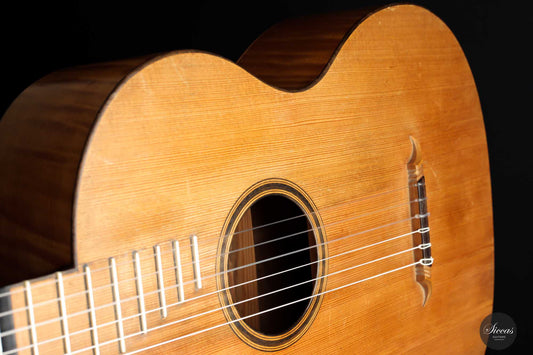
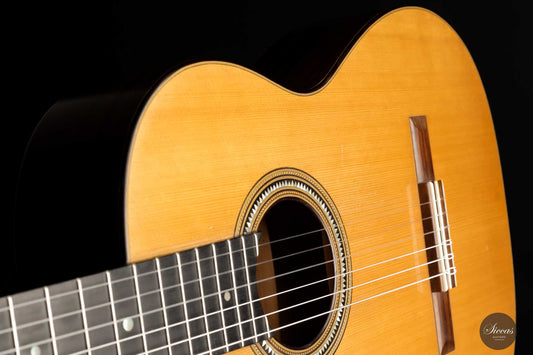
Hermann Hauser I (1882–1952) is the luthier Andrés Segovia called the maker of the greatest guitar of his epoch. His instruments — built in Munich during the golden years of 1930–1952 — represent the pinnacle of the German school and remain among the most sought-after guitars in the world. Every Hauser I in our collection is carefully authenticated.
-
Luthier: Hermann Hauser I
-
Luthier: Hermann Hauser I
-
Luthier: Hermann Hauser I
-
Luthier: Hermann Hauser I
-
Luthier: Hermann Hauser I
-
Luthier: Hermann Hauser I
-
Luthier: Hermann Hauser I
-
Luthier: Hermann Hauser ILuthier: Rare GuitarsLuthier: Seltene Gitarren
-
Luthier: Hermann Hauser I
-
Luthier: Hermann Hauser I
-
Luthier: Hermann Hauser I
-
Luthier: Hermann Hauser I
-
Luthier: Henner HagenlocherLuthier: Hermann Hauser I
-
Luthier: Hermann Hauser I
-
Luthier: Hermann Hauser I
-
Luthier: Hermann Hauser I
-
Luthier: Hermann Hauser I
-
Luthier: Hermann Hauser I
-
Luthier: Hermann Hauser ILuthier: Rare Guitars
-
Luthier: Hermann Hauser I





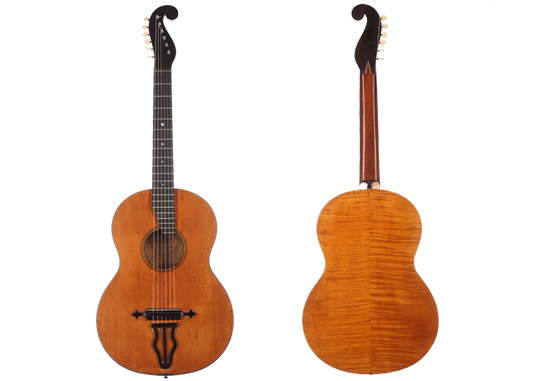

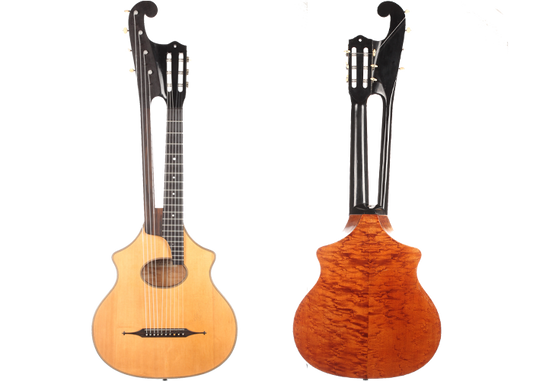

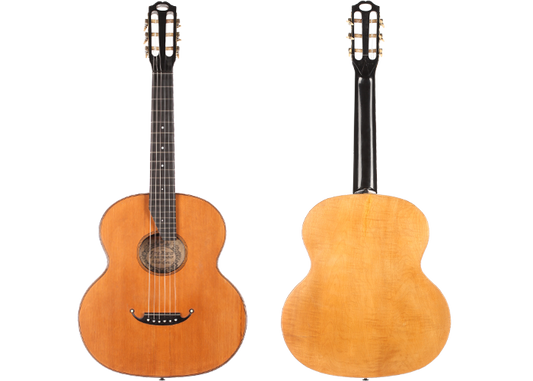

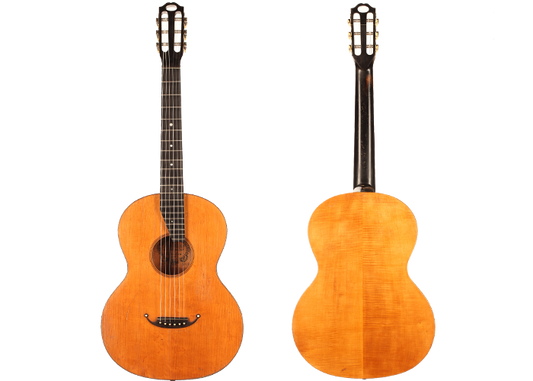












Ask us - right here.
Enrico, our AI team member, replies around the clock.
Instant reply · free · no obligation Rather use WhatsApp
Frequently Asked Questions About Classical Guitars
How do I choose the right classical guitar for my level?
Choosing the right classical guitar depends on your playing level, musical goals, and budget. Beginners benefit from studio-model guitars from renowned workshops, while advanced players and professionals often choose a handmade master guitar. We are happy to advise you personally and can send detailed sound samples and videos on request.
What is the difference between a master guitar and a studio guitar?
Master guitars are built entirely by hand in the workshop of a single luthier, using only high-quality, well-aged tonewoods. Studio guitars are made in small series, often under the supervision of the master luthier, and offer excellent value for students and ambitious amateur players.
Can I try a classical guitar at home for 14 days?
Yes — every guitar you purchase from us comes with a 14-day home approval period. This complimentary trial applies worldwide to all orders, whether you are in Germany, Europe, the USA, Asia or anywhere else. We ship your instrument fully insured in a high-quality case so you can play it under your own acoustic conditions. If the guitar is not the right one for you, simply send it back and receive a full refund of the purchase price.
Can I try a classical guitar before purchasing?
Absolutely. You are warmly invited to visit our showroom in Karlsruhe, Germany, and test the instruments at your leisure. We are happy to schedule a personal appointment. If a visit is not possible, we send detailed videos and sound samples, and offer extensive consultation by phone or video call.
What payment methods and financing options do you offer?
We accept bank transfer, PayPal, major credit cards, and Klarna. For high-value instruments, we offer individual installment plans on request. Please contact us directly — we will find a suitable solution for every budget.
How do I properly care for my classical guitar?
A classical guitar requires constant humidity between 45 and 55 percent. Store the instrument in its case with a humidifier, avoid direct sunlight and large temperature fluctuations. Change the strings regularly and clean the guitar with a soft microfiber cloth.
You may also be interested Hermann Hauser I
If you are looking for a Hermann Hauser I guitar for sale, you already know what you are dealing with. The Munich luthier who spent years studying Torres's principles through Miguel Llobet, synthesised Spanish construction with German precision, and built the guitar that Andrés Segovia played for decades — calling it simply the greatest guitar of his epoch. That 1937 instrument now lives in the Metropolitan Museum of Art. The others are scattered across the world's finest collections. When one becomes available, it is an event.
Why Hauser I Guitars Are Different
The synthesis Hauser achieved — Torres's fan bracing and proportions, German spruce of exceptional quality, precise graduation techniques drawn from his background in zither making — produced instruments with a tonal balance that remains the benchmark. Clear, projecting treble. Warm, defined bass. Even response across the full register. Notes that bloom under the fingers of a skilled player. These are not accidents of materials: they are the result of an unusually analytical mind applied to an artisanal tradition.
The peak years are 1930–1952. Earlier instruments show Hauser still working toward his synthesis; later instruments, built by his son Hermann Hauser II, continue the tradition at high quality but are distinct instruments. A prime Hauser I from 1935–1950, in playing condition with documented provenance, is among the finest classical guitars ever built by any maker in any country.
The Hauser Dynasty
The family tradition continues. Hermann Hauser II (1911–1988) maintained the workshop's exacting standards, and Hermann Hauser III (born 1958) currently builds from the family workshop in Reisbach, Bavaria — each generation adding refinements while preserving the fundamental character that Segovia recognised in 1937. For players who want the Hauser sound without the rarity premium of an original, Hauser III instruments are a compelling choice.
What to Know Before You Buy a Hauser I
Authentication matters enormously. The value and reputation of Hauser I instruments have made them targets for misattribution — both innocent (instruments built in the workshop by apprentices or family members, sometimes incorrectly labelled) and deliberate fraud. Key authentication points include: label examination, construction details (neck joint, bracing geometry, top graduation), material analysis, and provenance documentation. We work with recognised experts in historical guitar authentication, and every Hauser I we offer is accompanied by full documentation.
Condition equally matters. These instruments are 70–90 years old. Top cracks, repaired or unrepaired, affect both tone and value. Neck resets, refrets, and bridge work are normal for instruments of this age when properly executed. Significant structural issues or inappropriate repairs reduce both playability and investment value substantially.
Hermann Hauser I as Investment
The market for prime Hauser I guitars has strengthened consistently. Limited supply — Hauser's total output across his career was modest, and many instruments are in institutional or private collections unlikely to come to market — meets sustained demand from performers and collectors worldwide. A well-documented, condition-appropriate Hauser I is a serious long-term holding as well as an exceptional musical instrument.
Frequently Asked Questions
What is a Hermann Hauser I guitar worth?
Values vary significantly with condition, date, and provenance. Prime instruments from 1935–1950 in playing condition with strong documentation command the highest prices. Contact our team for current market guidance on specific instruments.
How do I know a Hauser I is authentic?
Authentication requires physical examination by an expert familiar with Hauser's construction methods — label alone is insufficient. We provide full authentication documentation for every instrument we sell.
What is the difference between Hauser I, II, and III?
Hermann Hauser I (1882–1952) created the instruments Segovia used. His son Hauser II (1911–1988) continued the tradition with comparable quality. Hauser III (born 1958) currently builds instruments of excellent quality in the family workshop — a living continuation of the tradition rather than a historical piece.
Browse Hermann Hauser I Guitars
Every instrument authenticated, documented, and presented in full. Worldwide insured shipping, personal expert consultation. Browse Hermann Hauser I guitars or speak to our team.