Flamenco vs Classical Guitar — What's the Difference?

Flamenco vs Classical Guitar — What's the Difference?

Wood and construction

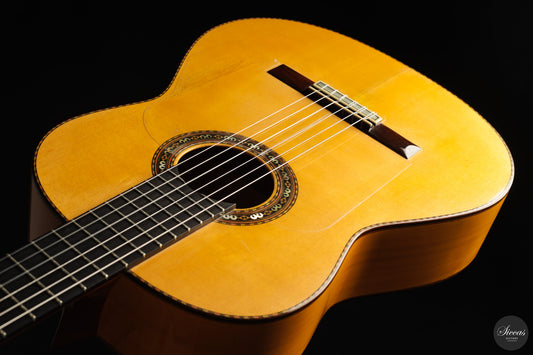
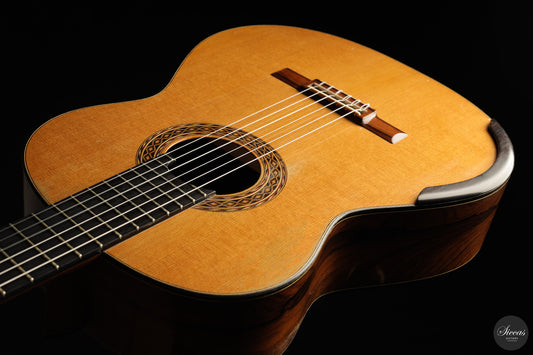
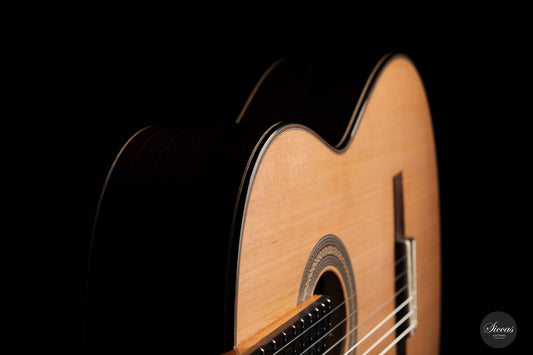
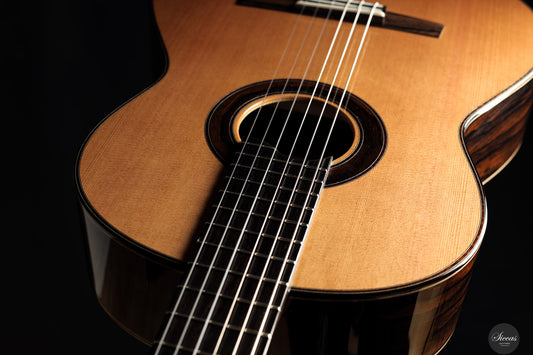
Those goals lead to different building choices. Traditional flamenco guitars are typically built with cypress back and sides (the lighter, brighter "flamenco blanca"), giving that crisp, dry sound, though rosewood "flamenco negra" guitars also exist and sit closer to the classical tone. Flamenco guitars are usually built lighter, often with a lower string action for speed and that characteristic buzz, and they traditionally carry a golpeador — a tap plate protecting the soundboard from the percussive finger-tapping (golpe) that is part of the style. Classical guitars, by contrast, favour cedar or spruce tops with rosewood or other dense woods for the back and sides, and a slightly higher action for clean, full notes.

Playing technique

The two traditions also ask for different hands. Classical technique centres on careful tone production, apoyando and tirando strokes, and clear voicing of melody and harmony. Flamenco adds a whole vocabulary of its own: rasgueado (rapid, rolling strums with the back of the fingers), golpe (percussive taps on the body), picado (fast single-line runs) and alzapúa (thumb technique). Flamenco is also deeply tied to rhythm — the compás — and to accompanying song and dance.

Which one is right for you?

Choose a classical guitar if you want to play the classical repertoire — Bach, Sor, Tárrega, Villa-Lobos — or are just starting out and want a versatile, warm-sounding instrument. Choose a flamenco guitar if you are drawn specifically to flamenco's rhythmic fire and percussive style. Many players begin on a classical guitar and explore flamenco later; the core left-hand technique transfers, even if the right-hand vocabulary differs.

FAQ

Can you play classical music on a flamenco guitar (and vice versa)?

Yes, but each instrument is optimised for its own style — the classical guitar sustains and sings, the flamenco guitar is bright and percussive.

What wood is a flamenco guitar made of?

Traditionally cypress back and sides ("blanca"), though rosewood "negra" flamenco guitars also exist.

Which should a beginner choose?

Usually a classical guitar, unless the player is specifically focused on flamenco.

See our flamenco guitars → or browse classical guitars

The Library
  • Classical Guitars

    The classical guitar, with its soft nylon strings and characteristic timbre, has become a symbol of chamber music, Spanish tradition, and concert repertoire. Its modern form was shaped by Antonio de Torres in the 19th century, setting the standard for the body, fan bracing, and the 65-centimeter scale length that are still used today. Instruments in this category open up a rich palette from the refined Romantic miniatures of Tárrega to the majestic concertos of Rodrigo. Here you will find guitars that preserve historical continuity and at the same time inspire new interpretations.
    Explore all classical guitars
  • Luthier: Zbigniew Gnatek
    Construction Year: 2023
    Construction Type: Lattice
    Top: Cedar
    Back and Sides: Madagascar rosewood
    Soundboard Finish: Nitrocellulose
    Body Finish: Polyurethane
    Air Body Frequency: G
    Weight (g): 1760
    Tuner: Pagos
    Condition: Excellent
  • Construction Year: 2025
    Construction Type: Double-Top Guitars
    Top: Spruce
    Back and Sides: Indian rosewood
    Soundboard Finish: Lacquer
    Body Finish: Lacquer
    Air Body Frequency: F
    Weight (g): 1500
    Tuner: Kris Barnett
    Condition: Mint
  • Construction Year: 2025
    Construction Type: Traditional
    Top: Spruce
    Back and Sides: Flamed Maple
    Soundboard Finish: French polish
    Body Finish: French polish
    Air Body Frequency: G sharp / A
    Weight (g): 1550
    Tuner: Fustero
    Condition: New
  • Construction Year: 2026
    Construction Type: Traditional
    Top: Spruce
    Back and Sides: Indian rosewood
    Soundboard Finish: French polish
    Body Finish: French polish
    Air Body Frequency: G
    Weight (g): 1710
    Tuner: Rubner
    Condition: New
  • Luthier: José Salinas
    Construction Year: 2026
    Construction Type: Traditional
    Top: Spruce
    Back and Sides: Indian rosewood
    Soundboard Finish: Lacquer
    Body Finish: Lacquer
    Air Body Frequency: F sharp / G
    Weight (g): 1550
    Tuner: Aparicio
    Condition: New
  • Construction Year: 2015
    Construction Type: Lattice
    Top: Cedar
    Back and Sides: Indian rosewood
    Soundboard Finish: Nitrocellulose
    Body Finish: Polyurethane
    Air Body Frequency: G / G sharp
    Weight (g): 2460
    Tuner: Alessi
    Condition: Excellent

Discounts and Early Access

Subscribe to our weekkly Siccas Guitars newsletter for immediate access to subscriber-exclusive discounts and early bird specials.