
The video Guess the Tune was recorded at Siccas Guitars and shows a side of the classical guitar that is often missing from the concert stage: playfulness, spontaneity, and humor. Ana Vidovic, Karlijn Langendijk, and Jouyan Tarzaban come together for a musical guessing game filled with laughter and a relaxed atmosphere.
Classical Guitar Quiz: Can You Name That Tune?
The classical guitar repertoire is one of the most distinctive in all of music. Certain pieces are instantly recognizable from a single measure — sometimes even from a single phrase. A shimmering tremolo in A minor? That is almost certainly Recuerdos de la Alhambra by Francisco Tárrega. A driving Phrygian bass ostinato? Almost certainly Asturias by Isaac Albéniz. A simple arpeggiated melody in E minor? Romanza, the anonymous Spanish piece that has introduced generations of players to the instrument.
That is what makes the classical guitar identification game so compelling — and so revealing. Each piece carries a sonic fingerprint: a characteristic technique, a rhythmic pattern, a harmonic color that places it immediately in a specific musical world. In the Siccas Guitars video, three professional guitarists test exactly this knowledge, and the result is as entertaining as it is instructive.
How the Game Works
The rules are simple. One person plays a short excerpt on the guitar, while the other two have to quickly guess which piece it is and name the composer. Sometimes just a few notes are enough, sometimes a wrong turn leads to more attempts. That is exactly where the fun lies: listening, guessing, correcting, and trying again.
What the game reveals is something every guitarist knows intuitively: the repertoire is full of pieces that are simultaneously distinctive and elusive. You know a piece the moment you hear it — but can you name it? Can you name the composer? Can you place it in the right century, the right stylistic tradition? These are the questions that the classical guitar quiz puts to the test.
Three Artists, One Shared Moment
Ana Vidovic, Karlijn Langendijk, and Jouyan Tarzaban know the repertoire well, which makes it even more entertaining when quick decisions are required. The video captures not only musical knowledge, but also what usually happens in rehearsal rooms and backstage areas: short comments, spontaneous reactions, friendly teasing, and shared amusement when things do not go as expected.
Ana Vidovic is one of the most celebrated classical guitarists of her generation, known for her interpretations of the standard repertoire and her technique. Karlijn Langendijk brings a distinctive voice to the instrument, working across a wide range of styles and periods. Jouyan Tarzaban rounds out the trio with his own perspective on the repertoire. Together, they form a panel that is both highly qualified and thoroughly human — capable of brilliance and equally capable of a moment of hesitation when the excerpt is unexpected.
The Pieces Behind the Game: Classical Guitar Identification Clues
Part of what makes a classical guitar quiz so fascinating is understanding why certain pieces are instantly identifiable. The following pieces are among the most recognizable in the repertoire, and each has a distinctive sonic fingerprint:
Recuerdos de la Alhambra – Francisco Tárrega
Recuerdos de la Alhambra is probably the single most recognizable piece in the classical guitar repertoire. Written by Francisco Tárrega in A minor, it is built entirely around the tremolo technique — a rapid, repeating figure that creates the illusion of a sustained melody above a moving bass line. The effect is shimmering and evocative, inspired by the fountains and pools of the Alhambra palace in Granada. Even a single bar of tremolo in A minor is enough to identify it. If you want to explore more pieces like this, our guide to famous classical guitar pieces covers the repertoire in depth.
Asturias – Isaac Albéniz
Asturias, originally a piano piece by Isaac Albéniz later arranged for guitar, is built around a driving bass ostinato in the Phrygian mode — the characteristic Spanish scale that gives flamenco and much Iberian music its distinctive color. The relentless repeating bass figure in E Phrygian is one of the most recognizable openings in the entire guitar literature. The middle section, in contrast, is lyrical and expansive. The contrast between these two characters — the driving, percussive ostinato and the singing middle section — is what makes the piece structurally so distinctive.
Romanza – Anonymous
Romanza (also known as Romance de Amor or Spanish Romance) is an anonymous piece whose origins remain disputed, though it is one of the most widely played guitar pieces in the world. Its arpeggio pattern in E minor, with a descending bass line and a repeating melody note, is immediately recognizable. It is often one of the first pieces a guitarist learns to play musically — and one that rewards listening at every level of the repertoire. Our guide to the easiest classical guitar pieces for beginners includes it as one of the most beautiful entry points to the repertoire.
La Catedral – Agustín Barrios Mangoré
La Catedral by Agustín Barrios Mangoré is a three-movement suite inspired by the Cathedral of Asunción in Paraguay. The first movement, Preludio Saudade, is a deeply expressive slow piece in a rich, Romantic harmonic language. The second movement, Andante Religioso, is stately and hymn-like. The third movement, Allegro Solemne, is technically demanding and structurally complex. The combination of a deeply personal Romantic language with South American sensibility makes Barrios one of the most distinctive voices in the guitar repertoire — and La Catedral is perhaps his most recognized work.
Recuerdos de la Alhambra and the Role of Technique as Identification
One of the fascinating aspects of classical guitar repertoire identification is that technique itself becomes a clue. When you hear tremolo, you think Tárrega. When you hear a rasgueado chord attack, you think flamenco. When you hear a harp-like arpeggio with harmonics, you might think Narciso Yepes or perhaps a contemporary piece. The technical demands of the classical guitar are part of what gives each piece its sonic identity — and part of what makes the guessing game so rewarding.
Rhythmic Patterns as Musical Fingerprints
For pieces rooted in flamenco or Spanish dance traditions, rhythmic patterns are among the strongest identification clues. The bulería, for instance, has a distinctive 12-beat cycle grouped asymmetrically — 3+3+2+2+2 — that is unmistakable once you know it. The soleá has its own characteristic accents and emotional weight. Even outside the flamenco tradition, rhythm is a powerful identifier: the lilt of a Baroque sarabande, the steady pulse of a Bach prelude, the driving energy of a Rodrigo concerto movement. Our flamenco guitar collection pairs naturally with an understanding of these rhythmic traditions.
Why It Is Fun to Watch
Guess the Tune thrives on short excerpts, spontaneous ideas, and the reactions between the players. Anyone who listens to or plays classical guitar will recognize these moments: thinking a piece is immediately familiar, then realizing that one crucial detail is missing. The video shows how differently musicians listen and what clues they use to place a piece within a certain style, era, or musical world.
There is also something revealing about watching professional musicians struggle — or succeed immediately. A piece that a non-specialist might not recognize at all can trigger an instant response from a trained guitarist. And conversely, a piece that seems completely obvious to an enthusiast might cause a moment of hesitation in a player who approaches repertoire differently. The guessing game is, in a quiet way, a window into how musical memory works and how we categorize and recall music.
Harmonic Progressions and Period Recognition
Beyond technique and rhythm, harmonic language is a third major identification clue in classical guitar repertoire. A Renaissance piece by Luis de Milán or John Dowland sounds harmonically very different from a Romantic piece by Tárrega or Barrios — which in turn sounds different from a twentieth-century piece by Heitor Villa-Lobos or Leo Brouwer. Even without knowing a specific piece, an experienced listener can often narrow down the century and stylistic tradition from the first few measures simply by attending to the harmonic language: the modes and cadences of the Renaissance, the functional tonality and chromaticism of the Romantic era, the bitonality and extended techniques of the modern period.
This is one of the things that makes classical guitar such a rich instrument for repertoire exploration. The guitar has been a central instrument in Western art music for over five centuries, and the accumulated repertoire reflects every major stylistic period. If you are curious about how the instrument evolved alongside that repertoire, our overview of great classical guitarists traces the players who defined each era.
Recorded at Siccas Guitars
The video was recorded at Siccas Guitars in an environment that leaves room for music and exchange. Instead of a formal concert setting, the focus here is on playing together. It is a format that creates closeness and shows how lively classical guitar can be away from the big stage.
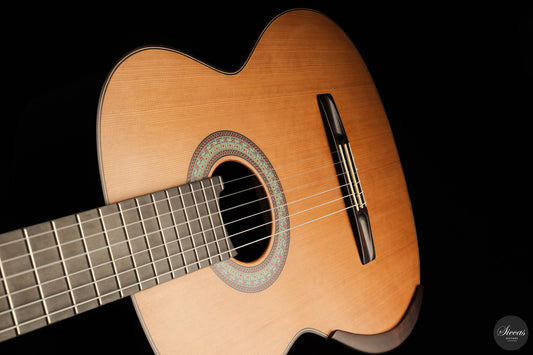
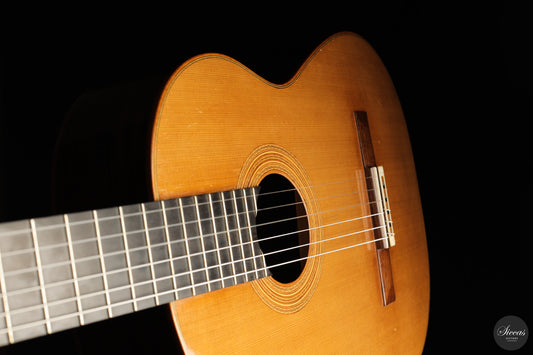
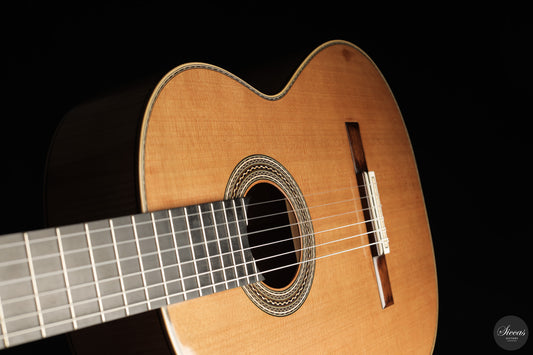
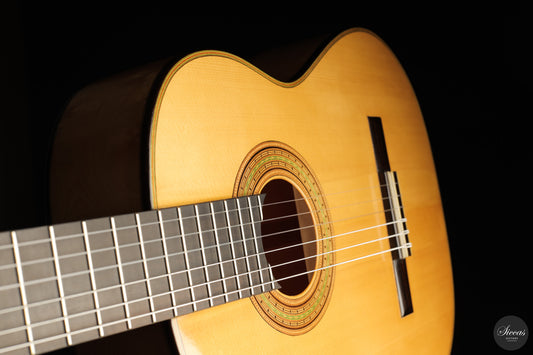
The guitars used in the recording are drawn from the Siccas Guitars inventory — instruments built by contemporary luthiers at the highest level of the craft. The choice of instrument matters in a context like this: each guitar has its own voice, its own response, its own tonal character. Watching professional players work with these instruments in an informal setting gives a different perspective on what the instruments can do. If you are interested in exploring the instruments themselves, our classical guitar collection offers a wide range of options from some of the world's leading builders.
A New Year Greeting for 2026
Released on the first day of 2026, Guess the Tune is a musical New Year greeting that brings lightness and energy into the start of the year. The Siccas Guitars team thanks everyone for their support and wishes all the best for the year ahead.
It is fitting that a video about musical knowledge and playfulness should mark the beginning of a new year. The classical guitar community is built on exactly these qualities: deep knowledge worn lightly, technical mastery expressed with joy, and a shared love of repertoire that connects players and listeners across generations. That spirit is visible in every moment of the video.
The Classical Guitar Quiz: Test Your Own Knowledge
After watching the video, you might find yourself wanting to test your own knowledge of the repertoire. Here are a few categories to consider as you listen to classical guitar music:
Technique-Based Clues
- Tremolo: The shimmering repeated-note technique most associated with Tárrega and Recuerdos de la Alhambra
- Rasgueado: The flamenco strumming technique, a strong indicator of Spanish or flamenco-influenced music
- Harmonics: Artificial or natural harmonics, used widely in twentieth-century music and in certain Romantic pieces
- Slurs and legato runs: Fast hammer-on and pull-off passages, common in Baroque arrangements and certain Romantic virtuoso pieces
Rhythmic Clues
- Bulería: 12-beat cycle, asymmetric grouping, high energy
- Soleá: 12-beat cycle, more measured and serious in character
- Sarabande: Slow triple meter with emphasis on the second beat, characteristic of Baroque dance suites
- Chaconne or passacaglia: Repeating bass or harmonic progression used as the basis for variations
Harmonic Clues
- Phrygian mode: The characteristic Spanish scale, strongly associated with flamenco and Iberian music
- Functional major-minor tonality: The harmonic language of the Classical and Romantic periods
- Twentieth-century extended harmony: Bitonality, modal harmony, and non-functional progressions associated with Villa-Lobos, Brouwer, and their contemporaries
Developing fluency with these clues is part of what it means to become deeply familiar with the classical guitar repertoire — and it is exactly the kind of knowledge that the Siccas Guitars video puts entertainingly on display. To explore the instrument further, you might also want to read about the differences between acoustic and classical guitar, or look into how top wood choice affects tone in the instruments the artists play.
Why Classical Guitar Repertoire Is So Identifiable
One of the reasons classical guitar pieces are so identifiable is that the instrument's technical limitations and possibilities have shaped the repertoire in very direct ways. Guitar music tends to be written in guitar-friendly keys — E major, A major, D major, G major, and their relative minors — because these keys make use of the instrument's open strings and allow resonant, full-sounding chords. This means that a significant portion of the most famous repertoire clusters around a relatively small set of harmonic areas, which makes identification easier for experienced listeners.
Similarly, the physical layout of the guitar — six strings, a standard tuning, a certain range and register — means that idiomatic guitar writing has recognizable textures: bass notes on the lower strings, melody on the upper strings, inner voices in between. When you hear a piece of music that is clearly idiomatic for the guitar, you already know a great deal about what to expect structurally. The double-top guitars in the Siccas inventory, for instance, are built to maximize projection and clarity across exactly these registral textures.
The Community of Classical Guitar
The Guess the Tune video is, in the end, a document of community. Three musicians sitting together with guitars, playing short fragments, laughing, guessing — this is what the classical guitar world actually looks like much of the time. The formal concert is one side of the instrument's life; the informal gathering is another, and in some ways the more fundamental one. Music is learned in this way, shared in this way, tested and refined through exactly this kind of spontaneous exchange.
At Siccas Guitars, that community dimension is central to the mission. The Weekly Guitar Meeting series, of which this video is a part, is designed to document these informal encounters between musicians of the highest level — and to share them with the wider classical guitar audience. The result is a body of video content that shows the instrument and its players as they actually are: brilliant, human, playful, and deeply knowledgeable.
Whether you are a beginner exploring the repertoire for the first time or an experienced player looking to deepen your knowledge, the Siccas Guitars video series offers a way into the music that no textbook can replicate. Watch. Listen. Guess. And enjoy.