Niccolò Paganini and the Guitar — His "Constant Companion"
This guide is part of our overview of the essential classical guitar repertoire. Niccolò Paganini (1782–1840) is immortalised as the most electrifying violinist of the Romantic era — but the guitar was his constant private companion, and he wrote more than 200 works for it that reveal a very different, more intimate side of his musical personality.
The Violinist Who Loved the Guitar
Born in Genoa in 1782, Paganini began his musical training on the mandolin before turning to the guitar and violin. The guitar was part of his life from early childhood, and his engagement with the instrument was lifelong and deep. During his years at the Baciocchi court in Lucca (approximately 1805–1809), he composed the bulk of his guitar output: solo pieces, duo-sonatas for violin and guitar, trios, and quartets with guitar. The Lucca years, freed from the pressures of the concert tour, gave him time for private music-making, and the guitar was central to that private world.
He almost never performed on guitar in public, preferring to reserve it for private music-making, intimate gatherings, and as a compositional tool. This explains the somewhat private quality of the guitar works: they are not showpieces designed to astonish an audience with technical display, as his violin caprices are. They are music for enjoyment, for conversation, for the pleasure of playing and listening in a domestic setting. The contrast with his violin works could hardly be greater.
The 200+ Guitar Works: An Overview
Paganini's guitar output is enormous: over 200 works spanning solo guitar, guitar duets, violin-guitar sonatas, string quartets with guitar, and other chamber combinations. The 37 sonatas for solo guitar stand at the centre of his solo guitar output — compact, elegant pieces that explore the instrument's lyrical and harmonic possibilities without the extreme technical demands of his violin writing. The 37 Sonatas for violin and guitar, by contrast, give both instruments equal importance and represent some of the finest chamber music for the combination ever written.
The Grand Sonata in A major, MS 3 — composed around 1805 but not published until 1828 — is his most celebrated solo guitar work. Its structure is unusual: the guitar carries the principal melodic line while a violin part provides accompaniment, inverting the typical soloist-accompanist relationship. This inversion is characteristic of Paganini's approach to the guitar: he was not writing for a subordinate instrument but for a partner, albeit a private and intimate one. The sonata's lyrical first section and more animated conclusion demonstrate the full expressive range he valued in the instrument.
The 37 Sonatas for Violin and Guitar
Paganini's 37 sonatas for violin and guitar are among the most substantial contributions to the violin-guitar duo repertoire. Composed primarily during the Lucca period, they are works of considerable polish and musical substance — not rough sketches but fully realised chamber pieces in which both instruments are treated with equal care. The violin has the more prominent role in most movements, but the guitar's contribution is far more than mere accompaniment: it provides harmonic support, rhythmic drive, and counter-melodic material that gives the duo texture real depth.
These works have been increasingly programmed by classical guitarists in collaboration with violinists, and they represent an important part of the historical guitar-violin duo repertoire. For players interested in the full scope of the classical guitar's chamber music tradition, the Paganini duo sonatas are essential listening and playing.
Luigi Legnani: The Guitar Partner
Paganini's closest guitar companion was Luigi Legnani, the virtuoso guitarist who was himself one of the finest players of the age. They toured together in 1836–37, and Paganini composed violin-guitar duets specifically for their joint performances. Paganini described Legnani as "the leading player of the guitar of the time" — a recognition from the greatest virtuoso of the era that carries considerable weight. Their collaboration represents the guitar's highest point of prestige in the early Romantic period, when the instrument was briefly at the centre of European musical life.
Paganini's Guitar and Its Historical Significance
Paganini owned several guitars over his lifetime, instruments appropriate to the early nineteenth-century Viennese and Italian tradition: light, intimate instruments suited to the domestic music-making he preferred for his guitar playing. The relationship between his violin virtuosity and his guitar intimacy tells us something important about the instrument itself: the guitar, in the hands of even the greatest violin virtuoso who ever lived, called forth a different, gentler, more private musical personality. This remains one of the instrument's most enduring qualities.
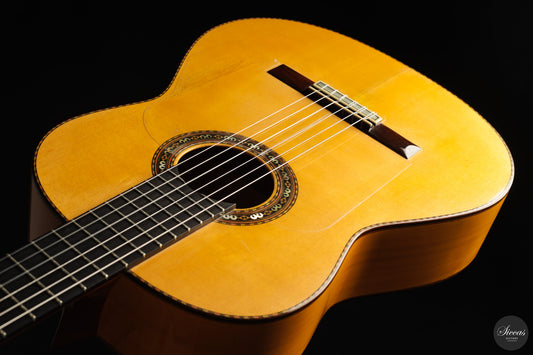
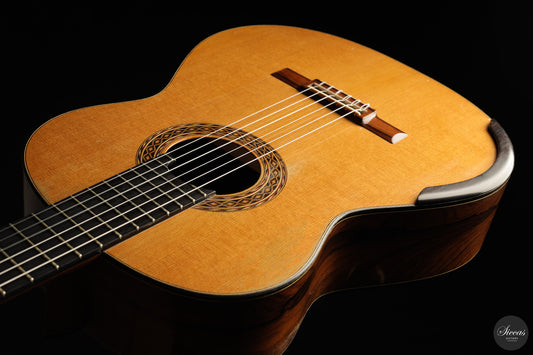
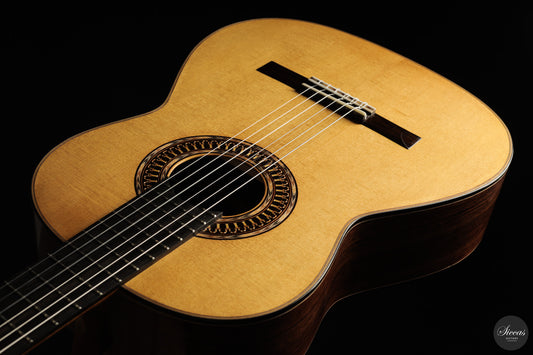
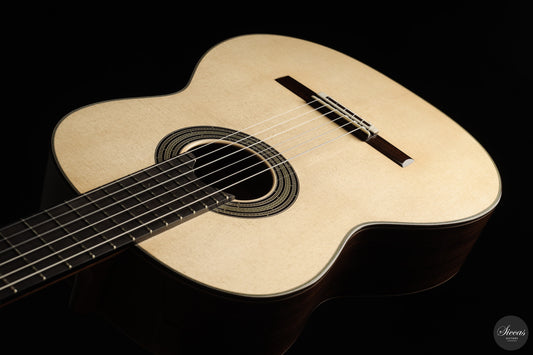
For players interested in the Romantic guitar tradition and the instruments that defined it, the collection at Siccas Guitars offers examples from the great Spanish and European makers in whose tradition Paganini's guitar playing was embedded.
Frequently Asked Questions
Did Paganini really play the guitar?
Yes — extensively. He composed over 200 works for it, called it his "constant companion," and played it throughout his life, though he almost never performed on guitar in public, preferring the violin for his concert career.
What is Paganini's most important guitar work?
The Grand Sonata in A major, MS 3 is his most celebrated solo guitar piece. The 37 sonatas for violin and guitar are his most substantial contribution to the guitar's chamber music repertoire.
Why did Paganini never perform guitar in public?
He reserved the guitar for private music-making and composition. For him it was an intimate instrument, suited to the drawing room rather than the concert hall, and he chose to keep that distinction clear throughout his career.