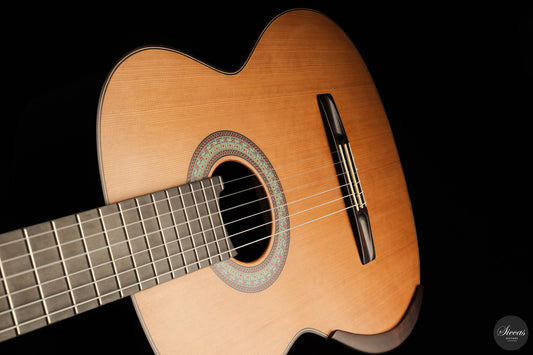
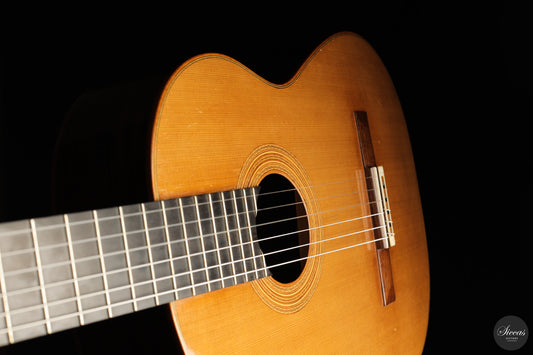
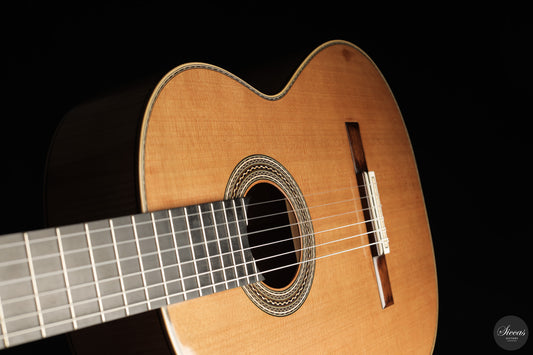
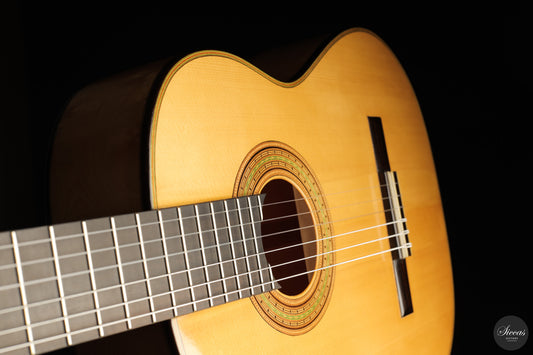
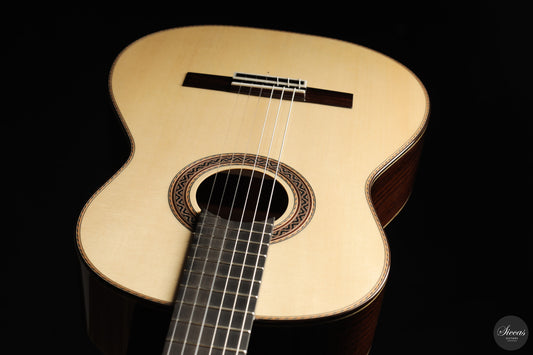
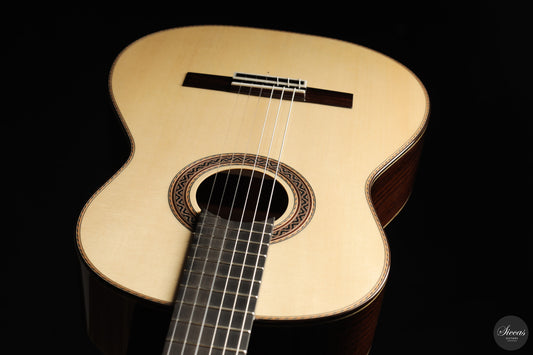
As someone with extensive experience playing various guitars, it truly takes a remarkable instrument to catch my eye. What I particularly value is a guitar that reflects the unique personality of its maker — it is that personal touch that resonates with me the most. This particular guitar managed to impress me right from our first encounter. Having followed Daniele's work for many years, I can confidently say that he has infused this guitar with his soul and artistry, creating a spectacular piece of art.
A New Direction for Daniele Marrabello
Visually, the guitar initially threw me for a loop — it flaunted a style unlike any of Daniele's previous designs, which took me a moment to adapt to. However, as I spent more time with it, I began to appreciate the exquisite craftsmanship and the unmistakable signature touches, especially the distinctive headstock. This instrument is particularly special to Daniele, drawing heavily on the influences of his hometown, Milan, which adds another layer of depth to its story. The "City Series" name is no mere marketing label: it represents a genuine creative evolution, a conscious step by the maker to root his work in the cultural identity of the city where his craft was shaped.
Daniele Marrabello is a Milan-based luthier whose guitars have earned a growing reputation among professional players and discerning collectors. Trained under the esteemed Italian master Enrico Botelli, Marrabello absorbed not only technical discipline but also a deep sensitivity to tone and materials. That lineage is visible in every detail of the Milano No. 70 — from the choice of tonewoods to the meticulous voicing of the top.
Construction and Tonewoods
One of the most striking decisions in this build is the use of Satinwood for the back and sides. This is a rare material that demands considerable expertise to be handled correctly. Satinwood is known for its striking visual figure and its tonal characteristics — it can produce a warm, resonant sound with good projection when worked by skilled hands. Given Daniele's training under Enrico Botelli, who himself has created several remarkable guitars using this wood, it is clear that Marrabello possesses a deep understanding of how to masterfully work with this material.
The combination of a carefully graduated spruce top with Satinwood back and sides places this guitar in an interesting tonal territory: the clarity and articulation that spruce provides is complemented by the warmth and color that Satinwood brings. For players who explore the polyphonic repertoire of J.S. Bach or the complex textures of Agustín Barrios Mangoré, this balance is enormously valuable.
Sound and Playability
In this guitar, Daniele has ingeniously adjusted the air resonance to F, enriching the bass tones with depth and darkness, yet maintaining a resonant foundation that enhances the overall sound palette. The richness of these bass notes is pivotal, especially when clarity is essential for articulating polyphonic compositions — which this guitar handles with ease. The trebles, in contrast, are crystal clear and vividly colorful, ringing with a bell-like quality.
Playing J.S. Bach's Bourrée from BWV 996 on this guitar showcases its phenomenal capabilities, particularly the ability to delineate independent bass lines crucial for polyphonic pieces. Moreover, the trebles are not only vibrant and easy to modulate but also exceptionally responsive. The sustain in the trebles — a challenging feat in guitars with lower air resonance — is impressively long-lasting and pure. The organic timbre of this instrument is genuinely special, offering a sonic experience that is as delightful to the ears as it is rare.
I anticipate that these qualities will only enhance as the guitar is played more, allowing it to open up over time. That is a mark of a truly great concert instrument: it does not reveal everything at once, but deepens in character with use.
The Milano Connection
For Daniele Marrabello, the Milano No. 70 is more than a commission. It is a statement of artistic identity — a love letter to the city that formed him. The design choices, subtle as they may appear to the casual observer, are deliberate references to Milan's architectural and cultural heritage. This kind of conceptual depth is rare in lutherie and speaks to the seriousness with which Marrabello approaches his craft.
The guitar is part of a limited edition City Series, making it both a collector's item and a working instrument of the highest order. Players who value individuality alongside exceptional tone will find it hard to resist. It is the kind of guitar that does not simply accompany the music — it participates in it.
A Significant Step Forward
I am almost at a loss for words when it comes to this exquisite guitar. Daniele has truly taken a significant leap forward in his guitar-making career with this creation. This guitar transcends its role as a mere concert instrument; it stands as a true masterpiece of artistry. I am eagerly anticipating what he will craft next.
If you are exploring the world of fine handmade classical guitars, the Marrabello Milano No. 70 belongs on your shortlist. Those who are drawn to instruments that tell a story — about a city, a tradition, a maker — will find something genuinely moving here. It is the product of deep skill, thoughtful design, and the kind of devotion to craft that distinguishes the best luthiers working today.
For players interested in how tonewoods shape the character of an instrument, our guide on spruce versus cedar classical guitars offers further context. And if you are curious about the broader tradition of concert guitar making and performance, our overview of great classical guitarists provides a rich companion read.
Written by: Jonathan Singgih Pranoto