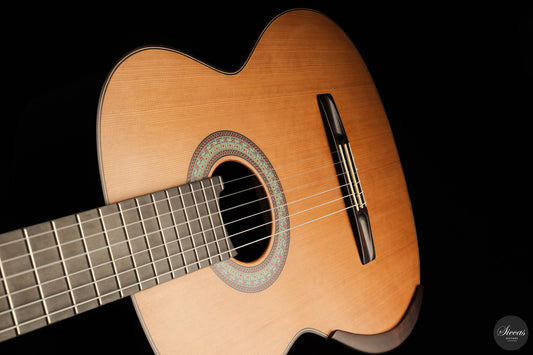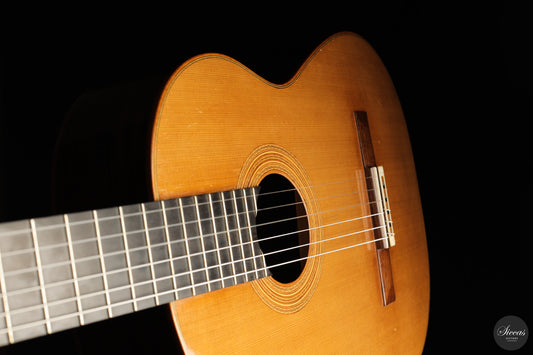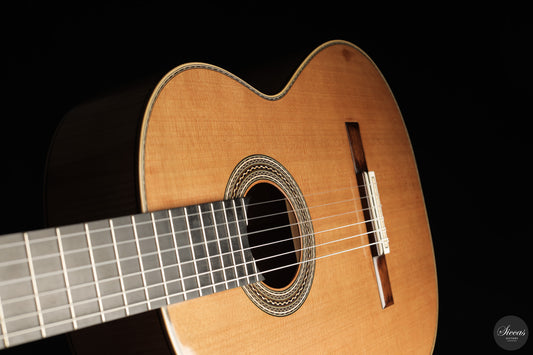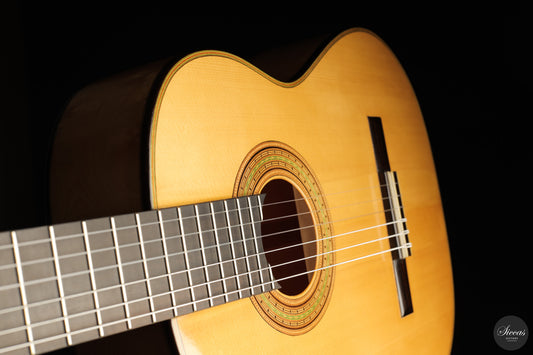

In April 2025, President Trump announced a 90-day pause on the planned increase of import tariffs for goods from most countries — including handcrafted classical guitars from Europe. This limited-time opportunity allows U.S. customers to import high-end concert guitars under the usual customs rates, before potentially sharp increases take effect.
Currently, importing a European classical guitar to the U.S. typically incurs a combined customs duty and tax rate of around 17% to 19%, depending on the state. Once the delayed tariffs are implemented, these rates may double — a major shift for anyone dreaming of a premium European luthier guitar.
At Siccas Guitars, we're proud to connect musicians around the world with some of the finest classical guitars ever built. We support our U.S. customers throughout the entire shipping process, including expert customs handling, careful and secure packaging, and fast international delivery through our experienced logistics partners.
This 90-day delay could be your last chance to import a top-tier European instrument under current import conditions. If you've been thinking about purchasing a handcrafted guitar, now's the time to act.
Our team is ready to answer your questions and guide you through a smooth and secure buying experience. Don't miss the chance to add your dream instrument to your collection — before import costs rise.
Tariffs and Classical Guitars: What US Buyers Need to Know
For decades, the global market for handcrafted classical guitars has functioned with relatively predictable trade conditions. European luthiers — working in Spain, Germany, France, and Austria — have shipped their instruments to musicians in the United States with well-established customs procedures and stable duty rates. That stability is now in question, and every serious guitarist considering a European instrument needs to understand exactly what is happening, what has changed, and what it means for their purchasing decision.
This article lays out the verified facts around US import tariffs as they apply to classical guitars, explains how the 90-day pause announced in April 2025 affects the current window for purchasing, and walks through everything Siccas Guitars does to support US buyers from the moment you choose an instrument through to its safe arrival at your door.
How Import Tariffs Apply to Classical Guitars
When a musical instrument is imported into the United States from a foreign country, it is subject to US customs duties administered by US Customs and Border Protection (CBP). The applicable duty rate is determined by the instrument's Harmonized System (HS) code — a standardized international classification system used by customs authorities worldwide.
Classical guitars — acoustic, nylon-string instruments — are typically classified under HS heading 9202, which covers string musical instruments other than those played with a bow. Under the standard Most Favored Nation (MFN) tariff schedule maintained by the US International Trade Commission (USITC), the base duty rate for guitars from countries in normal trade relations with the US has historically been 0% to a few percent, but additional tariffs, state-level taxes, and import processing fees mean the real landed cost increase for a European guitar has typically run between 17% and 19% when all charges are factored in.
It is always advisable to check the current USITC Harmonized Tariff Schedule directly at usitc.gov before completing any purchase, as rates can and do change. The declared value of the instrument at the time of import is used as the basis for duty calculation, and this value must be accurately declared — the full purchase price of the guitar.
What Changed in April 2025
In early April 2025, the Trump administration announced sweeping new tariff increases on goods imported from a wide range of countries. Shortly after the initial announcement, a 90-day pause was placed on the implementation of the steepest new rates for most trading partners. This pause applies to countries that had not yet been subject to the highest proposed tariff tiers, which includes most European nations that are major sources of fine classical guitars.
The practical effect of this pause: during the 90-day window, US buyers can import European classical guitars under the rates that were in place before the proposed increases, rather than the significantly higher rates that may come into force once the pause expires. Depending on the final tariff structure, the additional import cost on a high-value luthier guitar could increase substantially once the pause ends. For a concert-level instrument valued at several thousand dollars, even a modest percentage increase in duties translates to a meaningful sum of money.
No one can say with certainty what tariff structure will apply once the pause expires — trade policy at this level involves ongoing negotiation, legislative action, and administrative decisions that remain fluid. What is clear is that the current window offers US buyers the most favorable import conditions available in the near term.
Why This Matters for Classical Guitar Buyers
The classical guitar market at the professional and serious amateur level is almost entirely dominated by European and a handful of Japanese luthiers. The great building traditions — the Spanish school descending from Antonio de Torres, the German tradition of hand-selected tonewoods and precision joinery, the French and Austrian workshops that have produced instruments for concert artists worldwide — are rooted in Europe. If you are looking for an instrument built to the standard demanded by professional performers and advanced students, you are almost certainly looking at a European guitar.
This is not a market where close substitutes are freely available domestically at the same quality level. A handcrafted concert guitar from a recognized European builder is a unique object. Its tonal character, the quality of its materials, the precision of its construction — these are not things that can be replicated by simply buying a domestically available alternative. For US buyers serious about the instrument, the import channel from Europe is not optional; it is the primary access route to the best guitars in the world.
That is why tariff changes matter so directly to this community. A cost increase of 15 or 20 percentage points on an instrument priced at $5,000 to $30,000 or more is not an abstraction — it is a real dollar figure that affects what is within reach. The current pause creates a genuine, time-limited opportunity to complete a purchase before those costs potentially change.
If you are considering a guitar from our collection, you can explore the full range at Siccas Guitars classical guitars, including double-top guitars and flamenco guitars.
How Siccas Guitars Supports US Buyers
Siccas Guitars ships worldwide, and the United States is one of our most important markets. We have shipped hundreds of instruments to US customers over the years and have built up the experience, logistics relationships, and documentation practices that make international guitar purchases as smooth as possible.
Full Insurance Coverage
Every guitar we ship internationally is fully insured for its declared value throughout the entire transit. This is not a nominal or partial coverage arrangement — the instrument is covered from the moment it leaves our facility to the moment it arrives safely with you. Classical guitars at this level are irreplaceable objects, and we treat them accordingly.
Expert Packaging
We use purpose-built packaging designed specifically for the international transport of high-value instruments. Each guitar is secured in its case, the case is braced within a custom outer carton, and the entire package is prepared to withstand the handling conditions of international air freight. We have developed this packaging system through years of international shipping experience, and it reflects the care these instruments deserve.
Customs Documentation
Accurate, complete customs documentation is essential for smooth import into the United States. We prepare all necessary export documentation from our side, declare the full purchase value accurately, and use established logistics partners with experience in US customs procedures. We can also provide supporting documentation if requested by US customs authorities during the clearance process.
The 14-Day Home Trial
We offer a 14-day home trial period on all guitars. This means you can receive the instrument, play it in your own environment under your own conditions, and make a fully informed decision about keeping it. If the guitar is not right for you — for any reason — you can return it within 14 days. This policy applies to international purchases including those from the United States. The insurance coverage applies to the return journey as well.
The home trial matters especially for US buyers because it removes the risk that comes with purchasing an instrument you cannot try in person before buying. You are not committing to a final decision based on photos and descriptions alone — you are getting the opportunity to live with the guitar and truly assess whether it is the right instrument for you.
The Tariff Window: A Practical Timeline
The 90-day pause announced in April 2025 creates a defined window. For US buyers, the practical implication is straightforward: a purchase initiated and completed during this window will be subject to the current import conditions rather than whatever new structure may apply afterward.
The timeline for an international guitar purchase from Siccas Guitars is typically: selection and purchase, followed by preparation and shipping (usually a few days), followed by transit and customs clearance (typically a week to two weeks for air freight to the US), followed by delivery. The full process from purchase decision to guitar in hand is generally two to three weeks for most US destinations.
If you are considering a purchase and want to take advantage of the current tariff window, initiating that process promptly is the practical course of action. Our team is available to answer questions, provide additional information about specific instruments, and walk you through the purchase and import process.
Selecting the Right Instrument
For US buyers new to the world of European luthier guitars, the range of instruments available can be both exciting and overwhelming. Understanding a few key distinctions helps narrow the field considerably.
Spruce vs. Cedar Tops
The choice of tonewood for the soundboard is one of the most significant tonal decisions in a classical guitar. Spruce tops — typically European spruce or Engelmann spruce — tend to produce a bright, articulate sound with strong projection and clear note separation. They often require some playing in before they reach their full tonal potential, but reward the investment with excellent dynamic range and longevity.
Cedar tops tend to sound warm and responsive from the first note, with a rich, complex tone that suits players who favor a more intimate, lyrical sound. Cedar is particularly popular with players who focus on early music or who prefer a rounder tonal palette. You can explore our range of instruments by top wood — spruce top classical guitars and cedar top classical guitars — to compare instruments side by side.
For a detailed discussion of the tonal differences, see our article on spruce vs. cedar classical guitars.
Double-Top Guitars
Double-top construction — in which the soundboard is made from two thin layers of wood with a lightweight honeycomb core of Nomex or similar material bonded between them — represents one of the most significant innovations in classical guitar building of the past generation. The technique, pioneered by German luthier Matthias Dammann and subsequently adopted by builders worldwide, produces instruments with exceptional volume and projection while maintaining tonal warmth and complexity.
Double-top guitars have become the instrument of choice for many of the world's leading concert performers. If projection and volume are important to you — whether for performance, recording, or simply the pleasure of a guitar that fills a room — double-top construction is worth serious consideration. Explore our double-top guitar collection for the full range currently available.
Understanding the Market
The handcrafted classical guitar market spans a wide range of price points, and understanding where the significant quality thresholds lie helps buyers make better decisions. Entry-level workshop guitars from Europe can be excellent instruments for students and advancing players. Mid-range guitars from respected builders offer the kind of tonal character and construction quality that professional players demand. At the top of the market, concert instruments from the most recognized living luthiers represent the pinnacle of the craft.
Our team at Siccas Guitars has spent years developing relationships with the builders whose work meets our standards, and the instruments in our collection reflect that curation. We carry guitars from established names as well as emerging builders whose work we believe represents exceptional value and artistry. If you are uncertain where to start, our team is always available to discuss your playing level, musical goals, and budget to help identify the instruments most likely to suit you.
For those earlier in their classical guitar journey, our guide to easiest classical guitar pieces for beginners and our article on how long it takes to learn classical guitar offer useful orientation.
What Great Classical Guitarists Play
The instruments carried by the world's leading classical guitarists have long been European — primarily Spanish — guitars, though the definition of what constitutes the best building tradition has evolved considerably over the past half century. The great players of the twentieth century — Andres Segovia, Julian Bream, John Williams — played instruments built by Spanish masters such as Hermann Hauser, Jose Ramirez, and Ignacio Fleta. These were guitars built entirely by hand in small workshops, using methods passed down through apprenticeship traditions stretching back generations.
Today, the instruments played by leading concert performers come from a wider range of European countries and a broader set of building traditions, but the handcrafted European luthier guitar remains the gold standard. You can read more about the instruments and careers of the great players in our overview of great classical guitarists.
The connection between the instrument and the music it enables is direct and profound. A great guitar does not make a great player, but it removes obstacles — the acoustic limitations, the mechanical inconsistencies, the tonal compromises — that stand between a player and their fullest musical expression. That is why serious players invest in serious instruments, and why the opportunity to acquire a fine European guitar under favorable import conditions is worth taking seriously.
Buying From Europe: The Full Picture
For US buyers, purchasing a guitar from a European dealer involves a few considerations that differ from a domestic purchase. Understanding these in advance makes the process straightforward.
Currency
Siccas Guitars prices instruments in euros. The exchange rate between the US dollar and the euro fluctuates, which means the effective dollar cost of a euro-priced instrument varies over time. At the time of any given purchase, the conversion will reflect the current exchange rate. Your credit card or payment provider may apply a foreign transaction fee — it is worth checking with your card issuer before completing a purchase.
Value Added Tax
Prices shown on our website for non-EU customers do not include European VAT, as exports outside the EU are zero-rated for VAT purposes. US buyers purchasing through our website are not charged European VAT. US import duties and any applicable state taxes are separate from VAT and are the buyer's responsibility at the point of US customs clearance.
Import Duties and Taxes
As discussed above, US customs duties on musical instruments are calculated on the declared value of the goods. We declare the full purchase price accurately on all customs documentation. Any duties assessed by US customs are the responsibility of the buyer and are typically collected by the shipping carrier at the time of delivery or shortly before. The current rate — approximately 17% to 19% total when all charges are included — is the reference point for the current tariff window. We strongly recommend checking current USITC rates at usitc.gov for the most current applicable figures, as rates are subject to change.
Returns and the Home Trial
Our 14-day home trial applies to all purchases. If you wish to return a guitar, you initiate the return process through our customer service team, and we arrange a fully insured return shipment. The guitar must be returned in the same condition in which it was received, in its original case and packaging. Return shipping costs are typically the buyer's responsibility for international returns, though we handle all the logistics and documentation to make the process as simple as possible.
An Opportunity Worth Acting On
The 90-day tariff pause creates a genuine, defined, time-limited window for US buyers to import European classical guitars under the most favorable conditions currently available. Whether that window ultimately proves to be the last opportunity to import at current rates, or whether subsequent policy developments ease the situation further, is not something anyone can predict with certainty. What is certain is that acting during the pause removes any exposure to the higher rates that may apply once it ends.
If you have been considering a guitar from our collection — whether you are an advanced student ready for your first serious professional instrument, an established player looking to move up to a concert-level guitar, or a collector adding to a carefully curated selection — the current moment is as favorable as any in recent memory for making that purchase.
Browse our full collection of classical guitars, including instruments from Altamira and other respected builders across price points. Our team is available to answer questions, arrange video consultations, and guide you through every step of the selection and purchase process.
The finest classical guitars in the world are made in Europe. They have been for centuries, and the tradition continues with builders today who combine the accumulated knowledge of that tradition with modern innovations in construction and materials. This is the market Siccas Guitars exists to serve — connecting the musicians who deserve these instruments with the builders who create them, across whatever distances and logistics stand in the way.