





This guitar is sold – but we may have something similar.
Our experts know every guitar in the house and are happy to advise you personally.
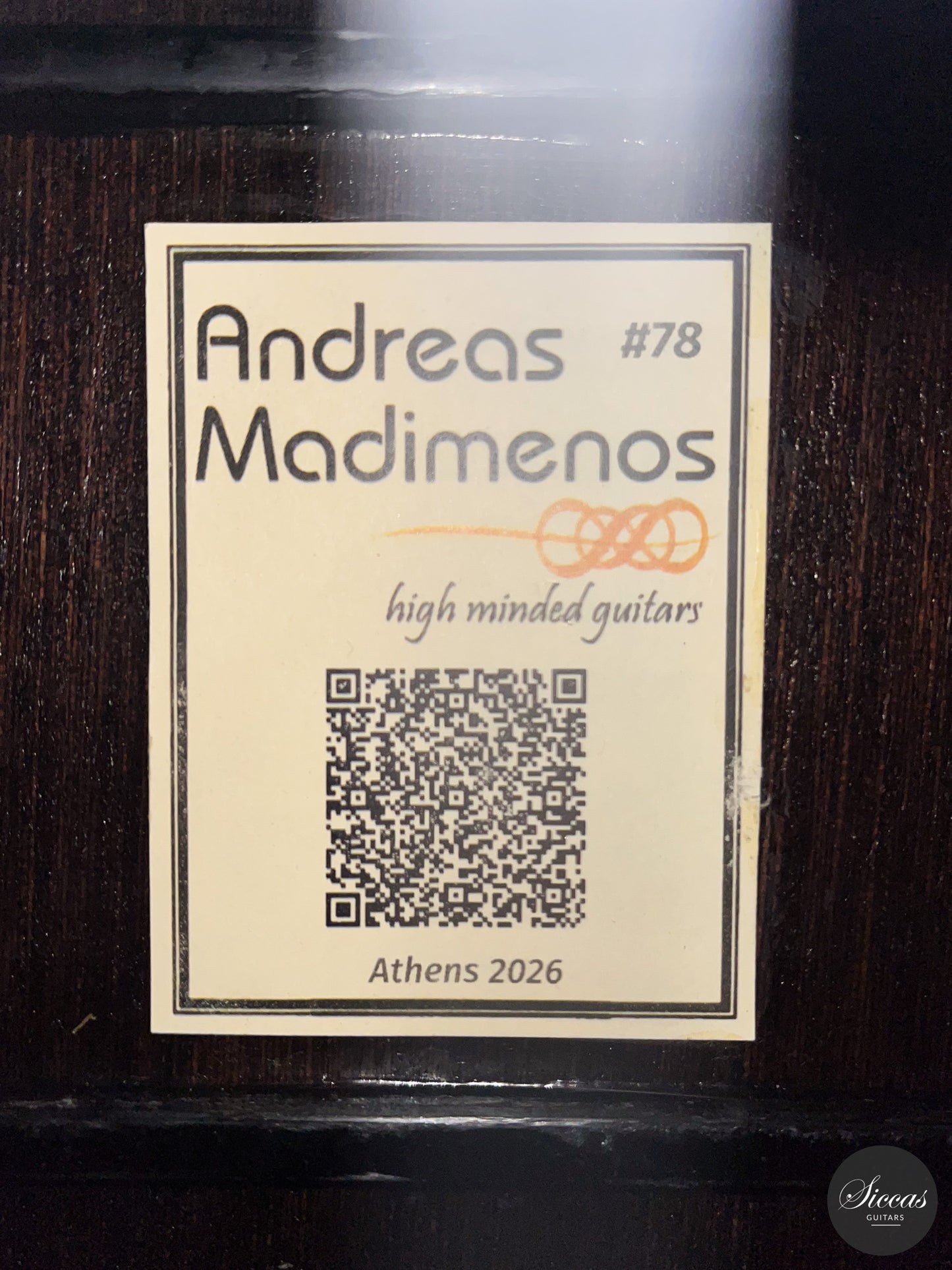
Ask about similar guitarsAndreas Madimenos - 2026 No. 78 Lattice
Details
Details
Overview
Overview


Video overview


More details about the guitar
About the luthier
Andreas Madimenos was born in Athens in 1984. After completing his musical studies, he went on to study Management and Financial Investments at the Athens University of Economics and Business. In 2014, he began his training in guitar making with the Greek luthier Pavlos Gypas, an experience that laid the foundation for his work as a maker.
He now works in his own fully equipped workshop, where he develops instruments that draw on both historical and modern references. His points of orientation include makers such as Vicente Arias and Johann Georg Stauffer, as well as Thomas Humphrey, Greg Smallman, and Zbigniew Gnatek. His guitars reflect a clear interest in structural development, projection, and responsiveness, always in service of musical control. Among the players who perform on his instruments is Rafael Aguirre, who uses one of Madimenos’s lattice guitars.
About the guitar
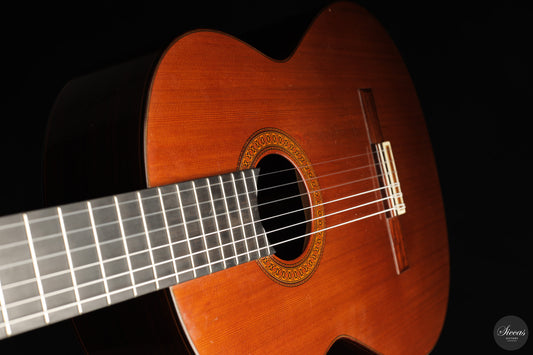
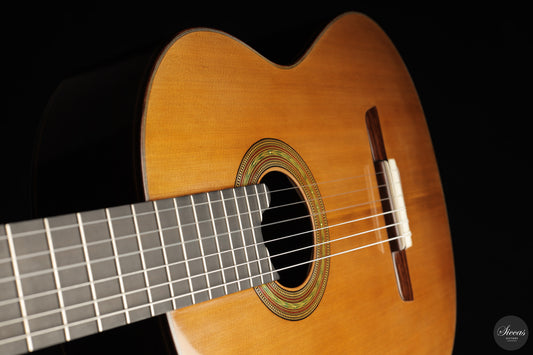
This guitar, built in 2026 as No. 78, presents Andreas Madimenos’s current approach to the lattice concept, with a design language that recalls the Australian school. The cedar top is paired with doubled ovangkol back and sides, a combination that supports a broad, powerful voice with notable depth in the bass register and a generous field of overtones. The trebles sing freely and retain body, which gives the instrument a wide tonal span across the register.
A central aspect of the construction is the internal frame developed with Charalampos Koumridis. According to the maker, this patent protected system is intended to reinforce projection, sustain, and the lower register. In playing, the result is a guitar that responds quickly, carries easily, and remains stable under changes of colour and pressure. It offers substantial dynamic capacity without losing clarity, which makes it well suited to both large scale concert literature and more contemporary playing techniques that require immediacy and control.
The visual conception is equally deliberate. The Indian rosewood bridge, the bindings, and the rosette are coordinated in colour and form, giving the instrument a unified appearance. The epoxy resin bindings are cast directly onto the body, adding an individual and coherent visual identity, while the ergonomic armrest contributes to comfort in extended playing. Handmade Pagos tuners complete an instrument whose design is guided by function, but never indifferent to refinement.

While this one is sold, these are ready for you
-
Classical Guitars
The classical guitar, with its soft nylon strings and characteristic timbre, has become a symbol of chamber music, Spanish tradition, and concert repertoire. Its modern form was shaped by Antonio de Torres in the 19th century, setting the standard for the body, fan bracing, and the 65-centimeter scale length that are still used today. Instruments in this category open up a rich palette from the refined Romantic miniatures of Tárrega to the majestic concertos of Rodrigo. Here you will find guitars that preserve historical continuity and at the same time inspire new interpretations.Look all products of the collection -
Siccas Luthiers - Halo Traditional Spruce 63 cm
Sale price 1.790 € Price:Unit price per Tax free (0% DE)1.990 €Save: 200 €Pre-OrderManufacturer: Siccas LuthiersManufacturer: Siccas LuthiersConstruction Type: TraditionalConstruction Type: Traditional -
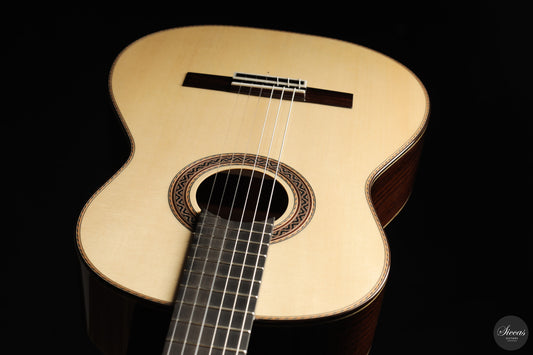
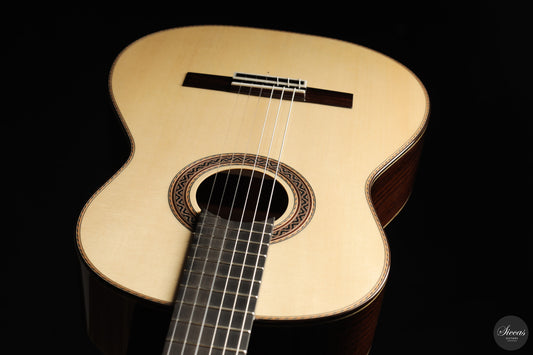
Siccas Luthiers - Halo Traditional Spruce
Sale price 1.790 € Price:Unit price per Tax free (0% DE)1.990 €Save: 200 €Pre-OrderManufacturer: Siccas LuthiersManufacturer: Siccas LuthiersConstruction Type: TraditionalConstruction Type: Traditional -
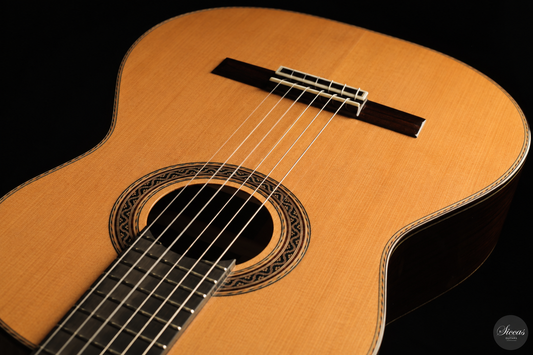
Siccas Luthiers - Halo Traditional Cedar 63 cm
Sale price 1.790 € Price:Unit price per Tax free (0% DE)1.990 €Save: 200 €Pre-OrderManufacturer: Siccas LuthiersManufacturer: Siccas LuthiersConstruction Type: TraditionalConstruction Type: Traditional -

 Pre-Order
Siccas Luthiers - Halo Traditional Cedar
Sale price 1.790 € Price:Unit price per Tax free (0% DE)1.990 €Save: 200 €Pre-OrderManufacturer: Siccas LuthiersManufacturer: Siccas LuthiersConstruction Type: TraditionalConstruction Type: Traditional -
Fernando Moreno - 2019 "Rastrojo"
Price: 3.490 €Unit price per Tax free (0% DE)Construction Type: Flamenco -
Dieter Hense - 1989 "Terz" 82/109 57 cm
Price: 4.190 €Unit price per Tax free (0% DE)Construction Type: Traditional -
Dieter Hense - 1989 "Oktav " 81/109 39 cm
Price: 2.990 €Unit price per Tax free (0% DE)Construction Type: Traditional -
Jose Ramirez - 1968 "MT" Mariano Tezanos No. 2957
Price: 8.990 €Unit price per Tax free (0% DE)Luthier: Jose RamirezLuthier: Jose Ramirez IIIConstruction Type: Traditional -
Lorenzo Frignani - 2026 Classical Guitar No. 275
Price: 13.990 €Unit price per Tax free (0% DE)Luthier: Lorenzo Frignani -
Dragan Neshic - 2026 Especial No. 3
Price: 7.490 €Unit price per Tax free (0% DE)Construction Type: Double-Top Guitars



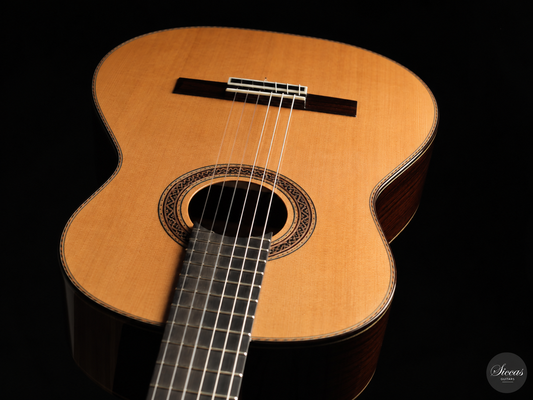


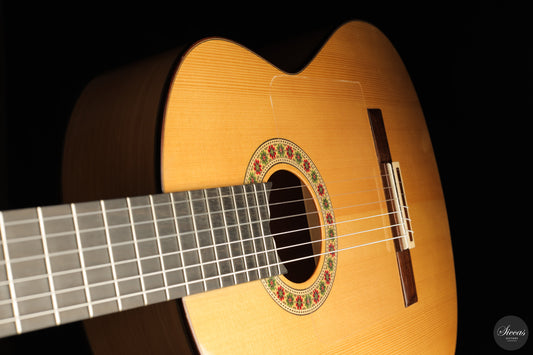

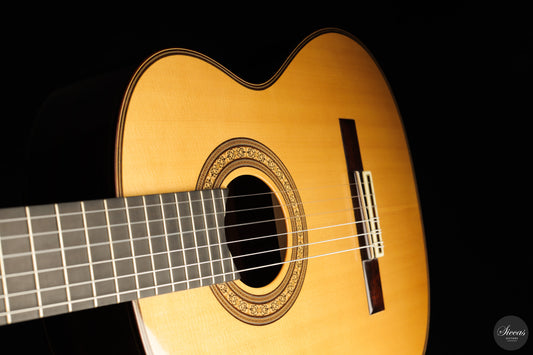

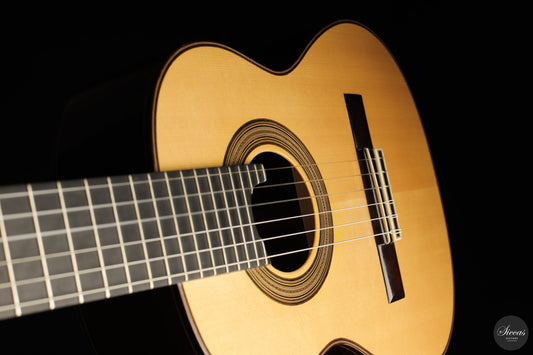





Related guitars
Frequently Asked Questions About Classical Guitars
How do I choose the right classical guitar for my level?
Choosing the right classical guitar depends on your playing level, musical goals, and budget. Beginners benefit from studio-model guitars from renowned workshops, while advanced players and professionals often choose a handmade master guitar. We are happy to advise you personally and can send detailed sound samples and videos on request.
What is the difference between a master guitar and a studio guitar?
Master guitars are built entirely by hand in the workshop of a single luthier, using only high-quality, well-aged tonewoods. Studio guitars are made in small series, often under the supervision of the master luthier, and offer excellent value for students and ambitious amateur players.
Can I try a classical guitar at home for 14 days?
Yes — every guitar you purchase from us comes with a 14-day home approval period. This complimentary trial applies worldwide to all orders, whether you are in Germany, Europe, the USA, Asia or anywhere else. We ship your instrument fully insured in a high-quality case so you can play it under your own acoustic conditions. If the guitar is not the right one for you, simply send it back and receive a full refund of the purchase price.
Can I try a classical guitar before purchasing?
Absolutely. You are warmly invited to visit our showroom in Karlsruhe, Germany, and test the instruments at your leisure. We are happy to schedule a personal appointment. If a visit is not possible, we send detailed videos and sound samples, and offer extensive consultation by phone or video call.
What payment methods and financing options do you offer?
We accept bank transfer, PayPal, major credit cards, and Klarna. For high-value instruments, we offer individual installment plans on request. Please contact us directly — we will find a suitable solution for every budget.
How do I properly care for my classical guitar?
A classical guitar requires constant humidity between 45 and 55 percent. Store the instrument in its case with a humidifier, avoid direct sunlight and large temperature fluctuations. Change the strings regularly and clean the guitar with a soft microfiber cloth.