Brandon Acker is one of today's best-known ambassadors for early plucked instruments. The American guitarist and lutenist has introduced millions of listeners to the lute, the theorbo and the baroque guitar, combining scholarly curiosity with an unusually approachable way of explaining historical music. On the Siccas Guitars channel he has explored repertoire from the Renaissance to the Baroque — including his performance of Dowland's Lachrimae Pavan.
Here he plays Fortune My Foe, one of the most famous melodies of Elizabethan England, in a setting associated with John Dowland — this time not on a lute, but on a thoroughly modern instrument: the Siccas Luthiers Creation Doubletop Triptych.
About Fortune My Foe
Fortune My Foe is an anonymous English ballad tune from the sixteenth century, and it was one of the best-known melodies of its age. It acquired a dark reputation: broadside ballads about crime and execution were commonly sung to it, which earned it the nickname of the 'hanging tune'. Its slow, grave character made it a favourite subject for instrumental variations.
Many composers of the period set the melody, and a well-known lute setting is associated with John Dowland (1563–1626), the greatest English lutenist-composer of his generation. Dowland built an entire aesthetic around melancholy — his motto 'Semper Dowland, semper dolens' (always Dowland, always grieving) says it plainly — and Fortune My Foe fits that world perfectly. If you want to go deeper into his life and music, read our guide to John Dowland and the classical guitar.
Renaissance Melancholy on a Doubletop Guitar
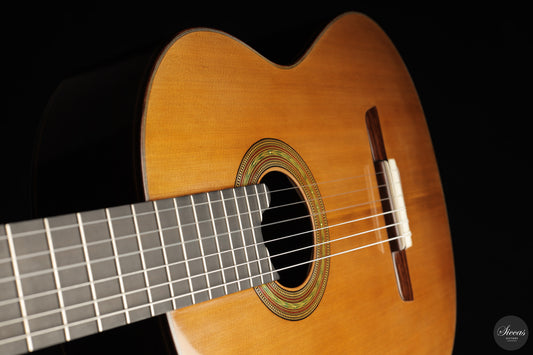
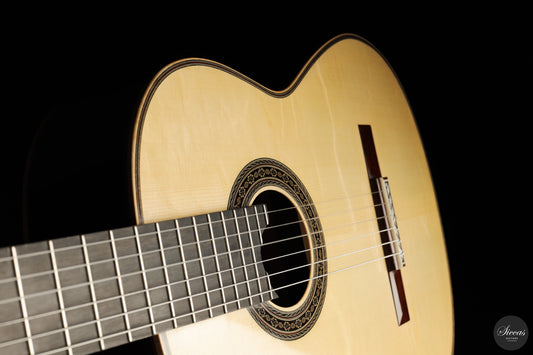
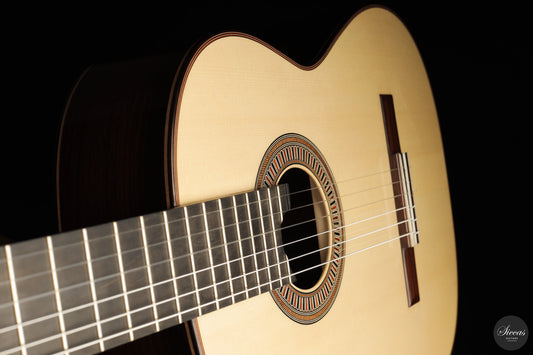
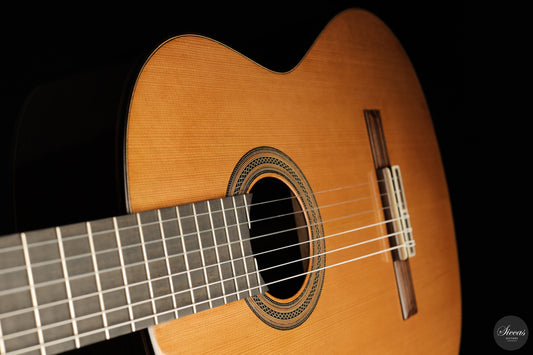
Part of the fascination of this recording is the meeting of two worlds. The Creation Doubletop Triptych by Siccas Luthiers is a contemporary concert instrument using modern double-top construction — a design that gives the guitar exceptional responsiveness and dynamic range. You can learn how this construction works in our article on double-top classical guitars.
In Acker's hands, that modern palette serves a 400-year-old melody: the guitar whispers where a lute would whisper, but can also open up with a depth of colour no Renaissance instrument possessed. It is a beautiful demonstration of why early music keeps finding a natural home on the modern classical guitar.
Watch the Performance
Explore more early music on six strings in our Dowland repertoire guide, or browse our collection of double-top guitars to hear what modern lutherie can do.