Some Christmas songs are carols; this one is a show tune, and it brings a cheerful, swinging lift to any festive set. It's Beginning to Look a Lot Like Christmas translates well to the classical guitar: the melody is clear and singable, the harmony moves in satisfying, slightly jazzy turns, and the whole thing lands as a crowd-pleaser. Our full tutorial is in the video above.
About the Song
Meredith Willson wrote It's Beginning to Look a Lot Like Christmas in 1951. Perry Como recorded one of the earliest and most widely heard versions, and the song became a holiday standard through Bing Crosby and countless others who followed. Its warm, major-key brightness and gently swinging rhythm set it apart from slower, more reverent carols.
The title itself is half the appeal: it names a feeling rather than a scene, which is why the song works across so many different arrangements and settings. On nylon strings, played fingerstyle, that feeling survives intact.
Why It Works on Classical Guitar
The melody sits comfortably on the treble strings. The harmonic movement — which has a mild jazz flavor from the original — translates naturally into fingerstyle guitar voicings without needing drastic rearrangement. What you get is a tune that audiences recognize immediately and respond to warmly, which makes it well worth the time investment.
The swing feel is the main character here. Unlike a straight-time carol, this song has a lilt that needs to breathe. A stiff, mechanical approach kills it. Keep the rhythm relaxed and the melody prominent, and the piece plays itself.
How to Approach the Arrangement
Rhythm and Feel
The original has a gentle swing — dotted-note phrasing rather than strict even eighths. In your arrangement, lean into that. Do not over-correct into a rigid classical pulse. Think of a walking pace rather than a march.
Melody Projection
The melody is what the audience knows. Keep it at the front of the texture at all times. Use the rest stroke (apoyando) on key melodic notes if your arrangement allows it, and keep inner voices and bass lines softer. Listeners will fill in any gaps in harmony; they will notice immediately if they cannot hear the tune.
Chord Changes
The harmonic rhythm moves fairly quickly in places, which is the main coordination challenge at the intermediate level. Practise the changes in isolation before connecting them to the melody. Once the left hand knows where it is going, the right hand can focus on keeping the swing alive.
Dynamics and Expression
Cheerful does not mean loud. Play with dynamic variation — a softer middle section before coming back with more brightness on the final phrase adds shape to the piece and keeps it from sounding flat. Small inflections matter more here than in a technically demanding concert work.
Difficulty Level
Intermediate. The swing feel and the chord changes require some coordination, but the song's familiarity is a genuine advantage: you already have the melody in your head, which speeds up the learning process considerably. Most intermediate players can get a satisfying result within a few practice sessions.
If you are working through the arrangement for the first time, the video tutorial above covers the full piece. Follow along section by section rather than trying to run it end to end from the start.
Playing Christmas Music on Classical Guitar
Holiday repertoire on classical guitar spans a wide range. On one end you have devotional carols — Silent Night, O Holy Night — that call for legato lines and restrained dynamics. On the other you have pieces like this one, which demand lightness and a sense of fun. A good festive set benefits from mixing both. It's Beginning to Look a Lot Like Christmas works well as an opener or as a change of pace mid-set, precisely because it lifts the mood quickly.
If you are building a Christmas program, pair it with one or two slower pieces for contrast. The variety makes each piece land more effectively.
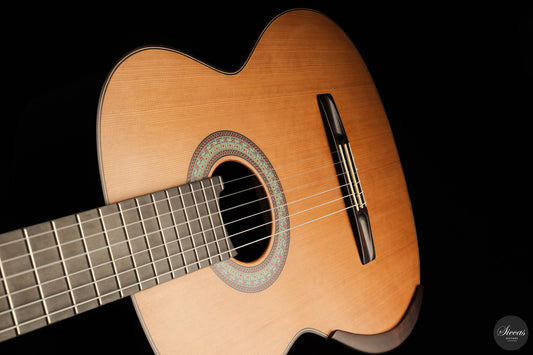
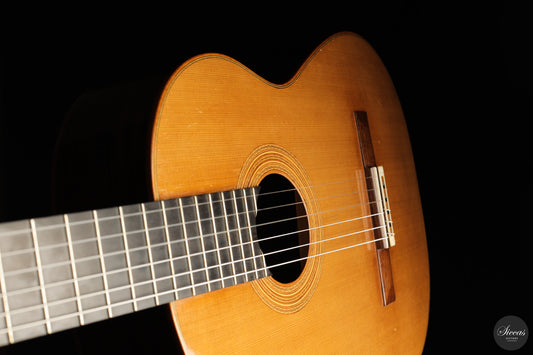
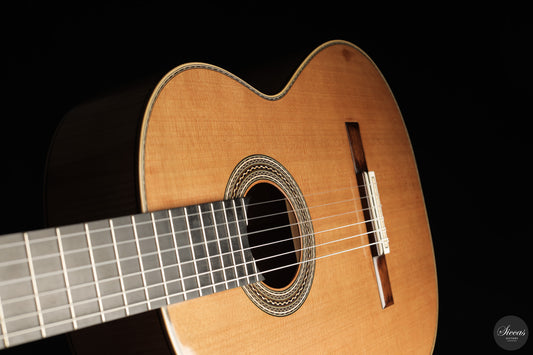
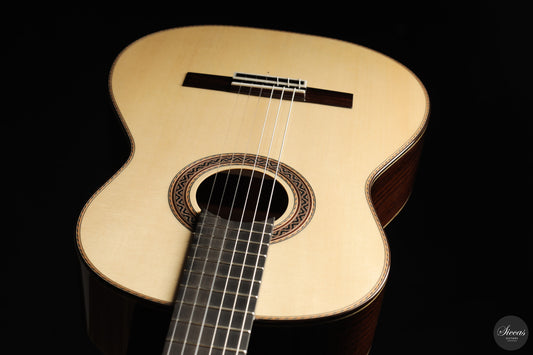
About the Instrument
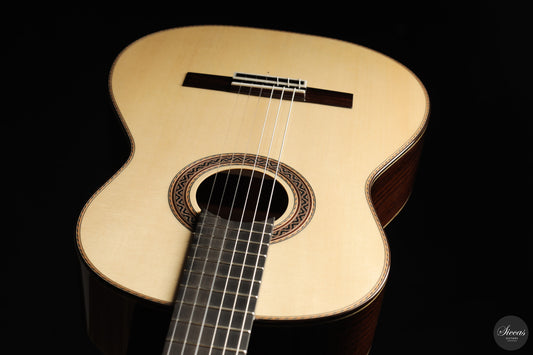
A classical guitar with nylon strings is well suited to this kind of arrangement. The softer attack of nylon compared to steel strings lets the melody sing without harshness, and the sustain on the bass notes supports the harmonic movement naturally. Any well-set-up classical guitar will handle the arrangement comfortably — the technical demands are intermediate, not specialist.
If you are looking for a guitar to learn on or to add to your collection, you can browse our range of classical guitars here.
Meredith Willson and the Song's Origins
Meredith Willson (1902–1984) was an American composer, playwright, and musician best known for the Broadway musical The Music Man (1957). It's Beginning to Look a Lot Like Christmas predates that success by six years and shows his gift for accessible, optimistic melody writing. The song was composed to evoke a specific American mid-century Christmas feeling — department stores, snowfall, families — and that specificity is probably why it has lasted.
Perry Como's 1951 recording was among the first to reach a wide audience. The song has since been recorded by hundreds of artists across virtually every genre. The classical guitar version belongs to a long tradition of arrangers finding that the melody and harmony are more flexible than they first appear.
Copyright Note
This song is under copyright. We do not reproduce TAB, notation, or lyrics here. Our video tutorial provides our own arrangement; sheet music and notation should be obtained through authorized sources.
More Festive and Holiday Guitar
If you enjoy playing seasonal music on classical guitar, the following resources may be useful:
- Famous classical guitar pieces — a broader look at repertoire across periods and styles
- Great classical guitarists — players who have shaped the instrument's repertoire and technique
- How long to learn classical guitar — realistic timelines and what affects your progress
- Acoustic vs. classical guitar — the key differences explained
- How to tune a classical guitar — keeping your instrument in shape
FAQ
Who wrote "It's Beginning to Look a Lot Like Christmas"?
Meredith Willson, in 1951. Perry Como was among the first artists to record it widely.
Is it hard to play on classical guitar?
Intermediate. The main challenges are the swing feel and the chord changes. Most intermediate players can learn a satisfying version within a few sessions.
Where can I find the TAB?
The song is under copyright. Our video tutorial covers the arrangement; for printed sheet music, use an authorized source.
What makes it suit the classical guitar?
The melody sits naturally on the treble strings, the harmonic movement has a jazz flavor that works well in fingerstyle voicings, and nylon strings give the melody a warmth that suits the song's character.
Can beginners play it?
The intermediate rating is honest — the swing feel in particular is harder to nail than the notes themselves. A late beginner with some fingerstyle experience can work through it, but it will take patience with the rhythmic feel rather than just the left-hand positions.
What other Christmas pieces work on classical guitar?
Many traditional carols arrange well on nylon strings. For a complete festive set, mix slow devotional pieces with upbeat ones like this to give the program shape.