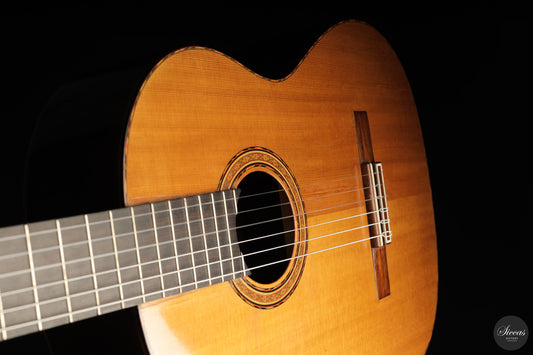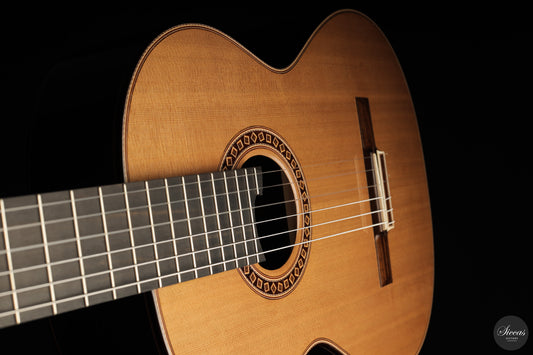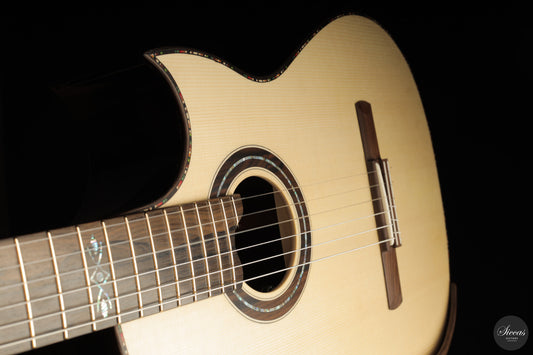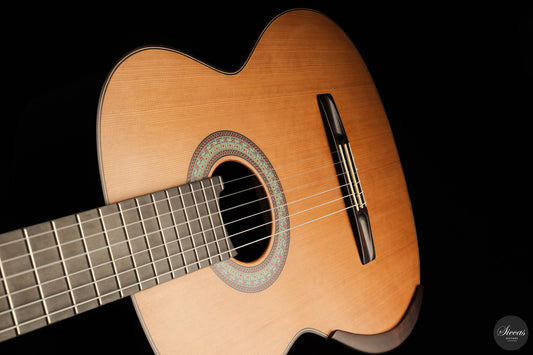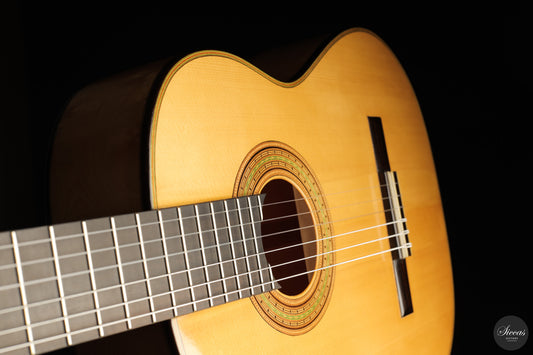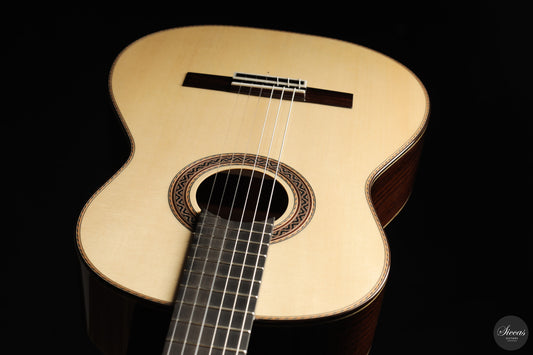

A flamenco guitar is built for a different job than a classical guitar. It has to cut through hand claps, footwork and singing, answer a rasgueado instantly and survive the percussive taps that are part of the style. That is why choosing one calls for slightly different questions. This guide shows you what to look for, from the choice between blanca and negra to the details you should check when you try an instrument. If you would first like to understand the basic differences between the two instruments, read our comparison flamenco vs classical guitar.
Blanca or Negra: The First Decision
The most important choice is the wood of the back and sides, because it shapes the whole character of the guitar. The top is traditionally spruce.
- Flamenca blanca: back and sides of cypress. A blanca produces more treble and a louder percussive attack than a negra. It is the classic flamenco sound: bright, dry, immediate.
- Flamenca negra: back and sides of rosewood. A negra sounds deeper and more resonant and sits closer to the tone of a classical guitar.
Maple is used as well. There is no better or worse here: a blanca suits players who want the traditional punch of flamenco, while a negra appeals to those who want more depth and sustain.
What to Check When You Try a Flamenco Guitar
- Action and buzz. Flamenco guitars usually have a lower action than classical guitars. A little string buzz is accepted in flamenco and even used as an expressive effect. What matters is that notes still speak clearly and do not choke, especially high up the neck.
- Attack and response. Play a few rasgueados and fast picado lines. A good flamenco guitar answers at once, with a crisp, percussive attack.
- Weight and build. Flamenco guitars are built lighter and with thinner tops than classical guitars, which gives them their brighter, more percussive sound. A lively guitar often feels noticeably light in the hands.
- The golpeador. Most flamenco guitars carry a golpeador, a tap plate usually made of plastic that protects the top from the finger taps (golpes). On a used guitar, check its condition and the wood around it.
- Balance and sustain. Even a percussive guitar should not sound thin. Listen for a firm bass and for trebles that still sing in falsetas.
New or Historic?
Older flamenco guitars by the great Spanish makers are among the most sought-after instruments of all, and many players love the dry, aged sound of a guitar that has been played for decades. A new guitar, on the other hand, gives you the current work of a living maker and an instrument in perfect condition. With a historic guitar, condition is everything: cracks, earlier repairs, the neck angle and the state of the golpeador are hard to judge from photos. Buy it from a specialist who has inspected and set up the instrument.
The Great Flamenco Guitar Traditions
The flamenco guitar is closely tied to a few Spanish cities and their workshops. In Madrid, Domingo Esteso (1882–1937) was one of the defining figures of the city's guitar-making tradition. In Córdoba, Manuel Reyes (1934–2014) devoted his career to flamenco guitars of uncompromising character. And in Seville, the self-taught Francisco Barba, born in 1939, built a reputation that made his guitars recognisable to flamenco players far beyond Andalusia.
Listen: A Francisco Barba Flamenco Guitar
Here you can hear what a fine flamenco guitar sounds like: Andjela Misic plays Farolillo de Feria by Paco de Lucía on a 2022 Francisco Barba.
Flamenco Guitars at Siccas Guitars
We regularly offer flamenco guitars by Spanish and international makers, from new instruments to historic guitars from the great workshops, and you will find flamenco models from Armin Hanika as well. You can see all available instruments in our flamenco guitar collection. If you would like advice on which guitar suits your playing, our team is happy to help, or you can visit our showroom in Karlsruhe and try them in person.
Frequently Asked Questions
What is the difference between a flamenca blanca and a flamenca negra?
A blanca has back and sides of cypress and sounds brighter, with more treble and a louder percussive attack. A negra has back and sides of rosewood and sounds deeper and more resonant, closer to a classical guitar.
Why does a flamenco guitar have a tap plate?
The golpeador protects the top from the percussive finger taps, the golpes, that are part of flamenco technique. It is usually made of plastic.
Is it normal for a flamenco guitar to buzz?
A little, yes. Flamenco guitars have a low action, and a slight buzz is accepted in flamenco and even used as an expressive effect. Notes should still sound clearly and not choke.
Should a beginner start on a flamenco guitar?
If flamenco is what draws you to the guitar, yes. If you are not yet sure which style you want to play, a classical guitar is usually the more versatile first instrument.