The Molina Guitar Duo — Isabella Selder and Santiago Molina Gimbernat — came to our studio with an unusual project: their own arrangements for two guitars of works that Manuel María Ponce originally wrote for the piano. You can read more about one half of the duo in our profile of Isabella Selder, who has also recorded Barrios' Choro da Saudade for our channel.
The Programme
The concert moves through four pieces: the Preludio y fuga sobre un tema de Händel, followed by Minueto, Pavana and Gavota. Three of the four titles point to the eighteenth century, and that is the key to the programme: this is Ponce in neoclassical mode, writing dance forms and counterpoint in a modern harmonic language.
The Preludio y fuga is the most demanding of them. A fugue on two guitars is a merciless test — each voice has to stay distinct, entries have to be shaped, and the two players must think as one contrapuntal mind rather than as melody and accompaniment.
Why Ponce Transcribes Well
Manuel María Ponce (1882–1948) was the Mexican composer who became one of Andrés Segovia's closest collaborators, writing sonatas, variations and the Concierto del sur for him. But most of his output was for the piano, and guitarists have been quietly borrowing from it ever since.
His piano writing suits the guitar because of how he thinks about texture: clear melodic lines over transparent accompaniment, harmony that colours rather than fills. On two guitars there is enough room to keep all of it audible — which is precisely what a solo transcription usually has to sacrifice. Our Ponce repertoire guide and our portrait of the composer cover the works written for the instrument itself.
Six Guitars in One Concert
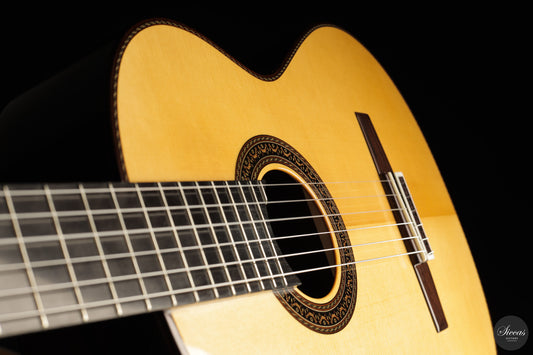
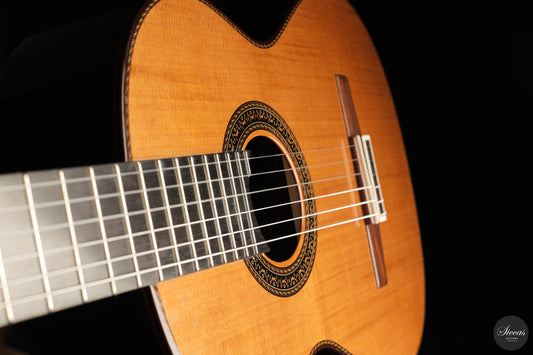
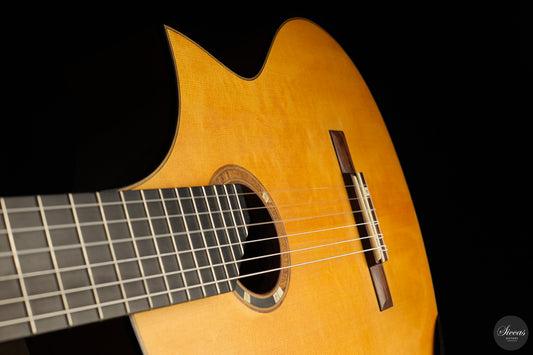
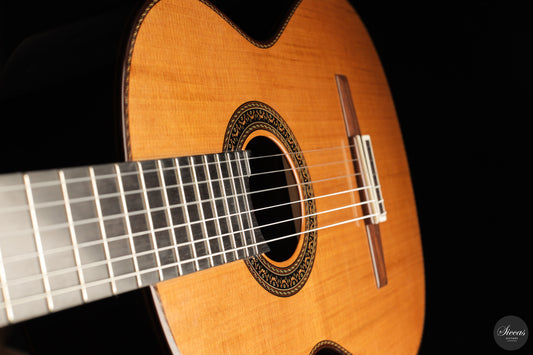
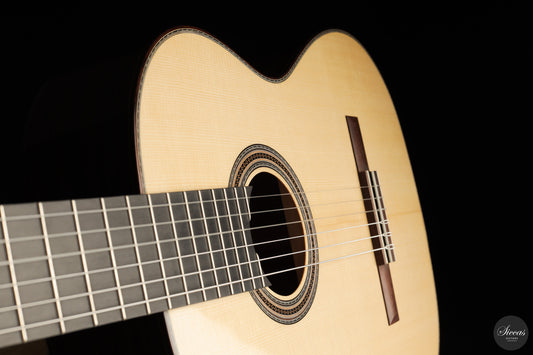
The duo changes instruments for each piece, which turns the recital into a comparison of very different building philosophies. They open on a pair of Siccas Luthiers Synthesis double-tops, one cedar and one spruce. The Minueto is played on guitars by Antonio Marchese and Sebastiano Fracasso. For the Pavana and Gavota they turn to two instruments by José Luis Romanillos — a 1984 "La Violeta" and a 1983 "La Casada" — the Spanish-born English luthier whose guitars belong among the finest of the late twentieth century. Read more in our article on José Luis Romanillos.
Watch the Concert
Discover more ensembles in our profiles of Duo Melis and the Amadeus Guitar Duo, and browse our overview of famous classical guitar pieces.