

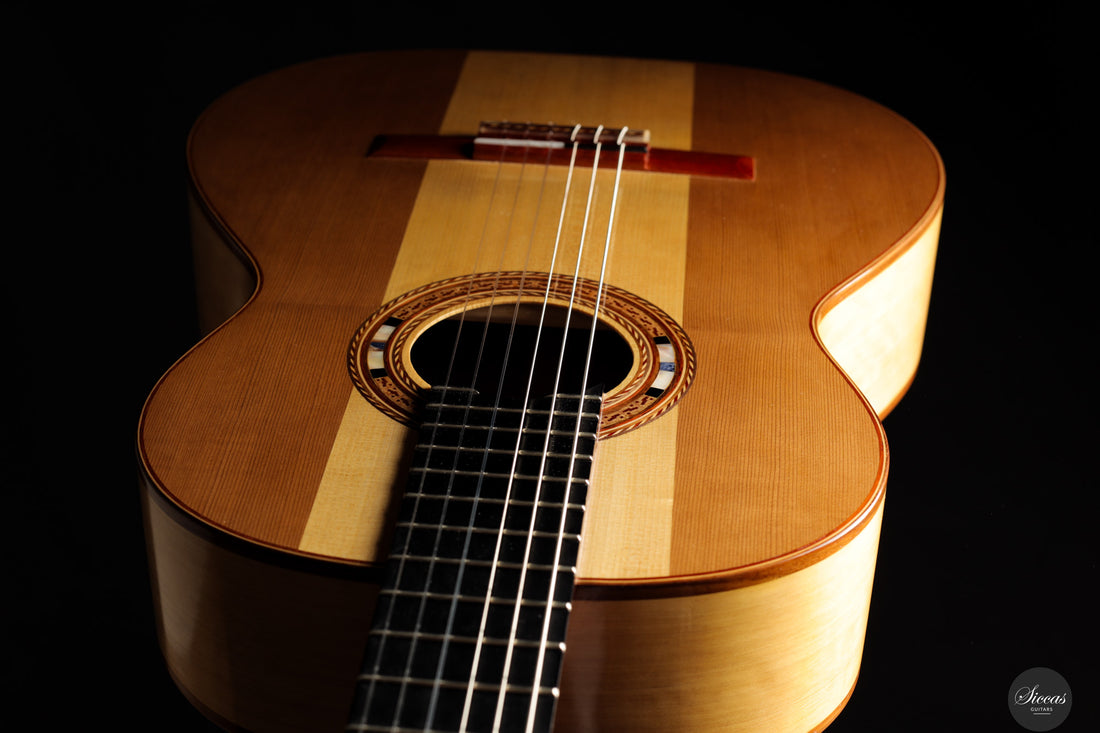




This guitar is sold – but we may have something similar.
Our experts know every guitar in the house and are happy to advise you personally.
Ask about similar guitarsErez Matzrafi - 2026 Thucea
Details
Details
Overview
Overview


Video overview


More details about the guitar
About the luthier
Erez Matzrafi is an Israeli luthier who has been building classical and flamenco guitars since 2013. Initially a self-taught craft born from a love of making things—from model airplanes to fine instruments—his guitar making evolved from a passionate hobby into a professional calling. Deeply influenced by Israel’s leading classical guitarists, including Yoram Zerbib, Tal Hurwitz, and Ruben Seroussi, Matzrafi refined his skills through their encouragement and feedback. A pivotal moment came through his collaboration with Andrea Tacchi, facilitated by Maestro Hurwitz. This mentorship reshaped Matzrafi’s philosophy of lutherie, emphasizing tonal sensitivity, aesthetic refinement, and a profound understanding of materials. Tacchi’s influence is particularly evident in Matzrafi’s approach to top thickness, membrane-like response, cypress double sides, and the nuanced balance between spruce and cedar.
About the guitar
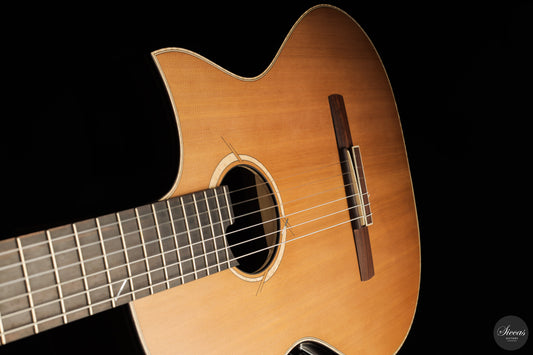
This 2026 traditional model by Erez Matzrafi is a refined homage to the aesthetic and acoustic principles of Andrea Tacchi. Its soundboard, composed of both spruce and cedar, offers an articulate blend of clarity and warmth—responding quickly with rounded fundamentals and a glowing sustain. The double cypress sides lend notable stability and contribute to a transparent, vibrant voice with immediate projection and a resonant core. Dynamic balance across all registers allows for nuanced phrasing, while the top reacts with membrane-like agility, rewarding the player’s control and touch. The overall response is deeply musical and engaging, offering an expressive tonal palette suited to a wide range of repertoire. Carefully built with French polish and refined details, the instrument reflects Matzrafi’s sensitivity to construction and his continuing dialogue with the European tradition of modern classical guitar making.

While this one is sold, these are ready for you
-
Classical Guitars
The classical guitar, with its soft nylon strings and characteristic timbre, has become a symbol of chamber music, Spanish tradition, and concert repertoire. Its modern form was shaped by Antonio de Torres in the 19th century, setting the standard for the body, fan bracing, and the 65-centimeter scale length that are still used today. Instruments in this category open up a rich palette from the refined Romantic miniatures of Tárrega to the majestic concertos of Rodrigo. Here you will find guitars that preserve historical continuity and at the same time inspire new interpretations.Look all products of the collection -
Tamara Stahl - 2026 "Signature No. 25"
Price: 10.990 €Unit price per Tax free (0% DE)ReservedLuthier: Tamara StahlConstruction Type: Traditional -
Fernando Mazza - 2025 20th Anniversary Model Doubletop
Price: 8.490 €Unit price per Tax free (0% DE)Luthier: Fernando MazzaConstruction Type: Double-Top Guitars -
ZUCALI - 2026 Shakti No. 2605
Price: 14.400 €Unit price per Tax free (0% DE) -
ZUCALI - 2026 Shiva No. 2606 64 cm
Price: 9.990 €Unit price per Tax free (0% DE) -
Jose Marques - 2026 Lattice No. 127
Price: 6.490 €Unit price per Tax free (0% DE)Luthier: Jose MarquesConstruction Type: Lattice -
Maxwell T. Sipe - 2026 No. 125 Lattice 64 cm
Price: 6.990 €Unit price per Tax free (0% DE)Luthier: Maxwell T. SipeConstruction Type: Lattice -
Michael Cadiz - 2026 No. 137
Price: 8.990 €Unit price per Tax free (0% DE)Luthier: Michael CadizConstruction Type: Lattice -
Robert Benedetto - 1997 "Manhattan" No. 39897
Price: 16.990 €Unit price per Tax free (0% DE) -
Carlos Juan Busquiel - 2023 "La Leona" No. 159
Price: 4.990 €Unit price per Tax free (0% DE)Luthier: Carlos Juan BusquielConstruction Type: Traditional -
Dominique Delarue - 2004 No. 263
Price: 6.990 €Unit price per Tax free (0% DE)Construction Type: Traditional

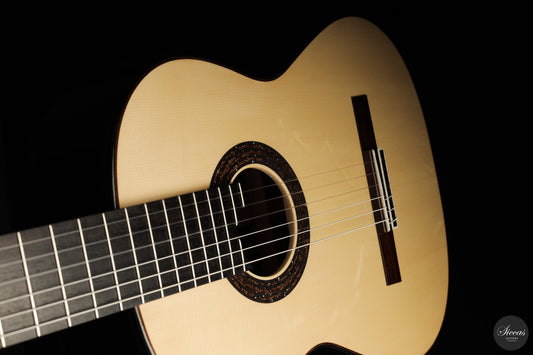

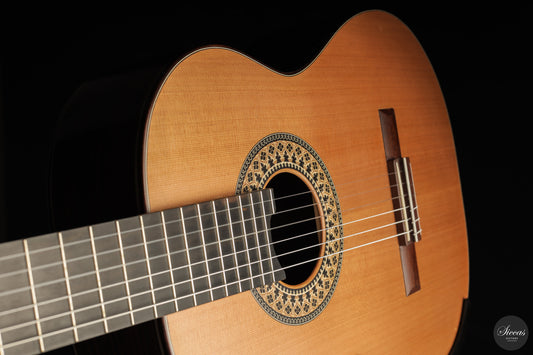

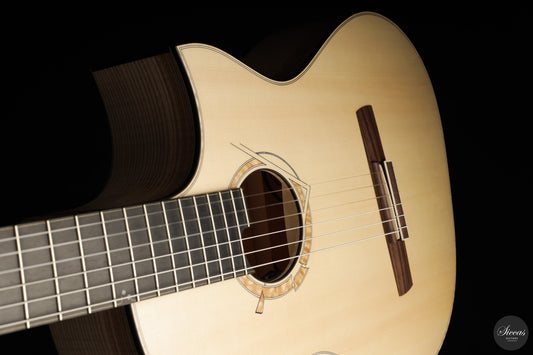





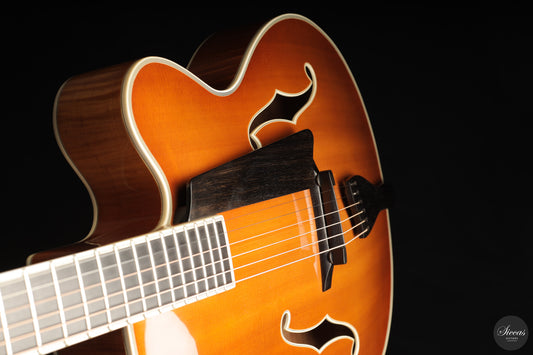

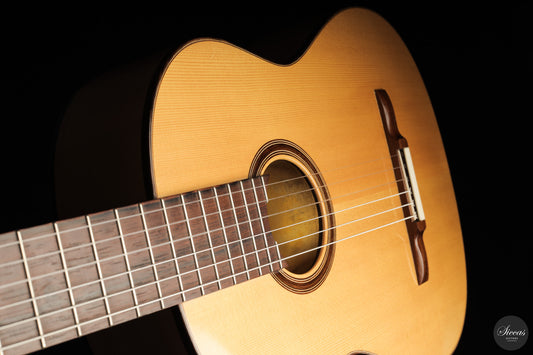

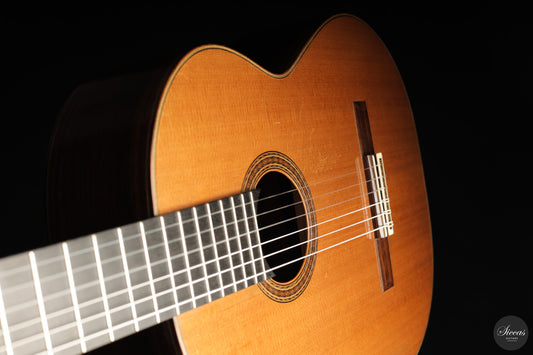


Related guitars
Frequently Asked Questions About Classical Guitars
How do I choose the right classical guitar for my level?
Choosing the right classical guitar depends on your playing level, musical goals, and budget. Beginners benefit from studio-model guitars from renowned workshops, while advanced players and professionals often choose a handmade master guitar. We are happy to advise you personally and can send detailed sound samples and videos on request.
What is the difference between a master guitar and a studio guitar?
Master guitars are built entirely by hand in the workshop of a single luthier, using only high-quality, well-aged tonewoods. Studio guitars are made in small series, often under the supervision of the master luthier, and offer excellent value for students and ambitious amateur players.
Can I try a classical guitar at home for 14 days?
Yes — every guitar you purchase from us comes with a 14-day home approval period. This complimentary trial applies worldwide to all orders, whether you are in Germany, Europe, the USA, Asia or anywhere else. We ship your instrument fully insured in a high-quality case so you can play it under your own acoustic conditions. If the guitar is not the right one for you, simply send it back and receive a full refund of the purchase price.
Can I try a classical guitar before purchasing?
Absolutely. You are warmly invited to visit our showroom in Karlsruhe, Germany, and test the instruments at your leisure. We are happy to schedule a personal appointment. If a visit is not possible, we send detailed videos and sound samples, and offer extensive consultation by phone or video call.
What payment methods and financing options do you offer?
We accept bank transfer, PayPal, major credit cards, and Klarna. For high-value instruments, we offer individual installment plans on request. Please contact us directly — we will find a suitable solution for every budget.
How do I properly care for my classical guitar?
A classical guitar requires constant humidity between 45 and 55 percent. Store the instrument in its case with a humidifier, avoid direct sunlight and large temperature fluctuations. Change the strings regularly and clean the guitar with a soft microfiber cloth.